Some people are thought to be wise because they don’t talk much; others are disliked because they talk too much. Some people keep quiet because they don’t have anything to say; others keep quiet because they know the right time to speak. A wise person will not speak until the right moment, but a bragging fool doesn’t know when that time is.
[ἔστιν σιωπῶν εὑρισκόμενος σοφός,
καὶ ἔστιν μισητὸς ἀπὸ πολλῆς λαλιᾶς.
ἔστιν σιωπῶν, οὐ γὰρ ἔχει ἀπόκρισιν,
καὶ ἔστιν σιωπῶν εἰδὼς καιρόν.
ἄνθρωπος σοφὸς σιγήσει ἕως καιροῦ,
ὁ δὲ λαπιστὴς καὶ ἄφρων ὑπερβήσεται καιρόν.]The Bible (The Old Testament) (14th - 2nd C BC) Judeo-Christian sacred scripture [Tanakh, Hebrew Bible], incl. the Apocrypha (Deuterocanonicals)
Book 22b. Sirach (Ecclesiasticus) 20: 5ff (Sir 20:5–7) [tr. GNT (1992 ed.)]
(Source)
More on the history and acceptance of this Apocryphal book here and here.
(Source (Greek)). Alternate translations:There is one that keepeth silence, and is found wise: and another by much babbling becometh hateful.
Some man holdeth his tongue, because he hath not to answer: and some keepeth silence, knowing his time.
wise man will hold his tongue till he see opportunity: but a babbler and a fool will regard no time.
[tr. KJV (1611)]There is one that holdeth his peace, that is found wise: and there is another that is hateful, that is bold in speech.
There is one that holdeth his peace, because he knoweth not what to say: and there is another that holdeth his peace, knowing the proper time.
A wise man will hold his peace till he see opportunity: but a babbler, and a fool, will regard no time.
[tr. DRA (1899)]There is the man who keeps quiet and is considered wise,
another incurs hatred for talking too much.
There is the man who keeps quiet, not knowing how to answer,
another keeps quiet, because he knows when to speak.
A wise man will keep quiet till the right moment,
but a garrulous fool will always misjudge it.
[tr. JB (1966); NJB (1985)]There are people who are silent
and are found to be wise,
and there are those who are hated
because they talk a lot.
There are those who keep silent
because they have nothing to say
in response,
and there are those who keep silent
because they know the right time.
Wise people keep silent
until the proper moment,
but those who swagger and are senseless will miss the right moment.
[tr. CEB (2011)]Some people keep silent and are found to be wise,
while others are detested for being talkative.
Some people keep silent because they have nothing to say,
while others keep silent because they know when to speak.
The wise remain silent until the right moment,
but the arrogant and the fool miss the right moment.
[tr. NRSV (2021 ed.)]
Quotations about:
be quiet
Note not all quotations have been tagged, so Search may find additional quotes on this topic.
Not being heard is no reason for silence.
[N’être pas écouté, ce n’est pas une raison pour se taire.]
Victor Hugo (1802–1885) French writer, journalist, human rights activist, politician
Les Misérables, Part 2 “Cosette,” Book 8 “Cemeteries Take What is Given Them,” ch. 1 (2.8.1) (1862) [tr. Wilbour (1862)]
(Source)
(Source (French)). Alternate translations:Not to be heard is no reason why a man should hold his tongue.
[tr. Wraxall (1862)]That one is not listened to is no reason for preserving silence.
[tr. Hapgood (1887)]Not being heard is no reason for silence.
[tr. Wilbour/Fahnestock/MacAfee (1987)]Not being listened to is no reason to stop talking.
[tr. Donougher (2013)]
If thou hast not Sense enough to speak, have Wit enough to hold thy tongue.

We seldom regret talking too little, but very often talking too much. This is a well-known maxim which everybody knows and nobody practices.
[L’on se repent rarement de parler peu, très souvent de trop parler: maxime usée et triviale que tout le monde sait, et que tout le monde ne pratique pas.]
Jean de La Bruyère (1645–1696) French essayist, moralist
The Characters [Les Caractères], ch. 11 “Of Mankind [De l’Homme],” § 149 (11.149) (1688) [tr. Van Laun (1885)]
(Source)
(Source (French)). Other translations:We seldom repent talking too little, but very often talking too much, a common and trivial maxim which every body knows, and no body practices.
[Bullord ed. (1696) and Curll ed. (1713)]We seldom repent talking too little, but very often talking too much; a common obsolete Maxim, which every body knows, and no body practices.
[Browne ed. (1752)]We seldom repent of speaking little, and very often of speaking too much; a well-worn and familiar maxim, that everyone knows but that not everyone practices.
[tr. Stewart (1970)]

God gave us teeth to hold back our tongue.
Proverbs, Sayings, and Adages
Greek proverb

I am very little inclined on any occasion to say anything unless I hope to produce some good by it.
Abraham Lincoln (1809–1865) American lawyer, politician, US President (1861–65)
Speech (1862-08-06), Union (War) Meeting, US Capitol steps, Washington, D. C.
(Source)
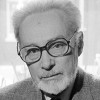
The true crime, the collective, general crime of almost all Germans of that time was that of lacking the courage to speak.
Primo Levi (1919–1987) Italian Jewish chemist and writer
The Drowned and the Saved, ch. 8 “Letters from Germans” (1986) [tr. Rosenthal (1888)]
(Source)
Regarding the Third Reich and the Holocaust.
To sin by silence, when we should protest,
Makes cowards out of men.

When you have nothing to say, say nothing; a weak defense strengthens your opponent, and silence is less injurious than a bad reply.
Charles Caleb "C. C." Colton (1780–1832) English cleric, writer, aphorist
Lacon: Or, Many Things in Few Words, Vol. 1, § 183 (1820)
(Source)
Always do sober what you said you would do drunk. That will teach you to keep your mouth shut.
Ernest Hemingway (1899–1961) American writer
(Attributed)