

“The best advice I would give you is, ‘If under attack, cause a diversion.'”
“A diversion?”
“Yes, trip over the dog, spill a glass of wine on your attacker, burst into song, challenge your attacker to a duel.”Kerry Greenwood (b. 1954) Australian author and lawyer
Phryne Fisher, Book 13, The Castlemaine Murders, ch. 4 [Phryne to Jane] (2003)
(Source)
Quotations about:
defense
Note not all quotations have been tagged, so Search may find additional quotes on this topic.

I know, you always come out on top, the great exception.
Well, someday your enemies will laugh and laugh. Consider:
life is full of changes, and who can stand them better? A man
who treats his body and proud mind to luxury, addicting them,
or someone used to little, and to thinking of the future,
a man wise in peacetime, preparing then the tools of war?[Uni nimirum recte tibi semper erunt res,
o magnus posthac inimicis risus. Uterne
ad casus dubios fidet sibi certius? Hic qui
pluribus adsuerit mentem corpusque superbum,
an qui contentus parvo metuensque futuri
in pace, ut sapiens, aptarit idonea bello?]Horace (65–8 BC) Roman poet, satirist, soldier, politician [Quintus Horatius Flaccus]
Satires [Saturae, Sermones], Book 2, # 2 “Quae virtus et quanta,” l. 106ff (2.2.106-111) (30 BC) [tr. Fuchs (1977)]
(Source)
Reply when a rich person argues with the narrator that they are so wealthy they need not be concerned about wasteful spending. The last line, about a wise man preparing for war during times of peace, is often quoted on its own.
(Source (Latin)). Alternate translations:O ieste, unto thy very foes, for, whether may have more,
(If fortune frowne, and grefes growe on) esperance to his store?
Thou: which was maried to thy mucke, and freshe in gay attyre,
Or he: that dreading chaunce to cum, a litle doth desyre,
And keepes it well, and warylye to helpe in hopelesse tyde:
Lyke as the wyse in golden peace for stormye warre provide.
[tr. Drant (1567)]Cant thou suppose
Thy fate alone will still be prosperous;
Oh, how thine enemies will laugh at thee,
When thou'rt reduc'd to want and beggary!
Which of the two can certainest rely
On his own temper in adversity?
That man whose pamper'd body and his mind,
Have ever been to luxury inclin'd,
Or that's content with little, and doth fear
What may fall out, and wisely does prepare
In time of peace things requisite for war.
[tr. A. F.; ed. Brome (1666)]Kind fortune still, forsooth, shall smile on Thee,
O future sport unto thine Enemy!
And which is better able to endure
Uncertain Chance? And which lives most secure?
He that doth never Fortune's smiles distrust,
But Pampers up himself, and feeds his Lust?
Or He that lives on little now, and spares;
And wisely when 'tis Peace, provides for Wars?
[tr. Creech (1684)]Shalt thou alone no change of fortune know?
Thou future laughter to thy deadliest foe!
But who, with conscious spirit self-secure,
A change of fortune better shall endure?
He, who with such variety of food
Pampers his passions, and inflames his blood,
Or he, contented with his little store,
And wisely cautious of the future hour,
Who in the time of peace with prudent care
Shall for the extremities of war prepare?
[tr. Francis (1747)]Shalt thou alone feel no reverse? Shalt thou
Thrive on for ever as thou thrivest now?
Poor child of scorn! Say which with better grace
May dare to look pert Fortune in the face --
The man that still in luxury's lap reclined
Pampers his body and unnerves his mind --
Or he that, with a little well content
And of his future comforts provident,
Like a wise chief is cautious to prepare
In time of peace the requisites for war?
[tr. Howes (1845)]What, will matters always go well with you alone? 0 thou, that hereafter shalt be the great derision of thine enemies! which of the two shall depend upon himself in exigences with most certainty? He who has used his mind and high-swollen body to redundancies; or he who, contented with a little and provident for the future, like a wise man in time of peace, shall make the necessary preparations for war?
[tr. Smart/Buckley (1853)]No doubt on you alone will fortune never cease to smile! O you doomed soon to be great source of laughter to your enemies when all your wealth is spent! Now which of these two characters will have a surer self-reliance 'gainst reverse? The one who has long used his haughty mind and pampered frame to luxury, or he who, satisfied with humble life, and careful of his future lot, like a good general has well prepared for war in time of peace.
[tr. Millington (1870)]Ay, you're the man: the world will go your way ...
O how your foes will laugh at you one day!
Take measure of the future: which will feel
More confidence in self, come woe, come weal,
He that, like you, by long indulgence plants
In body and in mind a thousand wants,
Or he who, wise and frugal, lays in stores
In view of war ere war is at the doors?
[tr. Conington (1874)]You alone, of course, will always find things go well. Oh, what a laughing-stock you will be some day for your enemies! Which of the two, in face of changes and chances, will have more self-confidence -- he who has accustomed a pampered mind and body to superfluities, or he who, content with little and fearful of the future, has in peace, like a wise man, provided for the needs of war?
[tr. Fairclough (Loeb) (1926)]For you alone, things will always go well: how interesting!
Later on, your foes will get a big laugh out of you.
Of the following two, which one has the better chance
Of remaining self-assured in vicissitude:
The man who has accustomed his mind and magnificent body
To all the luxuries or the man who, content with little,
Fearing the future, provides in time of peace,
As a wise man should, the equipment required for war?
[tr. Palmer Bovie (1959)]Undoubtedly you believe that for you,
only for you, things will always go well.
And then arrives the day when your enemies
will have the last laugh. In the changeable
events of life, who can count on himself
with greater security? -- he who has
proudly habituated both his body
and his soul to superfluous luxuries,
or he who, content with little, and fearful
of the future, has the wisdom to prepare
himself in peacetime for that which serves in war?
[tr. Alexander (1999)]Fate won't snicker at you
ever, you must think; what good fun you'll provide
your enemies one of these days. Who will
fare better when his luck changes, one who
coddles mind and body with all comforts,
or one who can get by on little and
prepares for change, the way a wise man
keeps his weapons oiled and sharp in peacetime?
[tr. Matthews (2002)]For you alone, I suppose, nothing will ever go wrong.
What a whale of a laugh you'll give your enemies! In times of crisis
which of the two will have greater confidence -- the man who has led
his mind and body to expect affluence as of right,
or the man with few needs who is apprehensive of the future
and who in peacetime has wisely made preparations for war?
[tr. Rudd (2005 ed.)]You alone, is it, trouble won’t touch!
O how your enemies will laugh some day! In times
Of uncertainty who’s more confident? The man
Who’s accustomed a fastidious mind and body
To excess, or the man content with little, wary
Of what’s to come, who wisely in peace prepared for war?
[tr. Kline (2015)]
If a nation values anything more than freedom, it will lose its freedom; and the irony of it is that if it is comfort or money that it values more, it will lose that too. And when a nation has to fight for its freedom, it can only hope to win if it possesses certain qualities: honesty, courage, loyalty, vision and self-sacrifice. If it does not possess them, it has only itself to blame if it loses its freedom.

We are neither “warmongers” nor “appeasers,” neither “hard” nor “soft.” We are Americans, determined to defend the frontiers of freedom, by an honorable peace if peace is possible, but by arms if arms are used against us. And if we are to move forward in that spirit, we shall need all the calm and thoughtful citizens that this great University can produce, all the light they can shed, all the wisdom they can bring to bear. It is customary, both here and around the world, to regard life in the United States as easy. Our advantages are many. But more than any other people on earth, we bear burdens and accept risks unprecedented in their size and their duration, not for ourselves alone but for all who wish to be free.
John F. Kennedy (1917–1963) American politician, author, journalist, US President (1961–63)
Speech, Centennial Celebration, University of Washington, Seattle (1961-11-16)
(Source)
Who knows whether, when a comet shall approach this globe to destroy it, as it often has been and will be destroyed, men will not tear rocks from their foundations by means of steam, and hurl mountains, as the giants are said to have done, against the flaming mass? — and then we shall have traditions of Titans again, and of wars with Heaven.
George Gordon, Lord Byron (1788–1824) English poet
Conversations of Lord Byron with Thomas Medwin, Vol. 2 (1832)
(Source)
The aggressor is always peace-loving (as Bonaparte always claimed to be); he would prefer to take over our country unopposed. To prevent his doing so one must be willing to make war and be prepared for it. In other words it is the weak, those likely to need defense, who should always be armed in order not to be overwhelmed. Thus decrees the art of war.
[Der Eroberer ist immer friedliebend (wie Bonaparte auch stets behauptet hat), er zöge ganz gern ruhig in unseren Staat ein; damit er dies aber nicht könne, darum müssen wir den Krieg wollen und also auch vorbereiten, d. h. mit anderen Worten: es sollen gerade die Schwachen, der Verteidigung Unterworfenen, immer gerüstet sein und nicht überfallen werden; so will es die Kriegskunst.]
Karl von Clausewitz (1780–1831) Prussian soldier, historian, military theorist
On War [Vom Kriege], Book 6, ch. 5 “Character of Strategic Defense [Charakter der strategischen Verteidigung],” (6.5) (1832) [tr. Howard & Paret (1976)]
(Source)
(Source (German)). Another translation:A conqueror is always a lover of peace (as Buonaparte always asserted of himself); he would like to make his entry into our state unopposed; in order to prevent this, we must choose war, and therefore also make preparations, that is in other words, it is just the weak, or that side which must defend itself, which should be always armed in order not to be taken by surprise; so it is willed by the art of war.
[tr. Graham (1873)]

Remind them that the sword still hangs upon the wall and the heart still beats within the man, and that that sword will be unsheathed again, if necessary, in defense of your rights. Given them to understand that you will not stand patiently by and see your hard earnings squandered by a luxuriating class of idlers. If the American manhood will arouse itself and speak to those fellows in plain language, not to be misunderstood, they can save themselves, their country and their children, from the fate of poverty which awaits them. Will you do it?
Lucy Parsons (1851–1942) American labor organizer, anarchist, orator [a.k.a. Lucy Gonzalez]
“Wage Slaves vs. Corporations,” The Liberator (24 Sep 1905)
(Source)

They defend their errors as if they were defending their inheritance.
Edmund Burke (1729–1797) Anglo-Irish statesman, orator, philosopher
Speech on Economical Reform, House of Commons (11 Feb 1780)
(Source)
Nothing I accept about myself can be used against me to diminish me.
Audre Lorde (1934–1992) American writer, feminist, civil rights activist
Essay (1983-10), “Eye to Eye: Black Women, Hatred, and Anger,” Essence Magazine, Vol. 14, No. 6
(Source)
From the expanded version collected in Sister Outsider: Essays and Speeches (1984).
It is absurd to hold that a man ought to be ashamed of being unable to defend himself with his limbs but not of being unable to defend himself with reason when the use of reason is more distinctive of a human being than the use of his limbs.
[πρὸς δὲ τούτοις ἄτοπον εἰ τῷ σώματι μὲν αἰσχρὸν μὴ δύνασθαι βοηθεῖν ἑαυτῷ, λόγῳ δ᾽ οὐκ αἰσχρόν: ὃ μᾶλλον ἴδιόν ἐστιν ἀνθρώπου τῆς τοῦ σώματος χρείας.]
Aristotle (384–322 BC) Greek philosopher
Rhetoric [Ῥητορική; Ars Rhetorica], Book 1, ch. 1, sec. 12 (1.1.12) / 1355b.1 (350 BC) [tr. Roberts (1924)]
(Source)
(Source (Greek)). Other translations:Absurd were it, if inability to defend oneself, in the case of the body be disgraceful, but in the case of the reason, which is more peculiarly the characteristic of man than the use of his body, be not disgraceful.
[Source (1847)]It were absurd, if, while it is disgraceful for a man not to be able to assist himself by his person, it were not disgraceful to be unable to do this by his speech, which is more a peculiarity of man than the exercise of the body.
[tr. Buckley (1850)]It would be absurd that, while incapacity for physical self-defence is a reproach, incapacity for mental defence should be none; mental effort being more distinctive of man than bodily effort.
[tr. Jebb (1873)]It would be absurd if it were considered disgraceful not to be able to defend oneself with the help of the body, but not disgraceful as far as speech is concerned, whose use is more characteristic of man than that of the body.
[tr. Freese (1926)]It would make no sense for an inability to defend oneself by physical means to be a source of shame, while an inability to defend oneself by verbal means was not, since the use of words is more specifically human than the use of the body.
[tr. Waterfield (2018)]It is strange if it is a shameful thing not to be able to come to one's own aid with one's body but not a shameful thing to be unable to do so by means of argument, which is to a greater degree a human being's own than is the use of the body.
[tr. Bartlett (2019)]
As an organized political group, the Communists have done nothing to damage our society a fraction as much as what their enemies have done in the name of defending us against subversion.
Murray Kempton (1917–1997) American journalist.
America Comes of Middle Age: Columns, 1950-1962 (1963)

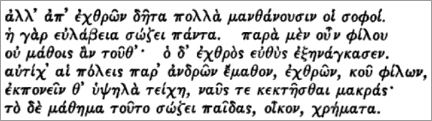
EPOPS: You’re mistaken: men of sense often learn from their enemies. Prudence is the best safeguard. This principle cannot be learned from a friend, but an enemy extorts it immediately. It is from their foes, not their friends, that cities learn the lesson of building high walls and ships of war. And this lesson saves their children, their homes, and their properties.
CHORUS [LEADER]: It appears then that it will be better for us to hear what they have to say first; for one may learn something at times even from one’s enemies.
Aristophanes (c. 450-c. 388 BC) Athenian comedic playwright
The Birds, l. 375ff (414 BC) [tr. Anon. (1812), Ramage (1864)]
(Source)
Alt. trans. [Hickie (1853)]:
EPOPS: Yet, certainly, the wise learn many things from their enemies; for caution preserves all things. From a friend you could not learn this, but your foe immediately obliges you to learn it. For example, the states have learned from enemies, and not from friends, to build lofty walls, and to possess ships of war. And this lesson preserves children, house, and possessions.
CHORUS [LEADER]: It is useful, as it appears to me, to hear their arguments first; for one might learn some wisdom even from one's foes.
Alt. trans. [O'Neill (1938)]:
EPOPS: The wise can often profit by the lessons of a foe, for caution is the mother of safety. It is just such a thing as one will not learn from a friend and which an enemy compels you to know. To begin with, it's the foe and not the friend that taught cities to build high walls, to equip long vessels of war; and it's this knowledge that protects our children, our slaves and our wealth.
LEADER OF THE CHORUS: Well then, I agree, let us first hear them, for that is best; one can even learn something in an enemy's school.
Then out spake brave Horatius,
The Captain of the Gate:
“To every man upon this earth
Death cometh soon or late.
And how can man die better
Than facing fearful odds,
For the ashes of his fathers,
And the temples of his Gods?Thomas Babington Macaulay (1800–1859) English writer and politician
“Horatius,” st. 27, Lays of Ancient Rome (1842)
(Source)
The aims of life are the best defense against death, and not only in the Lager.
Primo Levi (1919–1987) Italian Jewish chemist and writer
The Drowned and the Saved, ch. 6 “The Intellectual at Auschwitz” (1986) [tr. Rosenthal (1888)]
(Source)

[T]here are historic situations in which refusal to defend the inheritance of a civilization, however imperfect, against tyranny and aggression may result in consequences even worse than war.
Reinhold Niebuhr (1892–1971) American theologian and clergyman
“Christian Faith and the World Crisis,” Christianity and Crisis (10 Feb 1941)
I disapprove of what you say, but I will defend to the death your right to say it.
Voltaire (1694–1778) French writer [pseud. of Francois-Marie Arouet]
(Spurious)
(Source)
The words are not found in any actual Voltaire source. They belong to historian Evelyn Beatrice Hall, writing as S. G. Tallentyre, in The Friends of Voltaire (1906), describing an 1759 incident where Voltaire learned that Claude-Adrien Helvétius' book On the Mind [De l’esprit] had been burned (along with Voltaire's own On Natural Law) after condemnation by the Paris Parliament and the Sorbonne. Voltaire himself wasn't impressed by Helvétius' book, but thought a book burning was unjustified. Hall wrote:"What a fuss about an omelette!" he had exclaimed when he heard of the burning. How abominably unjust to persecute a man for such an airy trifle as that! "I disapprove of what you say, but I will defend to the death your right to say it," was his attitude now.
Hall later wrote that the actual words were her own and ought not to have had quotation marks.
Variations:For more detailed information, see Quote Origin: I Disapprove of What You Say, But I Will Defend to the Death Your Right to Say It – Quote Investigator®.
- I wholly disapprove of what you say -- and will defend to the death your right to say it.
- Monsieur l’Abbé, je déteste ce que vous écrivez, mais je donnerais ma vie pour que vous puissiez continuer à écrire. [Monsieur l’abbé, I detest what you write, but I would give my life to make it possible for you to continue to write.]

We need an adequate defense, but every arms dollar we spend above adequacy has a long-term weakening effect upon the nation and its security.
Dwight David Eisenhower (1890–1969) American general, US President (1953–61)
White House Years: Waging Peace, 1956-1961 (1965)
I will not deny but that the best apology against false accusers is silence and sufferance, and honest deeds set against dishonest words.

Arms alone can give the world no permanent peace, no confident security. Arms are solely for defense — to protect from violent assault what we already have. They are only a costly insurance. They cannot add to human progress.
Dwight David Eisenhower (1890–1969) American general, US President (1953–61)
Speech, American Society of Newspaper Editors, Washington, DC (21 Apr 1956)
Americans, indeed, all free men, remember that in the final choice a soldier’s pack is not so heavy a burden as a prisoner’s chains.
Dwight David Eisenhower (1890–1969) American general, US President (1953–61)
Inaugural Address (20 Jan 1953)
Because, therefore, we are defending a way of life, we must be respectful of that way of life as we proceed to the solution of our problem. We must not violate its principles and its precepts, and we must not destroy from within what we are trying to defend from without.
Dwight David Eisenhower (1890–1969) American general, US President (1953–61)
Speech, NATO Council (26 Nov 1951)
Never complain and never explain.
Benjamin Disraeli (1804–1881) English politician and author
(Attributed)
(Source)
Most often cited to John Morley, Life of William Ewart Gladstone, Vol. 1, Book 2, ch. 2, sec. 1 (1903). This was Disraeli's distillation of advice that Lord High Chancellor John Copley, Lord Lyndhurst, gave at a January 1835 dinner attended both a young Gladstone and Disraeli:Never defend yourself before a popular assemblage, except with and by retorting the attack; the hearers, in the pleasure which the assault gives them, will forget the previous charge.
The phrase is also attributed to Benjamin Jowett, Henry Ford II, and Charles Stewart Parnell.
War is mankind’s most tragic and stupid folly; to seek or advise its deliberate provocation is a black crime against all men. Though you follow the trade of the warrior, you do so in the spirit of Washington — not of Genghis Khan. For Americans, only threat to our way of life justifies resort to conflict.
Dwight David Eisenhower (1890–1969) American general, US President (1953–61)
Speech, Graduation Exercises, US Military Academy, West Point (3 Jun 1947)
PASTORE: Is there anything connected in the hopes of this accelerator that in any way involves the security of this country?
WILSON: No sir; I do not believe so.
PASTORE: Nothing at all?
WILSON: Nothing at all.
PASTORE: It has no value in that respect?
WILSON: It only has to do with the respect with which we regard one another, the dignity of men, our love of culture. It has to do with those things. It has nothing to do with the military, I am sorry.
PASTORE: Don’t be sorry for it.
WILSON: I am not, but I cannot in honesty say it has any such application.
PASTORE: Is there anything here that projects us in a position of being competitive with the Russians, with regard to this race?
WILSON: Only from a long-range point of view, of a developing technology. Otherwise, it has to do with: Are we good painters, good sculptors, great poets? I mean all the things that we really venerate and honor in our country and are patriotic about. In that sense, this new knowledge has all to do with honor and country but it has nothing to do directly with defending our country, except to make it worth defending.
Robert R. Wilson (1914–2000) American physicist
Testimony, Joint Committee on Atomic Energy (17 Apr 1969)Dialog between Senator John Pastore (D-RI) and Wilson regarding the funding for FY 1970 of Fermilab's first particle accelerator. Pastore was actually a proponent of Fermilab, but was seeking arguments to use with some of his colleagues.
The exchange is frequently portrayed as more hostile, and Wilson's answer is often paraphrased / elided as: "It has only to do with the respect with which we regard one another, the dignity of men, our love of culture. It has to do with are we good painters, good sculptors, great poets? I mean all the things we really venerate in our country and are patriotic about. It has nothing to do directly with defending our country except to make it worth defending."
See here for more background.
Every defendant is entitled to a trial in which his interests are vigorously and conscientiously advocated by an able lawyer. A proceeding in which the defendant does not receive meaningful assistance in meeting the forces of the state does not, in my opinion, constitute due process.
Thurgood Marshall (1908–1993) American lawyer, US Supreme Court Justice (1967–1991)
Strickland v. Washington, 466 U.S. 668 (1984) [Dissenting]
(Source)
With hearts fortified with these animating Reflections, we most solemnly, before God and the World, declare, that, exerting the utmost Energy of those Powers, which our beneficent Creator hath graciously bestowed upon us, the Arms we have been compelled by our Enemies to assume, we will, in defiance of every Hazard, with unabating Firmness and Perseverance, employ for the preservation of our Liberties; being with one Mind resolved to die Freemen rather than to live Slaves.
Thomas Jefferson (1743–1826) American political philosopher, polymath, statesman, US President (1801–09)
Essay (1775-07-06), “Declaration of the Causes and Necessity for Taking Up Arms” [with John Dickinson]
(Source)
Final version as approved by the Continental Congress. An earlier draft by Jefferson used these terms:We do, then, most solemnly before God and the world declare that regardless of every consequence, at the risk of every distress, the arms we have been compelled to assume we will use with perseverance, exerting to their utmost energies all those powers which our Creator hath given us to preserve that liberty which he committed to us in sacred deposit and to protect from every hostile hand our lives and our properties.
We should be wanting to ourselves, we should be perfidious to posterity, we should be unworthy that free ancestry from which we derive our descent, should we submit with folded arms to military butchery & depredation ….
Thomas Jefferson (1743–1826) American political philosopher, polymath, statesman, US President (1801–09)
Essay (1775-07-06), “Declaration of the Causes and Necessity for Taking Up Arms” [with John Dickinson]
(Source)
Final draft as approved by the Continental Congress.
I hate war as only a soldier who has lived it can, only as one who has seen its brutality, its stupidity.
Dwight David Eisenhower (1890–1969) American general, US President (1953–61)
Speech, Canadian Club, Ottawa (10 Jan 1946)
The way chosen by the United States was plainly marked by a few clear precepts, which govern its conduct in world affairs.
First: No people on earth can be held, as a people, to be enemy, for all humanity shares the common hunger for peace and fellowship and justice.
Second: No nation’s security and well-being can be lastingly achieved in isolation but only in effective cooperation with fellow-nations.
Third: Any nation’s right to form of government and an economic system of its own choosing is inalienable.
Fourth: Any nation’s attempt to dictate to other nations their form of government is indefensible.
And fifth: A nation’s hope of lasting peace cannot be firmly based upon any race in armaments but rather upon just relations and honest understanding with all other nations.
In the light of these principles the citizens of the United States defined the way they proposed to follow, through the aftermath of war, toward true peace.Dwight David Eisenhower (1890–1969) American general, US President (1953–61)
Speech (1953-04-16), “The Chance for Peace,” American Society of Newspaper Editors, Hotel Statler, New York City
(Source)
Describing US foreign policy post-World War 2, in contrast with the USSR. Also known as the "Cross of Iron" speech, it was delivered shortly into his presidency and just after Stalin's death.
I was too weak to defend, so I attacked.
Robert E. Lee (1807–1870) American military leader
(Attributed)
On his strategy at the Battle of Chancellorsville (1863).
I do not know how the Third World War will be fought, but I can tell you what they will use in the Fourth — rocks!
Albert Einstein (1879–1955) German-American physicist
“Einstein at 70,” interview by Alfred Werner, Liberal Judaism (April-May 1949)
For more information on this citation, and on earlier variants of this quote, see The Futuristic Weapons of WW3 Are Unknown, But WW4 Will Be Fought With Stones and Spears – Quote Investigator®.
If you want to know when a war is coming, you just watch the United States and see when they start cutting down on their defense. It’s the surest barometer in the world.
Will Rogers (1879–1935) American humorist
Column (1933-05-16), “Daily Telegram”
(Source)
Written while in Beverly Hills. Reprinted in his Autobiography, Donald Day ed. (1949), in a slightly different form:If you want to know when a war is coming, just watch the U.S. and see when they start cutting down on their defense. It's the surest barometer in the world.
Another variant can be found in Bryan B. Sterling, ed., The Best of Will Rogers (1990):If you want to know when a war might be coming, you just watch the U.S. and see when it starts cutting down on its defenses. It's the surest barometer in the world.
A nation that continues year after year to spend more on military defense than on programs of social uplift is approaching spiritual doom.
Martin Luther King, Jr. (1929–1968) American clergyman, civil rights leader, social activist, preacher
“Beyond Vietnam,” speech, Clergy and Laity Concerned, Riverside Church, New York City (4 Apr 1967)
(Source)
Reprinted (or the phrase repeated) in Where Do We Go from Here: Chaos or Community? (1967) and The Trumpet of Conscience (1968). See also this.
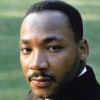
I don’t beleave in fighting; i am solemly aginst it; but if a man gits teu fighting, i am also solemly aginst hiz gitting licked. After a fight iz once opened, all the virtew thare iz in it iz tew lick the other party.
[I don’t believe in fighting; I am solemnly against it; but if a man gets to fighting, I am also solemnly against his getting licked. After a fight is once opened, all the virtue there is in it is to lick the other party.]
Josh Billings (1818–1885) American humorist, aphorist [pseud. of Henry Wheeler Shaw]
Everybody’s Friend, Or; Josh Billing’s Encyclopedia and Proverbial Philosophy of Wit and Humor, ch. 148 “Affurisms: Ink Brats” (1874)
(Source)

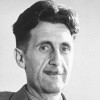
Nationalism is not to be confused with patriotism. Both words are normally used in so vague a way that any definition is liable to be challenged, but one must draw a distinction between them, since two different and even opposing ideas are involved.
By “patriotism” I mean devotion to a particular place and a particular way of life, which one believes to be the best in the world but has no wish to force upon other people. Patriotism is of its nature defensive, both militarily and culturally.
Nationalism, on the other hand, is inseparable from the desire for power. The abiding purpose of every nationalist is to secure more power and more prestige, not for himself but for the nation or other unit in which he has chosen to sink his own individuality.George Orwell (1903–1950) English journalist, essayist, writer [pseud. of Eric Arthur Blair]
Essay (1945-05), “Notes on Nationalism,” Polemic Magazine (1945-10)
(Source)
Be this your wall of brass — no secret sin,
To pale the cheek and rack the heart within![Hic murus aeneus esto,
nil conscire sibi, nulla pallescere culpa.]Horace (65–8 BC) Roman poet, satirist, soldier, politician [Quintus Horatius Flaccus]
Epistles [Epistularum, Letters], Book 1, ep. 1 “To Maecenas,” l. 60ff (1.1.60-61) (20 BC) [tr. Martin (1881)]
(Source)
(Source (Latin)). Other translations:Not to be giltye or war wan at anye falte at all,
A bulwarke that, to beare all bruntes, be that the brasen wall.
[tr. Drant (1567)]Be this a wall of Brass, to have within
No black accuser, harbour no pale sin.
[tr. Fanshawe; ed. Brome (1666)]Be this thy Guard, and this thy strong defence,
A vertuous Heart, and unstain'd Innocence;
Not to be conscious of a shameful sin:
Nor yet look pale for Scarlet Crimes within.
[tr. Creech (1684)]True, conscious Honour is to feel no sin,
He ’s arm'd without that’s innocent within;
Be this thy Screen, and this thy Wall of Brass.
[tr. Pope (1737), ll. 93-95]Be this thy brazen bulwark of defence,
Still to preserve thy conscious innocence,
Nor e'er turn pale with guilt.
[tr. Francis (1747)]Be good, then, and be great;
This be your tower of strength, your throne of state;
To keep your heart unconscious of a sin,
And feel no goadings of remorse within!
[tr. Howes (1845)]Let this be a [man’s] brazen wall, to be conscious of no ill, to turn pale with no guilt.
[tr. Smart/Buckley (1853)]Be this your wall of brass, your coat of mail,
A guileless heart, a cheek no crime turns pale.
[tr. Conington (1874)]Let this be a wall of brass around you -- "Not to be conscious of crime, or of any fault which spreads paleness over the countenance."
[tr. Elgood (1893)]Be this our wall of bronze, to have no guilt at heart, no wrongdoing to turn us pale.
[tr. Fairclough (Loeb) (1926)]Be this our wall of bronze: a conscience clear,
No guilt to turn us pale, to cause us fear.
[tr. Murrison, ed. Kraemer (1936)]And this bronze wall should be ours: to let no shame
Steal across our faces, no guilt steal into our hearts.
[tr. Palmer Bovie (1959)]Make this your barrier of bronze,
that no crime burdens you, no guilt has turned you pale.
[tr. Fuchs (1977)]Let a man stand
Behind this bronze wall:
Never guilty,
Never pale with sin, and fear
Of sin.
[tr. Raffel (1983)]Let this be our defense: not to have any
Wrongdoing on our conscience to worry over.
[tr. Ferry (2001)]So let this be your wall of brass:
to have nothing on your conscience, nothing to give you a guilty pallor.
[tr. Rudd (2005 ed.)]Let that be your wall of bronze,
To be free of guilt, with no wrongs to cause you pallor.
[tr. Kline (2015)]
Every gun that is made, every warship launched, every rocket fired signifies, in the final sense, a theft from those who hunger and are not fed, those who are cold and are not clothed. This world in arms is not spending money alone. It is spending the sweat of its laborers, the genius of its scientists, the hopes of its children.
The cost of one modern heavy bomber is this: a modern brick school in more than 30 cities. It is two electric power plants, each serving a town of 60,000 population. It is two fine, fully equipped hospitals. It is some 50 miles of concrete highway. We pay for a single fighter with a half million bushels of wheat. We pay for a single destroyer with new homes that could have housed more than 8,000 people.
This, I repeat, is the best way of life to be found on the road the world has been taking. This is not a way of life at all, in any true sense. Under the cloud of threatening war, it is humanity hanging from a cross of iron.Dwight David Eisenhower (1890–1969) American general, US President (1953–61)
Speech (1953-04-16), “The Chance for Peace,” American Society of Newspaper Editors, Hotel Statler, New York City
(Source)
Describing the cost of the Cold War. Also known as the "Cross of Iron" speech, it was delivered shortly into his presidency and just after Stalin's death.
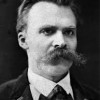
The most perfidious way of damaging a cause is deliberately to defend it with faulty arguments.
[Die perfideste Art, einer Sache zu schaden ist, sie absichtlich mit fehlerhaften Gründen vertheidigen.]
Friedrich Nietzsche (1844–1900) German philosopher and poet
The Gay Science [Die fröhliche Wissenschaft], Book 3, § 191 (1882) [tr. Nauckhoff (2001)]
(Source)
Also known as La Gaya Scienza, The Joyful Wisdom, or The Joyous Science.
(Source (German)). Other translations:The most perfidious manner of injuring a cause is to vindicate it intentionally with fallacious arguments.
[tr. Common (1911)]The most perfidious way of harming a cause consists of defending it deliberately with faulty arguments.
[tr. Kaufmann (1974)]One injures a cause in the most perfidious manner by deliberately defending it with erroneous reasons.
[tr. Hill (2018)]
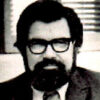
Bureaucracy defends the status quo long past the time when the quo has lost its status.
Lawrence J. Peter (1919–1990) American educator, management theorist
Peter’s Quotations: Ideas for Our Time (1977)
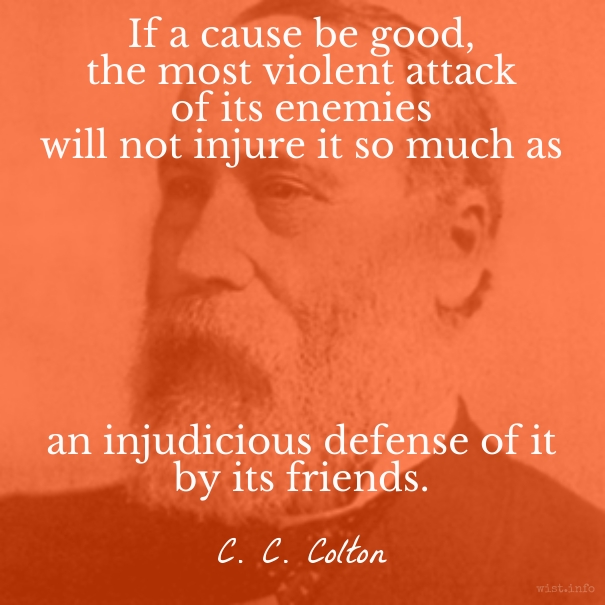
When you have nothing to say, say nothing; a weak defense strengthens your opponent, and silence is less injurious than a bad reply.
Charles Caleb "C. C." Colton (1780–1832) English cleric, writer, aphorist
Lacon: Or, Many Things in Few Words, Vol. 1, § 183 (1820)
(Source)
Yes, the bad-lawyer felony is the leading cause of the death penalty in Texas. The single most dangerous thing you can be in Texas is poor.
Molly Ivins (1944–2007) American writer, political columnist [Mary Tyler Ivins]
Essay (1997-06-10), Creators Syndicate column

There is a rank due to the United States, among nations, which will be withheld, if not absolutely lost, by the reputation of weakness. If we desire to avoid insult, we must be able to repel it; if we desire to secure peace, one of the most powerful instruments of our rising prosperity, it must be known that we are at all times ready for war.
George Washington (1732–1799) American military leader, Founding Father, US President (1789–1797)
Fifth Annual Message, Philadelphia (3 Dec 1793)
(Source)
For myself, I would see the White Tree in flower again in the courts of the kings, and the Silver Crown return, and Minas Tirith in peace: Minas Anor again as of old, full of light, high and fair, beautiful as a queen among other queens; not as a mistress of many slaves, nay, not even a kind mistress of willing slaves. War must be, while we defend our lives against a destroyer who would devour all; but I do not love the bright sword for its sharpness, nor the arrow for its swiftness, nor the warrior for his glory. I love only that which they defend: the city of the Men of Númenor, and I would have her loved for her memory, her ancientry, her beauty, and her present wisdom. Not feared, save as men may fear the dignity of a man, old and wise.
J.R.R. Tolkien (1892–1973) English writer, fabulist, philologist, academic [John Ronald Reuel Tolkien]
The Lord of the Rings, Vol. 2: The Two Towers, Book 4, ch. 5 “The Window on the West” [Faramir] (1954)
(Source)
He threatens many who injures one.
Publilius Syrus (d. 42 BC) Assyrian slave, writer, philosopher [less correctly Publius Syrus]
Sententiae [Moral Sayings]
Most people would rather defend to the death your right to say it, than listen to it.

Humor is just another defense against the universe.
Mel Brooks (b. 1926) American comedic actor, writer, producer [b. Melvyn Kaminsky]
(Attributed)
A loyal friend is a powerful defense:
whoever finds one has indeed found a treasure.[φίλος πιστὸς σκέπη κραταιά,
ὁ δὲ εὑρὼν αὐτὸν εὗρεν θησαυρόν.]The Bible (The Old Testament) (14th - 2nd C BC) Judeo-Christian sacred scripture [Tanakh, Hebrew Bible], incl. the Apocrypha (Deuterocanonicals)
Book 22b. Sirach (Ecclesiasticus) 6:14 (Sir 6:14) [NJB (1985)]
(Source)
More on the history and acceptance of this Apocryphal book here and here.
(Source (Greek)). Other translations:A faithfull friend is a strong defence: and he that hath found such an one hath found a treasure.
[KJV (1611)]A faithful friend is a strong defence: and he that hath found him, hath found a treasure.
[DRA (1899)]A faithful friend is a sure shelter,
whoever finds one has found a rare treasure.
[tr. JB (1966)]A loyal friend is like a safe shelter; find one, and you have found a treasure.
[GNT (1976)]Trustworthy friends are a strong shelter;
whoever finds one
has found a treasure.
[tr. CEB (2011)]Faithful friends are a sturdy shelter;
whoever finds one has found a treasure.
[tr. NRSV (2021 ed.)]A faithful friend is a firm friend;
And he that findeth him hath found a treasure.
[tr. RJPS (2023 ed.)]

History does not long entrust the care of freedom to the weak or the timid.
Dwight David Eisenhower (1890–1969) American general, US President (1953–61)
Inaugural Address (20 Jan 1953)