CHARMIAN: Good madam, keep yourself within yourself.
The man is innocent.CLEOPATRA: Some innocents ’scape not the thunderbolt.
William Shakespeare (1564–1616) English dramatist and poet
Antony and Cleopatra, Act 2, sc. 5, l. 94ff (2.5.94-96) (1607)
(Source)
Quotations about:
innocence
Note not all quotations have been tagged, so Search may find additional quotes on this topic.

I have never liked the idea of an Un-American Activities Committee. I have always thought that a strong democracy should stand by its fundamental beliefs and that a citizen of the United States should be considered innocent until he is proved guilty.
If he is employed in a government position where he has access to secret and important papers, then for the sake of security he must undergo some special tests. However, I doubt whether the loyalty test really adds much to our safety, since no Communist would hesitate to sign it and he would be in good standing until he was proved guilty. So it seems to me that we might as well do away with a test which is almost an insult to any loyal American citizen.Eleanor Roosevelt (1884–1962) American politician, diplomat, activist; First Lady of the US (1933–45)
Column (1947-10-29), “My Day”
(Source)
On the House Un-American Activities Committee.

HELEN: Men think me wicked, though I did no wrong:
And for the innocent to bear the load
Of guilt is worse than wickedness itself.[ἙΛΈΝΗ: πρῶτον μὲν οὐκ οὖσ᾽ ἄδικος, εἰμὶ δυσκλεής:
καὶ τοῦτο μεῖζον τῆς ἀληθείας κακόν,
ὅστις τὰ μὴ προσόντα κέκτηται κακά.]Euripides (485?-406? BC) Greek tragic dramatist
Helen [Ἑλένη], l. 270ff (412 BC) [tr. Sheppard (1925)]
(Source)
(Source (Greek)). Other translations:First, though my life is pure from guilt, my name
Is infamous; this ill, this charge of crimes
From which the soul is free, is more severe
Than what from truth arises.
[tr. Potter (1783), l. 304ff]First of all exposed
To slanderous tongues, although I ne'er have erred.
It were a lesser evil e'en to sin
Than be suspected falsely.
[tr. Wodhull (1809)]First indeed, not being unjust, I am in ill repute; and this is a greater evil than the truth, when any one is charged with evils he does not possess.
[tr. Buckley (1850)]First, although I never acted wrongly, my good name is gone. And this trouble is stronger than the reality, if someone incurs blame for wrongs that are not his own.
[tr. Coleridge (1891)]First, an ill name, though I am clean of sin;
And worse is this than suffering for just cause,
To bear the burden of sins that are not ours.
[tr. Way (Loeb) (1912)]First, I have lost my name, thought I have done no wrong;
and it is worse than suffering what one deserves
if one must suffer for the things one never did.
[tr. Warner (1951)]In the first place, though I am innocent, my name is a byword of reproach; and if there is any worse fate than suffering for real crimes, it is suffering for crimes that were never committed.
[tr. Vellacott (1954)]I have done nothing wrong and yet my reputation
is bad, and worse than a true evil is it to bear
the burden of faults that are not truly yours.
[tr. Lattimore (1956)]First of all, I am blameless,
and yet I am blamed.
It is easier to bear what belongs to you
than what does not.
[tr. Meagher (1986)]Firstly, I have done nothing wrong and yet my name is reviled. When someone is punished though innocent of crime, it is a worse affliction than getting his just deserts.
[tr. Davie (2002)]First, although I never sinned, my good name is gone. And this is a grief beyond the reality, if a man incurs blame for sins that are not his.
[tr. Athenian Society (2006)]First, I am not wicked, but people think I am.
There's nothing worse than being innocent,
But treated as guilty.
[tr. A. Wilson (2007)]To begin with, my good reputation has been destroyed though I have done nothing wrong, and there’s nothing worse than to be burdened by the shame which one has not earned.
[tr. Theodoridis (2011)]First, though I’ve done nothing wrong, my name is loathed.
It’s so much worse to be scorned for things you haven’t done
than to suffer honest charges!
[Ambrose et al. (2018)]First, although I never acted wrongly, my good name is gone. And this trouble [kakon] is stronger than the truth [alētheia], if someone incurs blame for evils [kaka] that are not his own. [tr. Coleridge / Helen Heroization Team]
LADY MACBETH: Look like th’ innocent flower,
But be the serpent under ‘t.William Shakespeare (1564–1616) English dramatist and poet
Macbeth, Act 1, sc. 5, l. 75ff (1.5.75-76) (1606)
(Source)
GALE: Childhood is Last Chance Gulch for happiness. After that, you know too much.
Tom Stoppard (1937–2025) Czech-English playwright and screenwriter
Where Are They Now? (1968)
(Source)


You know growing old is like being increasingly penalized for a crime you haven’t committed.

When the judgment day comes, civilization will have an alibi: “I never took a human life, I only sold the fellow the gun to take it with.”
When we are children we seldom think of the future. This innocence leaves us free to enjoy ourselves as few adults can. The day we fret about the future is the day we leave our childhood behind.
Patrick Rothfuss (b. 1973) American author
The Name of the Wind, ch. 12 “Puzzle Pieces Fitting” (2007)
(Source)

The truly innosent are thoze who not only are guiltless themselfes, but who think others are.
[The truly innocent are those who not only are guiltless themselves, but who think others are.]
Josh Billings (1818–1885) American humorist, aphorist [pseud. of Henry Wheeler Shaw]
Everybody’s Friend, Or; Josh Billing’s Encyclopedia and Proverbial Philosophy of Wit and Humor, “Plum Pits” (1874)
(Source)

A time-honored concept of Anglo-Saxon justice declares that a man is innocent until proven guilty. I believe that in a democratic society a man is similarly loyal until proven disloyal. No testaments of faith, no protestations of affection for his native land, and no amount of signatures will prove a bloody thing — one way or the other — as to a man’s patriotism or lack thereof.
Rod Serling (1924–1975) American screenwriter, playwright, television producer, narrator
Speech, Moorpark College, Moorpark, California (3 Dec 1968)
(Source)
Serling had refused to sign a loyalty oath before speaking, giving up the fee for his appearance.
The innocent and the beautiful
Have no enemy but time.William Butler Yeats (1865–1939) Irish poet and dramatist
“In Memory of Eva Gore-Booth and Con Markiewicz” (1927)
(Source)
There is no such thing as collective guilt or collective innocence; guilt and innocence make sense only if applied to individuals.

A man is a god in ruins.
Ralph Waldo Emerson (1803–1882) American essayist, lecturer, poet
“Nature,” ch. 8, Nature: Addresses and Lectures (1849)
(Source)
It had snowed in the night, and the world looked very clean, which I knew it not to be. But illusion is nice sometimes.

Oh! To be a child again. My only treasures, bits of shell and stone and glass. To love nothing but maple sugar. To fear nothing but a big dog. To go to sleep without dreading the morrow. To wake up with a shout. Not to have seen a dead face. Not to dread a living one. To be able to believe.
Fanny Fern (1811–1872) American columnist, humorist, author [b. Sara Willis]
Ginger-Snaps (1870)
It’s innocence when it charms us, ignorance when it doesn’t.
Mignon McLaughlin (1913–1983) American journalist and author
The Second Neurotic’s Notebook, ch. 10 (1966)
(Source)

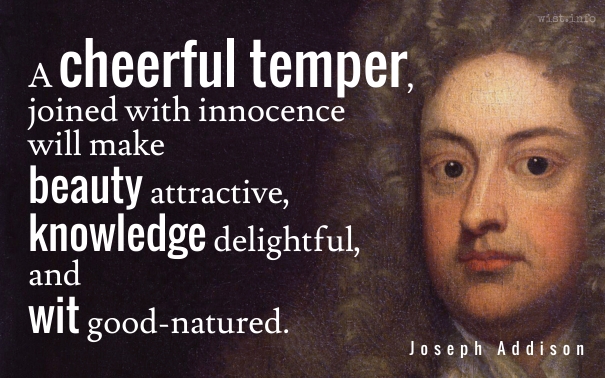
A cheerful temper, joined with innocence, will make beauty attractive, knowledge delightful, and wit good-natured.
Joseph Addison (1672–1719) English essayist, poet, statesman
Essay (1710-07-01), The Tatler, No. 192
(Source)

Trust no friend without faults,
And love a maiden, but no angel.[Trau keinem Freunde sonder Mängel,
Und leib’ ein Mädchen, kienem Engel.]Gotthold Lessing (1729–1781) German playwright, philosopher, dramaturg, writer
Note in a Family Register (1778)
Other translations: "Trust in no friend, rather forebear; / Love a sweet maid, no angel rare."

HAWKEYE: War isn’t Hell. War is war, and Hell is Hell. And of the two, war is a lot worse.
FR. MULCAHEY: How do you figure, Hawkeye?
HAWKEYE: Easy, Father. Tell me, who goes to Hell?
FR. MULCAHEY: Sinners, I believe.
HAWKEYE: Exactly. There are no innocent bystanders in Hell. War is chock full of them — little kids, cripples, old ladies. In fact, except for some of the brass, almost everybody involved is an innocent bystander.
Burt Prelutsky (b. 1940) American TV screenwriter, author, columnist, critic
M*A*S*H, 05×20 “The General’s Practitioner” (1977-02-15)

To spare the guilty is to injure the innocent.
Publilius Syrus (d. 42 BC) Assyrian slave, writer, philosopher [less correctly Publius Syrus]
Sententiae [Moral Sayings], # 113 [tr. Lyman (1862)]
I hear much of People’s calling out to punish the Guilty, but very few are concern’d to clear the Innocent.
Daniel Defoe (1660?-1731) English journalist and novelist
An Appeal to Honour and Justice, Tho’ it be of His Worse Enemies (1715)
Necessity can make a doubtful action innocent, but it cannot make it commendable.
[La nécessité peut rendre innocente une action douteuse ; mais elle ne saurait la rendre louable.]
Joseph Joubert (1754–1824) French moralist, philosopher, essayist, poet
Pensées [Thoughts], ch. 9 “De la Sagesse, de la Vertu, etc. [On Wisdom and Virtue],” ¶ 20 (1850 ed.) [tr. Auster (1983), 1808]
(Source)
(Source (French)). Other translations:Necessity may render a doubtful act innocent, but it cannot make it praiseworthy.
[tr. Attwell (1896), ¶ 133]Necessity may render a doubtful action innocent; but it cannot make it praiseworthy.
[tr. Lyttelton (1899), ch. 8, ¶ 16]
HENRY: What stronger breastplate than a heart untainted?
Thrice is he armed that hath his quarrel just,
And he but naked, though locked up in steel,
Whose conscience with injustice is corrupted.
We are to look upon it as more beneficial, that many guilty persons should escape unpunished, than one innocent person should suffer. The reason is, because it’s of more importance to community, that innocence should be protected, than it is, that guilt should be punished; for guilt and crimes are so frequent in the world, that all of them cannot be punished; and many times they happen in such a manner, that it is not of much consequence to the public, whether they are punished or not.
But when innocence itself, is brought to the bar and condemned, especially to die, the subject will exclaim, it is immaterial to me, whether I behave well or ill; for virtue itself, is no security. And if such a sentiment as this, should take place in the mind of the subject, there would be an end to all security what so ever.John Adams (1735–1826) American lawyer, Founder, statesman; US President (1797–1801)
Speech (1770-12-03/04), Argument for the Defense, Boston Massacre Trial
(Source)
This is frequently (in social media) paraphrased down to:It is more important that innocence be protected than it is that guilt be punished, for guilt and crimes are so frequent in this world that they cannot all be punished. But if innocence itself is brought to the bar and condemned, perhaps to die, then the citizen will say, “whether I do good or whether I do evil is immaterial, for innocence itself is no protection,” and if such an idea as that were to take hold in the mind of the citizen that would be the end of security whatsoever.
Adams volunteered to represent the British against murder charges, even though it was a very unpopular thing to do.
More info here: Quote Files: John Adams on Innocence, Guilt, and Punishment – The Skeptical Libertarian.
Be this your wall of brass — no secret sin,
To pale the cheek and rack the heart within![Hic murus aeneus esto,
nil conscire sibi, nulla pallescere culpa.]Horace (65–8 BC) Roman poet, satirist, soldier, politician [Quintus Horatius Flaccus]
Epistles [Epistularum, Letters], Book 1, ep. 1 “To Maecenas,” l. 60ff (1.1.60-61) (20 BC) [tr. Martin (1881)]
(Source)
(Source (Latin)). Other translations:Not to be giltye or war wan at anye falte at all,
A bulwarke that, to beare all bruntes, be that the brasen wall.
[tr. Drant (1567)]Be this a wall of Brass, to have within
No black accuser, harbour no pale sin.
[tr. Fanshawe; ed. Brome (1666)]Be this thy Guard, and this thy strong defence,
A vertuous Heart, and unstain'd Innocence;
Not to be conscious of a shameful sin:
Nor yet look pale for Scarlet Crimes within.
[tr. Creech (1684)]True, conscious Honour is to feel no sin,
He ’s arm'd without that’s innocent within;
Be this thy Screen, and this thy Wall of Brass.
[tr. Pope (1737), ll. 93-95]Be this thy brazen bulwark of defence,
Still to preserve thy conscious innocence,
Nor e'er turn pale with guilt.
[tr. Francis (1747)]Be good, then, and be great;
This be your tower of strength, your throne of state;
To keep your heart unconscious of a sin,
And feel no goadings of remorse within!
[tr. Howes (1845)]Let this be a [man’s] brazen wall, to be conscious of no ill, to turn pale with no guilt.
[tr. Smart/Buckley (1853)]Be this your wall of brass, your coat of mail,
A guileless heart, a cheek no crime turns pale.
[tr. Conington (1874)]Let this be a wall of brass around you -- "Not to be conscious of crime, or of any fault which spreads paleness over the countenance."
[tr. Elgood (1893)]Be this our wall of bronze, to have no guilt at heart, no wrongdoing to turn us pale.
[tr. Fairclough (Loeb) (1926)]Be this our wall of bronze: a conscience clear,
No guilt to turn us pale, to cause us fear.
[tr. Murrison, ed. Kraemer (1936)]And this bronze wall should be ours: to let no shame
Steal across our faces, no guilt steal into our hearts.
[tr. Palmer Bovie (1959)]Make this your barrier of bronze,
that no crime burdens you, no guilt has turned you pale.
[tr. Fuchs (1977)]Let a man stand
Behind this bronze wall:
Never guilty,
Never pale with sin, and fear
Of sin.
[tr. Raffel (1983)]Let this be our defense: not to have any
Wrongdoing on our conscience to worry over.
[tr. Ferry (2001)]So let this be your wall of brass:
to have nothing on your conscience, nothing to give you a guilty pallor.
[tr. Rudd (2005 ed.)]Let that be your wall of bronze,
To be free of guilt, with no wrongs to cause you pallor.
[tr. Kline (2015)]
“Why can’t you fly now, mother?”
“Because I am grown up, dearest. When people grow up they forget the way.”
“Why do they forget the way?”
“Because they are no longer gay and innocent and heartless. It is only the gay and innocent and heartless who can fly.”J. M. Barrie (1860–1937) Scottish novelist and dramatist [James Matthew Barrie]
Peter and Wendy, ch. 17 “When Wendy Grew Up” [Jane to Wendy] (1911)
In his 1908 sequel play, When Wendy Grew Up, An Afterthought (some which was eventually folded into the main play (1904, published 1928) in Act 5, though not these lines), this is rendered:JANE: Why can't you fly now, Mother?
WENDY: Because I'm grown up, sweetheart; when people grow up they forget the way.
JANE: Why do they forget the way?
WENDY: Because they are no longer young and innocent. It is only the young and innocent that can fly.
We are all exceptional cases. We all want to appeal against something! Each of us insists on being innocent at all cost, even if has to accuse the whole human race and heaven itself!
Albert Camus (1913–1960) Algerian-French novelist, essayist, playwright
The Fall (1956) [tr. J. O’Brien]
HAMLET: Be thou as chaste as ice, as pure as snow, thou shalt not escape calumny.
William Shakespeare (1564–1616) English dramatist and poet
Hamlet, Act 3, sc. 1, l. 147ff (3.1.147-148) (c. 1600)
(Source)

“It needs but one foe to breed a war, not two, Master Warden,” answered Éowyn. “And those who have not swords can still die upon them.”
J.R.R. Tolkien (1892–1973) English writer, fabulist, philologist, academic [John Ronald Reuel Tolkien]
The Lord of the Rings, Vol. 3: The Return of the King, Book 6, ch. 5 “The Steward and the King” (1955)
(Source)