Old age is courteous — no one more:
For time after time he knocks at the door,
But nobody says, “Walk in, sir, pray!”
Yet turns he not from the door away,
But lifts the latch, and enters with speed,
And then they cry, “A cool one, indeed.”[Das Alter ist ein höflich’ Mann:
Einmal übers andre klopft er an;
Aber nun sagt niemand: „Herein!‟
Und vor der Türe will er nicht sein.
Da klinkt er auf, tritt ein so schnell,
Und nun heißt’s, er sei ein grober Gesell.]Johann Wolfgang von Goethe (1749–1832) German poet, statesman, scientist
Poem (1814), “Old Age [Das Alter]” [tr. Bowring (1853)]
(Source)
(Source (German)). Other translations:Old Age is a courteous gentleman:
again and again he knocks.
But nowadays no one says: come in!
And he doesn't want to be in front of the door.
So he rings and enters quickly,
and then people claim he is a coarse fellow.
[tr. Bachlund (1989)]Old Age, that most polite of men,
Knocks the door, and knocks, then knocks again;
‘Enter’? No-one gives him a shout.
But he’s not one for hanging about,
He lifts the latch and in a trice
There he is. They call him rude and not nice.
[tr. Lawley (2024)]Old age is a courteous man;
More than once he knocks away;
But now no one speaks, "Come in!"
And at the door he will not stay;
So he opens the latch, walks in so fast,
And now for a churl he is deemed at last.
[tr. Google AI (2026), though it tried to attribute it to two other translators before admitting it had just made it up itself.]Age is a polite gentleman:
He knocks here and there and then again;
But no one then says, "Come in!"
And he's not much pleased to wait outside.
So the doors he himself unlatches and quickly steps inside,
And now so is it that he's such a rude fellow.
[Source]
Quotations about:
getting old
Note not all quotations have been tagged, so Search may find additional quotes on this topic.

People often say to themselves in life that they should avoid a variety of occupation, and, more particularly, be the less willing to enter upon new work the older they grow. But it is easy to talk, easy to give advice to oneself and others. To grow old is itself to enter upon a new business; all the circumstances change, and a man must either cease acting altogether, or willingly and consciously take over the new rôle.
[Man sagt sich oft im Leben, daß man die Vielgeschäftigkeit, Polypragmosyne, vermeiden, besonders, je älter man wird, sich desto weniger in ein neues Geschäft einlassen solle. Aber man hat gut reden, gut sich und anderen rathen. Älter werden heißt selbst ein neues Geschäft antreten; alle Verhältnisse verändern sich, und man muß entweder zu handeln ganz aufhören oder mit Willen und Bewußtsein das neue Rollenfach übernehmen.]
Johann Wolfgang von Goethe (1749–1832) German poet, statesman, scientist
Sprüche in Prosa: Maximen und Reflexionen [Proverbs in Prose: Maxims and Reflections] (1833) [tr. Saunders (1893), ch. 4, #237]
(Source)
(Source (German)). Other translations:People often say to themselves in the course of their lives that they should avoid a variety of occupation, and, more especially as they grow older, feel the less inclination to enter upon any new work. But it is all very well to talk thus and give advice to oneself and to others. To grow old is in itself to enter upon a new business; all the circumstances are changed, and a man must either cease altogether from acting or else willingly and consciously take over his new role.
[tr. Rönnfeldt (1900)]You often say to yourself in the course of your life that you ought to avoid having too much business, "polypragmosyne," and, more especially, that the older you get, the more you ought to avoid entering on new business. But it’s all very well saying this, and giving yourself and others good advice. The very fact of growing older means taking up a new business; all our circumstances change, and we must either stop doing anything at all or else willingly and consciously take on the new role we have to play on life’s stage.
[tr. Stopp (1995); Art and Activity, Vol. 5, No. 2 "Individual Points," #259]One often says to oneself […] that one ought to avoid having too many different businesses, to avoid becoming a jack-of-all-trades, and that the older one gets, the more one ought to avoid entering into new business. But […] the very fact of growing older means taking up a new business; all our circumstances change, and we must either stop doing anything at all or else willingly and consciously take on the new role we have to play on life’s stage.
[Var. of Stopp]
We claim the dignity of age, but the truth is, age leaves us without any dignity at all.
Elizabeth Bear (b. 1971) American author [pseud. for Sarah Bear Elizabeth Wishnevsky]
Bone and Jewel Creatures, ch. 4 [Bijou] (2010)
(Source)

Age had not yet defeated her on all fronts, though it was a war of attrition she knew she was fated to lose.
Elizabeth Bear (b. 1971) American author [pseud. for Sarah Bear Elizabeth Wishnevsky]
Bone and Jewel Creatures, ch. 3 (2010)
(Source)
I’ve made a lot of stupid mistakes. Everyone does in this life. The real affliction of old age is remorse.
[Ho fatto molti stupidi errori, se ne fanno nella vita. I veri acciacchi dell’età sono i rimorsi.]
Cesare Pavese (1908–1950) Italian writer. essayist, literary critic
The Moon and the Bonfire [La Luna e i Falò], ch. 8 [The Cavaliere] (1950) [tr. Sinclair (1952)]
(Source)

When our vices desert us, we flatter ourselves that we are deserting our vices.
[Quand les vices nous quittent, nous nous flattons de la créance que c’est nous qui les quittons.]
François VI, duc de La Rochefoucauld (1613–1680) French epigrammatist, memoirist, noble
Réflexions ou sentences et maximes morales [Reflections; or Sentences and Moral Maxims], ¶192 (1665-1678) [tr. Kronenberger (1959)]
(Source)
Present in the 1st (1665) edition. In that version and the manuscript, the latter part read "... nous voulons nous flatter que c’est nous qui les quittons."
(Source (French)). Other translations:When our Vices forsake us, we please our selves with an Opinion, that we parted first, and left them.
[tr. Stanhope (1694), ¶193]When our vices have left us, we flatter ourselves that we have left them.
[pub. Donaldson (1783), ¶440]When our Vices have left us, we flatter ourselves that we have left them.
[ed. Lepoittevin-Lacroix (1797), ¶184]When our vices leave us, we flatter ourselves that we have left them.
[ed. Carvill (1835), ¶367]When our vices quit us we flatter ourselves with the belief that it is we who quit them.
[ed. Gowens (1851), ¶201]When our vices leave us we flatter ourselves with the idea we have left them.
[tr. Bund/Friswell (1871), ¶192]We flatter ourselves that we quit our vices; in reality our vices quit us.
[tr. Heard (1917), ¶197]When our vices abandon us, we flatter ourselves that it is we who abandon them.
[tr. Stevens (1939), ¶192]When our vices depart from us, we flatter ourselves that it is we who have gotten rid of them.
[tr. FitzGibbon (1957), ¶192]When the vices give us up we flatter ourselves that we are giving up them.
[tr. Tancock (1959), ¶192]When our vices leave us, we flatter ourselves with the belief that it is we who have left them.
[tr. Whichello (2016) ¶192]

He was filled with terrible knowing: This day had been exactly as empty as the last and tomorrow would be the same. This is what it is to be old, Henry thought.
Dale Bailey (b. 1968) American author
Story (1997-02), “Quinn’s Way,” Magazine of Fantasy & Science Fiction, Vol. 92, No. 2, Issue 548
(Source)

Sometimes people grieve when they find old age coming upon them, when they find their vehicles not so strong as they used to be. They desire the strength and the faculties that they once had. It is wise for them to repress that desire, to realize that their bodies have done good work, and if they can no longer do the same amount as of yore, they should do gently and peacefully what they can, but not worry themselves over the change. Presently they will have new bodies; and the way to ensure a good vehicle is to make such use as one can of the old one, but in any case to be serene and calm and unruffled. The only way to do that is to forget self, to let all selfish desires cease, and to turn the thought outward to the helping of others as far as one’s capabilities go.
C. W. Leadbeater (1846–1934) English clergyman, theosophist, author [Charles Webster Leadbeater]
The Masters and the Path, ch. 14 (1925)
(Source)
Is there something you can do about it? You’re darned right there is! You can fight back. Mister Old Age is not going to get you, by golly! All you need is a little determination — a willingness to get out of that reclining lounge chair, climb into that sweatsuit, lace on those running shoes, stride out that front door, and hurl yourself in front of that municipal bus.
No, wait. Sorry. For a moment there I got carried away by the bleakness of it all. Forget what I said. Really. There is absolutely no need to become suicidally depressed about the fact that every organ in your body is headed straight down the toilet.Dave Barry (b. 1947) American humorist, author, columnist
Dave Barry Turns 40, ch. 2 “Your Disintegrating Body” (1990)
(Source)

All the best sands of my life are somehow getting into the wrong end of the hourglass. If I could only reverse it! Were it in my power to do so, would I?
Thomas Bailey Aldrich (1836–1907) American writer, poet, critic, editor
“Leaves from a Notebook,” Ponkapog Papers (1903)
(Source)
It’s like all the time I was working keeping house and raising the kids and making love and earning our keep I thought there was going to come a time or there would be some place where all of it came together. Like it was words I was saying, all my life, all the kinds of work, just a word here and a word there, but finally all the words would make a sentence, and I could read the sentence. I would have made my soul and know what it was for. But I have made my soul and I don’t know what to do with it. Who wants it?

You will recognize, my boy, the first sign of old age: it is when you go out into the streets of London and realize for the first time how young the policemen look.
Seymour Hicks (1871–1949) British actor, playwright, producer
(Attributed)
(Source)
Quoted in C. R. D. Pulling, They Were Singing, ch. 7 (1952).

Old age is not an accomplishment; it is just something that happens to you despite yourself, like falling downstairs.
Another nice thing about getting old is you can leave any social event early just by saying you’re tired.
George Carlin (1937–2008) American comedian
Show (2008-03-01), It’s Bad for Ya, “Old Fuck,” Wells Fargo Center, Santa Rosa, California (HBO)
(Source (Audio); dialogue verified)
Variant: "One great thing about getting old is that you can get out of all sorts of social obligations just by saying you're tired."

Youth is a wonderful thing. What a crime to waste it on children.
George Bernard Shaw (1856–1950) Irish playwright and critic
(Attributed)
Widely attributed to Shaw (also to Oscar Wilde), but no actual source has been found.
For more discussion of this quotations origin, see Quote Origin: Youth Is Wasted on the Young – Quote Investigator®.

Old age is like a plane flying through a storm. Once you’re aboard, there’s nothing you can do. You can’t stop the plane, you can’t stop the storm, you can’t stop time. So one might as well accept it calmly, wisely.
Golda Meir (1898–1978) Russian-American-Israeli politician, teacher; Prime Minister of Israel (1969–1974)
Interview (1972-11) by Oriana Fallaci, Ms. (1973-04)
(Source)
Answering to the charge that she is hard and inflexible, countering that she is very sensitive and feeling in most matters.
The full interview was reprinted in Fallaci, Interview with History, ch. 4 "Golda Meir" (1974) [tr. Shepley (1976)], but slightly rephrased:Old age is like an airplane flying in a storm. Once you're in it, there's nothing you can do. You can't stop a plane, you can't stop a storm, you can't stop time. So you might as well take it easy, with wisdom.
Was this re-edited (and in which instance?), or is it a matter of different translation? It's unclear in what language the interview was conducted, but the original edition of the book (Intervista con la Storia) was in Italian, Fallaci's native language, which gave the passage as follow:La vecchiaia é come un aereo che vola nella tempesta. Una volta che ci sei dentro, non puoi farci pid nulla. Non si ferma un aereo, non si ferma una tempesta, non si ferma il tempo. Quindi tanto vale pigliarsela calma, in saggezza.

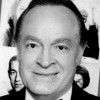
It feels great to be 95. I mean, for those parts of me that still have feeling.
Bob Hope (1903–2003) American comedian, actor, humanitarian (b. Leslie Townes Hope)
“95 Years of Hope,” press kit, joke sheet (1998)
(Source)
It is unclear if Hope originated the joke, or one of his writers, or even if it was something he picked up from elsewhere. It was attributed to him in the profile "The C. E. O. of Comedy," by John Lahr, New Yorker, Vol. 74 (1998-12-21), and included in the posthumously published Bob Hope: My Life in Jokes, "My Nineties: 1993-2003" (2003) [with Linda Hope].
The same joke (updated) was told by Hope as he approached 100, e.g., BBC News, "Bob Hope's One-Liners" (2003-07-28).
Let mine not be the saddest fate of all,
To live beyond my greater self; to see
My faculties decaying, as the tree
Stands stark and helpless while its green leaves fall.
Let me hear rather the imperious call,
Which all men dread, in my glad morning time,
And follow death ere I have reached my prime,
Or drunk the strengthening cordial of life’s gall.
The lightning’s stroke or the fierce tempest blast
Which fells the green tree to the earth to-day
Is kinder than the calm that lets it last,
Unhappy witness of its own decay.
May no man ever look on me and say,
“She lives, but all her usefulness is past.”Ella Wheeler Wilcox (1850–1919) American author, poet, temperance advocate, spiritualist
Poem (1882), “Uselessness,” Maurine and Other Poems (1882 ed.)
(Source)

Old age isn’t a battle; old age is a massacre.

The youth gets together his materials to build a bridge to the moon, or perchance a palace or temple on the earth, and at length the middle-aged man concludes to build a woodshed of them.

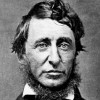
Cadfael buckled his saddlebags before him, and mounted a little stiffly, but with plain pleasure. Considerately, Hugh refrained from offering help. Sixty-five is an age deserving of respect and reverence from the young, but those who have reached it do not always like to be reminded.
Ellis Peters (1913–1995) English writer, translator [pseud. of Edith Mary Pargeter, who also wrote under the names John Redfern, Jolyon Carr, Peter Benedict]
Cadfael Chronicles No. 21, Brother Cadfael’s Penance, ch. 2 (1994)
(Source)

You are young, and then you are middle-aged, but it is hard to tell the moment of passage from one state to the next. Then you are old, but you hardly know when it happened.
Doris Lessing (1919–2013) British author, biographer, playwright [b. Doris May Tayler]
The Summer Before the Dark (1973)
(Source)

He had never before been quite so acutely aware of the particular quality and function of November, its ripeness and its hushed sadness. The year proceeds not in a straight line through the seasons, but in a circle that brings the world and man back to the dimness and mystery in which both began, and out of which a new seed-time and a new generation are about to begin. Old men, thought Cadfael, believe in that new beginning, but experience only the ending. It may be that God is reminding me that I am approaching my November. Well, why regret it? November has beauty, has seen the harvest into the barns, even laid by next year’s seed. No need to fret about not being allowed to stay and sow it, someone else will do that. So go contentedly into the earth with the moist, gentle, skeletal leaves, worn to cobweb fragility, like the skins of very old men, that bruise and stain at the mere brushing of the breeze, and flower into brown blotches as the leaves into rotting gold. The colours of late autumn are the colours of the sunset: the farewell of the year and the farewell of the day. And of the life of man? Well, if it ends in a flourish of gold, that is no bad ending.
Ellis Peters (1913–1995) English writer, translator [pseud. of Edith Mary Pargeter, who also wrote under the names John Redfern, Jolyon Carr, Peter Benedict]
Cadfael Chronicles No. 21, Brother Cadfael’s Penance, ch. 1 (1994)
(Source)
PETER: Because I heard father and mother talking of what I was to be when I became a man. I want always to be a little boy and to have fun; so I ran away to Kensington Gardens and lived a long time among the fairies.
J. M. Barrie (1860–1937) Scottish novelist and dramatist [James Matthew Barrie]
Peter Pan, Act 1 (1904, pub. 1928)
(Source)
In Barrie's 1911 novelization, Peter and Wendy, ch. 3 "Come Away, Come Away!" this is rendered:“It was because I heard father and mother,” he explained in a low voice, “talking about what I was to be when I became a man.” He was extraordinarily agitated now. “I don’t want ever to be a man,” he said with passion. “I want always to be a little boy and to have fun. So I ran away to Kensington Gardens and lived a long long time among the fairies.”
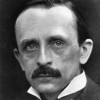
Years steal
Fire from the mind as vigor from the limb;
And life’s enchanted cup but sparkles near the brim.George Gordon, Lord Byron (1788–1824) English poet
Childe Harold’s Pilgrimage, Canto 3, st. 8 (1816)
(Source)
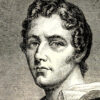
A wise woman is never passé. She crosses the bridge spanning youth and age with firm step and smiling lips.
Minna Antrim (1861–1950) American epigrammatist, writer
Naked Truth and Veiled Allusions (1902)
(Source)
The fust intimashun i had that i waz gitting old waz, i found myself telling to mi friends the same storys over again.
[The first intimation I had that I was getting old was, I found myself telling to my friends the same stories over again.]
Josh Billings (1818–1885) American humorist, aphorist [pseud. of Henry Wheeler Shaw]
Everybody’s Friend, Or; Josh Billing’s Encyclopedia and Proverbial Philosophy of Wit and Humor, ch. 155 “Affurisms: Ink Lings” (1874)
(Source)

I’m growing fonder of my staff;
I’m growing dimmer in the eyes;
I’m growing fainter in my laugh;
I’m growing deeper in my sighs;
I’m growing careless of my dress;
I’m growing frugal of my gold;
I’m growing wise; I’m growing, — yes, —
I’m growing old!
Sum folks, az they gro older, gro wizer; but most folks simply gro stubbornner.
[Some folks, as they grow older, grow wiser; but most folks simply grow more stubborn.]Josh Billings (1818–1885) American humorist, aphorist [pseud. of Henry Wheeler Shaw]
Everybody’s Friend, Or; Josh Billing’s Encyclopedia and Proverbial Philosophy of Wit and Humor, ch. 148 “Affurisms: Ink Brats” (1874)
(Source)
My days of love are over; me no more
The charms of maid, wife, and still less of widow,
Can make the fool of which they made before, —
In short, I must not lead the life I did do;
The credulous hope of mutual minds is o’er,
The copious use of claret is forbid too,
So for a good old-gentlemanly vice,
I think I must take up with avarice.
For the complete life, the perfect pattern, includes old age as well as youth and maturity. The beauty of the morning and the radiance of noon are good, but it would be a very silly person who drew the curtains and turned on the light in order to shut out the tranquility of the evening. Old age has its pleasures, which, though different, are not less than the pleasures of youth.
W. Somerset Maugham (1874–1965) English novelist and playwright [William Somerset Maugham]
The Summing Up, ch. 73 (1938)
(Source)

Perhaps being old is having lighted rooms
Inside your head, and having people in them, acting.
People you know, yet can’t quite name.Philip Larkin (1922–1985) English poet, novelist, librarian
Poem (1974), “The Old Fools,” High Windows
(Source)

Old age is like learning a new profession. And not one of your own choosing.
Jacques Barzun (1907–2012) French-American historian, educator, polymath
Quoted in Arthur Krystal, “Age of Reason,” The New Yorker (2007-10-15)
(Source)
What a wretched lot of old shriveled creatures we shall be by-and-by. Never mind, — the uglier we get in the eyes of others, the lovelier we shall be to each other; that has always been my firm faith about friendship, and now it is in a slight degree my experience.
George Eliot (1819–1880) English novelist [pseud. of Mary Ann Evans]
Letter to Sara Hennell (1852-05-27)
(Source)
I’ve come up with a set of rules that describe our reactions to technologies:
- Anything that is in the world when you’re born is normal and ordinary and is just a natural part of the way the world works.
- Anything that’s invented between when you’re fifteen and thirty-five is new and exciting and revolutionary and you can probably get a career in it.
- Anything invented after you’re thirty-five is against the natural order of things.
Douglas Adams (1952–2001) English author, humorist, screenwriter
The Salmon of Doubt, Part 2 “The Universe” (2002) [ed. Peter Guzzardi]
(Source)

Growing old is no more than a bad habit which a busy man has no time to form.
[Vieillir n’est qu’une mauvaise habitude; l’homme occupé n’a pas le temps de la prendre.]
André Maurois (1885–1967) French author [b. Émile Salomon Wilhelm Herzog]
The Art of Living [Un Art de Vivre], ch. 8 “The Art of Growing Old” (1939) [tr. Whitall (1940)]
(Source)
You know growing old is like being increasingly penalized for a crime you haven’t committed.
PROFESSOR: What message do people generally send back when you first call on them?
OLD AGE: Not at home. Then I leave a card and go. Next year I call; get the same answer; leave another card. So for five or six, — sometimes ten years or more. At last, if they don’t let me in, I break in through the front door or the windows.
The child thinks of growing old as an almost obscene calamity, which for some mysterious reason will never happen to itself. All who have passed the age of thirty five are joyless grotesques, endlessly fussing about things of no importance and staying alive without, so far as the child can see, having anything to live for. Only child life is real life.
George Orwell (1903–1950) English journalist, essayist, writer [pseud. of Eric Arthur Blair]
Essay (1948-06), “‘Such, Such Were the Joys …’,” Partisan Review (1952-09)
(Source)
This autobiographical essay was drafted around 1939, revised around 1946, and then completed in May or June of 1948. Collected in Such, Such Were the Joys, essay 8 (1953), though the full, unredacted version was not published until 2000.

Inside every older person there’s a younger person wondering what happened.
Ashleigh Brilliant (b. 1933) Anglo-American epigramist, aphorist, cartoonist
Pot-Shots, #1390

I want to tell people approaching and perhaps fearing old age that it is a time of discovery. If they say, “Of what?” I can only answer, “We must find out for ourselves, otherwise it wouldn’t be discovery.”
Florida Scott-Maxwell (1883–1979) American-British playwright, author, psychologist
(Attributed)
Old minds are like old horses; you must exercise them if you wish to keep them in working order.
John Adams (1735–1826) American lawyer, Founder, statesman; US President (1797–1801)
(Attributed)
(Source)
Attributed by Josiah Quincy III, as described anecdotally in L. Maria Child's essay "Hints About Health," collected in her book Looking Toward Sunset: From Sources Old and New, Original and Selected (1865). Child describes Quincy attributing his own long life and acuity to the above advice given by Adams when Adams was asked how his mind was so vigorous in old age.
At one point I had this exchange sourced as being a letter from Adams to Quincy (1825-02-14). I am at present unable to find a record or reference online of such a letter.
Sometimes (perhaps due to the recipient's name), the quote is misattributed to Adams' son, John Quincy Adams.

She shrugged. “I don’t mind getting old.”
“I didn’t mind getting old when I was young, either,” I said. “It’s the being old now that’s getting to me.”
John Scalzi (b. 1969) American writer
Old Man’s War (2005)

When young, we trust ourselves too much, and we trust others too little when old. Rashness is the error of youth, timid caution of age.
Charles Caleb "C. C." Colton (1780–1832) English cleric, writer, aphorist
Lacon: Or, Many Things in Few Words, Vol. 1, § 363 (1820)
(Source)
Because inside every old person is a young person wondering what happened.

LADY BRACKNELL: Thirty-five is a very attractive age. London society is full of women of the highest birth who have, of their own free choice, remained thirty-five for years. Lady Dumbleton is an instance in point. To my own knowledge she has been thirty-five ever since she arrived at the age of forty, which was many years ago now.
Oscar Wilde (1854–1900) Irish poet, wit, dramatist
The Importance of Being Earnest, Act 3 (1895)
(Source)

Little of all we value here
Wakes on the morn of its hundredth year
Without both feeling and looking queer.
In fact, there’s nothing that keeps its youth,
So far as I know, but a tree and truth.Oliver Wendell Holmes, Sr. (1809–1894) American poet, essayist, scholar
Poem (1858-09), “The Deacon’s Masterpiece,” Atlantic Monthly, Vol. 2, No. 4
(Source)
The poem appears in the middle of an installment of "Autocrat of the Breakfast-Table", collected in Autocrat of the Breakfast-Table, ch. 11 (1858).
He that would pass the latter part of life with honour and decency, must, when he is young, consider that he shall one day be old; and remember, when he is old, that he has once been young.
Samuel Johnson (1709–1784) English writer, lexicographer, critic
Essay (1750-09-08), The Rambler, No. 50
(Source)
Often misattributed to Joseph Addison.

Old age is the most unexpected of all things that happen to a man.
Leon Trotsky (1879–1940) Russian politician, Marxist, intellectual, revolutionary [b. Lev Davidovich Bronstein]
Diary, Notebook 2 (1935-05-08) [tr. Zarudnaya (1958)]
(Source)

Our hair
Grows grizzled, and we are not what we were.
Years foll’wing Years, steal something ev’ry day,
At last they steal us from our selves away;
In one our Frolicks, one Amusements end,
In one a Mistress drops, in one a Friend:
This subtle Thief of Life, this paltry Time,
What will it leave me, if it snatch my Rhime?[Singula de nobis anni praedantur euntes;
eripuere iocos, Venerem, convivia, ludum;
tendunt extorquere poemata: quid faciam vis?]Horace (65–8 BC) Roman poet, satirist, soldier, politician [Quintus Horatius Flaccus]
Epistles [Epistularum, Letters], Book 2, ep. 2 “To Julius Florus,” l. 55ff (2.2.55-57) (14 BC) [tr. Pope (1737)]
(Source)
(Source (Latin)). Other translations:Howbeit my wyt, which I haue had beginnes for to decay,
And ech yeare plucks away from me as it doth passe away.
My games, my iestes, my lustes, my feastes, from me they made to go,
And now would steale my poems to. what wouldste thou I should do?
[tr. Drant (1567)]I find I'm growing old, and every year
Steals somewhat from me; Venus, Mirth, and Chear,
Begin to lose their Gust; My Wits decline,
And my Poetick vein grows dry with time.
What e're I have been, I am scarse the same,
And will you have me dance now I am lame?
[tr. I. D.; ed. Brome (1666)]On me each circling Year does make a prey,
It steals my Humor, and my Mirth away.
And now at last would steal my Poems too
From my Embrace; what would You have me do?
[tr. Creech (1684)]The waning years apace
Steal off our thoughts, and rifle every grace.
Alas! already have they snatcht away
My jokes, my loves, my revellings, and play.
They strive to wrest my poems from me too,
Instruct me then what method to pursue.
[tr. Francis (1747)]Our joys steal from us, as the years roll on;
Mirth, music, love, and wine are well-nigh gone:
And poesy, 'ere many a sun be past, --
Sweet poesy must be resigned at last.
But what to write?
[tr. Howes (1845)]The advancing years rob us of every thing: they have taken away my mirth, my gallantry, my revelings, and play: they are now proceeding to force poetry from me. What would you have me do?
[tr. Smart/Buckley (1853)]Our years keep taking toll as they move on;
My feasts, my frolics are already gone,
And now, it seems, my verses must go too:
Bestead so sorely, what's a man to do?
[tr. Conington (1874)]Then, too, the years, they rob us, as they run,
Of all things we delight in, one by one;
Sport, love, feast, frolic they have wrenched away,
And verse will follow at no distant day.
Write! Ay, but what?
[tr. Martin (1881)]The rolling years rob us, one by one, of our possessions. They have taken away my jokes, loves, convivialities, sports. They strive to wrench from me my poetry. What do you wish me to write?
[tr. Elgood (1893)]The advancing years rob us of everything; they have taken from me jests, love, banquets and the sports; and now they proceed to take from me my poetry.
What then would you have me do?
[tr. Dana/Dana (1911)]The years, as they pass, plunder us of all joys, one by one. They have stripped me of mirth, love, feasting, play; they are striving to wrest from me my poems. What would you have me do?
[tr. Fairclough (Loeb) (1926)]The years revolving steal from us our powers:
My jests, loves, sports, my taste for festive hours
They’ve torn away; and now my poems, too,
They strive to wrest. What would you have me do?
[tr. Anon.; ed. Kraemer (1936)]Our pleasures steal off, one by one, with the years,
Which have already snatched my zest for laughter and love,
For playing and feasting. And now they're trying to twist
The poems loose from my hand. What can I do?
[tr. Palmer Bovie (1959)]The passing years rob us of our pleasures one by one.
They've taken jokes and sex away, and games and dinners;
now they're clutching at my poems. How can I fight that?
[tr. Fuchs (1977)]One by one the years go by, and one by one they steal
Our pleasures: laughter, love, friendship, fun.
They're taking poetry too -- and what in God's name should I do?
[tr. Raffel (1983)]The years as they go by take everything with them,
One thing after another; they’ve taken away
Laughter, and revelry, and love from me, and now
They want to take poetry. What can I do?
[tr. Ferry (2001)]As the years go by they rob us of one thing after another.
Already they've taken fun, sex, parties and sport;
now they're pulling away my poems. What shall I do then?
[tr. Rudd (2005 ed.)]The passing years steal one thing after another:
They’ve robbed me of fun, love, banquets, sport:
They’re trying to wrest my poems away: what next?
[tr. Kline (2015)]
SUSAN: Sally, does it ever occur to you that age brings wisdom and greater confidence?
SALLY: Susan, age brings you more to shave.
Steven Moffat (b. 1961) Scottish television writer, producer
Coupling, 01×01 “Flushed” (2000-05-12)
(Source)

Nothing so dates a man as to decry the younger generation.
Adlai Stevenson II (1900–1965) American politician, diplomat, statesman
Speech (1952-10-08), “The Area of Freedom,” University of Wisconsin, Madison
(Source)
I am old, but I certainly have not that sign of old-age, extolling the past at the expense of the present.
Sydney Smith (1771–1845) English clergyman, essayist, wit
Memoir of the Reverend Sydney Smith, by His Daughter, Lady Holland, Vol. 1, ch. 11 (1855)
(Source)

Grow old along with me!
The best is yet to be,
The last of life, for which the first was made:
Our times are in His hand
Who saith, “A whole I planned,
Youth shows but half; trust God: see all nor be afraid!”Robert Browning (1812–1889) English poet
Poem (1864), “Rabbi Ben Ezra,” st. 1, Dramatis Personæ
(Source)
Books, you know, Charles, are like lobster shells. We surround ourselves with ’em, and then we grow out of ’em and leave ’em behind, as evidences of our earlier stages of development.
Dorothy Sayers (1893–1957) English author, translator
The Unpleasantness at the Bellona Club, ch. 18 “Picture-cards” [Peter] (1928)
(Source)