One haff the trubbles ov this life kan be traced to saying “Yes” too quick, and not saying “No” soon enough.
[One half the troubles of this life can be traced to saying “Yes” too quickly, and not saying “No” soon enough.]
Josh Billings (1818–1885) American humorist, aphorist [pseud. of Henry Wheeler Shaw]
Josh Billings’ Farmer’s Allminax, 1878-05 (1878 ed.)
(Source)
Quotations about:
denial
Note not all quotations have been tagged, so Search may find additional quotes on this topic.

We all need to look into the dark side of our nature — that’s where the energy is, the passion. People are afraid of that because it holds pieces of us we’re busy denying.
Sue Grafton (1940–2017) American novelist, screenwriter
Interview (1997-02-07) by Jeffrey Zaslow, “Straight Talk,” USA Weekend magazine
(Source)

DENY, v.t. See Hurl Back The Allegation.
Ambrose Bierce (1842–1914?) American writer and journalist
“Deny,” “Devil’s Dictionary” column, San Francisco Wasp (1882-02-17)
(Source)
Not collected in later books.

A Fault, once denied, is twice committed.
Thomas Fuller (1654–1734) English physician, preacher, aphorist, writer
Gnomologia: Adages and Proverbs (compiler), # 93 (1732)
(Source)

Part of the skill of saying no is to shut up afterward and not babble on, offering material for an argument.
Judith Martin (b. 1938) American author, journalist, etiquette expert [a.k.a. Miss Manners]
“Miss Manners,” syndicated column (2014-11-04)
(Source)

You quickly remove something from your eye that hurts it:
if rot is eating at your soul, why postpone the cure a year?[Nam cur
quae laedunt oculum festinas demere; si quid
est animum, differs curandi tempus in annum?]Horace (65–8 BC) Roman poet, satirist, soldier, politician [Quintus Horatius Flaccus]
Epistles [Epistularum, Letters], Book 1, ep. 2 “To Lollius,” l. 37ff (1.2.37-39) (20 BC) [tr. Fuchs (1977)]
(Source)
(Source (Latin)). Other translations:Yea, thoughe thou be awake,
A little mote out of thyne eye why doste thou haste to take?
If oughte there be that noyes thy minde moste parte thou arte contente
Or thou begin to cure the same to seeke an whole yeare spente.
[tr. Drant (1567)]If a Fly
Get in thy Eye, 'tis puld out instantly:
But if thy Mindes Ey's hurt, day after day
That Cure's deferr'd.
[tr. Fanshawe; ed. Brome (1666)]You'l move an Eye-soar streight; and is it sence,
To let the Mind be cur'd a Twelve-moneth hence?
[tr. "Dr. W."; ed. Brome (1666)]For why, when any thing offends thy Eyes,
Dost thou streight seek for ease, and streight advise
Yet if it shall oppress thy Mind, endure
The ills with Patience, and defer the Cure?
[tr. Creech (1684)]For the hurt eye an instant cure you find;
Then why neglect, for years, the sickening mind?
[tr. Francis (1747)]How strange is this! if ought the eye offends,
You straight remove it and the anguish ends;
If ought corrodes the mind, some slight pretence
Serves to protract the cure a twelve-month hence.
[tr. Howes (1845)]For why do you hasten to remove things that hurt your eyes, but if any thing gnaws your mind, defer the time of curing it from year to year?
[tr. Smart/Buckley (1853)]You lose no time in taking out a fly,
Or straw, it may be, that torments your eye;
Why, when a thing devours your mind, adjourn
Till this day year all thought of the concern?
[tr. Conington (1874)]Let but a speck of dust distress your eye,
You rest not till you're rid of it; then why,
If 'tis your mind that's out of sorts, will you
Put off the cure with "Any time will do"?
[tr. Martin (1881)]Anything which injures eyesight you will at once remove, why then, if anything injures the mind, do you delay for a whole year to heal it?
[tr. Elgood (1893)]Why indeed are you in a hurry to remove things which hurt the eye, while if aught is eating into your soul, you put off the time for cure till next year?
[tr. Fairclough (Loeb) (1926)]Why hurry so to take out that mote from your eye,
But put off until next year the time to take steps
To arrest your soul erosion?
[tr. Palmer Bovie (1959)]You run to the doctor if anything sticks in your eye,
But leave your sick soul to be cured some other time,
Some other year!
[tr. Raffel (1983)]If you had a sty, you'd be in a hurry to cure it;
If the sickness is in your soul, why put it off?
[tr. Ferry (2001)]Why so quick to remove
a speck of dirt from your eye? And yet, if anything eats at
your soul, you say: ‘Time enough to attend to it next year’.
[tr. Rudd (2005 ed.)]Why so quick to remove a speck from your eye, when
If it’s your mind, you put off the cure till next year?
[tr. Kline (2015)]
There are some truths, the force and validity of which we readily admit, in all cases except our own; and there are other truths so self-evident that we dare not deny them, but so dreadful, that we dare not believe them.
Charles Caleb "C. C." Colton (1780–1832) English cleric, writer, aphorist
Lacon: Or, Many Things in Few Words, Vol. 1, § 370 (1820)
(Source)
CROMWELL: Yet is there a man in this court, is there a man in this country, who does not know Sir Thomas More’s opinion of this title? Of course not! But how can that be? Because this silence betokened — nay, this silence was — not silence at all, but most eloquent denial!
MORE: (with some of the academic’s impatience for a shoddy line of reasoning) Not so, Mr. Secretary, the maxim is “qui tacet consentire”: The maxim of the law is: (very carefully) “Silence Gives Consent .” If therefore you wish to construe what my silence “betokened,” you must construe that I consented, not that I denied.
CROMWELL: Is that in fact what the world construes from it? Do you pretend that is what you wish the world to construe from it?
MORE: The world must construe according to its wits. This court must construe according to the law.
Robert Bolt (1924–1995) English dramatist
A Man for All Seasons, play, Act 2 (1960)
(Source)
During More's treason trial for, without giving a reason, refusing to take an oath that the King of England also held the title "Supreme Head of the Church in England."
Bolt's 1966 film adaptation uses nearly the same lines (Source (Video); dialog verified):CROMWELL: Yet is there a man in this court, is there a man in this country, who does not know Sir Thomas More's opinion of this title?
GALLERY: No!
CROMWELL: Yet how can this be? Because this silence betokened -- nay, this silence was -- not silence at all, but most eloquent denial!
MORE: Not so. Not so, Master Secretary, the maxim is "qui tacet consentire": The maxim of the law is "Silence Gives Consent." If therefore you wish to construe what my silence "betokened," you must construe that I consented, not that I denied.
CROMWELL: Is that in fact what the world construes from it? Do you pretend that is what you wish the world to construe from it?
MORE: The world must construe according to its wits. This court must construe according to the law.
When the map does not correspond to the territory, there is a certain category of fool — the overeducated, the academic, the journalist, the newspaper reader, the mechanistic “scientist”, the pseudo-empiricist, those endowed with what I call “epistemic arrogance”, this wonderful ability to discount what they did not see, the unobserved — who enter a state of denial, imagining the territory as fitting the map.
Nassim Nicholas Taleb (b. 1960) Lebanese-American essayist, statistician, risk analyst, aphorist
The Bed of Procrustes: Philosophical and Practical Aphorisms, “Postface” (2010)
(Source)

It does not undo harm to acknowledge that we have done it; but it undoes us not to acknowledge it.
Mignon McLaughlin (1913–1983) American journalist and author
The Neurotic’s Notebook, ch. 4 (1963)
(Source)

The great majority of us are required to live a life of constant, systematic duplicity. Your health is bound to be affected if, day after day, you say the opposite of what you feel, if you grovel before what you dislike and rejoice at what brings you nothing but misfortune. Your nervous system isn’t a fiction, it’s a part of your physical body, and your soul exists in space and is inside you, like the teeth in your head. You can’t keep violating it with impunity.
Boris Pasternak (1890–1960) Russian poet, novelist, and literary translator
Doctor Zhivago [До́ктор Жива́го], Part 2, ch. 15 “Conclusion,” sec. 6 [Yury] (1955) [tr. Hayward & Harari (1958), UK ed.]
(Source)
Other translations:The great majority of us are required to live a life of constant, systematic duplicity. Your health is bound to be affected if, day after day, you say the opposite of what you feel, if you grovel before what you dislike and rejoice at what brings you nothing but misfortune. Our nervous system isn’t just a fiction, it’s a part of our physical body, and our soul exists in space and is inside us, like the teeth in our mouth. It can’t be forever violated with impunity.
[tr. Hayward & Harari (1958), US ed.]A constant, systematic dissembling is required of the vast majority of us. It’s impossible, without its affecting your health, to show yourself day after day contrary to what you feel, to lay yourself out for what you don’t love, to rejoice over what brings you misfortune. Our nervous system is not an empty sound, not a fiction. It’s a physical body made up of fibers. Our soul takes up room in space and sits inside us like the teeth in our mouth. It cannot be endlessly violated with impunity.
[tr. Pevear & Volokhonsky (2010)]
The eazyest thing for our freinds to diskover in us, and the hardest thing for us to diskover in ourselfs, is that we are growing old.
[The easiest thing for our friends to discover in us, and the hardest thing for us to discover in ourselves, is that we are growing old.]
Josh Billings (1818–1885) American humorist, aphorist [pseud. of Henry Wheeler Shaw]
Everybody’s Friend, Or; Josh Billing’s Encyclopedia and Proverbial Philosophy of Wit and Humor, ch. 131 “Affurisms: Plum Pits (1)” (1874)
(Source)
My favorite word is “redemption.” I like both its meaning and the sound. My least favorite word is “maybe.” “Maybe” is almost always a “no” drawn out in cruel fashion.
Martha Elizabeth "Libba" Bray (b. 1964) American writer
“Twenty-One Things You Don’t Know About Me,” No. 4
(Source)
In her Amazon.com author biography.

The country of the aged is a land few people think very hard and seriously about before the time of life when they sense they’re arriving there.
Maggie Scarf (b. 1932) American writer, journalist, lecturer
Unfinished Business, ch. 18 (1980)
(Source)

PROFESSOR: What message do people generally send back when you first call on them?
OLD AGE: Not at home. Then I leave a card and go. Next year I call; get the same answer; leave another card. So for five or six, — sometimes ten years or more. At last, if they don’t let me in, I break in through the front door or the windows.
For those who live neither with religious consolations about death nor with a sense of death (or of anything else ) as natural, death is the obscene mystery, the ultimate affront, the thing that cannot be controlled. It can only be denied.
Susan Sontag (1933–2004) American essayist, novelist, activist
Illness As Metaphor, ch. 7 (1978)
(Source)

There’s a reason narcissists don’t learn from mistakes and that’s because they never get past the first step, which is admitting that they made one. It’s always an assistant’s fault, an adviser’s fault, a lawyer’s fault. Ask them to account for a mistake any other way and they’ll say, “What mistake?”
Robert Hogan (b. 1937) American psychologist
Quoted in Jeffrey Kluger, The Narcissist Next Door, ch. 6 (2014)
(Source)

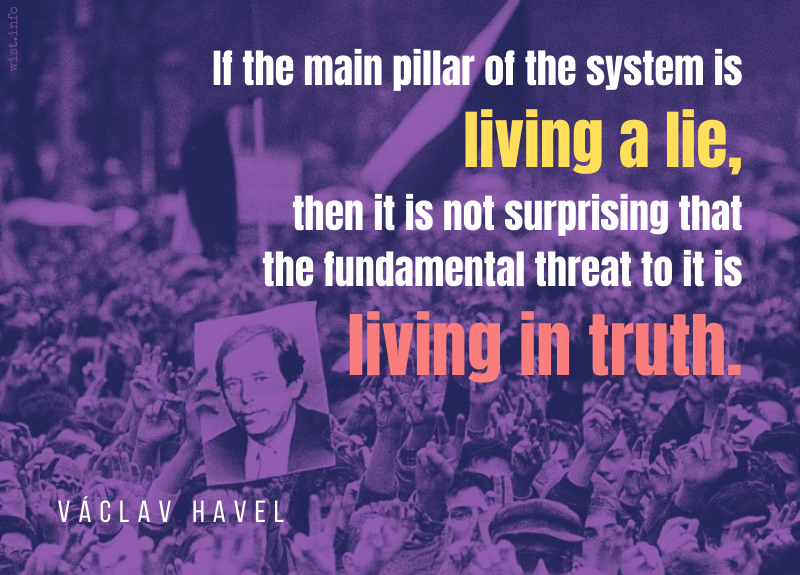
If the main pillar of the system is living a lie, then it is not surprising that the fundamental threat to it is living in truth. This is why it must be suppressed more severely than anything else.
Václav Havel (1936–2011) Czech playwright, essayist, dissident, politician
Essay (1978-10), “The Power of the Powerless,” ch. 7 [tr. Wilson], The Power of the Powerless [ed. John Keane] (1985)
(Source)
The general uncertainty as to what is really happening makes it easier to cling to lunatic beliefs. Since nothing is ever quite proved or disproved, the most unmistakable fact can be impudently denied.
George Orwell (1903–1950) English journalist, essayist, writer [pseud. of Eric Arthur Blair]
Essay (1945-05), “Notes on Nationalism,” Polemic Magazine (1945-10)
(Source)
A nationalist will say that “it can’t happen here,” which is the first step toward disaster. A patriot says that it could happen here, but that we will stop it.
Timothy Snyder (b. 1969) American historian, author
On Tyranny: Twenty Lessons from the Twentieth Century (2017)
(Source)

Why does truth call forth hatred? Simply because truth is loved in such a way that those who love some other thing want it to be the truth, and precisely because they do not wish to be deceived, are unwilling to be convinced that they are indeed being deceived. Thus they hate the truth for the sake of that other thing which they love, because they take it for the truth. They love truth when it enlightens them, they hate it when it accuses them.
[Cur autem veritas parit odium et inimicus eis factus est homo tuus verum praedicans, cum ametur beata vita, quae non est nisi gaudium de veritate, nisi quia sic amatur veritas ut, quicumque aliud amant, hoc quod amant velint esse veritatem, et quia falli nollent, nolunt convinci quod falsi sint? Itaque propter eam rem oderunt veritatem, quam pro veritate amant. Amant eam lucentem, oderunt eam redarguentem.]
Augustine of Hippo (354–430) Christian church father, philosopher, saint [b. Aurelius Augustinus]
Confessions, Book 10, ch. 23 / ¶ 34 (10.23.34) (c. AD 398) [tr. Boulding (1997)]
(Source)
(Source (Latin)). Other translations:But why doth "truth generate hatred," and the man of thine, preaching the truth, become an enemy to them? Whereas a happy life is loved, which is nothing else but joying in the truth; unless that truth is in that kind loved, that they who love any thing else would gladly have that which they love to be the truth: and because they would not be deceived, would not be convinced that they are do? Therefore do they hate the truth for that thing's sake which they love instead of the truth. They love truth when she enlightens, they hate her when she reproves.
[tr. Pusey (1838)]Why, then, doth truth beget hatred, and that man of thine, preaching the truth, became an enemy unto them, whereas a happy life is loved, which is naught else but joy in the truth; unless that truth is loved in such a sort as that those who love aught else wish that to be the truth which they love, and, as they are willing to be deceived, are unwilling to be convinced that they are so? Therefore do they hate the truth for the sake of that thing which they love instead of the truth. They love the truth when she shines on them, and hate her when she rebukes them.
[tr. Pilkington (1876)]But why does "truth beget hatred," and why is that man of Thine, preaching the truth, made an enemy to them, whereas a happy life is loved, which is nothing else joy in the truth; unless the truth is so loved, that whoever loves something else, wants that which they love to be the truth, and because they are unwilling to be deceived, are unwilling to be convinced that they are imposed on? Therefore do they hate the truth, for the sake of that thing which they love instead of it. They love truth when it shines; hate it when it rebukes.
[tr. Hutchings (1890)]Why does truth call forth hatred? Why is Your servant treated as an enemy by those to whom he preaches the truth, if happiness is loved, which is simply joy in truth? Simply because truth is loved in such a way that those who love some other thing want it to be the truth, and, precisely because they do not wish to be deceived, are unwilling to be convinced that they are deceived. Thus they hate the truth for the sake of that other thing which they love because they take it for truth. They love truth when it enlightens them, they hate truth when it accuses them.
[tr. Sheed (1943)]Why, then, does truth generate hatred, and why does thy servant who preaches the truth come to be an enemy to them who also love the happy life, which is nothing else than joy in the truth -- unless it be that truth is loved in such a way that those who love something else besides her wish that to be the truth which they do love. Since they are unwilling to be deceived, they are unwilling to be convinced that they have been deceived. Therefore, they hate the truth for the sake of whatever it is that they love in place of the truth. They love truth when she shines on them; and hate her when she rebukes them.
[tr. Outler (1955)]Why is it, then, that “truth begets hatred?” Why is your man who preaches truth to men become an enemy in their eyes, even though there is love for the happy life, which is naught else but joy in the truth? Can such things be except because truth is loved in such wise that men who love some other object want what they love to be the truth, and because they do not want to be deceived, they refuse to be convinced that they have been deceived? Therefore, they hate the truth for the sake of that very thing which they have loved instead of the truth. They love the truth because it brings light to them; they hate it in as much as it reproves them.
[tr. Ryan (1960)]But why does truth engender hatred? Why does your servant meet with hostility when he preaches the truth, although men love happiness, which is simply the enjoyment of truth? It can only be that man’s love of truth is such that when he loves something which is not the truth, he pretends to himself that what he loves is the truth, and because he hates to be proved wrong, he will not allow himself to be convinced that he is deceiving himself. So he hates the real truth for the sake of what he takes to his heart in its place. Men love the truth when it bathes them in its light: they hate it when it proves them wrong.
[tr. Pine-Coffin (1961)]But why is it that “truth gives birth to hatred”? Why does your servant who preaches the truth incur enmity in spite of the fact that people love the happy life which simply is joy in truth? It is because truth is loved in such a way that those who love something else would like to believe that what they love is the truth, and because they would not like to be deceived, they object to being shown that in fact they are deceived. And so they hate truth for the sake of whatever it is they love instead of truth. They love the light of truth, but hate it when it shows them up as wrong.
[tr. Warner (1963)]But why does truth engender hatred, and why does your man become an enemy to those to whom he preaches truth, though the blessed life is loved, which is nothing else but rejoicing because of the truth? Unless it be that truth is so” loved, that, whoever loves anything else wants what they love to be the truth, and because they do not wish to be deceived and are unwilling to be convinced that they are deceived. And so, for the sake of that which they love instead of the truth, they hate the truth. They love truth when it enlightens, hate it when it reproves.
[tr. Blaiklock (1983)]So why, then, does truth sometimes engender hatred? Why does the servant of God come to be an enemy of those who want a happy life, even though true happiness is joy in the truth? The reason must be this: Our love of truth is such that when we love something that’s not the truth, we pretend to ourselves that we we love is the truth. Then, because we hate to be proved wrong, we’re unwilling to be convinced that we’ve deceived ourselves. In this way, then, people hate the truth for the sake of whatever it is that they love more than the truth. They love truth when it shines warmly on them, and hate it when it rebukes them.
[Source]

The belief that all higher life is governed by the idea of renunciation poisons our moral life by engendering vanity and egotism. But if we take gratification as our ideal we thereby impose on ourselves a program of self-restraint; for if we claim that we are under the necessity of learning all that we can about reality, and that we learn most through pleasure, we must also admit that we are under the necessity of hearing what our fellow-creatures learn about it and of working out a system by which we will curb our pleasures so that they do not interfere with those of others. If, however, we claim that it is by renunciation that we achieve wisdom, we have no logical reason for feeling any disapproval of conditions that thrust pain and deprivation on others.
Rebecca West (1892–1983) British author, journalist, literary critic, travel writer [pseud. for Cicily Isabel Fairfield]
“Pleasure Be Your Guide,” The Nation, “Living Philosophies” series #10 (25 Feb 1939)
(Source)
Adapted into Clifton Fadiman, I Believe: The Personal Philosophies of Certain Eminent Men and Women of Our Time (1952).

See no evil, hear no evil, makes you seem really evil.
Stephen Colbert (b. 1964) American political satirist, writer, comedian
Late Show (9 Feb 2021)
(Source)

The way to avoid evil is not by maiming our passions, but by compelling them to yield their vigor to our moral nature. Thus they become, as in the ancient fable, the harnessed steeds which bear the chariot of the sun.
When it comes to a question of our forgiving other people, it is partly the same and partly different. It is the same because, here also, forgiving does not mean excusing. Many people seem to think it does. They think that if you ask them to forgive someone who has cheated or bullied them you are trying to make out that there was really no cheating or no bullying. But if that were so, there would be nothing to forgive. They keep on replying, “But I tell you the man broke a most solemn promise.” Exactly: that is precisely what you have to forgive. (This doesn’t mean that you must necessarily believe his next promise. It does mean that you must make every effort to kill every taste of resentment in your own heart — every wish to humiliate or hurt him or to pay him out.) The difference between this situation and the one in which you are asking God’s forgiveness is this. In our own case we accept excuses too easily; in other people’s we do not accept them easily enough.
C. S. Lewis (1898–1963) English writer, literary scholar, lay theologian [Clive Staples Lewis]
“On Forgiveness”
How many things have been denied one day, only to become realities the next!
Jules Verne (1828–1905) French novelist, poet, playwright
From the Earth to the Moon (1865)
(Source)
KING ARTHUR: Look, you stupid bastard, you’ve got no arms left!
BLACK KNIGHT: Yes I have.
KING ARTHUR: Look!
BLACK KNIGHT: It’s just a flesh wound.Monty Python (b. 1969) British comedy troupe [Graham Chapman, John Cleese, Terry Gilliam, Eric Idle, Terry Jones, Michael Palin]
Monty Python and the Holy Grail (1975)
Every life is its own excuse for being, and to deny or refute the untrue things that are said of you is an error in judgment. All wrong recoils upon the doer, and the man who makes wrong statements about others is himself to be pitied, not the man he vilifies. It is better to be lied about than to lie. At the last no one can harm us but ourselves.
Elbert Hubbard (1856–1915) American writer, businessman, philosopher
The Roycroft Dictionary and Book of Epigrams (1923)
(Source)
That’s not a nuts thing, that’s a “humans hate to admit error even as they stand there, black and smoldering, with the stub of a cigarette in one hand, in the middle of a wide crater containing them and the remains of a sign that once read ‘DANGER: VOLATILE EXPLOSIVES'” thing. It’s pretty universal.
James Nicoll (b. 1961) Canadian reviewer, editor
“Proposal for a new FAQ or two,” rec.arts.sf.written, Usenet (10 Jun 2005)
(Source)

At the approach of danger there are always two voices that speak with equal force in the heart of man: one very reasonably tells the man to consider the nature of the danger and the means of avoiding it; the other even more reasonable says that it is too painful and harassing to think of the danger, since it is not a man’s power to provide for everything and escape from the general march of events; and that it is therefore better to turn aside from the painful subject till it has come, and to think of what is pleasant. In solitude a man generally yields to the first voice; in society to the second.
Leo Tolstoy (1828–1910) Russian novelist and moral philosopher
War and Peace, Book 10, ch. 17 (1865-1869)
People often grudge others when they cannot enjoy themselves.
Aesop (620?-560? BC) Legendary Greek storyteller
Fables [Aesopica], “The Dog in the Manger” (6th C BC)
(Source)
Few men are sufficiently discerning to appreciate all the evil they do.
[Il n’y a guère d’homme assez habile pour connoître tout le mal qu’il fait.]
François VI, duc de La Rochefoucauld (1613–1680) French epigrammatist, memoirist, noble
Réflexions ou sentences et maximes morales [Reflections; or Sentences and Moral Maxims], ¶269 (1665-1678) [tr. Tancock (1959), ¶269]
(Source)
First appeared in the 2nd (1666) edition. In manuscript, it reads "... assez pénétrant pour apercevoir tout le mal qu’il fait."
(Source (French)). Other translations:There are but few Men Wise enough to know all the Mischief Wisdom does.
[tr. Stanhope (1694), ¶270]There are but few Men wise enough to know all the Mischief they do.
[tr. Stanhope (1706), Powell ed., ¶269]Few men are able to know all the ill they do.
[pub. Donaldson (1783), ¶5]Few men are able to know all the ill they do.
[ed. Lepoittevin-Lacroix (1797), ¶252]Few of us have abilities to know all the ill we occasion.
[ed. Carvill (1835), ¶3]Scarcely any man is clever enough to know all the evil he does.
[ed. Gowens (1851), ¶280]No man is clever enough to know all the evil he does.
[tr. Bund/Friswell (1871), ¶269]No one is sufficiently keen to realize to the full the harm he does.
[tr. Heard (1917), ¶277]Scarcely any man is clever enough to realize all the harm he does.
[tr. Stevens (1939), ¶269]There is hardly a man clever enough to recognize the full extent of the evil that he does.
[tr. FitzGibbon (1957), ¶269]Almost no one is perceptive enough to realize all the harm he does.
[tr. Kronenberger (1959), ¶269]There is scarcely a man alive clever enough to know all the evil he does.
[tr. Whichello (2016) ¶269]

A great deal of intelligence can be invested in ignorance when the need for illusion is deep.

CALVIN: It’s not denial. I’m just very selective about the reality I accept.


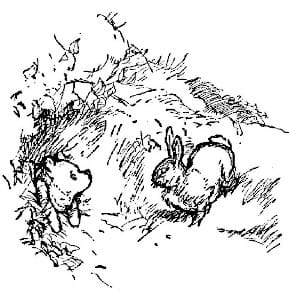
“Hallo, are you stuck?” he asked.
“N-no,” said Pooh carelessly. “Just resting and thinking and humming to myself.”A. A. Milne (1882–1956) English poet and playwright [Alan Alexander Milne]
Winnie-the-Pooh, ch. 2 “Pooh Goes Visiting” (1926)
(Source)
MENAS: We, ignorant of ourselves,
Beg often our own harms, which the wise powers
Deny us for our good; so find we profit
By losing of our prayers.William Shakespeare (1564–1616) English dramatist and poet
Antony and Cleopatra, Act 2, sc. 1, l. 7ff (2.1.7-10) (1607)
(Source)