Solitude is the climax of the negative virtues. When we go to bed after a solitary day we can tell ourselves that we have not been unkind nor dishonest nor untruthful; and the negative virtues are agreeable to that dangerous faculty we call the conscience. That they should ever be admitted for a part of virtue is what I cannot explain. I do not care two straws for all the nots.
Robert Louis Stevenson (1850–1894) Scottish essayist, novelist, poet
Essay (1880-01/02?), “Reflections and Remarks on Human Life,” § 4.6 “Solitude and Society”
(Source)
A collection of aphorisms and musings, first published in the Edinburgh Edition of his Works, vol. 28 (1898).
Quotations about:
self-opinion
Note not all quotations have been tagged, so Search may find additional quotes on this topic.
It is the business of this life to make excuses for others, but none for ourselves. We should be clearly persuaded of our own misconduct, for that is the part of knowledge in which we are most apt to be defective.
Robert Louis Stevenson (1850–1894) Scottish essayist, novelist, poet
Essay (1880-01/02?), “Reflections and Remarks on Human Life,” § 1.1 “Justice and Justification”
(Source)
A collection of aphorisms and musings, first published in the Edinburgh Edition of his Works, vol. 28 (1898).
But when thoughts and words are collected and adjusted, and the whole composition at last concluded, it seldom gratifies the author, when he comes coolly and deliberately to review it, with the hopes which had been excited in the fury of the performance: novelty always captivates the mind; as our thoughts rise fresh upon us, we readily believe them just and original, which, when the pleasure of production is over, we find to be mean and common, or borrowed from the works of others, and supplied by memory rather than invention.
Samuel Johnson (1709–1784) English writer, lexicographer, critic
Essay (1754-03-02), The Adventurer, No. 138
(Source)
Often have I marvelled how each one of us loves himself above all men, yet sets less store by his own opinion of himself than by that of everyone else.
[Πολλάκις ἐθαύμασα πῶς ἑαυτὸν μὲν ἕκαστος μᾶλλον πάντων φιλεῖ, τὴν δὲ ἑαυτοῦ περὶ αὑτοῦ ὑπόληψιν ἐν ἐλάττονι λόγῳ τίθεται ἢ τὴν τῶν ἄλλων.]
Marcus Aurelius (AD 121–180) Roman emperor (161–180), Stoic philosopher
Meditations [To Himself; Τὰ εἰς ἑαυτόν], Book 12, ch. 4 (12.4) (AD 161-180) [tr. Haines (Loeb) (1916)]
(Source)
(Source (Greek)). Other translations:I have often wondered how it should come to pass, that every man loving himself best, should more regard other men's opinions concerning himself than his own.
[tr. Casaubon (1634), 12.3]I have often wonder'd how it comes to pass, that every Body should love themselves best, and yet value their Neighbours Opinion about themselves, more than their own.
[tr. Collier (1701)]I have often wondered how each man should love himself more than any other; and yet make less account of his own opinion concerning himself, than of the opinions of others.
[tr. Hutcheson/Moor (1742)]I have often wondered, whence it comes to pass, that although every one loves himself more than he does any other man, he should yet pay a greater regard to the opinion of other people concerning him than to his own.
[tr. Graves (1792)]I have often wondered how it is that every man loves himself more than all the rest of men, but yet sets less value on his own opinion of himself than on the opinion of others.
[tr. Long (1862)]I have often wondered how it comes to pass that everybody should love themselves best, and yet value their neighbor's opinion about themselves more than their own.
[tr. Collier/Zimmern (1887)]How strange it is, that every one loves himself above all others, yet attaches less weight to his own view of himself, than to that of other men.
[tr. Rendall (1898)]I have wondered often how it comes that, while every man loves himself beyond all others, yet he holds his own opinion of himself in less esteem than the opinion of others.
[tr. Hutcheson/Chrystal (1902)]I often wonder how it is that every one loves himself more than all the world and yet takes less account of his own judgement of himself than of the judgement of the world.
[tr. Farquharson (1944)]I often marvel how it is that though each man loves himself beyond all else, he should yet value his own opinion of himself less than that of others.
[tr. Staniforth (1964)]I have often marvelled at how everyone loves himself above all others, yet places less value on his own opinion of himself than that of everyone else.
[tr. Hard (1997 ed.); Hard (2011 ed.)]It never ceases to amaze me: we all love ourselves more than other people, but care more about their opinion than our own.
[tr. Hays (2003)]I have often wondered how it is that everyone loves himself more than anyone else, but rates his own judgement of himself below that of others.
[tr. Hammond (2006)]I have often been amazed at how every person loves himself more than he loves others yet places less value on his own judgment of himself than of the judgments of others concerning him.
[tr. Needleman/Piazza (2008)]How is it that every person loves themselves more than any other person, yet still gives more value to the opinions of others than the opinion they hold of themselves?
[tr. McNeill (2019)]
Regard not so much what the World thinks of thee, as what thou thinkest of thyself.
Thomas Fuller (1654–1734) English physician, preacher, aphorist, writer
Introductio ad Prudentiam, Vol. 1, # 1552 (1725)
(Source)
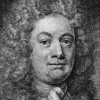
Endeavor to make thy own Company pleasant to thee.
Thomas Fuller (1654–1734) English physician, preacher, aphorist, writer
Introductio ad Prudentiam, Vol. 1, # 99 (1725)
(Source)
Alcohol is nicissary f’r a man so that now an’ thin he can have a good opinion iv himsilf, ondisturbed be th’ facts.
[Alcohol is necessary for a man so that now and then he can have a good opinion of himself, undisturbed by the facts.]
Finley Peter Dunne (1867–1936) American humorist and journalist
“Mr. Dooley on Alcohol,” Chicago Tribune (26 Apr 1914)
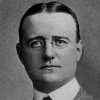
Our credulity is greatest concerning the things we know least about. And since we know least about ourselves, we are ready to believe all that is said about us. Hence the mysterious power of both flattery and calumny.
Eric Hoffer (1902–1983) American writer, philosopher, longshoreman
Passionate State of Mind, Aphorism 128 (1955)
(Source)
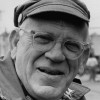
Unless a man has talents to make something of himself, freedom is an irksome burden. Of what avail is freedom to choose if the self be ineffectual? We join a mass movement to escape individual responsibility, or, in the words of the ardent young Nazi, “to be free from freedom.” It was not sheer hypocrisy when the rank-and-file Nazis declared themselves not guilty of all the enormities they had committed. They considered themselves cheated and maligned when made to shoulder responsibility for obeying orders. Had they not joined the Nazi movement in order to be free from responsibility?
Eric Hoffer (1902–1983) American writer, philosopher, longshoreman
True Believer: Thoughts on the Nature of Mass Movements, Part 2, ch. 5, § 26 (1951)
Few men are sufficiently discerning to appreciate all the evil they do.
[Il n’y a guère d’homme assez habile pour connoître tout le mal qu’il fait.]
François VI, duc de La Rochefoucauld (1613–1680) French epigrammatist, memoirist, noble
Réflexions ou sentences et maximes morales [Reflections; or Sentences and Moral Maxims], ¶269 (1665-1678) [tr. Tancock (1959), ¶269]
(Source)
First appeared in the 2nd (1666) edition. In manuscript, it reads "... assez pénétrant pour apercevoir tout le mal qu’il fait."
(Source (French)). Other translations:There are but few Men Wise enough to know all the Mischief Wisdom does.
[tr. Stanhope (1694), ¶270]There are but few Men wise enough to know all the Mischief they do.
[tr. Stanhope (1706), Powell ed., ¶269]Few men are able to know all the ill they do.
[pub. Donaldson (1783), ¶5]Few men are able to know all the ill they do.
[ed. Lepoittevin-Lacroix (1797), ¶252]Few of us have abilities to know all the ill we occasion.
[ed. Carvill (1835), ¶3]Scarcely any man is clever enough to know all the evil he does.
[ed. Gowens (1851), ¶280]No man is clever enough to know all the evil he does.
[tr. Bund/Friswell (1871), ¶269]No one is sufficiently keen to realize to the full the harm he does.
[tr. Heard (1917), ¶277]Scarcely any man is clever enough to realize all the harm he does.
[tr. Stevens (1939), ¶269]There is hardly a man clever enough to recognize the full extent of the evil that he does.
[tr. FitzGibbon (1957), ¶269]Almost no one is perceptive enough to realize all the harm he does.
[tr. Kronenberger (1959), ¶269]There is scarcely a man alive clever enough to know all the evil he does.
[tr. Whichello (2016) ¶269]

“I have been Foolish and Deluded,” said Pooh, “and I am a Bear of No Brain at All.”
“You’re the Best Bear in All the World,” said Christopher Robin soothingly.A. A. Milne (1882–1956) English poet and playwright [Alan Alexander Milne]
Winnie-the-Pooh, ch. 3 “Pooh and Piglet Go Hunting” (1926)
(Source)