Most tyrants are, by nature, short-sighted. Though they aspire to an eternal panoply of statues and symphonies in their honor, they rarely focus on constructive present actions that will lead to a future where their name is even known, let alone praised. As time goes on, they either fall into the delusion of omnipotence, or else become obsessed with holding onto embattled power until the bitter end. Neither mental state leads to laying a healthy foundation for posterity.
Graham Ericsson (b. 1961) American technologist, writer, aphorist
Journal (2026-04-22)
Quotations about:
self-defeat
Note not all quotations have been tagged, so Search may find additional quotes on this topic.

Samuel told the people who were asking him for a king everything that the Lord had said to him. “This is how your king will treat you,” Samuel explained.
“He will make soldiers of your sons; some of them will serve in his war chariots, others in his cavalry, and others will run before his chariots. He will make some of them officers in charge of a thousand men, and others in charge of fifty men. Your sons will have to plow his fields, harvest his crops, and make his weapons and the equipment for his chariots.
“Your daughters will have to make perfumes for him and work as his cooks and his bakers.
“He will take your best fields, vineyards, and olive groves, and give them to his officials. He will take a tenth of your grain and of your grapes for his court officers and other officials. He will take your servants and your best cattle and donkeys, and make them work for him. He will take a tenth of your flocks. And you yourselves will become his slaves.
“When that time comes, you will complain bitterly because of your king, whom you yourselves chose, but the Lord will not listen to your complaints.”
The people paid no attention to Samuel, but said, “No! We want a king.”וַיֹּ֣אמֶר שְׁמוּאֵ֔ל אֵ֖ת כׇּל־דִּבְרֵ֣י יְהֹוָ֑ה אֶל־הָעָ֕ם הַשֹּׁאֲלִ֥ים מֵאִתּ֖וֹ מֶֽלֶךְ׃ {ס}
וַיֹּ֕אמֶר זֶ֗ה יִֽהְיֶה֙ מִשְׁפַּ֣ט הַמֶּ֔לֶךְ אֲשֶׁ֥ר יִמְלֹ֖ךְ עֲלֵיכֶ֑ם אֶת־בְּנֵיכֶ֣ם יִקָּ֗ח וְשָׂ֥ם לוֹ֙ בְּמֶרְכַּבְתּ֣וֹ וּבְפָרָשָׁ֔יו וְרָצ֖וּ לִפְנֵ֥י מֶרְכַּבְתּֽוֹ׃
וְלָשׂ֣וּם ל֔וֹ שָׂרֵ֥י אֲלָפִ֖ים וְשָׂרֵ֣י חֲמִשִּׁ֑ים וְלַחֲרֹ֤שׁ חֲרִישׁוֹ֙ וְלִקְצֹ֣ר קְצִיר֔וֹ וְלַעֲשׂ֥וֹת כְּלֵֽי־מִלְחַמְתּ֖וֹ וּכְלֵ֥י רִכְבּֽוֹ׃
וְאֶת־בְּנוֹתֵיכֶ֖ם יִקָּ֑ח לְרַקָּח֥וֹת וּלְטַבָּח֖וֹת וּלְאֹפֽוֹת׃
וְאֶת־שְׂ֠דֽוֹתֵיכֶ֠ם וְאֶת־כַּרְמֵיכֶ֧ם וְזֵיתֵיכֶ֛ם הַטּוֹבִ֖ים יִקָּ֑ח וְנָתַ֖ן לַעֲבָדָֽיו׃
וְזַרְעֵיכֶ֥ם וְכַרְמֵיכֶ֖ם יַעְשֹׂ֑ר וְנָתַ֥ן לְסָרִיסָ֖יו וְלַעֲבָדָֽיו׃
וְֽאֶת־עַבְדֵיכֶם֩ וְֽאֶת־שִׁפְח֨וֹתֵיכֶ֜ם וְאֶת־בַּחוּרֵיכֶ֧ם הַטּוֹבִ֛ים וְאֶת־חֲמוֹרֵיכֶ֖ם יִקָּ֑ח וְעָשָׂ֖ה לִמְלַאכְתּֽוֹ׃
צֹאנְכֶ֖ם יַעְשֹׂ֑ר וְאַתֶּ֖ם תִּֽהְיוּ־ל֥וֹ לַעֲבָדִֽים׃
וּזְעַקְתֶּם֙ בַּיּ֣וֹם הַה֔וּא מִלִּפְנֵ֣י מַלְכְּכֶ֔ם אֲשֶׁ֥ר בְּחַרְתֶּ֖ם לָכֶ֑ם וְלֹא־יַעֲנֶ֧ה יְהֹוָ֛ה אֶתְכֶ֖ם בַּיּ֥וֹם הַהֽוּא׃
וַיְמָאֲנ֣וּ הָעָ֔ם לִשְׁמֹ֖עַ בְּק֣וֹל שְׁמוּאֵ֑ל וַיֹּאמְר֣וּ לֹּ֔א כִּ֥י אִם־מֶ֖לֶךְ יִֽהְיֶ֥ה עָלֵֽינוּ׃The Bible (The Old Testament) (14th - 2nd C BC) Judeo-Christian sacred scripture [Tanakh, Hebrew Bible], incl. the Apocrypha (Deuterocanonicals)
Book 9: 1 Samuel 8:10ff (1 Sam. 8:10-19) [tr. GNT (1992 ed.)]
(Source)
(Source (Hebrew)). Other translations:And Samuel told all the words of the Lord unto the people that asked of him a king. And he said, This will be the manner of the king that shall reign over you:
He will take your sons, and appoint them for himself, for his chariots, and to be his horsemen; and some shall run before his chariots. And he will appoint him captains over thousands, and captains over fifties; and will set them to ear his ground, and to reap his harvest, and to make his instruments of war, and instruments of his chariots.
And he will take your daughters to be confectionaries, and to be cooks, and to be bakers.
And he will take your fields, and your vineyards, and your oliveyards, even the best of them, and give them to his servants. And he will take the tenth of your seed, and of your vineyards, and give to his officers, and to his servants. And he will take your menservants, and your maidservants, and your goodliest young men, and your asses, and put them to his work. He will take the tenth of your sheep: and ye shall be his servants.
And ye shall cry out in that day because of your king which ye shall have chosen you; and the Lord will not hear you in that day.
Nevertheless the people refused to obey the voice of Samuel; and they said, Nay; but we will have a king over us.
[KJV (1611)]All that Yahweh had said Samuel repeated to the people who were asking him for a king. He said, "These will be the rights of the king who is to reign over you.
"He will take your sons and assign them to his chariotry and cavalry, and they will run in front of his chariot. He will use them as leaders of a thousand and leaders of fifty; he will make them plough his ploughland and harvest his harvest and make his weapons of war and the gear for his chariots.
"He will also take your daughters as perfumers, cooks and bakers.
"He will take the best of your fields, of your vineyards and olive groves and give them to his officials. He will tithe your crops and vineyards to provide for his eunuchs and his officials. He will take the best of your manservants and maidservants, of your cattle and your donkeys, and make them work for him. He will tithe your flocks, and you yourselves will become his slaves.
"When that day comes, you will cry out on account of the king you have chosen for yourselves, but on that day God will not answer you."
The people refused to listen to the words of Samuel. They said, 'No! We want a king."
[JB (1966)]Everything that Yahweh had said, Samuel then repeated to the people who were asking him for a king. He said, "This is what the king who is to reign over you will do.
"He will take your sons and direct them to his chariotry and cavalry, and they will run in front of his chariot. He will use them as leaders of a thousand and leaders of fifty; he will make them plough his fields and gather in his harvest and make his weapons of war and the gear for his chariots.
"He will take your daughters as perfumers, cooks and bakers.
"He will take the best of your fields, your vineyards and your olive groves and give them to his officials. He will tithe your crops and vineyards to provide for his courtiers and his officials. He will take the best of your servants, men and women, of your oxen and your donkeys, and make them work for him. He will tithe your flocks, and you yourselves will become his slaves.
"When that day comes, you will cry aloud because of the king you have chosen for yourselves, but on that day Yahweh will not hear you."
The people, however, refused to listen to Samuel. They said, "No! We are determined to have a king."
[NJB (1985)]Then Samuel explained everything the Lord had said to the people who were asking for a king. “This is how the king will rule over you,” Samuel said:
“He will take your sons, and will use them for his chariots and his cavalry and as runners for his chariot. He will use them as his commanders of troops of one thousand and troops of fifty, or to do his plowing and his harvesting, or to make his weapons or parts for his chariots.
"He will take your daughters to be perfumers, cooks, or bakers.
"He will take your best fields, vineyards, and olive groves and give them to his servants. He will give one-tenth of your grain and your vineyards to his officials and servants. He will take your male and female servants, along with the best of your cattle and donkeys, and make them do his work. He will take one-tenth of your flocks, and then you yourselves will become his slaves!
"When that day comes, you will cry out because of the king you chose for yourselves, but on that day the Lord won’t answer you.”
But the people refused to listen to Samuel and said, “No! There must be a king over us."
[CEB (2011)]So Samuel reported all the words of the Lord to the people who were asking him for a king. He said, “These will be the ways of the king who will reign over you:
"He will take your sons and appoint them to his chariots and to be his horsemen, and to run before his chariots, and he will appoint for himself commanders of thousands and commanders of fifties and some to plow his ground and to reap his harvest and to make his implements of war and the equipment of his chariots.
"He will take your daughters to be perfumers and cooks and bakers.
"He will take the best of your fields and vineyards and olive orchards and give them to his courtiers. He will take one-tenth of your grain and of your vineyards and give it to his officers and his courtiers. He will take your male and female slaves and the best of your cattle and donkeys and put them to his work. He will take one-tenth of your flocks, and you shall be his slaves.
"And on that day you will cry out because of your king, whom you have chosen for yourselves, but the Lord will not answer you on that day.”
But the people refused to listen to the voice of Samuel; they said, “No! We are determined to have a king over us."
[NRSV (2021 ed.)]Samuel reported all God’s words to the people, who were asking him for a king. He said, “This will be the practice of the king who will rule over you:
"He will take your sons and appoint them as his charioteers and riders, and they will serve as outrunners for his chariots. He will appoint them as his chiefs of thousands and of fifties; or they will have to plow his fields, reap his harvest, and make his weapons and the equipment for his chariots.
"He will take your daughters as perfumers, cooks, and bakers.
"He will seize your choice fields, vineyards, and olive groves, and give them to his courtiers. He will take a tenth part of your grain and vintage and give it to his eunuchs and courtiers. He will take your male and female slaves, your choice young men, and your donkeys, and put them to work for him. He will take a tenth part of your flocks, and you shall become his slaves.
"The day will come when you cry out because of the king whom you yourselves have chosen; and God will not answer you on that day.”
But the people would not listen to Samuel’s warning. “No,” they said. “We must have a king over us."
[RJPS (2023 ed.)]
But when thoughts and words are collected and adjusted, and the whole composition at last concluded, it seldom gratifies the author, when he comes coolly and deliberately to review it, with the hopes which had been excited in the fury of the performance: novelty always captivates the mind; as our thoughts rise fresh upon us, we readily believe them just and original, which, when the pleasure of production is over, we find to be mean and common, or borrowed from the works of others, and supplied by memory rather than invention.
Samuel Johnson (1709–1784) English writer, lexicographer, critic
Essay (1754-03-02), The Adventurer, No. 138
(Source)
The sinner sins against himself. The wrong-doer wrongs himself by making himself evil.
[Ὁ ἁμαρτάνων ἑαυτῷ ἁμαρτάνει: ὁ ἀδικῶν ἑαυτὸν ἀδικεῖ, ἑαυτὸν, ἑαυτὸν κακὸν ποιῶν.]
Marcus Aurelius (AD 121–180) Roman emperor (161–180), Stoic philosopher
Meditations [To Himself; Τὰ εἰς ἑαυτόν], Book 9, ch. 4 (9.4) (AD 161-180) [tr. Hutcheson/Chrystal (1902)]
(Source)
(Source (Greek)). Alternate translations:He that sinneth, sinneth unto himself. He that is unjust, hurts himself, in that he makes himself worse than he was before.
[tr. Casaubon (1634)]He that commits a Fault Abroad , is a Trespasser at Home; And he that injures his Neighbour, hurts himself , for to make himself an ill Man is a shrew'd Michief.
[tr. Collier (1701)]He who does wrong, does a wrong to himself. He who is injurious, does evil to himself, by making himself evil.
[tr. Hutcheson/Moor (1742)]He that commits a crime, is guilty of an offence against his own interest, and he that acts unjustly, injures himself: for to make himself a bad man, is an essential injury.
[tr. Graves (1792)]He who does wrong does wrong against himself. He who acts unjustly acts unjustly to himself, because he makes himself bad.
[tr. Long (1862)]He that commits a fault abroad is a trespasser at home; and he that injures his neighbour, hurts himself, for to make himself an evil man is a great mischief.
[tr. Collier/Zimmern (1887)]He who sins, sins against himself; he who does wrong, wrongs himself, making himself evil.
[tr. Rendall (1898)]He that does wrong, does wrong to himself. The unjust man is unjust to himself, for he makes himself bad.
[tr. Haines (Loeb) (1916)]Whosoever does wrong, wrongs himself; whosoever does injustice, does it to himself, making himself evil.
[tr. Farquharson (1944)]The sinner sins against himself; the wrongdoer wrongs himself, becoming the worse by his own action.
[tr. Staniforth (1964)]Whoever does wrong, wrongs himself; whosever acts unjustly, acts unjustly toward himself, because he makes himself bad.
[tr. Hard (1997 ed., 2011 ed.)]To do harm is to do yourself harm. To do an injustice is to do yourself an injustice -- it degrades you.
[tr. Hays (2003)]The sinner sins against himself: the wrongdoer wrongs himself, by making himself morally bad.
[tr. Hammond (2006)]He who acts wrongly harms himself. If a person commits an injustice, he acts badly toward himself, thus making himself bad.
[tr. Needleman/Piazza (2008)]
But you were so utterly devoid of sense, that throughout the whole of your speech you were disputing with yourself, saying things which not only were inconsistent with each other, but involved direct contradiction and opposition, so that the contest was not so much between you and me as between Antonius and Antonius.
[Tam autem eras excors, ut tota in oratione tua tecum ipse pugnares, non modo non cohaerentia inter se diceres, sed maxime disiuncta atque contraria, ut non tanta mecum quanta tibi tecum esset contentio.]
Marcus Tullius Cicero (106–43 BC) Roman orator, statesman, philosopher
Philippics [Philippicae; Antonian Orations], No. 2, ch. 8 / sec. 18 (2.8/2.18.7) (44-10-24 BC) [tr. King (1877)]
(Source)
Addressing Mark Antony (Marcus Antonius).
(Source (Latin)). Other translations:But you are so senseless that throughout the whole of your speech you were at variance with yourself; so that you said things which had not only no coherence with each other, but which were most inconsistent with and contradictory to one another; so that there was not so much opposition between you and me as there was between you and yourself.
[tr. Yonge (1903)]And so void of sense were you that throughout your speech you were at war with yourself, were making not only inconsistent statements, but statements so entirely disjointed and contrary to one another that the contest was not so much with me as with yourself.
[tr. Ker (Loeb) (1926)]Really, your speech was demented, it was so full of inconsistencies. From beginning to end, you were not merely incoherent but glaringly self-contradictory: indeed you contradicted yourself more often than you contradicted me.
[tr. Grant (1971 ed.)]So obtuse were you that throughout your entire speech you were at issue with yourself, making statements that were not merely incoherent but actually inconsistent and incompatible: the result was that you seemed to be not so much in dispute with me as with yourself.
[tr. Berry (2006)]But your speech was so senseless that throughout it you struggled only against yourself and said things that not only made no internal sense but were self-contradictory and inconsistent; in the end it was not so much a clash with me as with yourself.
[tr. McElduff (2011)]But you were so stupid that in your whole speech you were fighting yourself; not only were your statements inconsistent, but so extremely disjoint and contrary that the argument was not so much with me as with yourself, against yourself.
[tr. Wiseman]
“It comes from a very ancient democracy, you see ….”
“You mean, it comes from a world of lizards?”
“No,” said Ford, who by this time was a little more rational and coherent than he had been, having finally had the coffee forced down him, “nothing so simple. Nothing anything like so straightforward. On its world, the people are people. The leaders are lizards. The people hate the lizards and the lizards rule the people.”
“Odd,” said Arthur, “I thought you said it was a democracy.”
“I did,” said Ford. “It is.”
“So,” said Arthur, hoping he wasn’t sounding ridiculously obtuse, “why don’t the people get rid of the lizards?”
“It honestly doesn’t occur to them,” said Ford. “They’ve all got the vote, so they all pretty much assume that the government they’ve voted in more or less approximates to the government they want.”
“You mean they actually vote for the lizards?”
“Oh yes,” said Ford with a shrug, “of course.”
“But,” said Arthur, going for the big one again, “why?”
“Because if they didn’t vote for a lizard,” said Ford, “the wrong lizard might get in.”Douglas Adams (1952–2001) English author, humorist, screenwriter
Hitchhiker’s Guide No. 4, So Long, and Thanks for All the Fish, ch. 36 (1984)
(Source)

It was foolish indeed — thus to run farther and farther from all who could help her, as if she had been seeking a fit spot for the goblin-creature to eat her in at his leisure; but that is the way fear serves us: it always sides with the thing we are afraid of.
George MacDonald (1824–1905) Scottish novelist, poet
The Princess and the Goblin, ch. 14 (1872)
(Source)
Anger is an acid that can do more harm to the vessel in which it is stored than to anything on which it is poured.
Mark Twain (1835–1910) American writer [pseud. of Samuel Clemens]
(Spurious)
Frequently attributed to Twain, but not found in his writing or in any contemporary sources.
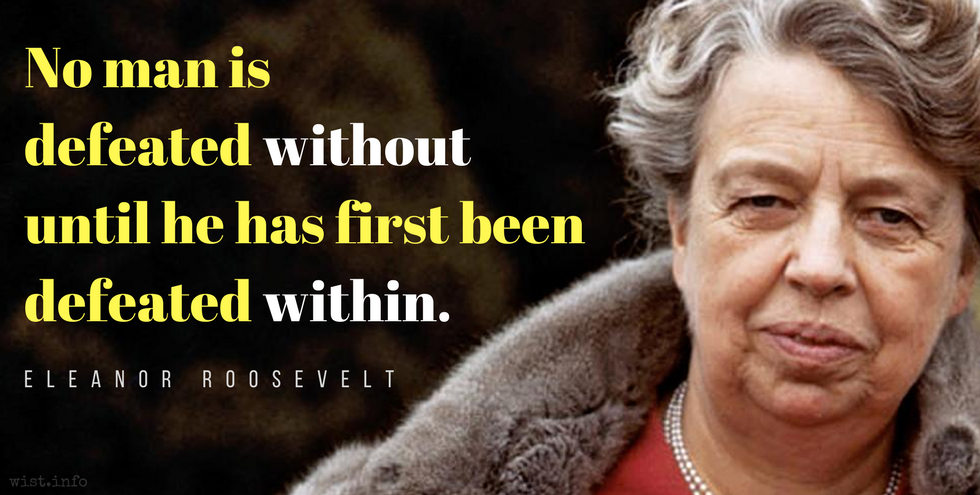
No man is defeated without until he has first been defeated within.
Eleanor Roosevelt (1884–1962) American politician, diplomat, activist; First Lady of the US (1933–45)
You Learn by Living, ch. 10 (1960)
(Source)