

Never allow your mind to dwell on your own misconduct: that is ruin. The conscience has morbid sensibilities; it must be employed but not indulged, like the imagination or the stomach.
Robert Louis Stevenson (1850–1894) Scottish essayist, novelist, poet
Essay (1880-01/02?), “Reflections and Remarks on Human Life,” § 7.1 “Discipline of Conscience”
(Source)
A collection of aphorisms and musings, first published in the Edinburgh Edition of his Works, vol. 28 (1898).
Quotations about:
self-judgment
Note not all quotations have been tagged, so Search may find additional quotes on this topic.
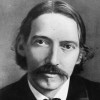
It is the business of this life to make excuses for others, but none for ourselves. We should be clearly persuaded of our own misconduct, for that is the part of knowledge in which we are most apt to be defective.
Robert Louis Stevenson (1850–1894) Scottish essayist, novelist, poet
Essay (1880-01/02?), “Reflections and Remarks on Human Life,” § 1.1 “Justice and Justification”
(Source)
A collection of aphorisms and musings, first published in the Edinburgh Edition of his Works, vol. 28 (1898).
I suffer from the disease of writing books and being ashamed of them when they are finished.
[J’ai la maladie de faire des livres et d’en être honteux quand je les ai faits.]
Charles-Lewis de Secondat, Baron de Montesquieu (1689–1755) French political philosopher
Pensées Diverses [Assorted Thoughts], # 83 / 837 (1720-1755)
(Source)
(Source (French)). Other translations:It is a kind of sickness with me to compose books and to be ashamed of them afterwards.
[ed. Guterman (1963)]I have the disease of writing books and being ashamed of them when I have written them.
[tr. Clark (2012)]


It iz one ov the hardest things on earth for a man to learn, — that he plays a third rate game ov whist.
[It is one of the hardest things on earth for a man to learn — that he plays a third-rate game of whist.]


But when thoughts and words are collected and adjusted, and the whole composition at last concluded, it seldom gratifies the author, when he comes coolly and deliberately to review it, with the hopes which had been excited in the fury of the performance: novelty always captivates the mind; as our thoughts rise fresh upon us, we readily believe them just and original, which, when the pleasure of production is over, we find to be mean and common, or borrowed from the works of others, and supplied by memory rather than invention.
Samuel Johnson (1709–1784) English writer, lexicographer, critic
Essay (1754-03-02), The Adventurer, No. 138
(Source)

Dare not to be guilty of ill Things, tho’ thou wert sure to be secret and unpunished. Conscience will sit upon it, and that is Witness, Jury, Judge, and Executioner.
Thomas Fuller (1654–1734) English physician, preacher, aphorist, writer
Introductio ad Prudentiam, Vol. 2, # 2216 (1727)
(Source)

Search others for their virtues, thy self for thy vices.
Benjamin Franklin (1706–1790) American statesman, scientist, philosopher, aphorist
Poor Richard (1738 ed.)
(Source)

It is useful to know something of the manners of different nations, that we may be enabled to form a more correct judgment regarding our own, and be prevented from thinking that everything contrary to our customs is ridiculous and irrational, — a conclusion usually come to by those whose experience has been limited to their own country.
[Il est bon de savoir quelque chose des moeurs de divers peuples, afin de juger des nôtres plus sainement, et que nous ne pensions pas que tout ce qui est contre nos modes soit ridicule et contre raison, ainsi qu’ont coutume de faire ceux qui n’ont rien vu.]
René Descartes (1596–1650) French philosopher, mathematician
Discourse on Method [Discours de la méthode], Part 1 (1637) [tr. Veitch (1850)]
(Source)
(Source (French)). Other translations:It's good to know something of the manners of severall Nations, that we may not think that all things against our Mode are ridiculous or unreasonable, as those are wont to do, who have seen Nothing.
[Newcombe ed. (1649)]It is good to know something of the customs of different peoples in order to judge more sanely of our own, and not to think that everything of a fashion not ours is absurd and contrary to reason, as do those who have seen nothing.
[tr. Haldane & Ross (1911)]It is good to know something of the customs of various peoples, so that we may judge our own more soundly and not think that everything contrary to our own ways is ridiculous and irrational, as those who have seen nothing of the world ordinarily do.
[tr. Cottingham, Stoothoff (1985)]It is well to know something of the manner of various peoples, in order more sanely to judge our own, and that we do not think that everything against our modes is ridiculous, and against reason, as those who have seen nothing are accustomed to think.

Every man is in some sort a failure to himself. No one ever reaches the heights to which he aspires.
For behind the unwillingness to judge lurks the suspicion that no one is a free agent, and hence the doubt that anyone is responsible or could be expected to answer for what he has done. The moment moral issues are raised, even in passing, he who raises them will be confronted with this frightful lack of self-confidence and hence of pride, and also with a kind of mock-modesty that in saying, Who am I to judge? actually means We’re all alike, equally bad, and those who try, or pretend that they try, to remain halfway decent are either saints or hypocrites, and in either case should leave us alone.

Would you have a friend who talks to you the way you talk to yourself?
Carolyn Ann "Callie" Khouri (b. 1957) American screenwriter, producer, director, feminist
Commencement Address, Sweet Briar College (22 May 1994)
(Source)

[The reformer] wants his conscience to be your guide.
Lawrence J. Peter (1919–1990) American educator, management theorist
Peter’s Quotations (1977)

A man should learn to detect and watch that gleam of light which flashes across his mind from within, more than the lustre of the firmament of bards and sages. Yet he dismisses without notice his thought, because it is his.
In every work of genius we recognize our own rejected thoughts; they come back to us with a certain alienated majesty. Great works of art have no more affecting lesson for us than this. They teach us to abide by our spontaneous impression with good-humored inflexibility then most when the whole cry of voices is on the other side. Else to-morrow a stranger will say with masterly good sense precisely what we have thought and felt all the time, and we shall be forced to take with shame our own opinion from another.Ralph Waldo Emerson (1803–1882) American essayist, lecturer, poet
Essay (1841), “Self-Reliance,” Essays: First Series, No. 2
(Source)
This essay was inspired by his reading of Walter Savage Landor in 1833, with passages pulled from his lecture "Individualism," last in his course on "The Philosophy of History" (1836–1837), with other passages from the lectures "School," "Genius," and "Duty" in his course on "Human Life" (1838–1839).

Few men are sufficiently discerning to appreciate all the evil they do.
[Il n’y a guère d’homme assez habile pour connoître tout le mal qu’il fait.]
François VI, duc de La Rochefoucauld (1613–1680) French epigrammatist, memoirist, noble
Réflexions ou sentences et maximes morales [Reflections; or Sentences and Moral Maxims], ¶269 (1665-1678) [tr. Tancock (1959), ¶269]
(Source)
First appeared in the 2nd (1666) edition. In manuscript, it reads "... assez pénétrant pour apercevoir tout le mal qu’il fait."
(Source (French)). Other translations:There are but few Men Wise enough to know all the Mischief Wisdom does.
[tr. Stanhope (1694), ¶270]There are but few Men wise enough to know all the Mischief they do.
[tr. Stanhope (1706), Powell ed., ¶269]Few men are able to know all the ill they do.
[pub. Donaldson (1783), ¶5]Few men are able to know all the ill they do.
[ed. Lepoittevin-Lacroix (1797), ¶252]Few of us have abilities to know all the ill we occasion.
[ed. Carvill (1835), ¶3]Scarcely any man is clever enough to know all the evil he does.
[ed. Gowens (1851), ¶280]No man is clever enough to know all the evil he does.
[tr. Bund/Friswell (1871), ¶269]No one is sufficiently keen to realize to the full the harm he does.
[tr. Heard (1917), ¶277]Scarcely any man is clever enough to realize all the harm he does.
[tr. Stevens (1939), ¶269]There is hardly a man clever enough to recognize the full extent of the evil that he does.
[tr. FitzGibbon (1957), ¶269]Almost no one is perceptive enough to realize all the harm he does.
[tr. Kronenberger (1959), ¶269]There is scarcely a man alive clever enough to know all the evil he does.
[tr. Whichello (2016) ¶269]

A man’s first care should be to avoid the reproaches of his own heart; his next to escape the censures of the world: if the last interferes with the former, it ought to be entirely neglected; but otherwise there cannot be a greater satisfaction to an honest mind, than to see those approbations which it gives itself seconded by the applauses of the public: a man is more sure of his conduct, when the verdict which he passes upon his own behaviour is thus warranted and confirmed by the opinion of all that know him.
Joseph Addison (1672–1719) English essayist, poet, statesman
Essay (1711-07-20), The Spectator, No. 122
(Source)
Writing of his (fictional) friend, Sir Roger de Coverley.

Deal with the faults of others as gently as with your own.
Proverbs, Sayings, and Adages
Chinese proverb
