Biographys are delitesum reading, we kompare all the virtews ov the persons karakter with our own, and all hiz failings with our nabors.
[Biographies are delightsome reading; we compare all the virtues of the person’s character with our own, and all his failings with our neighbors.]
Josh Billings (1818–1885) American humorist, aphorist [pseud. of Henry Wheeler Shaw]
Josh Billings’ Farmer’s Allminax, 1877-11 (1877 ed.)
(Source)
Quotations about:
self-appreciation
Note not all quotations have been tagged, so Search may find additional quotes on this topic.

So let us look for beauty and grace, for love and friendship, for that which is creative and birth-giving and soul-stretching. Let us dare to laugh at ourselves, healthy, affirmative laughter. Only when we take ourselves lightly can we take ourselves seriously, so that we are given the courage to say, “Yes! I dare disturb the universe.”
Madeleine L'Engle (1918–2007) American writer
Speech (1983-11-16), “Dare To Be Creative,” Lecture, Library of Congress, Washington, DC
(Source)

Be polite and generous, but don’t undervalue yourself. You will be useful, at any rate; you may just as well be happy, while you are about it.
Be not deceived: it is not that which Men believe of thee will make thee happy or miserable; but that which thou believest of thyself.
Thomas Fuller (1654–1734) English physician, preacher, aphorist, writer
Introductio ad Prudentiam, Vol. 2, # 2073 (1727)
(Source)
No one, whether poet or orator, ever yet thought anyone else better than himself. This is the case even with bad ones.
[Nemo umquam neque poëta neque orator fuit, qui quemquam meliorem quam se arbitraretur. Hoc etiam malis contingit.]
Marcus Tullius Cicero (106–43 BC) Roman orator, statesman, philosopher
Epistulae ad Atticum [Letters to Atticus], Book 14, Letter 20, sec. 3 (14.20.3) (44 BC) [tr. Shuckburgh (1900), # 724]
(Source)
At Atticus' suggestion that Cicero write a speech for Brutus to give before the people of Rome. Cicero goes on to suggest this will be even more true for someone gifted and erudite, like Brutus, whose oratorical tastes and style are different from Cicero's.
(Source (Latin)). Alternate translations:There has never yet been either a poet or an orator who did not consider himself the greatest in the world.
[ed. Harbottle (1906)]No one, whether poet or orator, ever thought anyone better than himself. This is so even in the case of bad ones.
[tr. Windstedt (Loeb) (1913)]There never was a poet or an orator who thought any one better than himself.
[tr. McKinlay (1926), # 104]There was never a poet or orator yet who thought anyone better than himself. This applies even to the bad ones.
[tr. Shackleton Bailey (1968)]
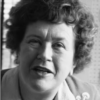
The measure of achievement is not winning awards. It’s doing something that you appreciate, something you believe is worthwhile. I think of my strawberry souffle. I did that at least twenty-eight times before I finally conquered it.
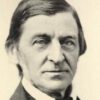
A man should learn to detect and watch that gleam of light which flashes across his mind from within, more than the lustre of the firmament of bards and sages. Yet he dismisses without notice his thought, because it is his.
In every work of genius we recognize our own rejected thoughts; they come back to us with a certain alienated majesty. Great works of art have no more affecting lesson for us than this. They teach us to abide by our spontaneous impression with good-humored inflexibility then most when the whole cry of voices is on the other side. Else to-morrow a stranger will say with masterly good sense precisely what we have thought and felt all the time, and we shall be forced to take with shame our own opinion from another.Ralph Waldo Emerson (1803–1882) American essayist, lecturer, poet
Essay (1841), “Self-Reliance,” Essays: First Series, No. 2
(Source)
This essay was inspired by his reading of Walter Savage Landor in 1833, with passages pulled from his lecture "Individualism," last in his course on "The Philosophy of History" (1836–1837), with other passages from the lectures "School," "Genius," and "Duty" in his course on "Human Life" (1838–1839).
Men go forth to marvel at the heights of mountains and the huge waves of the sea, the broad flow of the rivers, the vastness of the ocean, the orbits of the stars, and yet they neglect to marvel at themselves.
[Et eunt homines mirari alta montium et ingentes fluctus maris et latissimos lapsus fluminum et oceani ambitum et gyros siderum, et relinquunt se ipsos.]
Augustine of Hippo (354–430) Christian church father, philosopher, saint [b. Aurelius Augustinus]
Confessions, Book 10, ch. 8 / ¶ 15 (10.8.15) (c. AD 398) [tr. Outler (1955)]
(Source)
(Source (Latin)). Other translations:And men go abroad to admire the heights of mountains, the mighty billows of the sea, the broad tides of rivers, the compass of the ocean, and the circuits of the stars, and pass themselves by.
[tr. Pusey (1838)]And men go forth to wonder at the heights of mountains, the huge waves of the sea, the broad flow of the rivers, the extent of the ocean, and the courses of the stars, and omit to wonder at themselves.
[tr. Pilkington (1876)]And men travel to admire the heights of mountains, and the vast waves of the sea, and the broad streams of rivers, and the circuit of the ocean, and the orbits of stars, and pass over themselves.
[tr. Hutchings (1890)]Here are men going afar to marvel at the heights of mountains, the mighty waves of the sea, the long courses of great rivers, the vastness of the ocean, the movements of the stars, yet leaving themselves unnoticed.
[tr. Sheed (1943)]Men go forth to marvel at the mountain heights, at huge waves in the sea, at the broad expanse of flowing rivers, at the wide reaches of the ocean, and at the circuits of the stars, but themselves they pass by.
[tr. Ryan (1960)]Yet men go out and gaze in astonishment at high mountains, the huge waves of the sea, the broad reaches of rivers, the ocean that encircles the world, or the stars in their courses. But they pay no attention to themselves.
[tr. Pine-Coffin (1961)]And men go abroad to wonder at the heights of mountains, the huge waves of the sea, the broad streams of rivers, the vastness of the ocean, the turnings of the stars -- and they do not notice themselves.
[tr. Warner (1963)]Men go to wonder at the heights of mountains, and the huge billows of the sea, the broad sweeps of the rivers, the curve of ocean and the circuits of the stars, and yet pass by themselves.
[tr. Blaiklock (1983)]