Do you think that what I say each day on such a variety of topics could come to me if I did not cultivate my mind with learning, or that my mind could bear such a strain if I did not relax it by this same learning?
Indeed I confess that I have devoted myself to these interests. Let others be ashamed who have so buried themselves in books that they can offer nothing for the common enjoyment and can bring nothing forward into the light and the sight of men; but, gentlemen of the jury, why should I be ashamed, I who have lived so long in such a way that leisurely interests have never lured me nor pleasure called me nor sleep kept me from timely service to anyone?
Who, I ask, can censure me on this account, who can rightfully be angry at me, if I take as much time for the pursuit of these studies as is granted others to attend to their interests, to celebrate the festive days of the games, as much time as they devote to other pleasures and the relaxation of mind and body, as much time as others give to early-opening banquets, or even to throwing dice and playing ball?[An tu existimas aut suppetere nobis posse quod cotidie dicamus in tanta varietate rerum, nisi animos nostros doctrina excolamus, aut ferre animos tantam posse contentionem, nisi eos doctrina eadem relaxemus?
Ego vero fateor me his studiis esse deditum: ceteros pudeat, si qui se ita litteris abdiderunt, ut nihil possint ex his neque ad communem adferre fructum neque in aspectum lucemque proferre: me autem quid pudeat, qui tot annos ita vivo, iudices, ut a nullius umquam me tempore aut commodo aut otium meum abstraxerit aut voluptas avocarit aut denique somnus retardarit?
Qua re quis tandem me reprehendat aut quis mihi iure suscenseat, si, quantum ceteris ad suas res obeundas, quantum ad festos dies ludorum celebrandos, quantum ad alias voluptates et ad ipsam requiem animi et corporis conceditur temporum, quantum alii tribuunt tempestivis conviviis, quantum denique alveolo, quantum pilae, tantum mihi egomet ad haec studia recolenda sumpsero?]Marcus Tullius Cicero (106–43 BC) Roman orator, statesman, philosopher
Pro Archia Poeta [For Archia the Poet], ch. 6 / sec. 12-13 (62 BC) [tr. Guinach (1962)]
(Source)
Cicero defends his reading and study habits.
(Source (Latin)). Other translations:Do you think it possible that we could find a supply for our daily speeches, when discussing such a variety of matters, unless we were to cultivate our minds by the study of literature; or that our minds could bear being kept so constantly on the stretch if we did not relax them by that same study?
But I confess that I am devoted to those studies, let others be ashamed of them if they have buried themselves in books without being able to produce anything out of them for the common advantage or anything which may bear the eyes of men and the light. But why need I be ashamed, who for many years have lived in such a manner as never to allow my own love of tranquility to deny me to the necessity or advantage of another or my fondness for pleasure to distract, or even sleep to delay my attention to such claims?
Who then can reproach me or who has any right to be angry with me, if I allow myself as much time for the cultivation of these studies as some take for the performance of their own business, or for celebrating days of festival and games, or for other pleasures, or even for the rest and refreshment of mind and body, or as others devote to early banquets, to playing at dice, or at ball?
[tr. Yonge (1856)]Do you think this can be afforded us as we speak every day in such a variety of cases, unless we abstract our minds from learning; or that our minds can bear such contention, unless we relax them from the same learning?
But I acknowledge I am devoted to these studies; the rest of my brethren may be ashamed if they withdraw from literature in such a manner as from it to be unable either to bear common fruit , or to bring it forth to light to be gazed on; but why am I to be ashamed that my sense of leisure has never led me to remain away in the hour of danger for convenience' sake, or pleasure never allured, or finally slumber never retarded me, who will thus continue to act for as many years as I live?
Why, indeed, should anyone blame me , or have a right to be angry with me if I employ , in the enumeration of these studies, as much time as is allowed to everyone else to attend to their own affairs, to celebrate the festal days of the games, to devote to other pleasures and to the rest of mind and body itself as much time as others devote to protracted banquets, or, in fine, to the gaming-table, or the javelin?
[tr. M'Donogh Mahony (1886)]Or do you suppose, either (that it) would be possible for us to have at hand, what we might utter daily, in such a variety of things [actions], unless we cultivated our minds by study, or (that) (our) minds could bear such great efforts, unless we relaxed them by the same study?
I indeed confess (that), I am given to these pursuits; let it shame others, if they hagve so buried themselves in letters, that they can neither bring nothing [anything] from these (studies), for the common advantage, nor to produce (anything) to view and to light. But why may I be ashamed, O judges who so many years live [have lived] so, that ever [never] either my leisure may have drawn me away or pleasure may have called (me) aside or in fine sleep may have kept (me) back from the emergency or the advantage of any one?
Wherefore who, pray, may reproach me, or who by right may be offended at me, if as much time as is conceded to others, for transacting their affairs, as much for celebrating festival days of games, as much for others pleasures, and for the rest itself of the mind and of the body; much as others devote to protracted banquets, as much in fine as to dice, as much as to ball playing.
[tr. Dewey (1916)]Do you think that I could find inspiration for my daily speeches on so manifold a variety of topics, did I not cultivate my mind with study, or that my mind could endure so great a strain, did not study too provide it with relaxation?
I am a votary of literature, and make the confession unashamed; shame belongs rather to the bookish recluse, who knows not how to apply his reading to the good of his fellows, or to manifest its fruits to the eyes of all. But what shame should be mine, gentlemen, who have made it a rule of my life for all these years never to allow the sweets of a cloistered ease or the seductions of pleasure or the enticements of repose to prevent me from aiding any man in the hour of his need?
How then can I justly be blamed or censured, if it shall be found that I have devoted to literature a portion of my leisure hours no longer than others without blame devote to the pursuit of material gain, to the celebration of festivals or games, to pleasure and the repose of mind and body, to protracted banqueting, or perhaps to the gaming-board? or to ball-playing?
[tr. Watts (Loeb) (1923)]Surely you do not believe that we can keep ourselves supplied with something to say every day on such a variety of topics, unless we thoroughly cultivate our minds by study? Surely you do not think that our minds could endure such strain unless we should give them the relaxation of the same study?
For my part I own that I am devoted to the pursuit of this. The rest of the world may be ashamed to have so buried themselves with literature as to be able neither to produce therefrom anything to the common profit, nor to bring it into sight and publicity. But why should I be ashamed , gentlemen of the jury, to have been living now so many years in such fashion, that neither has my love of retirement ever withdrawn me from any man's time of peril or season of advantage, nor has indulgence called me away, nor, in short, has sloth kept me back from it?
Who therefore, I pray, could find fault with me, or who could, with justice, be vexed with me, if I have myself appropriated to the resumption of such studies just so much out of my leisure hours as the rest of the world devotes to the transaction of their affairs, meeting of private engagements, or to attending the holidays of the Games, or to other indulgences and the mere rest of their minds and bodies? -- just so much time as some devote to lengthy dinners, or even to the dice-box and the tennis-ball?
[tr. Allcroft/Plaistowe (c. 1925)]How do you imagine I could find material for my daily speeches on so many different subjects if I did not train my mind with literary study, and how could my mind cope with so much strain if I did not use such study to help it unwind?
Yes, I for one am not ashamed to admit that I am devoted to the study of literature. Let others be ashamed if they have buried their heads in books and have not been able to find anything in them which could either be applied to the common good or brought out into the open and the light of day. But why should I be ashamed, gentlemen, given that in all the years I have lived my private pastimes have never distracted me, my own pleasures have never prevented me, and not even the need for sleep has ever called me away from helping anyone in his hour of danger or of need?
Who, then, can justly censure or reproach me if I allow myself the same amount of time for pursuing these studies as others set aside for dealing with their own personal affairs, celebrating festivals and games, indulging in other pleasures, and resting their minds and bodies, or as much as they devote to extended partying and to playing dice and ball?
[tr. Berry (2000)][...] I confess indeed that I am obsessed with studying literature. Let this fact shame others who do not know how to make use of their books so that they can’t provide anything from their reading to common profit or to make their benefit clear in sight.
Why, moreover, should I be ashamed when I have lived so many years in such a way that my hobby never prevented me from being useful to anyone at any time and its pleasure or sleepiness never distracted me or slowed me down? In what way, then, can anyone criticize me or censure me if I am discovered to have spent that very same amount of time in pursuing these studies as others do without blame in pursuing profit, or in celebrating festivals or games, in seeking the pleasure and rest of the body and mind, or dragging out hours in dining, gambling or ballgames?
[tr. @sentantiq (2019)]
Quotations about:
pastime
Note not all quotations have been tagged, so Search may find additional quotes on this topic.
If thou wouldest be provident of thy Time; make choice of good Company, and good Books.
Thomas Fuller (1654–1734) English physician, preacher, aphorist, writer
Introductio ad Prudentiam, Vol. 2, # 1858 (1727)
(Source)

Chuse such Pleasures, as recreate much, and cost little.
Thomas Fuller (1654–1734) English physician, preacher, aphorist, writer
Introductio ad Prudentiam, Vol. 1, # 61 (1725)
(Source)
Do not, on a rainy day, ask your child what he feels like doing, because I assure you that what he feels like doing, you won’t feel like watching.
Fran Lebowitz (b. 1950) American journalist, essayist
Social Studies, “Parental Guidance” (1981)
(Source)

Vacation cruises are advertised as luxurious journeys to exotic places, but a chief pleasure is the reading of books [….] On steamer chairs topside or poolside, in the lounges, everywhere you see men and women with their noses in books, devouring them for hours. The Book: Man’s Chief Weapon Against Tedium. Woman’s too.
Garrison Keillor (b. 1942) American entertainer, author
“The Floating Village,” New York Times (2010-01-06)
(Source)
Who does not take pleasure in childish toys?
[τίς δ᾽ οὐχὶ χαίρει νηπίοις ἀθύρμασιν]
Euripides (485?-406? BC) Greek tragic dramatist
Auge [Αὐγῃ], frag. 272 [Heracles] (c. 408 BC) [tr. Collard/Cropp (2008)]
(Source)
Nauck frag. 272, Barnes frag. 20, Musgrave frag. 5. (Source (Greek)). Other translations:Who is not pleas'd with children's harmless sports?
[tr. Wodhall (1809)]Who does not find delight in childish amusements?
[Source]
Where other powers of entertainment are wanting, the true philosopher will derive benefit from such as are given.

The only way to forget time is to make use of it.
[On ne peut oublier le temps qu’en s’en servant.]
Charles Baudelaire (1821–1867) French poet, essayist, art critic
Journaux Intimes [Intimate Journals], “Mon cœur mis à nu [My Heart Laid Bare],” § 111 (1864–1867; pub. 1887) [tr. Sieburth (2022)]
(Source)
(Source (French)). Other translations:One can only forget Time by making use of it.
[tr. Isherwood (1930)]One can only forget about time by making use of it.
[Common, e.g.]
One of the saddest things is that the only thing that a man can do for eight hours a day, day after day, is work. You can’t eat eight hours a day nor drink for eight hours a day nor make love for eight hours — all you can do for eight hours is work. Which is the reason why man makes himself and everybody else so miserable and unhappy.
William Faulkner (1897–1962) American novelist
Interview (1956, Spring), by Jean Stein, “The Art of Fiction,” Paris Review, No. 12
(Source)
Collected in Malcom Cowley (ed.), Writers at Work (1958)
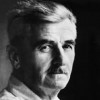
Ordinary men are intent merely on how to spend their time; a man with any talent is interested in how to use his time.
[Die gewöhnlichen Leute sind bloß darauf bedacht, die Zeit zuzubringen; wer irgend ein Talent hat, — sie zu benutzen.]
Arthur Schopenhauer (1788–1860) German philosopher
Parerga and Paralipomena, Vol. 1, “Aphorisms on the Wisdom of Life [Aphorismen zur Lebensweisheit],” ch. 2 “Of What One Is” [Von dem, was einer ist]” (1851) [tr. Payne (1974)]
(Source)
(Source (German)). Other translation:Ordinary people think merely how they shall spend their time; a man of any talent tries to use it.
[tr. Saunders (1890)]

Do something every day that makes you feel guilty for wasting your time.
Robert Brault (b. c. 1945) American aphorist, programmer
(Attributed)

Dreams, books, are each a world; and books we know,
Are a substantial world, both pure and good:
Round these, with tendrils strong as flesh and blood,
Our pastime and our happiness will grow.

The pleasantest of all diversions is to sit alone under the lamp, a book spread out before you, and to make friends with people of a distant past you have never known.
Yoshida Kenkō (1284–1350) Japanese author and Buddhist monk [吉田 兼好]
Essays in Idleness [Tsurezuregusa] (c. 1330)
Every age has its pleasures, its style of wit, and its own ways.
Nicolas Boileau-Despréaux (1636–1711) French poet and critic
The Art of Poetry [L’Art Poétique], Canto 3 (1674)

Now when an American has an idea, he directly seeks a second American to share it. If there be three, they elect a president and two secretaries. Given four, they name a keeper of records, and the office is ready for work; five, they convene a general meeting, and the club is fully constituted.
[Or, quand un Américain a une idée, il cherche un second Américain qui la partage. Sont-ils trois, ils élisent un président et deux secrétaires. Quatre, ils nomment un archiviste, et le bureau fonctionne. Cinq, ils se convoquent en assemblée générale, et le club est constitué.]
Jules Verne (1828–1905) French novelist, poet, playwright
From the Earth to the Moon, ch. 1 “The Gun Club” (1865)
(Source)
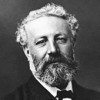
You do not play then at whist, sir! Alas, what a sad old age you are preparing for yourself!
[Vous ne jouez donc pas le whist, monsieur? Hélas! quelle triste vieilesse vous vous préparez!]
Charles-Maurice de Talleyrand-Périgord (1754–1838) French secularized clergyman, statesman, wit, diplomat
(Attributed)
In Amédée Pichot, Souvenirs Intimes sur M. de Talleyrand, "Le Pour et le Contre" (1870).

Endeavor to make thy own Company pleasant to thee.
Thomas Fuller (1654–1734) English physician, preacher, aphorist, writer
Introductio ad Prudentiam, Vol. 1, # 99 (1725)
(Source)
Let us go singing as far as we go: the road will be less tedious.
[Cantantes licet usque (minus via laedit) eamus.]
Virgil (70–19 BC) Roman poet [b. Publius Vergilius Maro; also Vergil]
Eclogues [Eclogae, Bucolics, Pastorals], No. 9 “Lycidas and Moeris,” l. 64ff (9.64) [Lycidas] (42-38 BC)
(Source)
(Source (Latin)). Other translations:Singing lets goe, the way shall better please.
[tr. Ogilby (1649)]A Song will help the beating Storm to bear.
[tr. Dryden (1709), l. 89]Light song will ease the road of half its care.
[tr. Wrangham (1830), l. 76]Yet we may still go on singing; the way will be less tedious.
[tr. Davidson (1854)]Singing let us journey on --
(The way will seem less tedious).
[tr. Calverley (c. 1871)]We may as well sing -- it makes the journey less irksome.
[tr. Wilkins (1873)]Move on, and should the way seem long,
Shorten the distance with a song.
[tr. King (1882), ll. 915-916]Walk on, and make
The road less tedious with our verse.
[tr. Palmer (1883)]Then singing let us go,
our way to lighten.
[tr. Greenough (1895)]Let us go on still singing; the way is less tedious.
[tr. Bryce (1897)]We may go singing all the way, and the road weary us the less.
[tr. Mackail (1899)]Let us go singing to beguile our way.
[tr. Mackail/Cardew (1908)]Let us go forward singing, for the path
Tires us less so.
[tr. Williams (1915)]We may yet go singing on our way -- it makes the road less irksome.
[tr. Fairclough (Loeb) (1916)]Let us sing carols all the way: 'twill be
Less tedious.
[tr. Royds (1922)]Why not go forward singing all the way? It makes the going easier.
[tr. Rieu (1949)]We still may sing as we go and lighten the journey.
[tr. Johnson (1960)]We can press on,
Singing as we go: a song lightens a long road.
[tr. Day Lewis (1963), ll. 63-64]Let's keep on going, but singing as we go.
Sing makes the journey easier.
[tr. Ferry (1999)]We might go along singing (the road will be less tedious).
[tr. Kline (2001)]
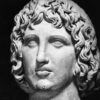
Most people, when they are left free to fill their own time according to their choice are at a loss to think of anything sufficiently pleasant to be worth doing. And whatever they decide on, they are troubled by the feeling that something else would have been pleasanter. The ability to fill leisure intelligently is the last product of civilization, and at present very few people have reached this level.
Bertrand Russell (1872–1970) English mathematician and philosopher
Conquest of Happiness, Part 2, ch. 14 “Work” (1930)
(Source)
The time you enjoy wasting is not wasted time.
Bertrand Russell (1872–1970) English mathematician and philosopher
(Misattributed)
Misattributed to many modern authors besides Russell, including John Lennon, T. S. Elliot, and Soren Kierkegaard.
The frequent misattribution to Russell is from the phrase being used by Lawrence J. Peter in Peter's Quotations (1977) about a different Russell quote ("The thing that I should wish to obtain from money would be leisure with security"). In turn, the words were not original with Peter: the earliest citation for this quote is Marthe Troly-Curtin, Phyrnette Married, ch. 29 (1912).
More information on the history of this quotation: Time You Enjoy Wasting Is Not Wasted Time – Quote Investigator®.
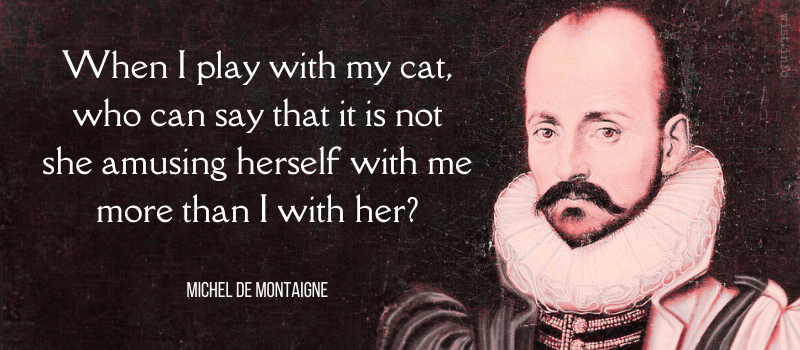
When I play with my cat, who can say that it is not she amusing herself with me more than I with her?
[Quand je me jouë à ma chatte, qui sçait, si elle passe son temps de moy plus que je ne fay d’elle?]
Michel de Montaigne (1533–1592) French essayist
Essays, Book 2, ch. 12 (2.12), “Apology for Raymond Sebond [Apologie de Raimond de Sebonde]” (1573) [tr. Ives (1925)]
(Source)
(Source (French)). Other translations:When I am playing with my Cat, who knowes whether she have more sporte in dallying with me, then I have in gaming with hir?
[tr. Florio (1603)]When I play with my cat, who knows whether puss is not more diverted with me than I am with puss?
[tr. Cotton (1686)]When I play with my cat who knows whether I do not make her more sport than she makes me?
[tr. Cotton/Hazlitt (1877)]When I play with my cat, who knows if I am not a pastime to her more than she is to me.
[tr. Frame (1943)]When I play with my cat, how do I know that she is not passing time with me rather than I with her?
[tr. Screech (1987)]

“I wish life was not so short,” he thought. “Languages take such a time, and so do all the things one wants to know about.”
J.R.R. Tolkien (1892–1973) English writer, fabulist, philologist, academic [John Ronald Reuel Tolkien]
The Lost Road, ch. 1 [Alboin] (1987) [ed. C. Tolkien]
(Source)
There is a very fine line between “hobby” and “mental illness.”
Dave Barry (b. 1947) American humorist, author, columnist
“25 Things I Have Learned In 50 Years,” #11 (1997)

CALVIN: The only skills I have the patience to learn are those that have no real application in life.
Bill Watterson (b. 1958) American cartoonist
Calvin and Hobbes (1993-07-03)
(Source)
After performing a series of tricks with a yo-yo.