But insincerity is very troublesome to manage; a man hath so many things to attend to, so many ends to bring together, as make his life a very perplexed and intricate thing. Oportet mendacem esse memorem, “A liar had need of a good memory,” lest he contradict at one time what he said at another: but truth is always consistent with itself, and needs nothing to help it out; it is always near at hand, and sits upon our lips, and is ready to drop out before we are aware: whereas a lie is troublesome, and sets a man’s invention upon the rack, and one trick needs a great many more to make it good.
Quotations about:
lie
Note not all quotations have been tagged, so Search may find additional quotes on this topic.
Never chase a lie. Let it alone, and it will run itself to death.
Lyman Beecher (1775–1863) American minister, preacher, abolitionist
(Attributed)
Where cited, it is usually to "Naval Journal (March 1848)," and in fact it does appear in The Sailor's Magazine and Naval Journal, Vol. 20, No. 7 (1848-03), but only as column filler, clearly not its original source. Such filler was sold to magazines and newspapers to fill out unused column space.
Nor is that the earliest appearance. Identically or very similarly formatted and attributed copies can be found in The New Jersey Freeman, Vol. 3, No. 5 (1848-02-05); the Ohio Cultivator, Vol. 3, No. 24 (1847-12-15); The Youth's Companion, Vol. 21, No. 30 (1847-11-25); the Boston Advent Herald, Vol. 14 (1847-11-13); the Christian Watchman, Vol. 28, No. 40 (1847-10-01).
I cannot find an original source for Beecher saying or writing this.
The quote (including its following "I can work out a good character much faster than any one can lie me out of it") can be found in other, slightly later, sources without attribution to Beecher (e.g., 1853, 1856). The Book of Thought (1858) attributes it to [Bishop George?] Berkeley.
A similar aphorism appears around the same time, unattributed, in Bronson, Elocution; or, Mental and Vocal Philosophy (1845) ("Never chase a lie; for if you keep quiet, truth will eventually overtake it") and in the American Agriculturalist, Vol. 11, No. 18 (1853-12-07) ("Never chase a lie; for if you be quiet, truth will eventually overtake it and destroy it").

To lie about a man never hurts him, but to tell the truth about him sumtimes duz.
[To lie about a man never hurts him, but to tell the truth about him sometimes does.]
Josh Billings (1818–1885) American humorist, aphorist [pseud. of Henry Wheeler Shaw]
Josh Billings’ Farmer’s Allminax, 1875-10 (1875 ed.)
(Source)
MADRIGAL: One can lie. … But truth is more interesting!
Enid Bagnold (1889–1981) English writer
The Chalk Garden, Act 3 (1955)
Ellipses in original.

And, after all, what is a lie? ‘T is but
The truth in masquerade; and I defy
Historians, heroes, lawyers. priests, to put
A fact without some leaven of a lie.
The truth that survives is simply the lie that is pleasant to believe.
H. L. Mencken (1880–1956) American writer and journalist [Henry Lewis Mencken]
A Little Book in C Major, ch. 2, § 31 (1916)
(Source)
The truth may be out there, but lies are inside your head.

When words stop meaning anything, when truth doesn’t matter, when people can just lie with abandon, democracy can’t work.
Barack Obama (b. 1961) American politician, US President (2009–2017)
Speech, Miami (2 Nov 2018)
(Source)
Beware:
All too often,
We say
What we hear others say.
We think
What we’re told that we think.
We see
What we’re permitted to see.
Worse!
We see what we’re told that we see.
Repetition and pride are the keys to this.
To hear and to see
Even an obvious lie
Again
And again and again
May be to say it,
Almost by reflex
Then to defend it
Because we’ve said it
And at last to embrace it
Because we’ve defended it
And because we cannot admit
That we’ve embraced and defended
An obvious lie.Thus, without thought,
Without intent,
We make
Mere echoes
Of ourselves —
And we say
What we hear others say.Octavia Butler (1947–2006) American writer
Parable of the Talents, ch. 18, epigram (1998)
(Source)
Internally cited to the book's scripture, Earthseed: The Books of the Living,, and to a poem, "Warrior," written by the protagonist's uncle, Marcos Duran.

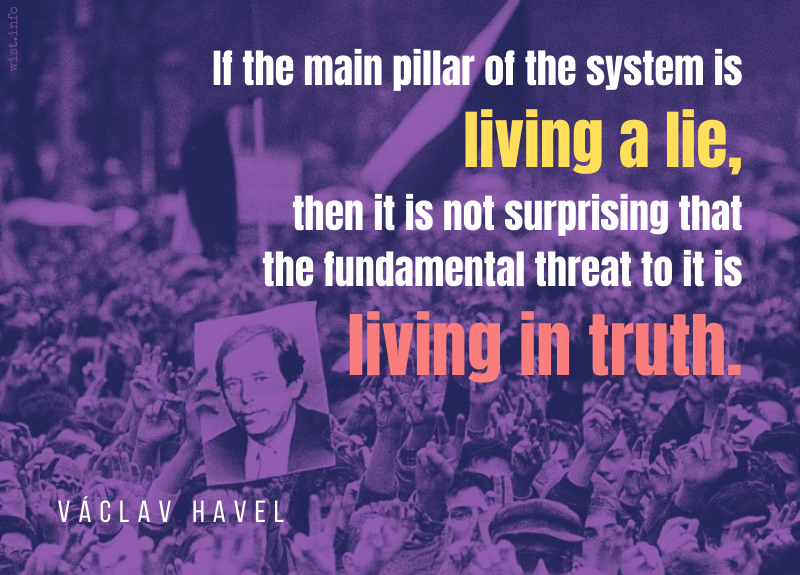
If the main pillar of the system is living a lie, then it is not surprising that the fundamental threat to it is living in truth. This is why it must be suppressed more severely than anything else.
Václav Havel (1936–2011) Czech playwright, essayist, dissident, politician
Essay (1978-10), “The Power of the Powerless,” ch. 7 [tr. Wilson], The Power of the Powerless [ed. John Keane] (1985)
(Source)
There is another sort of lies, inoffensive enough in themselves, but wonderfully ridiculous; I mean those lies which a mistaken vanity suggests, that defeat the very end for which they are calculated, and terminate in the humiliation and confusion of their author, who is sure to be detected. These are chiefly narrative and historical lies, all intended to do infinite honor to their author. He is always the hero of his own romances; he has been in dangers from which nobody but himself ever escaped; he as seen with his own eyes, whatever other people have heard or read of; he has had more bonnes fortunes than ever he knew women; and has ridden more miles post in one day, than ever courier went in two. He is soon ridiculed, and as soon becomes the object of universal contempt and ridicule.
Lord Chesterfield (1694–1773) English statesman, wit [Philip Dormer Stanhope]
Letter to his son, #126 (21 Sep 1747)
(Source)
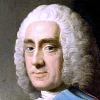
How easy it is to make people believe a lie, and how hard it is to undo that work again!
Mark Twain (1835–1910) American writer [pseud. of Samuel Clemens]
Dictation (1906-12-02), The Autobiography of Mark Twain, Vol. 2 (2013)
(Source)
A phrase that may be the origin the spurious Twain quotation, "It's easier to fool people than to convince them that they have been fooled."
The civilized are those who get more out of life than the uncivilized, and for this the uncivilized have not forgiven them.
Cyril Connolly (1903–1974) English intellectual, literary critic and writer.
The Unquiet Grave (1944)
To anger a conservative, lie to him. To anger a liberal, tell him the truth.
Theodore Roosevelt (1858–1919) American politician, statesman, conservationist, writer; US President (1901–09)
(Spurious)
Frequently attributed to Roosevelt but unsourced; first appears in the 2000s. See here for more discussion.
You must not tell lies because if you do you will find yourself unable to believe anything that is told to you.
George Bernard Shaw (1856–1950) Irish playwright and critic
The Intelligent Woman’s Guide to Socialism, Capitalism, Sovietism, and Fascism, ch. 74 (1928)
A single lie destroys a whole reputation for integrity.
[Piérdese con sola una mentira todo el crédito de la entereza.]
Baltasar Gracián y Morales (1601–1658) Spanish Jesuit priest, writer, philosopher
The Art of Worldly Wisdom [Oráculo Manual y Arte de Prudencia], § 181 (1647) [tr. Jacobs (1892)]
(Source)
(Source (Spanish)). Other translations:By one single lie, a man loses all his good name.
[Flesher ed. (1685)]A whole reputation for uprightness may be ruined with a single lie.
[tr. Fischer (1937)]A single lie can destroy your reputation for honesty.
[tr. Maurer (1992)]

The best liar is he who makes the smallest amount of lying go the longest way.
Samuel Butler (1835–1902) English novelist, satirist, scholar
The Way of All Flesh, ch. 39 (1903)
I do not mind lying, but I hate inaccuracy.
Samuel Butler (1835–1902) English novelist, satirist, scholar
The Note-Books of Samuel Butler, ch. 19 [ed. Festing-Jones] (1907)
Nearly always, the best deception trades on the enemy’s own preconceptions. If he already believes what you want him to believe, you have merely to confirm his own ideas rather than to undertake the more difficult task of inserting new ones into his mind.
Ronald Lewin (1914–1984) British military historian, radio producer publishing editor
Ultra Goes to War, ch. 10 (1978)

Truth is generally the best vindication against slander.
Abraham Lincoln (1809–1865) American lawyer, politician, US President (1861–65)
Letter (1864-07-14) to Edwin M. Stanton
(Source)
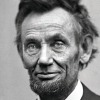
It is more from carelessness about truth than from intentional lying that there is so much falsehood in the world.
Samuel Johnson (1709–1784) English writer, lexicographer, critic
Comment (1778-03-30) to Mrs. Thrale, in James Boswell, The Life of Samuel Johnson (1791)
(Source)
During the week of 30 March - 3 April.
There are two kinds of statistics, the kind you look up and the kind you make up.
Rex Stout (1886–1975) American writer
Death of a Doxy, ch. 9 (1966)
If falsehood, like truth, had but one face, we should be better off, for we should take for certain the contrary of what the liar said. But the opposite of truth has a hundred thousand shapes and a limitless field.
[Si comme la verité, le mensonge n’avoit qu’un visage, nous serions en meilleurs termes : car nous prendrions pour certain l’opposé de ce que diroit le menteur. Mais le revers de la verité a cent mille figures, et un champ indefiny.]
Michel de Montaigne (1533–1592) French essayist
Essays, Book 1, ch. 9 (1.9), “Of Liars [Des Menteurs]” (1572) [tr. Ives (1925)]
(Source)
(Source (French)). Other translations:If a lie had no more faces but one, as truth hath; we should be in farre better termes then we are: For, whatsoever a lier should say, we would take it in a contrarie sense. But the opposite of truth hath many-many shapes, and an undefinite field.
[tr. Florio (1603)]If Falshood had, like Truth, but one Face only, we should be upon better Terms; for we should then take the contrary to what the Lyer says for certain Truth; but the Reverse of Truth has a hundred thousand Figures, and a Field indefinite without Bound or Limit.
[tr. Cotton (1686)]If Falsehood had, like Truth, only one face, we should be upon better terms; for we should then take the contrary of what the liar should say for certain truth; but the reverse of truth has a hundred thousand forms, and a field without limits.
[tr. Friswell (1868)]If falsehood had, like truth, but one face only, we should be upon better terms; for we should then take for certain the contrary to what the liar says: but the reverse of truth has a hundred thousand forms, and a field indefinite, without bound or limit.
[tr. Cotton/Hazlitt (1877)]If falsehood, like truth, had only one face, we would be in better shape. For we would take as certain the opposite of what the liar said. But the reverse of truth has a hundred thousand shapes and a limitless field.
[tr. Frame (1943)]If a lie, like truth, had only one face we could be on better terms, for certainty would be the reverse of what the liar said. But the reverse side of truth has a hundred thousand shapes and no defined limits.
[tr. Screech (1987)]If, like truth, falsehood had only one face, we would be better off. We could trust that the opposite of whatever a liar says is true. But the flip side of the truth is endless and has a hundred thousand faces.
[tr. HyperEssays (2023)]
If fallacies come knocking at my door,
I’d rather feed, and shelter full a score,
Than hide behind the black portcullis, doubt,
And run the risk of barring one Truth out.And if pretension for a time deceive,
And prove me one too ready to believe,
Far less my shame, than if by stubborn act,
I brand as lie, some great colossal Fact.Ella Wheeler Wilcox (1850–1919) American author, poet, temperance advocate, spiritualist
Poem (1906), “‘Credulity,'” st. 1-2, New Thought Pastels
(Source)

For the great enemy of truth is very often not the lie — deliberate, contrived and dishonest — but the myth — persistent, persuasive, and unrealistic. Too often we hold fast to the cliches of our forebears. We subject all facts to a prefabricated set of interpretations. We enjoy the comfort of opinion without the discomfort of thought.
John F. Kennedy (1917–1963) American politician, author, journalist, US President (1961–63)
Commencement Address, Yale University (1962-06-11)
(Source)
You may fool all the people some of the time; you can even fool some of the people all the time; but you can’t fool all of the people all the time.
Abraham Lincoln (1809–1865) American lawyer, politician, US President (1861–65)
(Attributed)
A possible precursor to this quote is the widely-republished Jacques Abbadie, "Treatise on the Truth of the Christian Religion [Traité de la Vérité de la Religion Chrétienne]," ch. 2 (1684):… ont pû tromper quelques hommes, ou les tromper tous dans certains lieux & en certains tems, mais non pas tous les hommes, dans tous les lieux & dans tous les siécles.
[One can fool some men, or fool all men in some places and times, but one cannot fool all men in all places and ages.]
A similar passage was used in Denis Diderot and Jean le Rond d’Alembert, ed., Encyclopédie: ou Dictionnaire Raisonné des Sciences, des Arts et des Métiers, Vol. 4 (1754).
An early English version came from a speech by William J. Groo to a convention of Prohibitionists; the newspaper recording of it does not include any attribution by Groo to anyone else:You can fool all the people part of the time, or you can fool some people all the time, but you cannot fool all people all the time.
First attributed to Lincoln by Fred F. Wheeler, interviewed in the Albany Times (1886-03-08): "You can fool part of the people some of the time, you can fool some of the people all of the time, but you cannot fool all the people all of the time."
First cited in detail in Alexander K. McClure, “Abe” Lincoln’s Yarns and Stories, (1904), in the above form; it was cited as a Lincoln speech in Clinton, Ill. (1858-09-02), but the passage is not found in any surviving Lincoln documents. No Lincoln reference is found in contemporary writings.
Also attributed to P.T. Barnum and Bob Dylan. See also Lawrence J. Peter.
More detailed discussion of the quotation and its origins can be found here:
One of the most striking differences between a cat and a lie is that a cat has only nine lives.
Mark Twain (1835–1910) American writer [pseud. of Samuel Clemens]
The Tragedy of Pudd’n’head Wilson, ch. 7, epigraph (1894)
MERLIN: When a man lies, he murders some part of the world.
John Boorman (b. 1933) English film director, writer
Excalibur (1981) [with Rospo Pallenburg]
It reminds me of the small boy who jumbled his Biblical quotations and said: “A lie is an abomination unto the Lord, and a very present help in trouble.”
Adlai Stevenson II (1900–1965) American politician, diplomat, statesman
Speech (1951-01), Springfield, Illinois
Jumbling together parts of Proverbs 12:22 and Psalms 46:1.
The quotation is attributed to Stevenson in Bessie James and Mary Waterstreet (ed.), Adlai's Almanac (1952) and Bill Adler (ed.), The Stevenson Wit (1965). It is also repeated in an interview (1953-03), "Pageant Visits: Adlai E. Stevenson," Pageant Magazine.
The quote is sometimes given without the preface (making it sound as if Stevenson used the phrase directly).
The anecdote was not original with Stevenson. Historian David McCullough in his history of the building of the Panama Canal, The Path Between the Seas (1977) says the phrase was used on the floor of the US Senate by John T. Morgan, who served there 1877-1907. I have also found versions of it in 1899 and 1902.
See also Elizabeth Knowles, What They Didn't Say (2006).
ANTONIO: Mark you this, Bassanio,
The devil can cite Scripture for his purpose.
An evil soul, producing holy witness,
Is like a villain with a smiling cheek,
A goodly apple rotten at the heart.
O, what a goodly outside falsehood hath!William Shakespeare (1564–1616) English dramatist and poet
Merchant of Venice, Act 1, sc. 3, l. 106ff (1.3.106-111) (1597)
(Source)

Please don’t lie to me, unless you’re absolutely sure I’ll never find out the truth.
Ashleigh Brilliant (b. 1933) Anglo-American epigramist, aphorist, cartoonist
Pot-Shots