

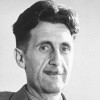
It is not easy to find a direct economic explanation of the behaviour of the people who now rule the world. The desire for pure power seems to be much more dominant than the desire for wealth. This has often been pointed out, but curiously enough the desire for power seems to be taken for granted as a natural instinct, equally prevalent in all ages, like the desire for food. Actually it is no more natural, in the sense of being biologically necessary, than drunkenness or gambling. And if it has reached new levels of lunacy in our own age, as I think it has, then the question becomes: What is the special quality in modern life that makes a major human motive out of the impulse to bully others? If we could answer that question — seldom asked, never followed up — there might occasionally be a bit of good news on the front page of your morning paper.
George Orwell (1903–1950) English journalist, essayist, writer [pseud. of Eric Arthur Blair]
Essay (1946-11-29), “As I Please” column, Tribune Newspaper
(Source)
Quotations about:
power-seeking
Note not all quotations have been tagged, so Search may find additional quotes on this topic.
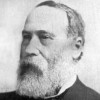
Power, like the diamond, dazzles the beholder, and also the wearer; it dignifies meanness; it magnifies littleness; to what is contemptible, it gives authority; to what is low, exaltation.
Charles Caleb "C. C." Colton (1780–1832) English cleric, writer, aphorist
Lacon: Or, Many Things in Few Words, Vol. 1, § 20 (1820)
(Source)
It is important not to confuse nationalism with mere worship of success. The nationalist does not go on the principle of simply ganging up with the strongest side. On the contrary, having picked his side, he persuades himself that it is the strongest, and is able to stick to his belief even when the facts are overwhelmingly against him. Nationalism is power-hunger tempered by self-deception. Every nationalist is capable of the most flagrant dishonesty, but he is also — since he is conscious of serving something bigger than himself — unshakably certain of being in the right.
George Orwell (1903–1950) English journalist, essayist, writer [pseud. of Eric Arthur Blair]
Essay (1945-05), “Notes on Nationalism,” Polemic Magazine (1945-10)
(Source)
Nationalism is not to be confused with patriotism. Both words are normally used in so vague a way that any definition is liable to be challenged, but one must draw a distinction between them, since two different and even opposing ideas are involved.
By “patriotism” I mean devotion to a particular place and a particular way of life, which one believes to be the best in the world but has no wish to force upon other people. Patriotism is of its nature defensive, both militarily and culturally.
Nationalism, on the other hand, is inseparable from the desire for power. The abiding purpose of every nationalist is to secure more power and more prestige, not for himself but for the nation or other unit in which he has chosen to sink his own individuality.George Orwell (1903–1950) English journalist, essayist, writer [pseud. of Eric Arthur Blair]
Essay (1945-05), “Notes on Nationalism,” Polemic Magazine (1945-10)
(Source)