

A consciousness of the fact that war means practically total destruction is the reason, I think, for the rising tide to prevent what seems such a senseless procedure. I understand that it is perhaps difficult for some people, whose lives have been lived with a sense of the need for military development, to envisage the possibility of being no longer needed. But the average citizen is beginning to think more and more of the need to develop machinery to settle difficulties in the world without destruction or the use of atomic bombs.
Eleanor Roosevelt (1884–1962) American politician, diplomat, activist; First Lady of the US (1933–45)
Column (1961-12-20), “My Day”
(Source)
Quotations about:
nuclear war
Note not all quotations have been tagged, so Search may find additional quotes on this topic.

I think the women of this country, if they face the fact of the present situation, will agree with me that this is a time for action — not for war, but for mobilization of every bit of peace machinery. It is also a time for facing the fact that you cannot use a weapon, even though it is the weapon that gives you greater strength than other nations, if it is so destructive that it practically wipes out large areas of land and great numbers of innocent people.
Eleanor Roosevelt (1884–1962) American politician, diplomat, activist; First Lady of the US (1933–45)
Column (1954-04-16), “My Day”
(Source)
On the Hydrogen Bomb.
No one can use this new destructive weapon without destroying innumerable innocent people. It would not be only our enemies that would condemn us, it would be our own conscience.
Eleanor Roosevelt (1884–1962) American politician, diplomat, activist; First Lady of the US (1933–45)
Column (1954-04-16), “My Day”
(Source)
On the Hydrogen Bomb.
To sound off with a cheerful “give me liberty or give me death” sort of argument in the face of the unprecedented and inconceivable potential of destruction in nuclear warfare is not even hollow; it is downright ridiculous. Indeed it seems so obvious that it is a very different thing to risk one’s own life for the life and freedom of one’s country and one’s posterity from risking the very existence of the human species for the same purpose that it is difficult not to suspect the defenders of the “better dead than red” or “better death than slavery” slogans of bad faith.
Which of course is not to say the reverse, “better red than dead,” has any more to recommend itself; when an old truth ceases to be applicable, it does not become any truer by being stood on its head.
As a matter of fact, to the extent that the discussion of the war question today is conducted in these terms, it is easy to detect a mental reservation on both sides. Those who say “better dead than red” actually think: The losses may not be as great as some anticipate, our civilization will survive; while those who say “better red than dead” actually think: Slavery will not be so bad, man will not change his nature, freedom will not vanish from the earth forever. In other words, the bad faith of the discussants lies in that both dodge the preposterous alternative they themselves have proposed; they are not serious.Hannah Arendt (1906–1975) German-American philosopher, political theorist
On Revolution, Introduction (1963)
(Source)

In nuclear or biological warfare, in which we know we cannot limit effects, how do we distinguish our enemies from our friends — or our enemies from ourselves? Does this not bring us exactly to the madness of terrorists who kill themselves in order to kill others?
Wendell Berry (b. 1934) American farmer, educator, poet, conservationist
Essay (2003-02-09), “A Citizen’s Response,” sec. 4, Citizenship Papers (2003)
(Source)
This passage did not appear in the original (abridged) full-page ad in the New York Times (2003-02-06) or the Orion Magazine (2003-03/04) publication of the essay.
LYMAN: He’s not the enemy. Scott, the Joint Chiefs, even the very emotional, very illogical lunatic fringe: they’re not the enemy. The enemy’s an age — a nuclear age. It happens to have killed man’s faith in his ability to influence what happens to him. And out of this comes a sickness, and out of sickness a frustration, a feeling of impotence, helplessness, weakness. And from this, this desperation, we look for a champion in red, white, and blue. Every now and then a man on a white horse rides by, and we appoint him to be our personal god for the duration. For some men it was a Senator McCarthy, for others it was a General Walker, and now it’s a General Scott.
Rod Serling (1924–1975) American screenwriter, playwright, television producer, narrator
Seven Days in May, film (1964)
(Source)
Based on the 1962 novel by Fletcher Knebel and Charles W. Bailey II.
These lines are almost all Serling's. By wording, the only parallel I could find in the original novel was this:The nuclear age, by killing man’s faith in his ability to influence what happens, could destroy the United States even if no bombs were ever dropped.
[Source]

And the great danger facing us today is not so much the atomic bomb that was created by physical science. Not so much that atomic bomb that you can put in an aeroplane and drop on the heads of hundreds and thousands of people — as dangerous as that is. But the real danger confronting civilization today is that atomic bomb which lies in the hearts and souls of men, capable of exploding into the vilest of hate and into the most damaging selfishness — that’s the atomic bomb that we’ve got to fear today. Problem is with the men. Within the heart and the souls of men. That is the real basis of our problem.
Martin Luther King, Jr. (1929–1968) American clergyman, civil rights leader, social activist, preacher
“Rediscovering Lost Values,” Sermon, Second Baptist Church, Detroit (28 Feb 1954)
(Source)

It was said that God, in order to test mankind which had become swelled with pride as in the time of Noah, had commanded the wise men of that age, among them the Blessed Leibowitz, to devise great engines of war such as had never before been upon the Earth, weapons of such might that they contained the very fires of Hell, and that God had suffered these magi to place the weapons in the hands of princes, and to say to each prince: “Only because the enemies have such a thing have we devised this for thee, in order that they may know that thou hast it also, and fear to strike. See to it, m’Lord, that thou fearest them as much as they shall now fear thee, that none may unleash this dread thing which we have wrought.” But the princes, putting the words of their wise men to naught, thought each to himself: If I but strike quickly enough, and in secret, I shall destroy these others in their sleep, and there will be none to fight back; the earth shall be mine.
Such was the folly of princes, and there followed the Flame Deluge.Walter M. Miller Jr. (1923–1996) American writer
A Canticle for Leibowitz, “Fiat Homo,” ch. 6 (1959)
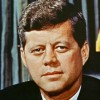
Mankind must put an end to war, or war will put an end to mankind.
John F. Kennedy (1917–1963) American politician, author, journalist, US President (1961–63)
Speech, United Nations (23 Sep 1961)
Speech written by Theodore "Ted" Sorensen.

I do not know how the Third World War will be fought, but I can tell you what they will use in the Fourth — rocks!
Albert Einstein (1879–1955) German-American physicist
“Einstein at 70,” interview by Alfred Werner, Liberal Judaism (April-May 1949)
For more information on this citation, and on earlier variants of this quote, see The Futuristic Weapons of WW3 Are Unknown, But WW4 Will Be Fought With Stones and Spears – Quote Investigator®.
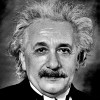
A new type of thinking is essential if mankind is to survive and move toward higher levels.
Albert Einstein (1879–1955) German-American physicist
Letter (1946-05-25), quoted in “Atomic Education Urged by Einstein,” New York Times
(Source)
This may be the source of some otherwise unsourced Einstein quotes:The missive was sent by telegram to "several hundred prominent Americans."
- "The significant problems we face cannot be solved at the same level of thinking we were at when we created them"
- "The world we have created today as a result of our thinking thus far has problems which cannot be solved by thinking the way we thought when we created them."
- "The world we have created is a product of our thinking; it cannot be changed without changing our thinking."
- "This problem will not be solved by the same minds that created it."
- "We cannot solve our problems with the same thinking we used when we created them."
- "We can't solve problems by using the same kind of thinking that created them."
Einstein revisited (alt. source) this theme in "The Real Problem Is in the Hearts of Men," New York Times Magazine (1946-06-23): "Many persons have inquired concerning a recent message of mine that 'a new type of thinking is essential if mankind is to survive and move toward higher levels.' [...] Past thinking and methods did not prevent world wars. Future thinking must prevent wars."