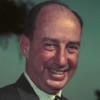
LYMAN: He’s not the enemy. Scott, the Joint Chiefs, even the very emotional, very illogical lunatic fringe: they’re not the enemy. The enemy’s an age — a nuclear age. It happens to have killed man’s faith in his ability to influence what happens to him. And out of this comes a sickness, and out of sickness a frustration, a feeling of impotence, helplessness, weakness. And from this, this desperation, we look for a champion in red, white, and blue. Every now and then a man on a white horse rides by, and we appoint him to be our personal god for the duration. For some men it was a Senator McCarthy, for others it was a General Walker, and now it’s a General Scott.
Rod Serling (1924–1975) American screenwriter, playwright, television producer, narrator
Seven Days in May, film (1964)
(Source)
Based on the 1962 novel by Fletcher Knebel and Charles W. Bailey II.
These lines are almost all Serling's. By wording, the only parallel I could find in the original novel was this:The nuclear age, by killing man’s faith in his ability to influence what happens, could destroy the United States even if no bombs were ever dropped.
[Source]
Quotations about:
cold war
Note not all quotations have been tagged, so Search may find additional quotes on this topic.
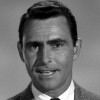
We are neither “warmongers” nor “appeasers,” neither “hard” nor “soft.” We are Americans, determined to defend the frontiers of freedom, by an honorable peace if peace is possible, but by arms if arms are used against us. And if we are to move forward in that spirit, we shall need all the calm and thoughtful citizens that this great University can produce, all the light they can shed, all the wisdom they can bring to bear. It is customary, both here and around the world, to regard life in the United States as easy. Our advantages are many. But more than any other people on earth, we bear burdens and accept risks unprecedented in their size and their duration, not for ourselves alone but for all who wish to be free.
John F. Kennedy (1917–1963) American politician, author, journalist, US President (1961–63)
Speech, Centennial Celebration, University of Washington, Seattle (1961-11-16)
(Source)
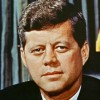
If we stay strong, then I believe we can stabilize the world and have peace based on force. Now, peace based on force is not as good as peace based on agreement, but in the terrible world in which we live, in the world where the Russians have enslaved many millions of human beings, in the world where they have killed men, I think that for the time being the only peace we can have is the peace based on force.
Edward Teller (1908–2003) Hungarian-American theoretical physicist
“Fallout and Disarmament: A Debate Between Linus Pauling and Edward Teller,” KQED-TV, San Francisco (20 Feb 1958)
(Source)
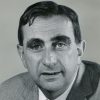
RIPPER: I can no longer sit back and allow Communist infiltration, Communist indoctrination, Communist subversion, and the international Communist conspiracy to sap and impurify all of our precious bodily fluids.
Stanley Kubrick (1928–1999) American film director, screenwriter, producer
Dr. Strangelove (1964) [with T. Southern, Peter George, based on Red Alert by Peter George]
Nor would surrender in Viet-Nam bring peace, because we learned from Hitler at Munich that success only feeds the appetite of aggression. The battle would be renewed in one country and then another country, bringing with it perhaps even larger and crueler conflict, as we have learned from the lessons of history.
Lyndon B. Johnson (1908–1973) American politician, educator, US President (1963–69)
Speech (1965-07-28), News Conference, White House, Washington, D. C.
(Source)
The pre-conference prepared remarks were the first definitive set of national policy statements as to America's growing military presence in Viet Nam. The idea that a Communist victory in Viet Nam would lead to similar wars in other nations was called the "Domino Theory."
We must show by our behavior that we believe in equality and justice and that our religion teaches faith and love and charity to our fellow men. Here is where each of us has a job to do that must be done at home, because we can lose the battle on the soil of the United States just as surely as we can lose it in any one of the countries of the world.
Eleanor Roosevelt (1884–1962) American politician, diplomat, activist; First Lady of the US (1933–45)
India and the Awakening East, Conclusion (1953)
(Source)

It seems to me that America’s objective today should be to try to make herself the best possible mirror of democracy that she can. The people of the world can see what happens here. They watch us to see what we are going to do and how well we can do it. We are giving them the only possible picture of democracy that we can: the picture as it works in actual practice. This is the only way other peoples can see for themselves how it works; and can determine for themselves whether this thing is good in itself, whether it is better than they have, better than what other political and economic systems offer them.
Eleanor Roosevelt (1884–1962) American politician, diplomat, activist; First Lady of the US (1933–45)
Memoir (1961), The Autobiography of Eleanor Roosevelt, Part 4, ch. 41 “Milestones”
(Source)
This text was not in her previous memoirs, but new to her compiled Autobiography.
Since I do not foresee that atomic energy will prove to be a boon within the near future, I have to say that, for the present, it is a menace. Perhaps it is well that it should be. It may intimidate the human race into bringing order to its international affairs, which, without the pressure of fear, undoubtedly would not happen.
Albert Einstein (1879–1955) German-American physicist
“Einstein on the Atomic Bomb,” Interview with Raymond Swing, Atlantic (Nov 1945)
(Source)
Sacrifice, patience, understanding, and implacable purpose may be our lot of years to come. Let’s face it. Let’s talk sense to the American people. Let’s tell them the truth, that there are no gains without pains, that there — that we are now on the eve of great decisions, not easy decisions, like resistance when you’re attacked, but a long, patient, costly struggle which alone can assure triumph over the great enemies of man — war, poverty, and tyranny — and the assaults upon human dignity which are the most grievous consequences of each.
Adlai Stevenson II (1900–1965) American politician, diplomat, statesman
Speech (1952-07-26), Democratic National Convention, Chicago
(Source)