The way to quiet the turbulence of a mob is to withdraw your hand, and let it quiet itself; to concede today, may be the best way to succeed tomorrow.
[Sea modo de sosegar vulgares torbellinos el alzar mano y dejar sosegar; ceder al tiempo ahora será vencer después.]
Baltasar Gracián y Morales (1601–1658) Spanish Jesuit priest, writer, philosopher
The Art of Worldly Wisdom [Oráculo Manual y Arte de Prudencia], § 138 (1647) [tr. Fischer (1937)]
(Source)
(Source (Spanish)). Alternate translations:The way then to calm popular gusts, is to be quiet. Then to yield to the times, will get the victory afterwards.
[Flesher ed. (1685)]The way to still storms in great multitudes is to hold one's hand and let them go down of themselves. A timely giving way for the present assures victory later.
[tr. Duff (1877)]The proper way to still the storms of the vulgar is to hold your hand and let them calm down of themselves. To give way now is to conquer by and by.
[tr. Jacobs (1892)]Throwing up your hands is sometimes a good way to put down vulgar storms. If you bow to time for the present, you will conquer in the future.
[tr. Maurer (1992)]
Quotations about:
withdrawal
Note not all quotations have been tagged, so Search may find additional quotes on this topic.

Say farewell to luck when winning: it is the way of the gamblers of reputation: quite as important as a gallant advance is a well-planned retreat, wherefore lock up your winnings when they are enough, or when great.
[Saberse dejar ganando con la fortuna. Es de tahúres de reputación. Tanto importa una bella retirada como una bizarra acometida; un poner en cobro las hazañas cuando fueren bastantes, cuando muchas.]
Baltasar Gracián y Morales (1601–1658) Spanish Jesuit priest, writer, philosopher
The Art of Worldly Wisdom [Oráculo Manual y Arte de Prudencia], § 38 (1647) [tr. Fischer (1937)]
(Source)
(Source (Spanish)). Other translations:To be moderate in good fortune is the part of a good Gamester, when Reputation lies at stake. A brave Retreat is as great as a brave Enterprise. When one hath acted great exploits, he ought to secure the glory of them, by drawing off in time.
[Flesher ed. (1685)]Leave off the game with fortune while you are in luck. -- That is what all the best players do. A fine retreat is worth just as much as a gallant attack. Let a man bring his deeds, when there are a great many and enough of them into safety.
[tr. Duff (1877)]Leave your Luck while Winning. All the best players do it. A fine retreat is as good as a gallant attack. Bring your exploits under cover when there are enough, or even when there are many of them.
[tr. Jacobs (1892)]Quit while you're ahead. All the best gamblers do. A fine retreat matters as much as a stylish attack. As soon as they are enough -- even when they are many -- cash in your deeds.
[tr. Maurer (1992)]
Truly, I live in dark times!
The guileless word is folly. A smooth forehead
Suggests insensitivity. The man who laughs
Has simply not yet had
The terrible news.
–
What kind of times are they, when
A talk about trees is almost a crime
Because it implies silence about so many horrors?
That man there calmly crossing the street
Is already perhaps beyond the reach of his friends
Who are in need?[Wirklich, ich lebe in finsteren Zeiten!
Das arglose Wort ist töricht. Eine glatte Stirn
Deutet auf Unempfindlichkeit hin. Der Lachende
Hat die furchtbare Nachricht
Nur noch nicht empfangen.
–
Was sind das für Zeiten, wo
Ein Gespräch über Bäume fast ein Verbrechen ist
Weil es ein Schweigen über so viele Untaten einschließt!
Der dort ruhig über die Straße geht
Ist wohl nicht mehr erreichbar für seine Freunde
Die in Not sind?]Bertolt Brecht (1898–1956) German poet, playwright, director, dramaturgist
Poem (1938 ca.), “To Those Born Later [An die Nachgeborenen],” sec. 1, Svendborger Gedichte (1939) [tr. Willet / Manheim / Fried (1976)]
(Source)
Also translated as "To Those Who Follow in Our Wake" and "To Later Generations." Written while Brecht had left Germany for Denmark ("crossing the street").
An audio recording of the poem by Brecht.
(Source (German)). Other translations:Truly, I live in dark times
The innocent word is suspect.
An unwrinkled forehead
suggests insensitivity.
He who laughs
simply has not heard
the terrible news.
-
What times are these when
a conversation about trees
is almost a crime
because it includes
so much silence
about so many outrages!
[tr. Lettau (1978)]Truly, I live in dark times!
An artless word is foolish. A smooth forehead
Points to insensitivity. He who laughs
Has not yet received
The terrible news.
-
What times are these, in which
A conversation about trees is almost a crime
For in doing so we maintain our silence about so much wrongdoing!
And he who walks quietly across the street,
Passes out of the reach of his friends
Who are in danger?
[tr. Horton (2008)]Really, I live in dark times!
Innocent words are foolish. A smooth brow
Betrays insensitivity. Anyone left laughing
Simply has not yet heard
The terrible news.
-
What are these for times, where
A discussion about trees is almost a crime
Because it involves a silence about so many misdeeds!
He there peacefully crossing the street
Is probably no longer reachable for his friends
Who are in need?
[tr. Rienas (2009)]Really, I live in dark times!
Innocent words are foolish. An unfurrowed brow
Indicates apathy. He who laughs
Just hasn’t yet received
The terrible news.
-
What times are these, in which
A conversation about trees is almost a crime
Because it implies silence about so many misdeeds!
He who quietly crosses the street
Is probably no longer within reach of his friends
Who are in need?
[tr. Renaud (2016)]Truly, I live in dark times!
Innocent words are foolish. A smooth forehead
shows insensitivity. The guy laughing
has just not received
the terrible news yet.
-
What kind of times are these, where
talking about trees is almost a crime
when it means silence about so many atrocities!
That man calmly crossing the street
is probably no longer reachable by his friends
who need help.
The greater part of the admirers of solitude, as of all other classes of mankind, have no higher or remoter view, than the present gratification of their passions. Of these, some, haughty and impetuous, fly from society only because they cannot bear to repay to others the regard which themselves exact; and think no state of life eligible, but that which places them out of the reach of censure or control, and affords them opportunities of living in a perpetual compliance with their own inclinations, without the necessity of regulating their actions by any other man’s convenience or opinion.
There are others, of minds more delicate and tender, easily offended by every deviation from rectitude, soon disgusted by ignorance or impertinence, and always expecting from the conversation of mankind more elegance, purity and truth, than the mingled mass of life will easily afford. Such men are in haste to retire from grossness, falsehood and brutality; and hope to find in private habitations at least a negative felicity, an exemption from the shocks and perturbations with which publick scenes are continually distressing them.
To neither of these votaries will solitude afford that content, which she has been taught so lavishly to promise. The man of arrogance will quickly discover, that by escaping from his opponents he has lost his flatterers, that greatness is nothing where it is not seen, and power nothing where it cannot be felt: and he, whose faculties are employed in too close an observation of failings and defects, will find his condition very little mended by transferring his attention from others to himself: he will probably soon come back in quest of new objects, and be glad to keep his captiousness employed on any character rather than his own.Samuel Johnson (1709–1784) English writer, lexicographer, critic
Essay (1754-01-19), The Adventurer, No. 126
(Source)
The more things a man is interested in, the more opportunities of happiness he has, and the less he is at the mercy of fate, since if he loses one thing he can fall back upon another. Life is too short to be interested in everything, but it is good to be interested in as many things as are necessary to fill our days. We are all prone to the malady of the introvert, who, with the manifold spectacle of the world spread out before him, turns away and gazes only upon the emptiness within.
Bertrand Russell (1872–1970) English mathematician and philosopher
Conquest of Happiness, Part 2, ch. 11 “Zest” (1930)
(Source)
‘Twill be wiser to run away when thou hast no Remedy, than to die in the Field foolishly.
Thomas Fuller (1654–1734) English physician, preacher, aphorist, writer
Introductio ad Prudentiam, Vol. 2, # 1890 (1727)
(Source)
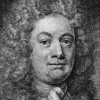
At a certain level of wretchedness a kind of spectral indifference takes over, and you see human beings as ghostly presences. Those closest to you are often no more than vague shadowy forms, barely distinct from life’s nebulous background and easily reabsorbed by the invisible.
[À un certain degré de misère, on est gagné par une sorte d’indifférence spectrale, et l’on voit les êtres comme des larves. Vos plus proches ne sont souvent pour vous que de vagues formes de l’ombre, à peine distinctes du fond nébuleux de la vie et facilement remêlées à l’invisible.]
Victor Hugo (1802–1885) French writer, journalist, human rights activist, politician
Les Misérables, Part 4 “Saint Denis,” Book 6 “Little Gavroche,” ch. 1 (4.6.1) (1862) [tr. Donougher (2013)]
(Source)
(Source (French)). Alternate translations:At a certain depth of misery, men are possessed by a sort of spectral indifference, and look upon their fellow beings as upon goblins. Your nearest relatives are often but vague forms of shadow for you, hardly distinct from the nebulous background of life, and easily reblended with the invisible.
[tr. Wilbour (1862)]In a certain stage of misery people are affected by a sort of spectral indifference and regard human beings as ghosts. Your nearest relatives are often to you no more than vague forms of the shadow, hardly to be distinguished from the nebulous back-ground of life, and which easily become blended. again with the invisible.
[tr. Wraxall (1862)]When a certain degree of misery is reached, one is overpowered with a sort of spectral indifference, and one regards human beings as though they were spectres. Your nearest relations are often no more for you than vague shadowy forms, barely outlined against a nebulous background of life and easily confounded again with the invisible.
[tr. Hapgood (1887)]There is a level of poverty at which we are afflicted with a kind of indifference which causes all things to seem unreal: those closest to us become no more than shadows, scarcely distinguishable against the dark background of our daily life, and easily lost to view.
[tr. Denny (1976)]At a certain depth of misery, people are possessed by a sort of spectral indifference, and look at their fellow beings as at ghosts. Your nearest relatives are often merely vague shadowy forms for you, hardly distinct from the nebulous background of life, and easily blended with the invisible.
[tr. Wilbour/Fahnestock/MacAfee (1987)]
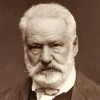
Most persons have died before they expire — died to all earthly longings, so that the last breath is only, as it were, the locking of the doors of the already deserted mansion.
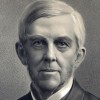
Too many of us stay walled up because we are afraid of being hurt. We are afraid to care too much, for fear that the other person does not care at all.
Eleanor Roosevelt (1884–1962) American politician, diplomat, activist; First Lady of the US (1933–45)
Eleanor Roosevelt’s Book of Common Sense Etiquette, ch. 2 (1962)
(Source)
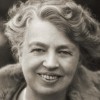
Who could deny that privacy is a jewel? I has always been the mark of privilege, the distinguishing feature of a truly urbane culture. Out of the cave, the tribal teepee, the pueblo, the community fortress, man emerged to build himself a house of his own with a shelter in it for himself and his diversions. Every age has seen it so. The poor might have to huddle together in cities for need’s sake, and the frontiersman cling to his neighbors for the sake of protection. But in each civilization, as it advanced, those who could afford it chose the luxury of a withdrawing-place.
Phyllis McGinley (1905–1978) American author, poet
“A Lost Privilege,” The Province of the Heart (1959)
(Source)

Nor would surrender in Viet-Nam bring peace, because we learned from Hitler at Munich that success only feeds the appetite of aggression. The battle would be renewed in one country and then another country, bringing with it perhaps even larger and crueler conflict, as we have learned from the lessons of history.
Lyndon B. Johnson (1908–1973) American politician, educator, US President (1963–69)
Speech (1965-07-28), News Conference, White House, Washington, D. C.
(Source)
The pre-conference prepared remarks were the first definitive set of national policy statements as to America's growing military presence in Viet Nam. The idea that a Communist victory in Viet Nam would lead to similar wars in other nations was called the "Domino Theory."
Those who retire from the world on akount ov its sin and peskyness must not forgit that they hav got tew keep kompany with a person who wants just as much watching as ennyboddy else.
[Those who retire from the world on account of its sin and peskiness must not forget that they have got to keep company with a person who wants just as much watching as anybody else.]
Josh Billings (1818–1885) American humorist, aphorist [pseud. of Henry Wheeler Shaw]
On Ice: and Other Things, 60 (1868)
Illness is a convent which has its rule, its austerity, its silences, and its inspirations.
Albert Camus (1913–1960) Algerian-French novelist, essayist, playwright
Notebooks: 1942-1951, Notebook 4, Jan 1942 – Sep 1945 [tr. O’Brien/Thody (1963)
(Source)