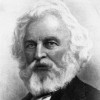
I went to the woods because I wished to live deliberately, to front only the essential facts of life, and see if I could not learn what it had to teach, and not, when I came to die, discover that I had not lived.
Henry David Thoreau (1817–1862) American philosopher and writer
Walden; or, Life in the Woods, ch. 2 “Where I Lived, and What I Lived For” (1854)
(Source)
Quotations about:
retreat
Note not all quotations have been tagged, so Search may find additional quotes on this topic.
Say farewell to luck when winning: it is the way of the gamblers of reputation: quite as important as a gallant advance is a well-planned retreat, wherefore lock up your winnings when they are enough, or when great.
[Saberse dejar ganando con la fortuna. Es de tahúres de reputación. Tanto importa una bella retirada como una bizarra acometida; un poner en cobro las hazañas cuando fueren bastantes, cuando muchas.]
Baltasar Gracián y Morales (1601–1658) Spanish Jesuit priest, writer, philosopher
The Art of Worldly Wisdom [Oráculo Manual y Arte de Prudencia], § 38 (1647) [tr. Fischer (1937)]
(Source)
(Source (Spanish)). Other translations:To be moderate in good fortune is the part of a good Gamester, when Reputation lies at stake. A brave Retreat is as great as a brave Enterprise. When one hath acted great exploits, he ought to secure the glory of them, by drawing off in time.
[Flesher ed. (1685)]Leave off the game with fortune while you are in luck. -- That is what all the best players do. A fine retreat is worth just as much as a gallant attack. Let a man bring his deeds, when there are a great many and enough of them into safety.
[tr. Duff (1877)]Leave your Luck while Winning. All the best players do it. A fine retreat is as good as a gallant attack. Bring your exploits under cover when there are enough, or even when there are many of them.
[tr. Jacobs (1892)]Quit while you're ahead. All the best gamblers do. A fine retreat matters as much as a stylish attack. As soon as they are enough -- even when they are many -- cash in your deeds.
[tr. Maurer (1992)]

Truly, I live in dark times!
The guileless word is folly. A smooth forehead
Suggests insensitivity. The man who laughs
Has simply not yet had
The terrible news.
–
What kind of times are they, when
A talk about trees is almost a crime
Because it implies silence about so many horrors?
That man there calmly crossing the street
Is already perhaps beyond the reach of his friends
Who are in need?[Wirklich, ich lebe in finsteren Zeiten!
Das arglose Wort ist töricht. Eine glatte Stirn
Deutet auf Unempfindlichkeit hin. Der Lachende
Hat die furchtbare Nachricht
Nur noch nicht empfangen.
–
Was sind das für Zeiten, wo
Ein Gespräch über Bäume fast ein Verbrechen ist
Weil es ein Schweigen über so viele Untaten einschließt!
Der dort ruhig über die Straße geht
Ist wohl nicht mehr erreichbar für seine Freunde
Die in Not sind?]Bertolt Brecht (1898–1956) German poet, playwright, director, dramaturgist
Poem (1938 ca.), “To Those Born Later [An die Nachgeborenen],” sec. 1, Svendborger Gedichte (1939) [tr. Willet / Manheim / Fried (1976)]
(Source)
Also translated as "To Those Who Follow in Our Wake" and "To Later Generations." Written while Brecht had left Germany for Denmark ("crossing the street").
An audio recording of the poem by Brecht.
(Source (German)). Other translations:Truly, I live in dark times
The innocent word is suspect.
An unwrinkled forehead
suggests insensitivity.
He who laughs
simply has not heard
the terrible news.
-
What times are these when
a conversation about trees
is almost a crime
because it includes
so much silence
about so many outrages!
[tr. Lettau (1978)]Truly, I live in dark times!
An artless word is foolish. A smooth forehead
Points to insensitivity. He who laughs
Has not yet received
The terrible news.
-
What times are these, in which
A conversation about trees is almost a crime
For in doing so we maintain our silence about so much wrongdoing!
And he who walks quietly across the street,
Passes out of the reach of his friends
Who are in danger?
[tr. Horton (2008)]Really, I live in dark times!
Innocent words are foolish. A smooth brow
Betrays insensitivity. Anyone left laughing
Simply has not yet heard
The terrible news.
-
What are these for times, where
A discussion about trees is almost a crime
Because it involves a silence about so many misdeeds!
He there peacefully crossing the street
Is probably no longer reachable for his friends
Who are in need?
[tr. Rienas (2009)]Really, I live in dark times!
Innocent words are foolish. An unfurrowed brow
Indicates apathy. He who laughs
Just hasn’t yet received
The terrible news.
-
What times are these, in which
A conversation about trees is almost a crime
Because it implies silence about so many misdeeds!
He who quietly crosses the street
Is probably no longer within reach of his friends
Who are in need?
[tr. Renaud (2016)]Truly, I live in dark times!
Innocent words are foolish. A smooth forehead
shows insensitivity. The guy laughing
has just not received
the terrible news yet.
-
What kind of times are these, where
talking about trees is almost a crime
when it means silence about so many atrocities!
That man calmly crossing the street
is probably no longer reachable by his friends
who need help.
And Sergeant Colon once again knew a secret about bravery. It was arguably a kind of enhanced cowardice — the knowledge that while death may await you if you advance it will be a picnic compared to the certain living hell that awaits should you retreat.

‘Twill be wiser to run away when thou hast no Remedy, than to die in the Field foolishly.
Thomas Fuller (1654–1734) English physician, preacher, aphorist, writer
Introductio ad Prudentiam, Vol. 2, # 1890 (1727)
(Source)
A great part of the happiness of life consists not in fighting battles but in avoiding them. A masterly retreat is in itself a victory.
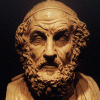
No shame in running,
fleeing disaster, even in pitch darkness.
Better to flee from death than feel its grip.[Οὐ γάρ τις νέμεσις φυγέειν κακόν, οὐδ’ ἀνὰ νύκτα.
βέλτερον ὃς φεύγων προφύγῃ κακὸν ἠὲ ἁλώῃ.]Homer (fl. 7th-8th C. BC) Greek author
The Iliad [Ἰλιάς], Book 14, l. 80ff (14.80) [Agamemnon] (c. 750 BC) [tr. Fagles (1990), l. 96ff]
(Source)
Original Greek. Other translations:Better from evils, well foreseen, to run
Than perish in the danger we may shun.
[tr. Pope (1715-20)]For there is no disgrace in flying from evil, not even during the night. It is better for a flying man to escape from evil, than to be taken.
[tr. Buckley (1860)]For there is no shame in fleeing from ruin, yea, even in the night. Better doth he fare who flees from trouble, than he that is overtaken.
[tr. Leaf/Lang/Myers (1891)]There is nothing wrong in flying ruin even by night. It is better for a man that he should fly and be saved than be caught and killed.
[tr. Butler (1898)]There is no shame in running, even by night, from disaster.
The man does better who runs from disaster than he who is caught by it.
[tr. Lattimore (1951)]There's no disgrace in getting away from ruin, not by a night retirement. Better a man should leave the worst behind him than be caught.
[tr. Fitzgerald (1974)]
“We canna just rush in, ye ken.”
A big bearded Feegle raised his hand. “Point ‘o order, Big Man. Ye can just rush in. We always just rush in.”
“Aye, Big Yan, point well made. But ye gotta know where ye’re just gonna rush in. Ye cannae just rush in anywhere. It looks bad, havin’ to rush oout again straight awa’.”Terry Pratchett (1948–2015) English author
Discworld No. 30, The Wee Free Men, ch. 5 (2003)
(Source)
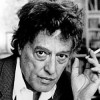
Since we cannot hope for order let us withdraw with style from the chaos.
Tom Stoppard (1937–2025) Czech-English playwright and screenwriter
Lord Malquist and Mr Moon, ch. 1 “Dramatis Personae and Other Coincidences” (1966)
I had met with an Observation among regular Officers, that Mankind were naturally divided into three Sorts. One third of them are animated at the first appearance of danger, and will press forward to meet it and examine it; another third are allarmed at it: but will neither advance nor retreat, till they know the nature of it: but stand to meet it: the remaining third will run or fly upon the first thought of it.
John Adams (1735–1826) American lawyer, Founder, statesman; US President (1797–1801)
Autobiography, Notes on Diary Entry for 1776-10-01 (1807)
(Source)

It isn’t often that Aunt Dahlia lets her angry passions rise, but when she does, strong men climb trees and pull them up after them.
P. G. Wodehouse (1881–1975) Anglo-American humorist, playwright and lyricist [Pelham Grenville Wodehouse]
Right Ho, Jeeves (1934)

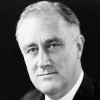
So, first of all, let me assert my firm belief that the only thing we have to fear is fear itself — nameless, unreasoning, unjustified terror which paralyzes needed efforts to convert retreat into advance.
Franklin Delano Roosevelt (1882–1945) American lawyer, politician, statesman; US President (1933–45)
Speech (1933-03-04), Inaugural Address, Washington, D.C.
(Source)
While you’re saving your face, you’re losing your ass.
Lyndon B. Johnson (1908–1973) American politician, educator, US President (1963–69)
Quoted in Philip Geyelin, Lyndon B. Johnson and the World, ch. 6 (1966)
(Source)
Geyelin said the phrase came up during "an august gathering of his most distinguished advisers when the question arose whether to honor an apparent US commitment to a proposition which Congress seemed unlikely to accept. Face-saving, the President observed, was not his major purpose in life," followed by the quote.