

JAMIE: Oh, no, you’re not thinking what I think you’re thinking, are you?
THE DOCTOR: That, I think, Jamie, depends upon what you think I am thinking!
Doctor Who (1963–1989) British science fiction television series, original run (BBC)
06×01 “The Dominators,” Part 1 (1968-08-10) [w. Mervyn Haisman, Henry Lincoln]
(Source)
(Source (Video); dialog confirmed). As the Doctor steps toward the open door of the spacecraft they've just discovered.
Quotations about:
plan
Note not all quotations have been tagged, so Search may find additional quotes on this topic.

RICHARD: Plots have I laid, inductions dangerous,
By drunken prophecies, libels, and dreams ….William Shakespeare (1564–1616) English dramatist and poet
Richard III, Act 1, sc. 1, l. 32ff (1.1.32) (1592)
(Source)

SARAH JANE: I mean, well, whatever’s in that Tower, it’s got enormous powers and, well, what can we do against it?
THE DOCTOR: What I’ve always done, Sarah Jane. Improvise.
Doctor Who (1963–1989) British science fiction television series, original run (BBC)
20xS1 “The Five Doctors,” Part 2 (1983-11-23) [w. Terrance Dicks]
(Source)
(Source (Video); dialog confirmed). This 20th Anniversary special feature was originally broadcast as a feature-length TV movie. For later releases, it was broken into four parts/episodes.
PLAN, v.t. To bother about the best method of accomplishing an accidental result.
Ambrose Bierce (1842–1914?) American writer and journalist
“Plan,” The Devil’s Dictionary (1911)
(Source)
Originally published in the "Cynic's Word Book" column in the New York American (1906-02-22).

The road to hell is paved with works-in-progress.
Philip Roth (1933–2008) American novelist and short-story writer
In “Works in Progress,” The New York Times Book Review (1979-07-15)
(Source)

Illustrious deeds, of dazzling brilliance, are represented by politicians as the outcome of great aims, whereas they are usually the result of caprice or passion. Thus the war between Augustus and Antony, though ascribed to their rival ambitions to dominate the world, may have been merely a result of jealousy.
[Ces grandes et éclatantes actions qui éblouissent les yeux sont représentées par les politiques comme les effets des grands desseins, au lieu que ce sont d’ordinaire les effets de l’humeur et des passions. Ainsi la guerre d’Auguste et d’Antoine, qu’on rapporte à l’ambition qu’ils avoient de se rendre maîtres du monde, n’étoit peut-être qu’un effet de jalousie.]François VI, duc de La Rochefoucauld (1613–1680) French epigrammatist, memoirist, noble
Réflexions ou sentences et maximes morales [Reflections; or Sentences and Moral Maxims], ¶7 (1665-1678) [tr. Stevens (1939)]
(Source)
A version of this appeared in the 1st edition (1665). Variants in the 1st edition include starting with Les, not Ces, and speaking of des grands intérêts, not desseins. The 1st edition also was much more assertive that it étoit un effet de jalousie (was a result of jealousy).(Source (French)). Other translations:Great and heroick actions which dazle their eyes who consider them, are represented by Politicians, as if they were the effects of great Interests; whereas they are ordinarily the effects of humour and passions. Thus the war between Augustus and Marc Antony, which some imputed to the Ambition they had of aspiring to the Empire of the World, was an effect of their mutual jealousie.
[tr. Davies (1669), ¶104]Those great and glorious Actions, that even dazle our Eyes with their Lustre, are represented by Politicians as the result of great Wisdom and excellent design; whereas in truth, they are commonly the effects of Passion and Humour. Thus the War between Augustus and Antony, which is usually thought to proceed from Greatness of Soul, and the Ambition each of them had to become Master of the World, was very probably no more than Envy and Emulation.
[tr. Stanhope (1694), ¶8]Great actions, the lustre of which dazzles us, are represented by politicians as the effects of deep design; whereas they are commonly the effects of caprice and passion. Thus the war between Augustus and Antony, supposed to be owing to their ambition to give a master to the world, arose probably from jealousy.
[pub. Donaldson (1783), ¶10; [ed. Lepoittevin-Lacroix (1797), ¶7]Great actions, the lustre of which dazzles us, are by politicians represented as the effects of deep design, whereas they are commonly the effects of caprice and passion. Thus the war between Augustus and Anthony, supposed to be owing to the ambition of giving a master to the world, arose probably from jealousy.
[ed. Carvill (1835), ¶7]Those great and brilliant actions which dazzle our eyes, are represented by politicians as the effects of great designs, instead of which they are commonly the effects of caprice and of the passions. Thus the war between Augustus and Antony, which is attributed to the ambition they had of making themselves masters of the world, was, perhaps, nothing but a result of jealousy.
[ed. Gowens (1851), ¶8]Great and striking actions which dazzle the eyes are represented by politicians as the effect of great designs, instead of which they are commonly caused by the temper and the passions. Thus the war between Augustus and Anthony, which is set down to the ambition they entertained of making themselves masters of the world, was probably but an effect of jealousy.
[tr. Bund/Friswell (1871), ¶7]Historians would have us believe that the most dazzling deeds are the results of deep-laid plans; more often they are the reuslts of men's moods and passions. Thus the war that Augustus waged against Antony, caused, we are told, by their ambition to be masters of the world, was, perchance, but the outcome of jealousy.
[tr. Heard (1917), ¶7]Statesmen will often present those great and striking deeds with which they dazzle our eyes as the outcome of some grand design, whereas in fact they are usually the product of mood and of emotion. Thus the struggle between Augustus and Mark Anthony, portrayed as the result of their conflicting ambition each to become sole master of the world, was perhaps caused simply by mutual jealousy.
[tr. FitzGibbon (1957), ¶7]Politicians explain great and resplendent deeds that dazzle the eye as born of high purpose, where for the most part they derive from whim or passion. Thus the war between Augustus and Antony, which we ascribe to their equal ambition to rule the world, was no more, perhaps, than the result of jealousy.
[tr. Kronenberger (1959), ¶7]Great and glorious events which dazzle the beholder are represented by politicians as the outcome of grand designs, whereas they are usually products of temperaments and passions. Thus the war between ‘Augustus and Antony, attributed to their passion to seize the mastery of the world, was probably nothing more than a result of jealousy.
[tr. Tancock (1959), ¶7]Those great and brilliant actions that dazzle the eyes of men are represented by politicians as being the effects of great designs; but they are usually the results of temper and the passions. Thus the war between Augustus and Antony, which is supposed to be due to the ambition they both had of making themselves the masters of the world, was perhaps nothing more than an effect of jealousy.
[tr. Whichello (2016) ¶7]

“It’s just Eeyore,” said Piglet. “I thought your Idea was a very good Idea.”
Pooh began to feel a little more comfortable, because when you are a Bear of Very Little Brain, and you Think of Things, you find sometimes that a Thing which seemed very Thingish inside you is quite different when it gets out into the open and has other people looking at it.A. A. Milne (1882–1956) English poet and playwright [Alan Alexander Milne]
House at Pooh Corner, ch. 6 “Eeyore Joins the Game” (1928)
(Source)
SEMPRONIUS: Oh! think what anxious moments pass between
The birth of plots, and their last fatal periods,
Oh! ’tis a dreadful interval of time,
Filled up with horror all, and big with death!
Destruction hangs on every word we speak,
On every thought, till the concluding stroke
Determines all, and closes our design.Joseph Addison (1672–1719) English essayist, poet, statesman
Cato, Act 1, sc. 3, l. 50ff (1713)
(Source)

Just as you drifted through an entire day without a plan and accomplished nothing, some people drift through their entire lives. They do it one day at a time, one week at a time, and one month at a time. The months run into years and span a life. It happens so gradually that they are unaware of how their lives are slipping by them until it’s too late.

And why carry out one’s projects, since the project is sufficient pleasure in itself?
[Et à quoi bon exécuter des projets, puisque le projet est en lui-même une jouissance suffisante?]
Charles Baudelaire (1821–1867) French poet, essayist, art critic
Le Spleen de Paris (Petits Poèmes en Prose), No. 24 “Projects [Les Projets],” final words (1869) [tr. Varèse (1970)]
(Source)
(Source (French)). Other translations:And what is the good of carrying out a project, when the project itself gives me pleasure enough?
[tr. Hamburger (1946)]And what good is it to carry out plans, since planning itself is a sufficient delight?
[tr. Kaplan (1989)]And what good would it do to execute such plans, since planning is in itself sufficient enjoyment?
[tr. Waldrop (2009)]What good is it to accomplish projects, when the project itself is enjoyment enough?
[Various]

As is always the case, parenting is an exercise in unintended consequences.
Stacy Schiff (b. 1961) American editor, essayist, biographer
“Obama’s Mother Ann Dunham Shaped His Success,” Newsweek (2011-05-01)
(Source)

You can’t beat an Administration by attacking it. You have to show some plan of improving on it.
Will Rogers (1879–1935) American humorist
Column (1924-11-16), “Weekly Article: A Political Autopsy” [No. 101]
(Source)
A goal without a plan is just a wish.
Antoine de Saint-Exupéry (1900–1944) French writer, aviator
(Spurious)
The earliest version of this quote is found as an anonymous proverb in Joan Horbiak, 50 Ways to Lose Ten Pounds (1995). The earliest association with Saint-Exupéry dates to around 2007. It's sometimes further pinned down to The Little Prince (1943); it does not appear there, but that's Saint-Exupéry's best-known book.
Come, weave us a scheme so I can pay them back!
Stand beside me, Athena, fire me with daring, fierce
as the day we ripped Troy’s glittering crown of towers down.
Stand by me — furious now as then, my bright-eyed one —
and I would fight three hundred men, great goddess,
with you to brace me, comrade-in-arms in battle![ἀλλ᾽ ἄγε μῆτιν ὕφηνον, ὅπως ἀποτίσομαι αὐτούς:
πὰρ δέ μοι αὐτὴ στῆθι, μένος πολυθαρσὲς ἐνεῖσα,
οἷον ὅτε Τροίης λύομεν λιπαρὰ κρήδεμνα.
αἴ κέ μοι ὣς μεμαυῖα παρασταίης, γλαυκῶπι,
καί κε τριηκοσίοισιν ἐγὼν ἄνδρεσσι μαχοίμην
σὺν σοί, πότνα θεά, ὅτε μοι πρόφρασσ᾽ ἐπαρήγοις]Homer (fl. 7th-8th C. BC) Greek author
The Odyssey [Ὀδύσσεια], Book 13, l. 386ff (13.386) [Odysseus] (c. 700 BC) [tr. Fagles (1996)]
(Source)
(Source (Greek)). Other translations:Advise then means to the reveng’d events
We both resolve on. Be thyself so kind
To stand close to me, and but such a mind
Breathe in my bosom, as when th’ Ilion tow’rs
We tore in cinders. O if equal pow’rs
Thou wouldst enflame amidst my nerves as then,
I could encounter with three hundred men,
Thy only self, great Goddess, had to friend,
In those brave ardors thou wert wont t’ extend!
[tr. Chapman (1616)]But now, O Pallas, find out some device,
How of the suitors best I may be rid,
And by me stand, inspiring courage stout,
As when we pull’d Troy’s head-gear off her head.
For then to master them I should not doubt,
Three hundred though they were.
[tr. Hobbes (1675), l. 347ff]Vouchsafe the means of vengeance to debate,
And plan with all thy arts the scene of fate.
Then, then be present, and my soul inspire,
As when we wrapp'd Troy's heaven-built walls in fire.
Though leagued against me hundred heroes stand.
Hundreds shall fall, if Pallas aid my hand.
[tr. Pope (1725)]Come then -- Devise the means; teach me, thyself,
The way to vengeance, and my soul inspire
With daring fortitude, as when we loos’d
Her radiant frontlet from the brows of Troy.
Would’st thou with equal zeal, O Pallas! aid
Thy servant here, I would encounter thrice
An hundred enemies, let me but perceive
Thy dread divinity my prompt ally.
[tr. Cowper (1792), l. 466]Come, weave me counsel neither void nor vain,
That red vengeance reap till not a man remain!
But stand thou near, and such bold strength inspire
As when we loosed the shining tiars of Troy.
If thou stand near me to inbreathe like fire,
Then with three hundred could I fight with joy!
[tr. Worsley (1861), st. 49-50]Come! weave some plan for my revenge upon them!
Stand by me fast, and inspire with daring courage,
As when from Troy we loosed her glittering tire.
If thou, Eyebright! thus breathing fire stand by me,
I fain would fight 'gainst e'en three hundred men --
With thee, dread goddess, close at hand to aid me!
[tr. Bigge-Wither (1869)]Now let thy mind
The plot contrive which on that hateful crew
May all my vengeance wreak -- and then do thou
Thyself beside me stand, and in my soul
Such dauntless valor rouse as in me wrought
When we the crested pride of Ilion's tow'rs
Cast down in overthrow. If, in that hour,
O, azure-eyed! thou would'st but at my side
Thy presence grant, I, with three hundred men,
By thy prompt succor champion'd to the fight,
Would thou stood'st by, in conflict would engage.
[tr. Musgrave (1869), l. 614ff]Come then, weave some counsel whereby I may requite them; and thyself stand by me, and put great boldness of spirit within me, even as in the day when we loosed the shining coronal of Troy. If but thou wouldest stand by me with such eagerness, thou grey-eyed goddess, I would war even with three hundred men, with thee my lady and goddess, if thou of thy grace didst succour me the while.
[tr. Butcher/Lang (1879)]But I prithee weave and devise it how of these avenged I may be;
And stand by me thyself and set in me that heart for the battle-joy
As wherewith we loosed aforetime the shining coif of Troy.
If thou stand beside me, O Grey-eyed, as battle-glad as then,
Forsooth would I hold the battle 'gainst thrice an hundred men,
With thee, O worshipped Goddess, so kind to bear me aid.
[tr. Morris (1887)]Come then, and frame a plot for me to win revenge. And do you stand beside me, inspiring hardy courage, even so as when we tore the shining crown from Troy. If you would stand as stoutly by me, clear-eyed one, then I would face three hundred men, mat4ed with you, dread goddess, with you for my strong aid.
[tr. Palmer (1891)]Advise me how I shall best avenge myself. Stand by my side and put your courage into my heart as on the day when we loosed Troy's fair diadem from her brow. Help me now as you did then, and I will fight three hundred men, if you, goddess, will be with me.
[tr. Butler (1898)]But come, weave some plan by which I may requite them; and stand thyself by my side, and endue me with dauntless courage, even as when we loosed the bright diadem of Troy. Wouldest thou but stand by my side, thou flashing-eyed one, as eager as thou wast then, I would fight even against three hundred men, with thee, mighty goddess, if with a ready heart thou wouldest give me aid.
[tr. Murray (1919)]Wherefore extend your bounty and disclose how I may avenge myself upon these suitors. Stand by me, Mistress, fanning my valorous rage as on the day we despoiled shining Troy of its pride of towers. With your countenance, august One, I would fight three hundred men together: only buoy me up with your judicious aid, O wise-eyed Goddess.
[tr. Lawrence (1932)]I beseech you to think of some way by which I could pay these miscreants out. And take your stand at my side, filling me with the spirit that dares all, as you did on the day when we pulled down Troy’s shining diadem of towers. Ah, Lady of the bright eyes, if only you would aid me with such vehemence as you did then, I could fight against three hundred, with you beside me, sovran goddess, and with your whole-hearted help to count on!
[tr. Rieu (1946)]Weave me a way to pay them back! And you, too,
take your place with me, breathe valor in me
the way you did that night when we Akhaians
unbound the bright veil from the brow of Troy!
O grey-eyed one, fire my heart and brace me!
I'll take on fighting men three hundred strong
if you fight at my back, immortal lady!
[tr. Fitzgerald (1961)]Come then, weave the design, the way I shall take my vengeance
upon them; stand beside me, inspire me with strength and courage,
as when together we brought down Troy's shining coronal.
For if in your fury, O gray-eyed goddess, you stood beside me,
I would fight, lady and goddess, with your help against three hundred v men if you, freely and in full heart, would help me.
[tr. Lattimore (1965)]Come, goddess, weave some plan
that lets me punish them. Stand at my side;
give me the gift of courage, as you did
when we tore loose Troy's gleaming diadem.
Were you, just as impetuous as then,
to stand beside me, gray-eyed goddess, I
could face even three hundred enemies:
I need your ready heart; I need your help.
[tr. Mandelbaum (1990)]Weave a plan so I can pay them back!
And stand by me yourself, give me the spirit I had
When we ripped down Troy's shining towers!
With you at my side, you reyes glinting
And your mind focused on battle -- I would take on
Three hundred men if your power were with me.
[tr. Lombardo (2000), l. 401ff]But come, devise some ingenious scheme to punish these miscreants. And take your stand at my side, filling me with the spirit that dares all, as you did on the day when we pulled down Troy's shining diadem of towers. Ah, Lady of the Bright Eyes, if only you would waid me with such eagerness as you did then, I could fight against three hundred, with you beside me, gracious goddess, with your whole-hearted support to count on.
[tr. DCH Rieu (2002)]So come now, weave me a scheme of revenge upon these men, and yourself stand by my side, fill me with strength and daring, as when we undid the bright diadem of Troy! Were you, grey-eyed goddess, beside me, hot to fight, I'd take on, with you, three hundred warriors, O my sovereign goddess, given your free and ready support.
[tr. Green (2018)]Come, weave a plan so I can pay them back.
Stand in person by my side, and fill me
with indomitable courage, as you did
when we loosed the bright diadem of Troy.
I pray, goddess with the glittering eyes,
that you are with me now as eagerly
as you were then. If so, then I would fight
three hundred men, if you, mighty goddess,
in your heart are willing to assist me.
[tr. Johnston (2019), l. 473ff]

“We canna just rush in, ye ken.”
A big bearded Feegle raised his hand. “Point ‘o order, Big Man. Ye can just rush in. We always just rush in.”
“Aye, Big Yan, point well made. But ye gotta know where ye’re just gonna rush in. Ye cannae just rush in anywhere. It looks bad, havin’ to rush oout again straight awa’.”Terry Pratchett (1948–2015) English author
Discworld No. 30, The Wee Free Men, ch. 5 (2003)
(Source)

No philosopher ever yet — and there has been a great deal written upon the subject — defined a mere change of plan as vacillation.
[Nemo doctus umquam (multa autem de hoc genere scripta sunt) mutationem consili inconstantiam dixit esse.]
Marcus Tullius Cicero (106–43 BC) Roman orator, statesman, philosopher
Epistulae ad Atticum [Letters to Atticus], Book 16, Letter 7, sec. 3 (16.7.3) (44 BC) [tr. Shuckburgh (1900), # 780]
(Source)
Defending to his brother his change in plans, based on the changing political situation in Rome.
For quotation books, this is often given in a shorter form, without the parenthetical clause about much having been written on the subject (i.e., Nemo doctus unquam mutationem consilii inconstantiam dixit esse, or the shorter English translations below.)
(Source (Latin)). Other translations:No philosopher, much as has been written on this subject, has ever yet affirmed that a change of plans is the same as inconsistency.
[tr. Jeans (1880), # 117]No wise man ever called a change of plan inconsistency.
[ed. Harbottle (1906)]No well-informed person has declared a change of opinion to be inconstancy.
[ed. Benham (1907), 16.8]No philosopher ever called a change of plan inconsistency, though there has been a good deal written on the point.
[tr. Winstedt (Loeb) (1913)]Well, in all the many writings on this theme, no philosopher has ever equated a change of plan with lack of firmness.
[tr. Shackleton Bailey (1968)]
God only knows, God makes his plan,
The information’s unavailable to the mortal man.
We’re working our jobs, collect our pay,
Believe we’re gliding down the highway
When in fact we’re slip slidin’ away.Paul Simon (b. 1941) American musician, singer-songwriter.
“Slip Slidin’ Away” (1977)

So I didn’t have a plan. I did, as I stood there, start to get seeds of what might, sometime, become a vague step generally in the direction of an intention. I may be stating that too strongly.
Steven Brust (b. 1955) American writer, systems programmer
Issola (2001)

Let the Care of one’s Business be committed but to one Person; for otherwise, besides Disagreement which may arise when Account is taken, everyone’s Answer is, That he thought others had done it.
Thomas Fuller (1654–1734) English physician, preacher, aphorist, writer
Introductio ad Prudentiam, Vol. 1, # 1072 (1725)
(Source)
Never give up on a dream just because of the time it will take to accomplish it. The time will pass anyway.
Earl Nightingale (1921–1989) American motivational speaker, writer, radio personality
(Attributed)
Any damned fool can write a plan. It’s the execution that gets you all screwed up.
James F. "Jim" Hollingsworth (1918–2010) American military commander
(Attributed)
(Source)
In Harry G. Summers, Jr., On Strategy: A Critical Analysis of the Vietnam War, ch. 4 (1982).
We haven’t got a plan, so nothing can go wrong!
Terence Alan "Spike" Milligan (1918–2002) Anglo-Irish comedian, writer, actor
(Attributed)
Variants:
- "We don't have a plan, so nothing can go wrong!"
- "We haven't any plan, so nothing can go wrong!"
Ensure that both plan and dispositions are flexible — adaptable to circumstances. Your plan should foresee and provide for a next step in case of success or failure.
B. H. Liddell Hart (1895–1970) English soldier, military historian (Basil Henry Liddell Hart)
Strategy, ch. 20 (1954)
[The commander] must always think and plan two battles ahead — the one he is prepared to fight and the next one — so that the success gained in one battle can be used as a springboard for the next.
Bernard Montgomery (1887–1976) British military leader
The Memoirs of Field-Marshal Montgomery, ch. 6 (1958)
What makes a plan capable of producing results is the commitment of key people to work on specific tasks.
Peter F. Drucker (1909–2005) Austrian-American business consultant
Management: Tasks, Responsibilities, Practices, ch. 8 (1977 ed.)
The man who sticks to his plan will become what he used to want to be.
James Richardson (b. 1950) American poet
Vectors: Aphorisms and Ten Second Essays, #349 (2001)

Deliberate with caution, but act with decision; and yield with graciousness, or oppose with firmness.
Charles Caleb "C. C." Colton (1780–1832) English cleric, writer, aphorist
Lacon: Or, Many Things in Few Words, Vol. 1, § 284 (1820)
(Source)
One thing that’s good about procrastination is that you always have something planned for tomorrow.
G. B. Stern (1890–1973) British writer [Gladys Bronwyn Stern]
(Attributed)

In military operations what is done openly and by force is much less than what is done by stratagem and the use of opportunity.
Polybius (203?-120 BC) Greek historian
Histories, 9.12 [tr. Paton (1925)]
The best time to plant a tree was twenty years ago. The second best time is now.
Proverbs, Sayings, and Adages
Chinese proverb

The world moves into the future as a result of decisions, not as a result of plans. Plans are significant only insofar as they affect decisions.
Kenneth Ewart Boulding (1910–1993) American economist, educator, poet, philosopher
Toward a General Social Science, ch. 1 (1974)
Smile on this
My bold endeavour.[Audacibus annue coeptis]
Virgil (70–19 BC) Roman poet [b. Publius Vergilius Maro; also Vergil]
Georgics [Georgica], Book 1, l. 40ff (1.40) (29 BC) [tr. Rhoades (1881)]
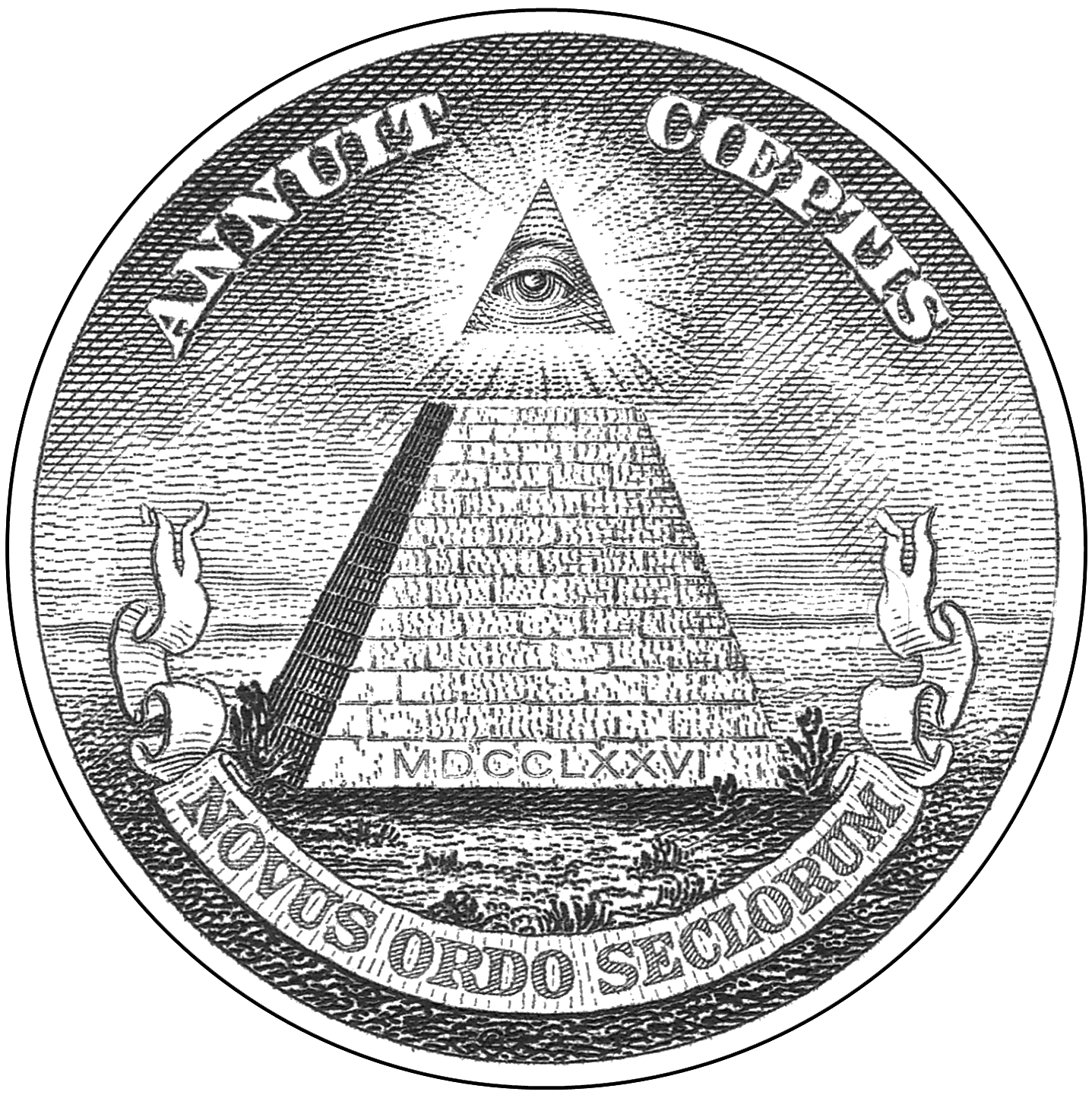
(Source)Calling on (now declared divine) Augustus Caesar to bless his poetry. This line, and a similar one in Virgil's Aeneid (9.625), inspired the phrase "Annuit cœptis" ("He [God] has favored our undertakings") on the reverse of the Great Seal of the United States.
(Source (Latin)). Other translations:Aid my bold design.
[tr. Ogilby (1649)]To my bold Endeavours add thy Force.
[tr. Dryden (1709), l. 60]Aid my bold design.
[tr. Nevile (1767), l. 50]Favour my adventurous enterprise.
[tr. Davidson (1854)]Bid my gallant enterprise succeed.
[tr. Blackmore (1871)]Favor my bold emprise.
[tr. Wilkins (1873)]Our bold endeavor bless.
[tr. King (1882)]Favor my adventurous enterprise.
[tr. Bryce (1897)]Favour my bold endeavour.
[tr. Mackail (1899)]Smile on this
My bold endeavour.
[tr. Greenough (1900)]O smile upon this my bold emprise!
[tr. Way (1912)]Give assent to my bold emprise.
[tr. Fairclough (Loeb) (1916)]Be gracious to this my bold design.
[tr. Day-Lewis (1940)]Condone this enterprise
Of bold experiment.
[tr. Bovie (1956)]I hope for an easy passage in this bold venture.
[tr. Slavitt (1971)]Assent to bold undertakings.
[tr. Miles (1980)]Smile on my enterprise.
[tr. Wilkinson (1982)]Agree to my bold beginning.
[tr. Kline (2001)]Assent to this work boldly begun.
[tr. Lembke (2004)]Bless the boldness of this undertaking.
[tr. Fallon (2006)]Approve my bold endeavour.
[tr. Johnson (2009)]Grant me the right to enter upon this bold
Adventure of mine.
[tr. Ferry (2015)]Look with favor upon a bold beginning.
[Bartlett's]
It was a time when a man with a policy would have been fatal to the country. I have never had a policy. I have simply tried to do what seemed best each day, as each day came.
Abraham Lincoln (1809–1865) American lawyer, politician, US President (1861–65)
Remark (1865-02) to John M. Palmer
(Source)
About Lincoln's election in 18960. Attributed in Alexander McClure, ed., "Abe" Lincoln's Yarns and Stories (1901). Palmer was a US Senator and Governor from Illinois, who first met Lincoln in 1839 (while acting as Major-General of the state's Volunteer Army) and recounted this comment from his final visit to Lincoln White House that month.

The old order changeth, yielding place to new,
And God fulfills Himself in many ways,
Lest one good custom should corrupt the world.Alfred, Lord Tennyson (1809–1892) English poet
Idylls of the King, “The Passing of Arthur” (1859-1885)
(Source)
For man proposes but God disposes. The path a person takes does not lie within himself.
[Nam homo proponit, sed Deus disponit, nec est in homine via ejus.]
Thomas à Kempis (c. 1380–1471) German-Dutch priest, author
The Imitation of Christ [De Imitatione Christi], Book 1, ch. 19, v. 2 (1.19.2) (c. 1418-27) [tr. Creasy (1989)]
(Source)
Thomas saying that, regardless of a person's good intentions to act virtuously, they are dependent on God's grace to make that actually happen.
The phrase "Man proposes but God disposes" (or the Latin original of it) was coined by Thomas, which makes it ironic where some later translators put it in quotations or self-referent indeeds.
The text given relates to, is frequently footnoted to, and even is quoted directly from:
- Proverbs 16:9 ("A man's heart deviseth his way: but the Lord directeth his steps." [KJV])
- Jeremiah 10:23 ("O Lord, I know that the way of man is not in himself: it is not in man that walketh to direct his steps." [KJV])
(Source (Latin)). Other translations:For man purposeth, but God disposeth: nay, the way that man shall walk in this world is not in himself but in the grace of God.
[tr. Whitford/Raynal (1530/1871)]Man proposes, but God disposes. The way that a man shall walk in this world is found not in himself, but in the grace of God.
[tr. Whitford/Gardiner (1530/1955)]For man doth propose but God doth dispose, neither is the way of man in his owne hands.
[tr. Page (1639), 1.19.9]A Man's Heart deviseth his Way, but the Lord directeth his Steps, says Solomon: We may contrive and act as seems most adviseable; by which we do so, are from the Lord, so is the Event of our having done it entirely in his disposal.
[tr. Stanhope (1696; 1706 ed.), 1.19.3]Tho' the heart of man deviseth his way, yet the Lord ordereth the event; and that it is not in man that walketh, to direct his steps.
[tr. Payne (1803)]For man proposes, but God disposes; neither is the way of man in himself.
[Parker ed. (1841); Bagster ed. (1860); Anon. (1901)]For man proposes but GOD disposes: nor is it in man to direct his steps.
[tr. Dibdin (1851)]For man proposeth, but God disposeth; and the way of a man is not in himself.
[tr. Benham (1874)]For man, indeed, proposes but God disposes, and God's way is not man's.
[tr. Croft/Bolton (1940)]For man proposes, but God disposes, and a man's road is not within himself.
[tr. Daplyn (1952)]Man proposes, but God disposes, and man's destiny is not in his own hands.
[tr. Sherley-Price (1952)]They know that "man proposes, and God disposes"; the course of a man's life is not what he makes it.
[tr. Knox-Oakley (1959)]For man proposes, God disposes, and it is not for man to choose his lot.
[tr. Knott (1962)]Man indeed proposes, bit it is God who disposes nor is the course of man in his power as he goes his way.
[tr. Rooney (1979)]

I tell this story to illustrate the truth of the statement I heard long ago in the Army: Plans are worthless, but planning is everything.
Dwight David Eisenhower (1890–1969) American general, US President (1953–61)
Speech, National Defense Executive Reserve Conference (14 Nov 1957)
Quoted in R. Nixon, Six Crises, "Krushchev" (1962) as "In preparing for battle I have always found that plans are useless, but planning is indispensable." Sometimes paraphrased as "Plans are nothing; planning is everything."
The tactical result of an engagement forms the base for new strategic decisions because victory or defeat in a battle changes the situation to such a degree that no human acumen is able to see beyond the first battle. In this sense one should understand Napoleon’s saying: “I have never had a plan of operations.” Therefore no plan of operations extends with any certainty beyond the first contact with the main hostile force.
Helmuth von Moltke (1800–1891) Prussian soldier
“On Strategy” (1871)
Translated in Daniel J. Hughes, Harry Bell, Moltke on the Art of War: Selected Writings (1993).
Paraphrases / variants:
- "No plan survives contact with the enemy."
- "No battle plan ever survives contact with the enemy."
“I mean, maybe you just want to see how it all turns out. Maybe it’s all part of a great big ineffable plan. All of it. You, me, him, everything. Some great big test to see if what you’ve built all works properly, eh? You start thinking: it can’t be a great cosmic game of chess, it has to be just very complicated Solitaire. And don’t bother to answer. If we could understand, we wouldn’t be us. Because it’s all — all –”
INEFFABLE, said the figure feeding the ducks.Terry Pratchett (1948–2015) English author
Good Omens, 7. “Sunday” (1990) [with Neil Gaiman]
(Source)
Crowley speculating to Aziraphale about God's motivations in creating a flawed Universe.
I claim not to have controlled events, but confess plainly that events have controlled me.
Abraham Lincoln (1809–1865) American lawyer, politician, US President (1861–65)
Letter (1864-04-04) to Albert G. Hodges
(Source)
On how neither the war nor the slavery issue had played out how as he anticipated or aimed for.
JAMIE: Have you thought up some clever plan, Doctor?
THE DOCTOR: Yes, Jamie, I believe I have.
JAMIE: What are you going to do?
THE DOCTOR: Bung a rock at it.
Doctor Who (1963–1989) British science fiction television series, original run (BBC)
05×02 “The Abominable Snowmen,” Part 4 (1967-10-21) [w. Meryn Haisman, Henry Lincoln]
(Source)
(Source (Video)). Note that the original video for this episode has been lost; it recreated in animated form in 2022, using audio-only recordings.
I have no use for the strictures of You must. You must not.
[無可無不可]
Confucius (c. 551- c. 479 BC) Chinese philosopher, sage, politician [孔夫子 (Kǒng Fūzǐ, K'ung Fu-tzu, K'ung Fu Tse), 孔子 (Kǒngzǐ, Chungni), 孔丘 (Kǒng Qiū, K'ung Ch'iu)]
The Analects [論語, 论语, Lúnyǔ], Book 18, verse 8 (18.8.5) (6th C. BC) [ed. Lao-Tse, tr. Hinton (1998)]
(Source)
(Source (Chinese)). Other translations:I have no course for which I am predetermined, and no course against which I am predetermined.
[tr. Legge (1861)]I will take no liberties, I will have no curtailing of my liberty.
[tr. Jennings (1895); in the footnote he gives a more raw translation, "Without possibilities (or freedom to act) -- without impossibilities"]With me there is no inflexible "thou shalt" or 'thou shalt not."
[tr. Soothill (1910)]I have no categoric can and cannot.
[tr. Pound (1933)]I have no "thou shalt" or "thou shalt not."
[tr. Waley (1938)]I accept life as it comes. [tr. Ware (1950)]I have no preconceptions about the permissible and the impermissible.
[tr. Lau (1979)]I avoid saying what should or should not be done.
[tr. Dawson (1993)]I follow no rigid prescriptions on what should, or should not, be done.
[tr. Leys (1997)]I have neither favorable nor unfavorable situation. [tr. Huang (1997)]I have not any stubborn positiveness or negation.
[tr. Cai/Yu (1998)]I do not have presuppositions as to what may and may not be done.
[tr. Ames/Rosemont (1998)]I have no "may" and no "may not."
[tr. Brooks/Brooks (1998)]I have no preconceptions about what one can or cannot do.
[tr. Annping Chin (2014)]
This may be the source of Lin-Yutang, ed. The Wisdom of Confucius (1938):The superior man goes through his life without any one preconceived course of action or any taboo. He merely decides for the moment what is the right thing to do.

It does not do to leave a live dragon out of your calculations, if you live near him.
J.R.R. Tolkien (1892–1973) English writer, fabulist, philologist, academic [John Ronald Reuel Tolkien]
The Hobbit, ch. 12 “Inside Information” (1937)
(Source)
You can plan all you want to. You can lie in your morning bed and fill whole notebooks with schemes and intentions. But within a single afternoon, within hours or minutes, everything you plan and everything you have fought to make yourself can be undone as a slug is undone when salt is poured on him. And right up to the moment when you find yourself dissolving into foam you can still believe you are doing fine.