Don’t let yourself forget how many doctors have died, after furrowing their brows over how many deathbeds. How many astrologers, after pompous forecasts about others’ ends. How many philosophers, after endless disquisitions on death and immortality. How many warriors, after inflicting thousands of casualties themselves. How many tyrants, after abusing the power of life and death atrociously, as if they were themselves immortal.
How many whole cities have met their end: Helike, Pompeii, Herculaneum, and countless others.
And all the ones you know yourself, one after another. One who laid out another for burial, and was buried himself, and then the man who buried him — all in the same short space of time.[Ἐννοεῖν συνεχῶς πόσοι μὲν ἰατροὶ ἀποτεθνήκασι, πολλάκις τὰς ὀφρῦς ὑπὲρ τῶν ἀρρώστων συσπάσαντες: πόσοι δὲ μαθηματικοί, ἄλλων θανάτους ὥς τι μέγα προειπόντες: πόσοι δὲ φιλόσοφοι, περὶ θανάτου ἢ ἀθανασίας μυρία διατεινάμενοι: πόσοι δὲ ἀριστεῖς, πολλοὺς ἀποκτείναντες: πόσοι δὲ τύραννοι, ἐξουσίᾳ ψυχῶν μετὰ δεινοῦ φρυάγματος ὡς ἀθάνατοι κεχρημένοι: πόσαι δὲ πόλεις ὅλαι, ἵν̓ οὕτως εἴπω, τεθνήκασιν, Ἑλίκη καὶ Πομπήιοι καὶ Ἡρκλᾶνον καὶ ἄλλαι ἀναρίθμητοι. ἔπιθι δὲ καὶ ὅσους οἶδας, ἄλλον ἐπ̓ ἄλλῳ: ὁ μὲν τοῦτον κηδεύσας εἶτα ἐξετάθη, ὁ δὲ ἐκεῖνον, πάντα δὲ ἐν βραχεῖ.]
Marcus Aurelius (AD 121–180) Roman emperor (161–180), Stoic philosopher
Meditations [To Himself; Τὰ εἰς ἑαυτόν], Book 4, ch. 48 (4.48) (AD 161-180) [tr. Hays (2003)]
(Source)
Helice (Helike, Ἑλίκη) was a town in Greece destroyed by an earthquake and tsunami in AD 373. Herculaneum and Pompeii were towns in southern Italy destroyed by an eruption of Mt Vesuvius in AD 79.
(Source (Greek)). Alternate translations:Let it be thy perpetual meditation, how many physicians who once looked so grim, and so tetrically shrunk their brows upon their patients, are dead and gone themselves. How many astrologers, after that in great ostentation they had foretold the death of some others, how many philosophers after so many elaborate tracts and volumes concerning either mortality or immortality; how many brave captains and commanders, after the death and slaughter of so many; how many kings and tyrants, after they had with such horror and insolency abused their power upon men's lives, as though themselves had been immortal; how many, that I may so speak, whole cities both men and towns: Helice, Pompeii, Herculaneum, and others innumerable are dead and gone. Run them over also, whom thou thyself, one after another, hast known in thy time to drop away. Such and such a one took care of such and such a one's burial, and soon after was buried himself. So one, so another: and all things in a short time.
[tr. Casaubon (1634), 4.39]Consider how many Physicians are Dead that us'd to value themselves upon the Cure of their Patients; How many Astrologers who thought themselves Great Men by foretelling the Death of others; How many Philosophers have gone the way of all Flesh, after all their Learned Disputes about dying, and Immortality; How many Field-Worthies, who had knock'd so many Mens Brains out ; How many Tyrants who manag'd the Power of Life and Death with as much Pride and Rigour, and as if themselves had been Immortal; How many Cities, if I may say so, have given up the Ghost: For Instance Helice in Greece, Pompeii, and Herculanum in Italy; not to mention many besides. Do but recollect your Acquaintance; And here you'll find People Managing and making way for Funerals; Mourning for their Friends, and giving Occasion for the same Office themselves. And all within a small Compass of Time.
[tr. Collier (1701)]Consider frequently how many physicians, who had often knit their brows on discovering the prognostics of death in their patients, have at last yielded to death themselves: And how many astrologers, after foretelling the deaths of others, with great ostentation of their art; and how many philosophers, after they had made many long dissertations upon death and immortality; how many warriors, after they had slaughtered multitudes; how many tyrants, after they had exercised their power of life and death with horrid pride, as if they had been immortal; nay, how many whole cities, if I may so speak, are dead: Helice, Pompeii, Herculanum, and others innumerable. Then run over those whom, in a series, you have known, one taking care of the funeral of another, and then buried by a third, and all this in a short time.
[tr. Hutcheson/Moor (1742)]Consider how many physicians have died, after having with contracted eye-brows and great solemnity pronounced the death of so many patients: -- how many astrologers, who thought it a great matter to foretell the fate of others: -- how many philosophers, after all their disputes about death and immortality: -- how many heroes, renowned for slaughter: -- how many tyrants, after exercising their power of life and death with the most ferocious insolence, as if they themselves were immortal! Nay, how many cities (if I may be allowed the expression) are dead and buried in their own ruins! Helice, Pompeii, and Herculaneum, and others without number.
Recollect also how many amongst your own acquaintance, whom, after attending the funerals of their friends, you have seen carried to their graves; and this within a short space of time.
[tr. Graves (1792), 4.39]Think continually how many physicians are dead after often contracting their eyebrows over the sick; and how many astrologers after predicting with great pretensions the deaths of others; and how many philosophers after endless discourses on death or immortality; how many heroes after killing thousands; and how many tyrants who have used their power over men's lives with terrible insolence, as if they were immortal; and how many cities are entirely dead, so to speak, Helice and Pompeii and Herculaneum, and others innumerable. Add to the reckoning all whom thou hast known, one after another. One man after burying another has been laid out dead, and another buries him; and all this in a short time.
[tr. Long (1862)]Consider how many physicians are dead that used to knit their brows over their patients; how many astrologers who thought themselves great men by foretelling the death of others; how many philosophers have gone the way of all flesh, after all their learned disputes about dying and immortality; how many warriors, who had knocked so many men's brains out; how many tyrants, who managed the power of life and death with as much insolence, as if themselves had been immortal; how many cities, if I may say so, have given up the ghost: for instance, Helice in Greece, Pompeii and Herculaneum in Italy; not to mention many besides. Do but recollect your acquaintance, and here you will find one man closing another's eyes, then he himself is laid out, and this one by another. And all within a small compass of time.
[tr. Collier/Zimmern (1887)]Constantly realise how many physicians are dead, who have often enough knit their brows over their patients; how many astrologers, who have pompously predicted others' deaths; philosophers, who have held disquisitions without end on death or immortality; mighty men, who have slain their thousands; tyrants, who in exercise of their prerogative of death have blustered as though they were Immortals; whole cities buried bodily, Helice, Pompeii, Herculaneum, and others without end. Then count up those whom you have known, one by one; how one buried another, was in his turn laid low, and another buried him; and all this in a little span!
[tr. Rendall (1898)]Constantly consider how many physicians are dead and gone, who frequently knitted their brows over their patients; how many astrologers, who foretold the deaths of others with great ostentation of their art; how many philosophers, who wrote endlessly on death and immortality; how many warriors, who slew their thousands; and how many tyrants, who used their power of life and death with cruel wantonness, as though they had been immortal. How many whole cities, if I may so speak, are dead: Helice and Pompeii and Herculaneum, and others past counting. Tell over next all those you have known, one after the other: think how one buried his fellow, then lay dead himself, to be buried by a third. And all this within a little time.
[tr. Hutcheson/Chrystal (1902)]Cease not to bear in mind how many physicians are dead after puckering up their brows so often over their patients; and how many astrologers after making a great parade of predicting the death of others; and how many philosophers after endless disquisitions on death and immortality; how many great captains after butchering thousands; how many tyrants after exercising with revolting insolence their power of life and death, as though themselves immortal; and how many entire cities are, if I may use the expression, dead, Helice and Pompeii and Herculaneum, and others without number.
Turn also to all, one after another, that come within thine own knowledge. One closed a friend's eyes and was then himself laid out, and the friend who closed his, he too was laid out -- and all this in a few short years.
[tr. Haines (Loeb) (1916)]Think continually how many physicians have died, after often knitting their foreheads over their patients; how many astrologers after prophesying other men's deaths, as though to die were a great matter; how many philosophers after endless debate on death or survival after death; how many paladins after slaying their thousands; how many tyrants after using their power over men's lives with monstrous arrogance, as if themselves immortal; how many entire cities have, if I may use the term, died, Helice, Pompeii, Herculaneum, and others innumerable. Run over, too, the many also you know of, one after another. One followed this man's funeral and then was himself laid on the bier; another followed him, and all in a little while.
[tr. Farquharson (1944)]Remind yourself constantly of all the physicians, now dead, who used to knit their brows over their ailing patients; of all the astrologers who so solemnly predicted their clients’ doom; the philosophers who expatiated so endlessly on death or immortality; the great commanders who slew their thousands; the despots who wielded powers of life and death with such terrible arrogance, as if themselves were gods who could never die; the whole cities which have perished completely, Helice, Pompeii, Herculaneum, and others without number. After that, recall one by one each of your own acquaintances; how one buried another, only to be laid low himself and buried in turn by a third, and all in so brief a space of time.
[tr. Staniforth (1964)]Reflect constantly on how many physicians have died after knitting their brows again and again over the beds of the sick; and how many astrologers after foretelling the deaths of others as though death itself were some great thing; and how many philosophers after endless disputes about death and immortality; and how many heroes after slaying a multitude of others; and how many tyrants after exercising their power over life and death with fearful arrogance, as though they themselves would be immortal; and how many entire cities have, if one may use the word, died: Helice, Pompeii, Herculaneium and others without number. Also call before your mind, one after another, the many whom you yourself have known. This man, after paying his last respects to that, was then laid out himself, and the one who laid him out was laid out in his turn, and all in so short a time.
[tr. Hard (1997 ed.)]Consider continually how many doctors have died, after often knitting their brows over their patients; how many astrologers, having foretold the deaths of others as if this were something important; how many philosophers, who contend endlessly about death and immortality [...] Go over how many people you have known, one after the other; one buried another and was then laid out for burial himself, and another another; all; in a short time.
[tr. Hard? (1997 ed.)]Think constantly how many doctors have died, after knitting their brows over their own patients; how many astrologers, after predicting the deaths of others, as if death were something important; how many philosophers, after endless deliberation on death or immortality; how many heroes, after the many others they killed; how many tyrants, after using their power over men’s lives with monstrous insolence, as if they themselves were immortal. Think too how many whole cities have ‘died’ — Helice, Pompeii, Herculaneum, innumerable others. Go over now all those you have known yourself, one after the other: one man follows a friend’s funeral and is then laid out himself, then another follows him — and all in a brief space of time.
[tr. Hammond (2006)]Keep constantly in your mind how many doctors die after a lifetime of wrinkling their brows in thought over the sick; and how many astrologers die after predicting with much ceremony the death of others; and how many philosophers die after exhausting their minds with countless discourses concerning death and immortality; and how many great military men die after killing so many people; and how many tyrants die after exercising their power over the lives of others with an insolent snort, as if they themselves were immortal. And how many entire cities -- Helice, Pompeii, Herculaneum,’ and countless others -- have been destroyed.
[tr. Needleman/Piazza (2008)]Reflect constantly on how many physicians have died after knitting their brows again and again over the beds of the sick; and how many astrologers after foretelling the deaths of others as though death itself were some great thing; and how many philosophers after endless disputes about death and immortality; and how many heroes after slaying a multitude of others; and how many tyrants after exercising their power over life and death with appalling arrogance, as though they themselves would be immortal; and how many entire cities have, if one may use the word, died: Helice, Pompeii, Herculaneum* and others without number. Also call before your mind, one after another, the many people whom you yourself have known. This man, after paying his last respects to that, was then laid out himself, and the one who laid him out was laid out in his turn, and all in so short a time.
[tr. Hard (2011 ed.)]Reflect constantly how many doctors have died, after often knitting their brows over those who were ill; and how many astrologers, after predicting the deaths of other people, as if death were some great thing; and how many philosophers, after countless debates about death or immortality; and how many heroes, after killing many other people, and how many tyrants, after exercising the power of life and death with terrible arrogance, as though they were immortal themselves; and how many entire cities died, if one can put it this way, Helike and Pompeii and Herculaneum, and others without number. Run over the ones you know, one after the other: one person attended another's funeral and then was laid out himself, another followed him, and all in so short a time.
[tr. Gill (2013)]
Quotations about:
transitory
Note not all quotations have been tagged, so Search may find additional quotes on this topic.
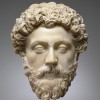
He that does a Memorable Action, and those that Report it, are all but short-liv’d Things.
[Πᾶν ἐφήμερον, καὶ τὸ μνημονεῦον καὶ τὸ μνημονευόμενον.]
Marcus Aurelius (AD 121–180) Roman emperor (161–180), Stoic philosopher
Meditations [To Himself; Τὰ εἰς ἑαυτόν], Book 4, ch. 35 (4.35) (AD 161-180) [tr. Collier (1701)]
(Source)
(Source (Greek)). Alternate translations:All things are transitory, and, as it were, but for a day; both those who remember; and the things, and persons remembered.
[tr. Hutcheson/Moor (1742)]Everything is only for a day, both that which remembers and that which is remembered.
[tr. Long (1862)]He that does a memorable action, and those that report it, are all but short-lived things.
[tr. Collier/Zimmern (1887)]Everything is but for a day, remembrancer alike and the remembered.
[tr. Rendall (1898)]All things are for a day, both what remembers and what is remembered.
[tr. Hutcheson/Chrystal (1902)]Ephemeral all of them, the rememberer as well as the remembered!
[tr. Haines (Loeb) (1916)]All is ephemeral, both what remembers and what is remembered.
[tr. Farquharson (1944)]All of us are creatures of a day; the rememberer and the remembered alike.
[tr. Staniforth (1964)]All is ephemeral, both that which remembers and that which is remembered.
[tr. Hard (1997 ed.)]Everything transitory -- the knower and the known.
[tr. Hays (2003)]All is ephemeral, both memory and the object of memory.
[tr. Hammond (2006)]They are all short-lived, both those who remember and the remembered.
[tr. Needleman/Piazza (2008)]All is ephemeral, both that which remembers and that which is remembered.
[tr. Hard (2011 ed.)]Everything is transitory, both that which remembers and that which is remembered.
[tr. Gill (2013)]
The thing to remember is that children are temporary. As soon as they develop a sense of humor and get to be good company, maybe even remember to take the trash out and close the refrigerator door, they pack up their electronic equipment and their clothes, and some of your clothes, and leave in a U-Haul, to return only at Thanksgiving. They were just passing through; they were always just passing through on their way to their own lives.
Barbara Holland (1933–2010) American author
One’s Company: Reflections on Living Alone, ch. 4 “Children” (1996)
(Source)

Your clothes should be according to the custom of those like you in age and condition. We do not have the power to change customs as we see fit, for it is time that creates them and likewise it is time that destroys them.
[I tuoi panni convien che siano secondo il costume degli altri di tuo tempo o di tua conditione, per le cagioni che io ho dette di sopra; ché noi non abbiamo potere di mutar le usanze a nostro senno, ma il tempo le crea, e consumale altresì il tempo.]
Giovanni della Casa (1503–1556) Florentine poet, author, diplomat, bishop
Galateo: Or, A Treatise on Politeness and Delicacy of Manners [Il Galateo overo de’ costumi], ch. 28 (1558) [tr. Eisnbichler/Bartlett (1986)]
(Source)
(Source (Italian)). Other translations:Your apparel must be shaped according to the fashion of the time, and your calling [...] For we must not take upon us to alter customs at our will. For time doth beget them and time doth also wear them out.
[tr. Peterson (1576)]Let your dress [...] be conformable to the customs of the age you live in, and suitable to your condition; for it is not in our power to alter the general fashions at our pleasure; which, as they are produced, so they are swallowed up by time.
[tr. Graves (1774)]

All passes. — Only strong art
Passes to eternity.
The bust
Survives the city.And the austere coin
That a workman finds
Underground
Reveals an emperor.[Tout passe. — L’art robuste
Seul a l’éternité,
Le buste
Survit à la cité.Et la médaille austère
Que trouve un laboureur
Sous terre
Révèle un empereur.]Théophile Gautier (1811–1872) French poet, writer, critic
“L’Art,” l. 41ff, Émaux et Camées (1852)
(Source)
(Source (French)). Other translations:Everything passes. --
Only robust art is eternal.
The bust outlives the city.
And the simple coin
Unearthed by a peasant
Reveals the image of an emperor.
[Source]All passes, Art alone
Enduring stays to us;
The Bust outlasts the throne, --
The Coin, Tiberius.
[Austin Dobson, "Ars Victrix" (1876), in imitation]Everything passes -- Robust art
Alone is eternal.
The bust
Survives the city.
[Source]Everything disappears -- Robust art
alone is eternal:
The Bust survives the city.
[Source]Everything passes away. -- Robust Art
Alone has eternity;
The bust
Survives the city.
[Source]
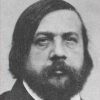
Don’t take life so serious, son … it ain’t no how permanent.
Walt Kelly (1913–1973) American animator and cartoonist [Walter Crawford Kelly, Jr.]
“Pogo” [Porky Pine] (24 Jun 1950)
More discussion about this quotation: Don’t Take Life So Serious, Son … It Ain’t Nohow Permanent – Quote Investigator.
Marrying a woman for her beauty makes no more sense than eating a bird for its singing. But it’s a common mistake nonetheless.

Beauty is but a lease from nature.
Edward Counsel (fl. 19th C) Australian author, composer
Maxims: Political, Philosophical, and Moral, #541 (2nd ed., 1892)
(Source)

Beauty is as summer fruits, which are easy to corrupt, and cannot last.
Francis Bacon (1561–1626) English philosopher, scientist, author, statesman
“Of Beauty,” Essays, No. 43 (1625)
(Source)

Everything passes, everything breaks, everything palls, everything gets replaced.
[Tout passe, tout casse, tout lasse, et tout se remplace.]
Proverbs, Sayings, and Adages
French proverb
Sometimes given without the final clause. The second and third clauses are sometimes reversed.

Sickness and sorrows come and go, but a superstitious soul hath no rest.

We may dig in our heels and dare life never to change, but, all the same, it changes under our feet like sand under the feet of a sea gazer as the tide runs out. Life is forever undermining us. Life is forever washing away our castles, reminding us that they were, after all, only sand and sea water.
Erica Jong (b. 1942) American writer, poet
Parachutes and Kisses (1984)


For the renown which riches or beauty confer is fleeting and frail; mental excellence is a splendid and lasting possession.
[Nam divitiarum et formae gloria fluxa atque fragilis est, virtus clara aeternaque habetur.]
Sallust (c. 86–35 BC) Roman historian and politician [Gaius Sallustius Crispus]
Bellum Catilinae [The War of Catiline; The Conspiracy of Catiline], ch. 1, sent. 4 [tr. Rolfe (1931)]
(Source)
Original Latin. Other translations:
- "For what are all the advantages of wealth, and all the graces of form and feature? mere precarious gifts, that soon fade and moulder away. It is virtue, and virtue only, that ennobles the human character, and lives in the memory of the after-times." [tr. Murphy (1807)]
- "For the splendour derived from riches and beauty is short-lived and frail, virtue alone confers immortality." [tr. Rose (1831)
- "For the glory of riches and beauty is fickle and frail; virtue is accounted bright and everlasting." [Source (1841)]
- "For the glory of wealth and beauty is fleeting and perishable; that of intellectual power is illustrious and immortal." [tr. Watson (1867)]
- "The glory of wealth and beauty is fleeting and frail, but personal merit is held in eternal honour." [tr. Pollard (1882)]
- "The glory of riches and appearance is fleeting and fragile, but to have prowess is something distinguished and everlasting. [tr. Woodman (2007)]
- "For the fame of riches and beauty is fickle and frail, while virtue is eternally excellent."
The old order changeth, yielding place to new,
And God fulfills Himself in many ways,
Lest one good custom should corrupt the world.Alfred, Lord Tennyson (1809–1892) English poet
Idylls of the King, “The Passing of Arthur” (1859-1885)
(Source)
It is said an Eastern monarch once charged his wise men to invent him a sentence, to be ever in view, and which should be true and appropriate in all times and situations. They presented him the words: “And this, too, shall pass away.” How much it expresses! How chastening in the hour of pride! — how consoling in the depth of affliction!
Abraham Lincoln (1809–1865) American lawyer, politician, US President (1861–65)
Speech (1859-09-30), Wisconsin State Agricultural Society, Milwaukee
(Source)
The anecdote Lincoln tells comes from a 12th Century Persian tale, which became popular in English in the early 19th Century, particularly through English poet Edward FitzGerald in 1852.