The events from 1933 to 1945 should have been fought in 1928 at the latest. Later it was too late. We must not wait until the struggle for freedom is called treason. We must not wait until the snowball has turned into an avalanche, we must crush the rolling snowball. Nobody can stop the avalanche! It only comes to rest when it has buried everything underneath it.
That is the lesson, that is the conclusion of what happened to us in 1933, that is the conclusion we must draw from our experiences, and it is the conclusion of my speech. Impending dictatorships can only be fought before they have taken power. It is a matter of an appointment calendar, not heroism.[Die Ereignisse von 1933 bis 1945 hätten spätestens 1928 bekämpft werden müssen. Später war es zu spät. Man darf nicht warten, bis der Freiheitskampf Landesverrat genannt wird. Man darf nicht warten, bis aus dem Schneeball eine Lawine geworden ist. Man muß den rollenden Schneeball zertreten. Die Lawine hält keiner mehr auf. Sie ruht erst, wenn sie alles unter sich begraben hat.
Das ist die Lehre, das ist das Fazit dessen, was uns 1933 widerfuhr. Das ist der Schluß, den wir aus unseren Erfahrungen ziehen müssen, und es ist der Schluß meiner Rede. Drohende Diktaturen lassen sich nur bekämpfen, ehe sie die Macht übernommen haben. Es ist eine Angelegenheit des Terminkalenders, nicht des Heroismus.]Erich Kästner (1899–1974) German writer, poet, screenwriter, satirist
Speech (1958-05-10), “Über das verbrennen von büchern [On the Burning of Books],” Hamburg PEN Conference
(Source)
Collected in Kastner, Gesammelte Schriften für Erwachsene [Collective Writings for Adults], Book 8 "Miscellaneous Articles III" (1969).
The speech was given on the 25th anniversary of the 1933 book burnings in Berlin. 1928 was the first federal election in Germany when the Nazi Party had federal candidates. It only received 3% of the vote.
This quote is forwarded through social media frequently, in a variety of translations and edits, usually without citation.
(Source (German)). Other translations:The events 1933–1945 should have been combated by 1928. Later was too late. We must not wait until the fight for freedom is called treason. We must not wait until the snowball has turned into an avalanche. You have to crush the rolling snowball. No one can stop the avalanche. It only comes to rest when it has buried everything underneath it.
That is the lesson of what happened to us in 1933. Impending dictatorships can only be fought before they have taken power.
[Source]They should have been combated by 1928 at the latest. Later it was too late. We must not wait until the struggle for freedom is called treason. We must not wait until the snowball has turned into an avalanche. You have to crush the rolling snowball. No one can stop the avalanche. It only comes to rest when it has buried everything underneath it.
That is the lesson, that is the conclusion of what happened to us in 1933. That is the conclusion we must draw from our experiences.
[Source]The events from 1933 to 1945 should have been battled in 1928 at the latest. Later was already too late. One must not wait until liberty is called treason. One must not wait till the snowball has become an avalanche. One must squelch the rolling snowball. The avalanche can't be stopped anymore [...]
[Source]The events from 1933 to 1945 should have been stopped in 1928 at the latest. After that it was too late. You can't wait until the struggle for freedom is labeled as treason. You need to squash the rolling snowball. No one can stop the ensuing avalanche after that. It ends only after everything is ruined.
[...] Threatening dictatorships can only be stopped before they have taken power.
[Source]The events of 1933 to 1945 should have been fought against by 1928 at the latest. Later it was too late. We must not wait until the fight for freedom is called treason. We must not wait until the snowball has become an avalanche. We must crush the rolling snowball. No one can stop the avalanche. It will not rest until it has buried everything beneath it.
That is the lesson, that is the conclusion of what happened to us in 1933. That is the conclusion we must draw from our experiences, and it is the end of my speech. Threatening dictatorships can only be fought against before they have taken power.
[Source]The events from 1933 until 1945 should've been eradicated as late as 1928. Later is too late. We cannot wait until the fight for freedom is called treason. We cannot wait until the snowball has turned into an avalanche. We must trample the rolling snowball. Nobody can stop the avalanche. It won't rest until it has buried everything.
[...] Threatening dictatorships can only be fought before they have gained power.
[Source]
Quotations about:
momentum
Note not all quotations have been tagged, so Search may find additional quotes on this topic.
Thus it was that with the shadows deepening about him, with his hopes fading one after another, Monsieur Mabeuf had remained serene, rather childishly but profoundly so. His spiritual states resembled the swing of a pendulum. Once set in motion by an illusion, the swing continued for a long time, even after the illusion had vanished. A clock does not stop the moment one loses the key.
[C’est ainsi qu’à travers cet obscurcissement qui se faisait autour de lui, toutes ses espérances s’éteignant l’une après l’autre, M. Mabeuf était resté serein, un peu puérilement, mais très profondément. Ses habitudes d’esprit avaient le va-et-vient d’un pendule. Une fois monté par une illusion, il allait très longtemps, même quand l’illusion avait disparu. Une horloge ne s’arrête pas court au moment précis où l’on en perd la clef.]
Victor Hugo (1802–1885) French writer, journalist, human rights activist, politician
Les Misérables, Part 3 “Marius,” Book 5 “The Excellence of Misfortune,” ch. 4 (3.5.4) (1862) [tr. Denny (1976)]
(Source)
(Source (French)). Other translations:Thus it was that amid this darkness which was gathering about him, all his hopes going out one after another, Monsieur Mabeuf had remained serene, somewhat childishly, but very thoroughly. His habits of mind had the swing of a pendulum. Once wound up by an illusion he went a very long lime, even when the illusion had disappeared. A clock does not stop at the very moment you lose the key.
[tr. Wilbour (1862)]It was thus that M. Mabeuf remained rather childishly but most profoundly serene, in the obscurity that was enveloping him gradually, and while his hopes were being extinguished in turn. The habits of his mind had the regular movement of a clock, and when he was once wound up by an illusion he went for a very long time, even when the illusion had disappeared. A clock does not stop at the precise moment when the key is lost.
[tr. Wraxall (1862)]It is thus that, athwart the cloud which formed about him, when all his hopes were extinguished one after the other, M. Mabeuf remained rather puerilely, but profoundly serene. His habits of mind had the regular swing of a pendulum. Once mounted on an illusion, he went for a very long time, even after the illusion had disappeared. A clock does not stop short at the precise moment when the key is lost.
[tr. Hapgood (1887)]So it was that amid this darkness gathering around him, all his hopes dimming one after another, M. Mabeuf had remained serene, somewhat childishly, but very deeply. His state of mind had the swing of a pendulum. Once wound up by an illusion, he went on a long time, even when the illusion had disappeared. A clock does not stop at the very moment you lose the key.
[tr. Wilbour/Fahnestock/MacAfee (1987)]Thus, as the darkness gathered, as all his hopes died, one by one, Monsieur Mabeuf remained serenE, a little childishly, but profoundly so. His mind behaved like a swinging pendulum. Once wound up by an illusion, it kept going for a very long time, even after the illusion was gone. A clock does not stop dead the very moment the key is lost.
[tr. Donougher (2013)]
The great armies, accumulated to provide security and preserve the peace, carried the nations to war by their own weight.
A. J. P. Taylor (1906–1990) British historian, journalist, broadcaster [Alan John Percivale Taylor]
The First World War: A Illustrated History, ch. 1 (1963)
(Source)
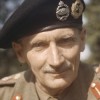
[The commander] must always think and plan two battles ahead — the one he is prepared to fight and the next one — so that the success gained in one battle can be used as a springboard for the next.
Bernard Montgomery (1887–1976) British military leader
The Memoirs of Field-Marshal Montgomery, ch. 6 (1958)
He who is outside the door has already a good part of his journey behind him.
Proverbs, Sayings, and Adages
Dutch proverb

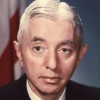
Avoid over-coordination. We have all observed months-long delays caused by an effort to bring all activities into complete agreement with a proposed policy or procedure. While the coordinating machinery is slowly grinding away, the original purpose is often lost. The essence of the proposals is being worn down as the persons most concerned impatiently await the decision. The process has been aptly called coordinating to death.
Hyman Rickover (1900–1986) Polish-American naval engineer, admiral [b. Chaim Gdala Rykower]
Speech (1954-03-16), “Administering a Large Military Development Project,” US Naval Postgraduate School, Monterey, California
(Source)
Well begun is half done.
Aristotle (384–322 BC) Greek philosopher
Politics [Πολιτικά], Book 5, ch. 4 / 1303b30 [tr. Jowett (1885)]
(Source)
People attribute this to Aristotle largely because Jowett used a contemporary proverb in lieu of what Aristotle wrote: "As the proverb says -- 'Well begun is half done.'" The following alternative translations capture his original meaning more closely: