

Not being able to control events, I control myself, and adapt myself to them if they do not adapt themselves to me.
[Ne pouvant regler les evenemens, je me regle moy-mesme : & m’applique à eux, s’ils ne s’appliquent à moy.]
Michel de Montaigne (1533–1592) French essayist
Essays, Book 2, ch. 17 (2.17), “Of Presumption [De la Presomption]” (1578) [tr. Cohen (1958)]
(Source)
This essay appeared in the 1st (1580) edition, and was expanded in succeeding editions. This passage was added in the 2nd (1588) edition.
(Source (French)). Other translations:Being unable to direct events, I governe my selfe; and if they apply not themselves to me, I apply my selfe to them.
[tr. Florio (1603)]Not being to govern events I govern myself, and apply myself to them, if they do not apply themselves to me.
[tr. Cotton (1686)]Not being able to govern events, I govern myself, and apply myself to them, if they will not apply themselves to me.
[tr. Cotton/Hazlitt (1877)]Being unable to regulate events, I regulate myself, and adapt myself to them if they do not adapt themselves to me.
[tr. Ives (1925)]Not being able to rule events, I rule myself, and adapt myself to them if they do not adapt themselves to me.
[tr. Frame (1943)]Not being able to control events I control myself: if they will not adapt to me then I adapt to them.
[tr. Screech (1987)]Since I cannot control events, I take control of myself and suit myself to them, if they do not suit me.
[tr. Atkinson/Sices (2012)]
Quotations about:
flexibility
Note not all quotations have been tagged, so Search may find additional quotes on this topic.

I think that it’s an honorable thing to change your mind occasionally. I don’t think it’s a sign of weakness or lack of integrity. I believe men are united by their doubts and separated by their convictions. Therefore, it’s a very good thing to have doubts. Doubts are the greatest spur to activity that I know of.
Peter Ustinov (1921–2004) English actor, author, director
Interview (1995-06-22) by Warren Allen Smith, Free Inquiry Magazine
(Source)

The only wedding custom with a pretense to long tradition and universality, that of public checking up on the consummation of the marriage, seems to have been dropped. Miss Manners can’t think why.
Judith Martin (b. 1938) American author, journalist, etiquette expert [a.k.a. Miss Manners]
“Miss Manners,” syndicated column (1981-04-11)
(Source)
On the idea that weddings have rigid and immutable rules, roles, and set pieces that must be adhered to. Collected in Miss Manners’ Guide to Excruciatingly Correct Behavior, Part 5 "Marriage (for Beginners)," "Weddings" (1983).

The object of education for that mind should be the teaching itself how to react with vigor and economy. No doubt the world at large will always lag so far behind the active mind as to make a soft cushion of inertia to drop upon, as it did for Henry Adams; but education should try to lessen the obstacles, diminish the friction, invigorate the energy, and should train minds to react, not at haphazard, but by choice, on the lines of force that attract their world. What one knows is, in youth, of little moment; they know enough who know how to learn.
Henry Adams (1838–1918) American journalist, historian, academic, novelist
The Education of Henry Adams, ch. 21 (1907)
(Source)
For the happiest life, rigorously plan your days, leave your nights open to chance.
Mignon McLaughlin (1913–1983) American journalist and author
The Second Neurotic’s Notebook, ch. 4 (1966)
(Source)
Variant: "For the happiest life, days should be rigorously planned, nights left open to chance."

Depend upon it, you see but half. You see the evil [of matrimony], but you do not see the consolation. There will be little rubs and disappointments everywhere, and we are all apt to expect too much; but then, if one scheme of happiness fails, human nature turns to another; if the first calculation is wrong, we make a second better: we find comfort somewhere — and those evil-minded observers, dearest Mary, who make much of a little, are more taken in and deceived than the parties themselves.
Jane Austen (1775–1817) English author
Mansfield Park, ch. 5 [Henry Crawford to Mary] (1814)
(Source)

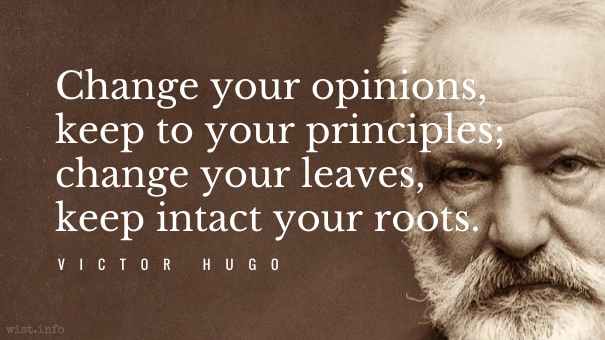
Change your opinions, keep to your principles;
change your leaves, keep intact your roots.[Changez vos opinions, gardez vos principes;
changez vos feuilles, gardez intactes vos racines.]
Victor Hugo (1802–1885) French writer, journalist, human rights activist, politician
Victor Hugo’s Intellectual Autobiography [Postscriptum de ma Vie], “Thoughts,” sec. 5 (1901) [tr. O’Rourke (1907)]
(Source)

Everything is possible for an eccentric, especially when he is English.
The road reaches every place, the short cut only one.
James Richardson (b. 1950) American poet
Vectors: Aphorisms and Ten-Second Essays, # 1 (2001)

Ensure that both plan and dispositions are flexible — adaptable to circumstances. Your plan should foresee and provide for a next step in case of success or failure.
B. H. Liddell Hart (1895–1970) English soldier, military historian (Basil Henry Liddell Hart)
Strategy, ch. 20 (1954)
My whole life is waiting for the questions to which I have prepared answers.
Tom Stoppard (1937–2025) Czech-English playwright and screenwriter
Lord Malquist and Mr Moon, ch. 2 “A Couple of Deaths and Exits” (1966)

A ginooine statesman should be on his guard,
Ef he must hev beliefs, nut to b’lieve ’em tu hard.[A genuine statesman should be on his guard,
If he must have beliefs, not to believe them too hard.]James Russell Lowell (1819–1891) American diplomat, essayist, poet
The Bigelow Papers: Second Series, ch. 5 (1867)
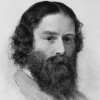
Some men think that rules should be made of cast iron; I believe they should be made of rubber, so they can be stretched to fit any particular case and then spring back into shape again. The really important part of a rule is the exception to it.
George Horace Lorimer (1867–1937) American journalist, author, magazine editor
Old Gorgon Graham: More Letters from a Self-Made Merchant to His Son, ch. 3 (1903)
(Source)
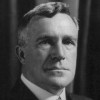
It is a good Blade that bends well.
Thomas Fuller (1654–1734) English physician, preacher, aphorist, writer
Gnomologia: Adages and Proverbs (compiler), # 2853 (1732)
(Source)

In other words, those very characteristics which are demanded by war — the ability to tolerate uncertainty, spontaneity of thought and action, having a mind open to the receipt of novel, and perhaps threatening, information — are the antitheses of those possessed by people attracted to the controls, and orderliness, of militarism. Here is the germ of a terrible paradox. Those very people who, because they have adopted attack rather than submission or flight as their preferred psychological defence against threat, are in theory the best suited to warring behaviour, may be the very ones least well equipped for other components of successful fighting.
Norman F. Dixon (1922–2013) British cognitive psychologist, author, military engineer
On the Psychology of Military Incompetence, Part 2, ch. 17 “Socialization and the Anal Character” (1976)
(Source)

The hell to be endured hereafter, of which theology tells, is no worse than the hell we make for ourselves in this world by habitually fashioning our characters in the wrong way. Could the young but realize how soon they will become mere walking bundles of habits, they would give more heed to their conduct while in the plastic state. We are spinning our own fates, good or evil. Every smallest stroke of virtue or of vice leaves its never so little scar.
William James (1842–1910) American psychologist and philosopher
The Principles of Psychology, Vol. 1, ch. 4 “Habit” (1890)
(Source)
This chapter originally published in Popular Science Monthly (Feb 1887).

The tactical result of an engagement forms the base for new strategic decisions because victory or defeat in a battle changes the situation to such a degree that no human acumen is able to see beyond the first battle. In this sense one should understand Napoleon’s saying: “I have never had a plan of operations.” Therefore no plan of operations extends with any certainty beyond the first contact with the main hostile force.
Helmuth von Moltke (1800–1891) Prussian soldier
“On Strategy” (1871)
Translated in Daniel J. Hughes, Harry Bell, Moltke on the Art of War: Selected Writings (1993).
Paraphrases / variants:
- "No plan survives contact with the enemy."
- "No battle plan ever survives contact with the enemy."
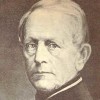
All men are by nature conservative but conservatism in the military profession is a source of danger to the country. One must be ready to change his line sharply and suddenly, with no concern for the prejudices and memories of what was yesterday. To rest upon formula is a slumber that, prolonged, means death.
Hyman Rickover (1900–1986) Polish-American naval engineer, admiral [b. Chaim Gdala Rykower]
Speech (1954-03-16), “Administering a Large Military Development Project,” US Naval Postgraduate School, Monterey, California
(Source)
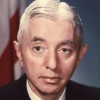
It is a bad plan that admits of no modification.
Publilius Syrus (d. 42 BC) Assyrian slave, writer, philosopher [less correctly Publius Syrus]
Sententiae [Moral Sayings], # 469
I had wanted to wrap this book up in a neat little package about a girl who is a comedienne from Detroit, becomes famous in New York, with all the world coming her way, gets this horrible disease of cancer, is brave and fights it, learning all the skills she needs to get through it, and then, miraculously, things are neatly tied up and she gets well. I wanted to be able to write on the book jacket: “Her triumph over cancer” or “She wins the cancer war.” I wanted a perfect ending, so I sat down to write the book with the ending in place before there even was an ending.
Now I’ve learned, the hard way. that some poems don’t rhyme, and some stories don’t have a clear beginning, middle and end. Like my life, this book has ambiguity. Like my life, this book is about not knowing, having to change, taking the moment and making the best of it, without knowing what’s going to happen next. Delicious ambiguity, as Joanna said.Gilda Radner (1946–1989) American comedian
It’s Always Something, ch. 16 “Change” (1989)
(Source)
Joanna was Radner's psychotherapist.

In matters of style, swim with the current; In matters of principle, stand like a rock.
Thomas Jefferson (1743–1826) American political philosopher, polymath, statesman, US President (1801–09)
(Spurious)
A common phrase in the late 19th Century. Only associated with Jefferson as of the mid-20th Century.

Thoughts, like fleas, jump from man to man. But they don’t bite everybody.
Stanislaw Lec (1909–1966) Polish aphorist, poet, satirist
Unkempt Thoughts [Myśli nieuczesane] (1957) [tr. Gałązka (1962)]
(Source)

This imputation of inconsistency is one to which every sound politician and every honest thinker must sooner or later subject himself. The foolish and the dead alone never change their opinions.
James Russell Lowell (1819–1891) American diplomat, essayist, poet
“Abraham Lincoln” (1864), My Study Windows (1871)
(Source)