We are stubborn because we are narrow-minded; it is hard to believe what is beyond the scope of our vision.
[La petitesse de l’esprit fait l’opiniâtreté, et nous ne croyons pas aisément ce qui est au delà de ce que nous voyons.]
François VI, duc de La Rochefoucauld (1613–1680) French epigrammatist, memoirist, noble
Réflexions ou sentences et maximes morales [Reflections; or Sentences and Moral Maxims], ¶265 (1665-1678) [tr. Heard (1917), ¶273]
(Source)
This maxim was in the 1st (1665) edition (with the wording "... fait souvent l’opiniâtreté ...")
(Source (French)). Other translations:It is from a Weakness and Littleness of Soul, that Men are Stiff and Positive in their Opinions; and we are very loth to Believe, what we are not able to Comprehend, and make out to Our Selves.
[tr. Stanhope (1694), ¶266]Narrowness of mind is often the cause of obstinacy: we do not easily believe beyond what we see.
[pub. Donaldson (1783), ¶319; ed. Lepoittevin-Lacroix (1797), ¶248]Narrowness of mind is often the cause of obstinacy; we believe no farther than we can see.
[ed. Carvill (1835), ¶458]Narrowness of mind is the cause of obstinacy -- we do not easily believe what is beyond our sight.
[ed. Gowens (1851), ¶276]A narrow mind begets obstinacy, and we do not easily believe what we cannot see.
[tr. Bund/Friswell (1871), ¶265]Obstinacy of opinion is due to want of intelligence; we find it difficult to believe what is beyond our mental horizon.
[tr. Stevens (1939), ¶265]A small mind is a stubborn mind; it is hard to believe what lies beyond our field of vision.
[tr. FitzGibbon (1957), ¶265]A small mind becomes an obstinate mind: we find it hard to believe what lies beyond our understanding.
[tr. Kronenberger (1959), ¶265]Obstinacy comes from limited intelligence, and we do not readily believe what is beyond our field of vision.
[tr. Tancock (1959), ¶265]Narrowness of mind begets obstinacy; and we do not easily believe what we cannot see ourselves.
[tr. Whichello (2016) ¶]
Quotations about:
dogmatism
Note not all quotations have been tagged, so Search may find additional quotes on this topic.
Neither acquiescence in skepticism nor acquiescence in dogma is what education should produce. What it should produce is a belief that knowledge is attainable in a measure, though with difficulty; that much of what passes for knowledge at any given time is likely to be more or less mistaken, but that the mistakes can be rectified by care and industry. In acting upon our beliefs, we should be very cautious where a small error would mean disaster; nevertheless it is upon our beliefs that we must act. This state of mind is rather difficult: it requires a high degree of intellectual culture without emotional atrophy. But though difficult it is not impossible; it is in fact the scientific temper. Knowledge, like other good things, is difficult, but not impossible; the dogmatist forgets the difficulty, the skeptic denies the possibility. Both are mistaken, and their errors, when wide-spread, produce social disaster.
Bertrand Russell (1872–1970) English mathematician and philosopher
Education and the Good Life, Part 1, ch. 2 “The Aims of Education” (1926)
(Source)
I think that it’s an honorable thing to change your mind occasionally. I don’t think it’s a sign of weakness or lack of integrity. I believe men are united by their doubts and separated by their convictions. Therefore, it’s a very good thing to have doubts. Doubts are the greatest spur to activity that I know of.
Peter Ustinov (1921–2004) English actor, author, director
Interview (1995-06-22) by Warren Allen Smith, Free Inquiry Magazine
(Source)
Once a man’s understanding has settled on something (either because it is an accepted belief or because it pleases him), it draws everything else also to support and agree with it. And if it encounters a larger number of more powerful countervailing examples, it either fails to notice them, or disregards them, or makes fine distinctions to dismiss and reject them, and all of this with much dangerous prejudice, to preserve the authority of its first conceptions.
[Intellectus humanus in iis quae semel placuerunt (aut quia recepta sunt et credita, aut quia delectant), alia etiam omnia trahit ad suffragationem et consensum cum illis: et licet major sit instantiarum vis et copia, quae occurrunt in contrarium; tamen eas aut non observat, aut contemnit, aut distinguendo summovet et rejicit, non sine magno et pernicioso praejudicio, quo prioribus illis syllepsibus authoritas maneat inviolata.]
Francis Bacon (1561–1626) English philosopher, scientist, author, statesman
Instauratio Magna [The Great Instauration], Part 2 “Novum Organum [The New Organon],” Book 1, Aphorism # 46 (1620) [tr. Silverthorne (2000)]
(Source)
(Source (Latin)). Alternate translations:The human understanding, when any preposition has been once laid down, (either from general admission and belief, or from the pleasure it affords,) forces every thing else to add fresh support and confirmation; and although more cogent and abundant instances may exist to the contrary, yet either does not observe or despises them, or gets rid of and rejects them by some distinction, with violent and injurious prejudice, rather than sacrifice the authority of its first conclusions.
[tr. Wood (1831)]The human understanding when it has once adopted an opinion (either as being the received opinion or as being agreeable to itself) draws all things else to support and agree with it. And though there be a greater number and weight of instances to be found on the other side, yet these it either neglects and despises, or else by some distinction sets aside and rejects; in order that by this great and pernicious predetermination the authority of its former conclusions may remain inviolate.
[tr. Spedding (1858)]The human Intellect, in those things which have once pleased it (either because they are generally received and believed, or because they suit the taste), brings everything else to support and agree with them; and though the weight and number of contradictory instances be superior, still it either overlooks or despises them, or gets rid of them by creating distinctions, not without great and in jurious prejudice, that the authority of these previous conclusions may be maintained inviolate.
[tr. Johnson (1859)]Once a human intellect has adopted an opinion (either as something it likes or as something generally accepted), it draws everything else in to confirm and support it. Even if there are more and stronger instances against it than there are in its favour·, the intellect either overlooks these or treats them as negligible or does some line-drawing that lets it shift them out of the way and reject them. This involves a great and pernicious prejudgment by means of which the intellect’s former conclusions remain inviolate.
[tr. Bennett (2017)]
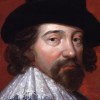
Profound ignorance makes a man dogmatical; he who knows nothing thinks he can teach others what he just now has learned himself.
[C’est la profonde ignorance qui inspire le ton dogmatique. Celui qui ne sait rien croit enseigner aux autres ce qu’il vient d’apprendre lui-même.]
Jean de La Bruyère (1645–1696) French essayist, moralist
The Characters [Les Caractères], ch. 5 “Of Society and Conversation [De la Société et de la Conversation],” § 76 (5.76) (1688) [tr. Van Laun (1885)]
(Source)
(Source (French)). Other translations:Profound Ignorance makes a Man dogmatick. If he knows nothing, he thinks he can teach others what he is to learn himself.
[Bullord ed. (1696)]Profound Ignorance makes a Man dogmatick; he who knows nothing, thinks he can teach others what he just now has learn'd himself.
[Curll ed. (1713)]A dogmatic tone is generally inspired by abysmal ignorance. The man who knows nothing thinks he is informing others of something which he has that moment learnt.
[tr. Stewart (1970)]
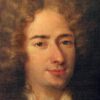
There were four things the Master abstained from entirely: he did not speculate, he did not claim or demand certainty, he was not inflexible, and he was not self-absorbed.
[子絕四、毋意、毋必、毋固、毋我]
Confucius (c. 551- c. 479 BC) Chinese philosopher, sage, politician [孔夫子 (Kǒng Fūzǐ, K'ung Fu-tzu, K'ung Fu Tse), 孔子 (Kǒngzǐ, Chungni), 孔丘 (Kǒng Qiū, K'ung Ch'iu)]
The Analects [論語, 论语, Lúnyǔ], Book 9, verse 4 (9.4) (6th C. BC – 3rd C. AD) [tr. Ames/Rosemont (1998)]
(Source)
Different versions of the Analects take these four items in slightly differing order, reflected in the translations below. (Source (Chinese)). Alternate translations:There were four things from which the Master was entirely free. He had no foregone conclusions, no arbitrary predeterminations, no obstinacy, and no egoism.
[tr. Legge (1861)]The Master barred four (words); - he would have no "shall"s, no "must"s, no "certainly"s, no "I"s.
[tr. Jennings (1895)]There were four things from which Confucius was entirely free : He was free from self-interest, from prepossessions, from bigotry and from egoism.
[tr. Ku Hung-Ming (1898)]The Master was entirely free from four things: he had no preconceptions, no pre-determinations, no obduracy, and no egoism.
[tr. Soothill (1910)]He was cut off from four things; he had no prejudices, no categoric imperatives, no obstinacy or no obstinate residues, no time-lags, no egotism.
[tr. Pound (1933); yes, that looks to be five things]There are four things that the Master wholly eschewed: he took nothing for granted, he was never over-positive, never obstinate, never egotistic.
[tr. Waley (1938)]The Master recognized four prohibitions; Do not be swayed by personal opinion; recognize no inescapable necessity; do not be stubborn; do not be egotistic.
[tr. Ware (1950)]He denounced (or tried to avoid completely) four things: arbitrariness of opinions, dogmatism, narrow-mindedness and egotism.
[tr. Lin Yutang (1938)]There were four things the Master refused to have anything to do with: he refused to entertain conjectures or insist on certainty; he refused to be inflexible or to be egotistical.
[tr. Lau (1979)]The Master cut out four things. He never took anything for granted, he never insisted on certainty, he was never inflexible and never egotistical.
[tr. Dawson (1993)]The Master absolutely eschewed four things: capriciousness, dogmatism, willfulness, self-importance.
[tr. Leys (1997)]The Master was absolutely free from four things: free from conjecture, free from arbitrariness, free from obstinacy, free from egoism.
[tr. Huang (1997)]Confucius prohibited the four points: no wantonness, no dictatorship, no stubbornness, and no arrogance.
[tr. Cai/Yu (1998)]The Master avoided four things: no wish, no will, no set, no self.
[tr. Brooks/Brooks (1998); they further interpret, "no fixed opinions, no foregone conclusions, no stubbornness, no self-absorption"]The Master had freed himself of four things: idle speculation, certainty, inflexibility, and conceit.
[tr. Hinton (1998)]The Master observed four prohibitions: no willfulness, no obstinacy, no narrow-mindedness, no egotism.
[tr. Watson (2007)]The Master stayed away from four things: he did not put forth theories or conjectures; he did not think he must be right; he was not obdurate; he was not self-centered.
[tr. Annping Chin (2014)]Confucius has four ultimate mindsets for perfect: no prejudice, no absolute must, no fixation, no self.
[tr. Li (2020)]
They clung to their rock-bottom opinions. They were so strong in their beliefs that there came a time when it hardly mattered what exactly those beliefs were; they all fused into a single stubbornness.

I am often inclined to be envious of other people’s religion. They are so cocksure dogmatically that they act as though they are omniscient. Life has no doubts, its direction is determined, all evil is by hypothesis overruled by an all-wise God for good. I do not share this view of life, any more than I share the Christian Science views of disease, but I can see that it makes people enthusiastic, effective, self-forgetful and often fanatical and great bores.
Henry Joel Cadbury (1883–1974) American biblical scholar, Quaker historian, writer, activist
“My Personal Religion,” lecture, Harvard School of Divinity (1936)
(Source)
The problem is that the people with the most ridiculous ideas are always the people who are most certain of them.
William "Bill" Maher (b. 1956) American comedian, political commentator, critic, television host.
The Decider (21 Jul 2007)
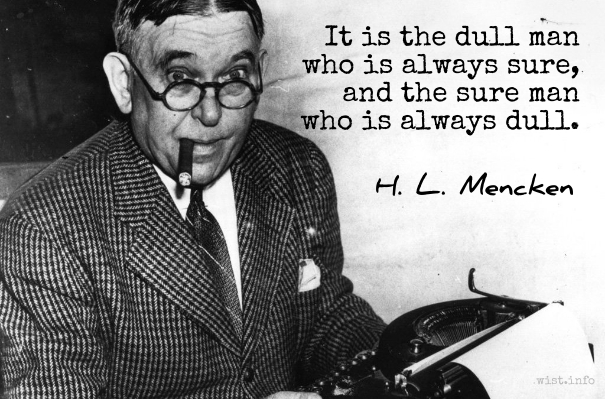
It is the dull man who is always sure, and the sure man who is always dull.
H. L. Mencken (1880–1956) American writer and journalist [Henry Lewis Mencken]
“The National Letters,” Prejudices: Second Series (1920)
(Source)
The world is made up for the most part of morons and natural tyrants, sure of themselves, strong in their own opinions, never doubting anything.
Clarence Darrow (1857–1938) American lawyer
Personal Liberty (1928)
For at least two thirds of our miseries spring from human stupidity, human malice, and those great motivators and justifiers of malice and stupidity, idealism, dogmatism, and proselytizing zeal on behalf of religious or political idols.
Aldous Huxley (1894–1963) English novelist, essayist and critic
“Knowledge and Understanding,” Vedanta and the West (May-Jun 1956)
(Source)
Revision of a 1955 lecture given at the Vedanta Society of Southern California; this phrase, however, does not occur in it (the surrounding text is found around the 10:00 mark). Reprinted in Adonis and the Alphabet, and Other Essays (in the US Tomorrow and Tomorrow and Tomorrow, and Other Essays) (1956).

When we believe ourselves in possession of the only truth, we are likely to be indifferent to common everyday truths. Self-deception, credulity, and charlatanism are somehow linked together.
Eric Hoffer (1902–1983) American writer, philosopher, longshoreman
Passionate State of Mind, Aphorism 83 (1955)
(Source)
Human beings are perhaps never more frightening than when they are convinced beyond doubt that they are right.
Laurens van der Post (1906–1996) Afrikaner author, conservationist, statesman, humanitarian
The Lost World of the Kalahari, ch. 3 (1958)
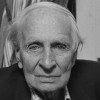
Not to be absolutely certain is, I think, one of the essential things in rationality.
Bertrand Russell (1872–1970) English mathematician and philosopher
“Am I an Atheist or an Agnostic?” sec. “Don’t Be Too Certain!” (1949)
(Source)
Originally given as a speech, "Agnosticism v. Atheism," Rationalist Press Assoc. Annual Dinner, London (1949-05-20), then printed as "Agnosticism v. Atheism," The Literary Guide and Rationalist Review (1949-07), then released as an essay under this title later in 1949.
Moral certainty is always a sign of cultural inferiority. The more uncivilized a man, the surer he is that he knows precisely what is right and what is wrong. All human progress, even in morals, has been the work of men who have doubted the current moral values, not of men who have whooped them up and tried to enforce them. The truly civilized man is always skeptical and tolerant in this field as in all others. His culture is based on “I am not too sure.”
H. L. Mencken (1880–1956) American writer and journalist [Henry Lewis Mencken]
Minority Report : H.L. Mencken’s Notebooks, #418 (1956)
(Source)
Doubt is not a pleasant condition, but certainty is an absurd one.
[Le doute n’est pas une état bien agréable, mais l’assurance est un état ridicule.]
Voltaire (1694–1778) French writer [pseud. of Francois-Marie Arouet]
Letter (1770-11-28) to Frederick William, Prince of Prussia [tr. Tallentyre (1919)]
(Source)
The French is sometimes given (e.g.) as "Le doute n'est pas une condition agréable, mais la certitude est absurde."
(Source (French)). Other translations:Doubt is not a very agreeable state, but certainty is a ridiculous one.
[tr. Robertson (1922)]Doubt is not a pleasant condition, but certainty is absurd.
[E.g. (1994)]Doubt is not an agreeable condition, but certainty is an absurd one.
[E.g.]
The greater the ignorance the greater the dogmatism.
Sir William Osler (1849–1919) Canadian physician
Montreal Medical Journal (1902)
The causes of the Great Depression are still far from certain. A lack of certainty, it may also be observed, is not evident in the contemporary writing on the subject. Much of it tells what went wrong and why with marked firmness. However, this paradoxically can itself be an indication of uncertainty. When people are least sure they are often most dogmatic.
John Kenneth Galbraith (1908–2006) Canadian-American economist, diplomat, author
The Great Crash, 1929, ch. 9 “Cause and Consequence,” sec. 3 (1954)
(Source)