Note not all quotations have been tagged, so Search may find additional quotes on this topic.
Fascism, Nazism and Stalinism have in common that they offered the atomized individual a new refuge and security. These systems are the culmination of alienation. The individual is made to feel powerless and insignificant, but taught to project all of his human powers into the figure of the leader, the state, the “fatherland,” to whom he has to submit and whom he has to worship. He escapes from freedom and into a new idolatry. All the achievements of individuality and reason, from the late Middle Ages to the nineteenth century are sacrificed on the altars of the new idols.
Erich Fromm (1900–1980) American psychoanalyst and social philosopher The Sane Society, ch. 7 (1956)
(Source)
The Constitution and the Declaration of Independence can live only as long as they are enshrined in our hearts and minds. If they are not so enshrined, they would be no better than mummies in their glass cases, and they could in time become idols whose worship would be a grim mockery of the true faith. Only as these documents are reflected in the thoughts and acts of Americans can they remain symbols of a power that can move the world.
Harry S Truman (1884–1972) US President (1945–1953)
Speech (1952-12-15), National Archives
(Source)
Gold and silver are the gods you adore
In what are you different from the idolater,
save that he worships one, and you a score?
[Fatto v’avete dio d’oro e d’argento;
e che altro è da voi a l’idolatre,
se non ch’elli uno, e voi ne orate cento?]
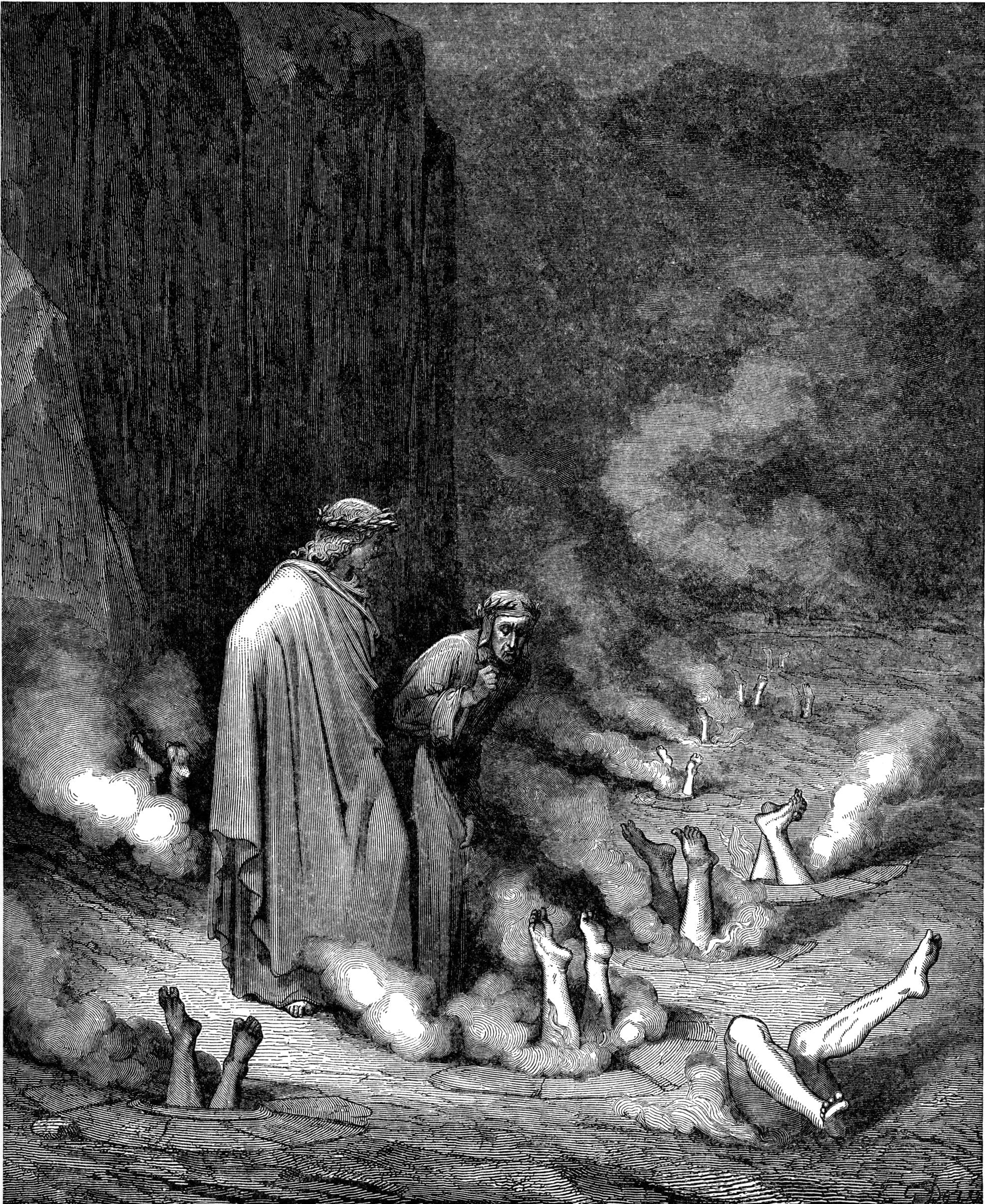
Dante Alighieri (1265–1321) Italian poet The Divine Comedy [Divina Commedia], Book 1 “Inferno,” Canto 19, l. 112ff (19.112-114) [Dante] (1309) [tr. Ciardi (1954)]
(Source)
Chiding the damned shade of Pope Nicholas III (reigned 1280-1303), who was infamous for his corruption, extorting lands for the Church from nobles before giving his blessing, taking bribes, and selling holy offices (simonism); the last has landed him in the Eighth Circle, third Bolgia, with the other simoniacs.
But you of silver and gold have made
Your God: What differs your Idolatry
From that of others, but that they did one
Alone, and you a hundred Gods adore.
[tr. Rogers (1782), l. 109ff]
Go, seek your Saviour in the delved mine.
And bid the Idolater the palm resign;
Thine is a Legion, his a single God!
[tr. Boyd (1802), st. 19]
Of gold and silver ye have made your god,
Diff’ring wherein from the idolater,
But he that worships one, a hundred ye?
[tr. Cary (1814)]
Silver and gold ye make your god: what more
Divides the brute idolater and you,
Save that he one, a hundred ye adore?
[tr. Dayman (1843)]
Ye have made you a god of gold and silver; and wherein do ye differ from the idolater, save that he worships one, and ye a hundred?
[tr. Carlyle (1849)]
Of gold and silver you have made your god,
Idols of yours and others to recount,
Theirs to one, to a hundred yours amount.
[tr. Bannerman (1850)]
Or gold and silver ye your gods have made;
And what is 'twist th' idolater and you,
But he to one -- ye to a hundred pray.
[tr. Johnston (1867)]
Ye have made yourselves a god of gold and silver;
And from the idolater how differ ye,
Save that he one, and ye a hundred worship?
[tr. Longfellow (1867)]
Ye have made a god of gold and silver, and what else is there between you and the idolater save that he worships one, and you a hundred.
[tr. Butler (1885)]
Ye've made your God of silver and of gold.
Ye from idolaters what line withdraws.
Save they sin once, and ye a hundredfold?
[tr. Minchin (1885)]
Ye have made you a god of gold and silver: and what difference is there between you and the idolater save that he worships one and ye a hundred?
[tr. Norton (1892)]
A god ye have made yourselves of gold and silver,
And from idolaters what else divides you,
Save that they pray to one and you a hundred?
[tr. Griffith (1908)]
You have made you a god of gold and silver, and what is there between you and teh idolaters but that they worship one and you a hundred?
[tr. Sinclair (1939)]
A God of silver and gold ye have made to adore;
And how do ye differ from the idolater
Sav e that he worships one, and ye five-score?
[tr. Binyon (1943)]
You deify silver and gold; how are you sundered
In any fashion from the idolater,
Save that he serves one god and you an hundred?
[tr. Sayers (1949)]
You have made you a god of gold and silver; and wherein do you differ from the idolaters, save that they worship one, and you a hundred?
[tr. Singleton (1970)]
You have built yourselves a God of gold and silver!
How do you differ from the idolater,
except he worships one, you worship hundreds?
[tr. Musa (1971)]
You’ve made yourselves a god of gold and silver;
how are you different from idolaters,
save that they worship one and you a hundred?
[tr. Mandelbaum (1980)]
You have made a god of gold and silver:
And how do you differ from an idolater,
Except that he prays to one, and you to a hundred?
[tr. Sisson (1981)]
You made a god of gold and silver: wherein
Is it you differ from the idolatrous --
Save that you worship a hundred, they but one?
[tr. Pinsky (1994), l. 105ff]
You have made gold and silver your god; and what difference is there between you and the idol-worshipper, except that he prays to one, and you to a hundred?
[tr. Durling (1996)]
You have made a god for yourselves of gold and silver, and how do you differ from the idolaters, except that he worships one image and you a hundred?
[tr. Kline (2002)]
Silver and gold you have made your god. And what’s
the odds -- you and some idol-worshipper?
He prays to one, you to a gilded hundred.
[tr. Kirkpatrick (2006)]
You have wrought yourselves a god of gold and silver.
How then do you differ from those who worship idols
except they worship one and you a hundred?
[tr. Hollander/Hollander (2007)]
The god you made for yourself is silver and gold --
And where are you different, you and worshippers
Of idols? They have one, and you a hundred.
[tr. Raffel (2010)]
You thieves reigned,
Making a God of gold and silver. Room
Does not exist between the idolaters
And you, except they worship one, and you
A hundred.
[tr. James (2013)]
For at least two thirds of our miseries spring from human stupidity, human malice, and those great motivators and justifiers of malice and stupidity, idealism, dogmatism, and proselytizing zeal on behalf of religious or political idols.
Aldous Huxley (1894–1963) English novelist, essayist and critic
“Knowledge and Understanding,” Vedanta and the West (May-Jun 1956)
(Source)
Revision of a 1955 lecture given at the Vedanta Society of Southern California; this phrase, however, does not occur in it (the surrounding text is found around the 10:00 mark). Reprinted in Adonis and the Alphabet, and Other Essays (in the US Tomorrow and Tomorrow and Tomorrow, and Other Essays) (1956).
Men are idolaters, and want something to look at and kiss and hug, or throw themselves down before; they always did, they always will; and if you don’t make it of wood, you must make it of words, which are just as much used for idols as promissory notes are used for values.
Oliver Wendell Holmes, Sr. (1809–1894) American poet, essayist, scholar
Article (1872-05), “The Poet at the Breakfast-Table,” Atlantic Monthly (Source)
Collected in The Poet at the Breakfast-Table, ch. 5 (1872).
Rough work, iconoclasm, but the only way to get at truth.
Oliver Wendell Holmes, Sr. (1809–1894) American poet, essayist, scholar
Article (1859-05), “The Professor at the Breakfast-Table,” Atlantic Monthly (Source)
Collected in The Professor at the Breakfast-Table, ch. 5 (1859).