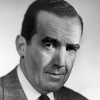
All the governments of the world adopt elaborate methods of concealing truths which they consider undesirable, and inflict various forms of penalty upon those who spread knowledge which is thought bad for the population This applies especially to knowledge of the kind which is considered seditious, and the kind which is considered obscene. I shall not give instances, since, if I did, I should myself fall under the ban of the law.
Bertrand Russell (1872–1970) English mathematician and philosopher
Education and the Social Order [Education and the Modern World], ch. 1 “The Individual versus the Citizen” (1932)
(Source)
Quotations about:
treason
Note not all quotations have been tagged, so Search may find additional quotes on this topic.

What was the crime? To complain. What was the crime? To suffer. Let misery hide and be silent, otherwise it is lèse-majesté.
[Quel était l’attentat? se plaindre. Quel était le crime? souffrir. Que la misère se cache et se taise, sinon elle est lèse-majesté.]
Victor Hugo (1802–1885) French writer, journalist, human rights activist, politician
The Man Who Laughs [L’Homme qui rit; The Laughing Man; By Order of the King], Part 2, Book 9, ch. 2 (.2.9.2) (1869) [tr. Lavelle (2003)]
(Source)
The attitude of the powerful and the courts when confronted by suffering and injustice.
(Source (French)). Other translations:What was the outrage? Disfigurement. What was the crime? Suffering. Let misery hide itself in silence, otherwise it becomes treason.
[tr. Unknown (1869)]What was the outrage? Complaint. What was the crime? Suffering. Let misery hide itself in silence, otherwise it becomes treason.
[tr. Unknown, Authorized (1871)]What was the outrage? -- Complaint. What was the crime? -- Suffering. Let misery hide itself in silence, otherwise it becomes treason.
[tr. Hapgood (1888)]Which was the outrage? The complaint. Which was the crime? The suffering. Let misery hide and be silent; otherwise it becomes high treason.
[tr. Phillips (1894)]

And as for the argument that criticism [of government foreign policy] may give aid and comfort to some enemy, that is a form of blackmail unworthy of those who profess it. If it is to be accepted, we will have an end to genuine discussion of foreign policies, for it will inevitably be invoked to stop debate and criticism whenever that debate gets acrimonious or the criticism cuts too close to the bone. And to the fevered mind of the FBI, the CIA, and some Senators, criticism always gives aid and comfort to the enemy or cuts too close to
the bone.Henry Steele Commager (1902–1998) American historian, writer, activist
Essay (1965-12-18), “The Problem of Dissent,” Saturday Review
(Source)
Reprinted in Freedom and Order, Part 6 (1966).
Sections of the essay (including this portion) were read into the Congressional Record, Senate Proceedings (1969-06-26), as part of a speech by former Senator Wayne Morse (D-Oregon) at the commencement of Fairleigh Dickinson University (1969-06-07); Morse's speech was read in by Senator Gary Hart (D-Colo.).

CATO: Curse on his virtues! they’ve undone his country.
Such popular humanity is treason.Joseph Addison (1672–1719) English essayist, poet, statesman
Cato, Act 4, sc. 4 (1713)
(Source)
Speaking of Caesar.

A man who does not see this is senseless; he who does see it, and still advocates such a measure, is impious.
[Hoc qui non videt, excors; qui, cum videt, decernit, impius est.]
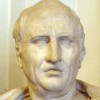
Marcus Tullius Cicero (106–43 BC) Roman orator, statesman, philosopher
Philippics [Philippicae; Antonian Orations], No. 5, ch. 2 / sec. 5 (5.2/5.5) (43-01-01 BC) [tr. Yonge (1903)]
(Source)
On the suggestion that Mark Antony be bought off by giving him governorship of Transalpine Gaul, and how that would merely give him more troops and power to move against Rome.
(Source (Latin)). Other translations:He that does not see this is a fool; he that sees it, and proposes it, is disloyal.
[tr. Ker (Loeb) (1926)]Anyone who does not see this is a fool; anyone who does and makes the proposal all the same is treacherous.
[tr. Manuwald (2007)]Who does not see this is senseless; who sees and still approves is ungodly.
[E.g.]
KING HENRY: Gives not the hawthorn bush a sweeter shade
To shepherds looking on their silly sheep
Than doth a rich embroidered canopy
To kings that fear their subjects’ treachery?William Shakespeare (1564–1616) English dramatist and poet
Henry VI, Part 3, Act 3, sc. 5, l. 42ff (3.5.42-45) (1591)
(Source)

LADY MACDUFF:When our actions do not,
Our fears do make us traitors.William Shakespeare (1564–1616) English dramatist and poet
Macbeth, Act 4, sc. 2, l. 4ff (4.2.4-5) (1606)
(Source)
What a contrast to this civil war in our midst! Here, set deep inside the country, are conspiracy, danger and a deadly foe. Degeneracy, madness and evil are the enemies we have to fight.
[Domesticum bellum manet, intus insidiae sunt, intus inclusum periculum est, intus est hostis. cum luxuria nobis, cum amentia, cum scelere certandum est.]
Marcus Tullius Cicero (106–43 BC) Roman orator, statesman, philosopher
Orationes in Catilinam [Catilinarian Orations], No. 2, ch. 5 / § 11 (2.5.11) (63-11-09 BC) [tr. Grant (1960)]
(Source)
Cicero argues that, having achieved peace with other nations, the danger to Rome is now the internal one of Catiline and his decadent, wastrel followers.
(Source (Latin)). Other translations:The Plot is within; the danger locked within; the Enemy is within: We have a Conflict with Luxury, with Madness, with Treachery.
[tr. Wase (1671)]Our only danger is at home; treason lurks within our walls; the enemy is in the heart of the city. Luxury, villainy, and madness, are the foes we are to encounter.
[tr. Sydney (1795)]Domestic war alone remains. The only plots against us are within our own walls, -- the danger is within, -- the enemy is within. We must war with luxury, with madness, with wickedness.
[tr. Yonge (1856)]A war at home remains; the snares are within; the danger is inclosed within; the enemy is within; we have to contend with luxury, with madness, with guilt.
[tr. Mongan (1879)]A domestic war remains; the snares are within; the danger is inclosed within; the enemy is within; it is to be contended to (by) us with luxury, with madness, with crime.
[tr. Underwood (1885)]A domestic war remains; the ambuscades are within; the danger is enclosed within; the enemy is within; (it) is to [must] be contended by us [we must contend] with luxury, with madness, with crime.
[tr. Dewey (1916)]The enemy is within the gates; it is with our own luxury, our own folly, our own criminality that we have to contend.
[tr. Taylor (1916)]
The surest safeguard against treason is a polity so just and equitable that no one will wish to betray it. Such an inspiration of men’s affection and men’s confidence is a more dependable guarantee of national security than the most searching catechism or the most diligent secret police. As we depart from this principle we confess our weakness, to our enemies as well as to ourselves. As we are faithful to it we realize our strength and show it to the world.
Whitney Griswold (1906–1963) American historian, educator [Alfred Whitney Griswold]
“Freedom, Security, and the University Tradition,” speech, Columbia University Bicentennial (1954-06-02)
(Source)
Reprinted in Griswold, In the University Tradition (1957).

Most people do not mind being surpassed in good fortune, character, or temperament, but no one, especially not a sovereign, likes to be surpassed in intelligence. For this is the king of attributes, and any crime against it is lèse-majesté.
[Bien se hallará quien quiera ceder en la dicha, y en el genio; pero en el ingenio, ninguno, cuanto menos una soberanía. Es éste el atributo rey, y así cualquier crimen contra él fue de lesa Majestad.]
Baltasar Gracián y Morales (1601–1658) Spanish Jesuit priest, writer, philosopher
The Art of Worldly Wisdom [Oráculo Manual y Arte de Prudencia], § 7 (1647) [tr. Maurer (1992)]
(Source)
See Johnson. (Source (Spanish)). Other translations:There are many who will yield in good fortune, or in good humour; but no body will yield in Wit, and least of all a Sovereign. Wit is the King of Attributes, and by consequent, every Offence against it, is no less a Crime than Treason.
[Flesher ed. (1685)]There be some that will grant you precedence in good luck or good temper but none in good sense, least of all a prince; for good sense is a royal prerogative, any claim to that is a case of lèse-majesté.
[tr. Jacobs (1892)]Some will deign to take place after you in matters of luck or of heart, but in intelligence, none, least of all a sovereign: for this is the sovereign attribute, wherefore any attack upon it is a crime against majesty.
[tr. Fischer (1937)]

We may then lay down this rule of friendship — neither ask nor consent to do what is wrong. For the plea “for friendship’s sake” is a discreditable one, and not to be admitted for a moment. This rule holds good for all wrong-doing, but more especially in such as involves disloyalty to the republic.
[Haec igitur lex in amicitia sanciatur, ut neque rogemus res turpes nec faciamus rogati. Turpis enim excusatio est et minime accipienda cum in ceteris peccatis, tum si quis contra rem publicam se amici causa fecisse fateatur.]
Marcus Tullius Cicero (106–43 BC) Roman orator, statesman, philosopher
Laelius De Amicitia [Laelius on Friendship], ch. 12 / sec. 40 (44 BC) [tr. Shuckburgh (1909)]
(Source)
Original Latin. Other translations:Let this law therefore be established in friendship, viz., that we should neither ask things that are improper, nor grant them when asked; for it is a disgraceful apology, and by no means to be admitted, as well in the case of other offenses, as when any one avows he has acted against the state for the sake of a friend.
[tr. Edmonds (1871)]As to friendship, then, let this law be enacted, that we neither ask of a friend what is wrong, nor do what is wrong at a friend’s request. The plea that it was for a friend’s sake is a base apology, -- one that should never be admitted with regard to other forms of guilt, and certainly not as to crimes against the State.
[tr. Peabody (1887)]Therefore let this law be established in friendship: neither ask dishonourable things, nor do them, if asked. And dishonourable it certainly is, and not to be allowed, for anyone to plead in defence of sins in general and especially of those against the State, that he committed them for the sake of a friend.
[tr. Falconer (1923)]Therefore, let this law be established for friendship: that we should neither ask for foul things nor fulfill requests for them. For this is a foul excuse and ought not be accepted for any crime, but especially not if someone is shown to have placed themselves against the Republic for the sake of a friend.
[Source]
How can we account for our present situation unless we believe that men high in this government are concerting to deliver us to disaster? This must be the product of a great conspiracy, a conspiracy on a scale so immense as to dwarf any previous such venture in the history of man. A conspiracy of infamy so black that when it is finally exposed, its principals shall forever be deserving of the maledictions of all.
Joseph McCarthy (1908–1957) American politician, attorney
“America’s Retreat from Victory: The Story of Gen. George C. Marshall,” speech, US Senate (14 Jun 1951)
(Source)
Part of a 65,000 word speech given by McCarthy, attacking Sec. of Defense George C. Marshall (and, by proxy, Harry Truman), alleging a string of sinister post-WW2 US diplomatic and military failures, culminating in Truman's firing of Douglas MacArthur.
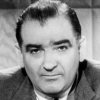
The hard line, which has always been arguable in theory and which has had some success in practice, views the imperatives of the cold war as an ineluctable challenge, has encouraged a skeptical view of the limits of negotiation, and has placed its primary trust in ample reserves of strength.
The pseudo-conservative line is distinguishable from this not alone in being more crusade-minded and more risk-oriented in its proposed policies but also in its conviction that those who place greater stress on negotiation and accommodation are either engaged in treasonable conspiracy (the Birch Society’s view) or are guilty of well-nigh criminal failings in moral and intellectual fiber (Goldwater’s).Richard Hofstadter (1916–1970) American historian and intellectual
“Goldwater and Pseudo-Conservative Politics,” sec. 4 (1965)
(Source)
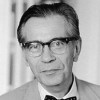
Treason is merely a question of dates.
Charles-Maurice de Talleyrand-Périgord (1754–1838) French secularized clergyman, statesman, wit, diplomat
Comment to Tsar Alexander (1815)
(Source)
Variant: "Treason is merely a matter of dates."
Both versions of the line are quoted in different biographies of Talleyrand, apparently derived from a passage in his Memoirs (ed. Albert de Broglie, tr. De Beaufort (1891)). He relates while at the Congress of Vienna (1814-15), Tsar Alexander referred to Saxony as "Those who betrayed the cause of Europe" for joining with Napoleon, to which Talleyrand replied (mindful that Alexander had at times been allied with Napoleon), "Sire, that is a question of dates."
In the movie Die Hard 2 (1990), the quote is misattributed to Cardinal Richelieu in Alexandre Dumas, The Three Musketeers (1844). Variants on the line actually have been used in movie editions of Dumas' The Count of Monte Cristo (but not in the actual book).

A nation can survive its fools, and even the ambitious. But it cannot survive treason from within. For the traitor appears not a traitor — he speaks in the accents familiar to his victims, and he appeals to the baseness that lies deep in the hearts of all men. He rots the soul of a nation — he works secretly and unknown in the night to undermine the pillars of the city — he infects the body politic so that it can no longer resist. A murderer is less to be feared. The traitor is the carrier of the plague. You have unbarred the gates of Rome to him.
Marcus Tullius Cicero (106–43 BC) Roman orator, statesman, philosopher
(Spurious)
This text, widely passed around on social media, was made up for Cicero in Taylor Caldwell, A Pillar of Iron (1965).
The man who tries to make the flag an object of a single party is a greater traitor to that flag than any man who fires at it.
David Lloyd George (1863–1945) Welsh politician, statesman, UK Prime Minister (1916–22)
(Attributed)
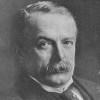
Traters, I will here remark, are a onfortnit class of peple. If they wasn’t, they wouldn’t be traters. They conspire to bust up a country — they fail, and they’re traters. They bust her, and they become statesmen and heroes.
[Traitors, I will here remark, are an unfortunate class of people. If they weren’t, they wouldn’t be traitors. They conspire to bust up a country — they fail, and they’re traitors. They bust her, and they become statesmen and heroes.]
Artemus Ward (1834–1867) American humorist, editor, lecturer [pseud. of Charles Farrar Browne]
“The Tower of London,” The Complete Works of Atermus Ward (1898)
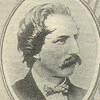
Each of you, for himself, by himself and on his own responsibility, must speak. And it is a solemn and weighty responsibility, and not lightly to be flung aside at the bullying of pulpit, press, government, or the empty catch-phrases of politicians. Each must for himself alone decide what is right and what is wrong, and which course is patriotic and which isn’t. You cannot shirk this and be a man. To decide against your convictions is to be an unqualified and inexcusable traitor, both to yourself and to your country, let men label you as they may. If you alone of all the nation shall decide one way, and that way be the right way according to your convictions of the right, you have done your duty by yourself and by your country — hold up your head! You have nothing to be ashamed of.
Mark Twain (1835–1910) American writer [pseud. of Samuel Clemens]
Essay (1909 ca.), Papers of the Adams Family, ch. 6 “Two Fragments from a Suppressed Book Called ‘Glances at History’ or ‘Outlines of History'”
(Source)
Collected in Letters from the Earth (c. 1909; pub. 1962) [ed. DeVoto (1939)]
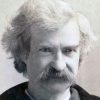
The Catholic and the Communist are alike in assuming that an opponent cannot be both honest and intelligent. Each of them tacitly claims that “the truth” has already been revealed, and that the heretic, if he is not simply a fool, is secretly aware of “the truth” and merely resists it out of selfish motives.
George Orwell (1903–1950) English journalist, essayist, writer [pseud. of Eric Arthur Blair]
Essay (1946-01), “The Prevention of Literature,” Polemic Magazine
(Source)
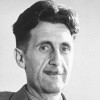
We must not confuse dissent with disloyalty.
Edward R. Murrow (1908–1965) American journalist
Commentary (1954-03-09), “A Report on Senator Joseph R. McCarthy,” See It Now, CBS TV
(Source)
(Source (Video)). Episode dealing with Sen. Joe McCarthy's witch hunt of Communists in the US.