FOREIGNER, n. A villain regarded with various and varying degrees of toleration, according to his conformity to the eternal standard of our conceit and the shifting one of our interests.
Ambrose Bierce (1842–1914?) American writer and journalist
“Foreigner,” “Devil’s Dictionary” column, San Francisco Wasp (1884-09-13)
(Source)
Not collected in later books.
Quotations about:
conceit
Note not all quotations have been tagged, so Search may find additional quotes on this topic.

CONCEIT, n. Self-respect in one whom we dislike.
Ambrose Bierce (1842–1914?) American writer and journalist
“Conceit,” “Devil’s Dictionary” column, San Francisco Wasp (1881-08-12)
(Source)
Not collected in later books.
The man who underestimates himself is perpetually being surprised by success, whereas the man who overestimates himself is just as often surprised by failure. The former kind of surprise is pleasant, the latter unpleasant. It is therefore wise to be not unduly conceited, though also not too modest to be enterprising.
Bertrand Russell (1872–1970) English mathematician and philosopher
Conquest of Happiness, Part 2, ch. 10 “Is Happiness Still Possible?” (1930)
(Source)

ELMIRE: No, amorous men are gullible. Their conceit
So blinds them that they’re never hard to cheat.[Non; on est aisément dupé par ce qu’on aime.
Et l’amour-propre engage à se tromper soi-même.]Molière (1622–1673) French playwright, actor [stage name for Jean-Baptiste Poquelin]
Tartuffe, or the Hypocrite [Le Tartuffe, ou L’Imposteur], Act 4, sc. 3 (1669) [tr. Wilbur (1963)]
(Source)
When her maid is concerned that Tartuffe will see through Elmire's stratagem.
(Source (French)). Other translations:No, People are easily Dup'd by what they love, and Self-love helps 'em to deceive themselves.
[tr. Clitandre (1672)]No; people are easily duped by those whom they love, and conceit is apt to deceive itself.
[tr. Van Laun (1876)]No, we are easily duped by those we love, and we deceive ourselves through our own conceit.
[tr. Wall (1879)]No, people are easily duped by what they like; and self-love helps them to deceive themselves.
[tr. Mathew (1890), 4.2]No; people are easily duped by those whom they love. Self-love leads the way to self-deceit.
[tr. Waller (1903)]Oh no! A lover's never hard to cheat,
And self-conceit leads straight to self-deceit.
[tr. Page (1909)]No, one is easily fooled by one's belovèd,
And self-conceit will end in self-deception.
[tr. Bishop (1957)]Oh, no! A lover is not hard to cheat,
And self-deception springs from self-conceit.
[tr. Frame (1967)]He loves me, and he's also vain,
That double drug will dull his brain.
[tr. Bolt (2002)]No, it's easy to be fooled by what we want; our vanity is always ready to betray us.
[tr. Steiner (2008)]We long to be fooled by the one we love,
And pride lends a hand in its own downfall.
[tr. Campbell (2013)]

You have a good many little gifts and virtues, but there is no need of parading them, for conceit spoils the finest genius. There is not much danger that real talent or goodness will be overlooked long, and the great charm of all power is modesty.
Louisa May Alcott (1832–1888) American writer
Little Women, ch. 7 “Amy’s Valley of Humiliation” [Mrs. March] (1868)
(Source)

I don’t believe any man ever existed without vanity, and if he did he would be an extremely uncomfortable person to have anything to do with. He would, of course, be a very good man, and we should respect him very much. He would be a very admirable man — a man to be put under a glass case and shown round as a specimen — a man to be stuck upon a pedestal and copied, like a school exercise — a man to be reverenced, but not a man to be loved, not a human brother whose hand we should care to grip. Angels may be very excellent sort of folk in their way, but we, poor mortals, in our present state, would probably find them precious slow company. Even mere good people are rather depressing.
Jerome K. Jerome (1859–1927) English writer, humorist [Jerome Klapka Jerome]
Idle Thoughts of an Idle Fellow, “On Vanity and Vanities” (1886)
(Source)

There were four things the Master abstained from entirely: he did not speculate, he did not claim or demand certainty, he was not inflexible, and he was not self-absorbed.
[子絕四、毋意、毋必、毋固、毋我]
Confucius (c. 551- c. 479 BC) Chinese philosopher, sage, politician [孔夫子 (Kǒng Fūzǐ, K'ung Fu-tzu, K'ung Fu Tse), 孔子 (Kǒngzǐ, Chungni), 孔丘 (Kǒng Qiū, K'ung Ch'iu)]
The Analects [論語, 论语, Lúnyǔ], Book 9, verse 4 (9.4) (6th C. BC – 3rd C. AD) [tr. Ames/Rosemont (1998)]
(Source)
Different versions of the Analects take these four items in slightly differing order, reflected in the translations below. (Source (Chinese)). Alternate translations:There were four things from which the Master was entirely free. He had no foregone conclusions, no arbitrary predeterminations, no obstinacy, and no egoism.
[tr. Legge (1861)]The Master barred four (words); - he would have no "shall"s, no "must"s, no "certainly"s, no "I"s.
[tr. Jennings (1895)]There were four things from which Confucius was entirely free : He was free from self-interest, from prepossessions, from bigotry and from egoism.
[tr. Ku Hung-Ming (1898)]The Master was entirely free from four things: he had no preconceptions, no pre-determinations, no obduracy, and no egoism.
[tr. Soothill (1910)]He was cut off from four things; he had no prejudices, no categoric imperatives, no obstinacy or no obstinate residues, no time-lags, no egotism.
[tr. Pound (1933); yes, that looks to be five things]There are four things that the Master wholly eschewed: he took nothing for granted, he was never over-positive, never obstinate, never egotistic.
[tr. Waley (1938)]The Master recognized four prohibitions; Do not be swayed by personal opinion; recognize no inescapable necessity; do not be stubborn; do not be egotistic.
[tr. Ware (1950)]He denounced (or tried to avoid completely) four things: arbitrariness of opinions, dogmatism, narrow-mindedness and egotism.
[tr. Lin Yutang (1938)]There were four things the Master refused to have anything to do with: he refused to entertain conjectures or insist on certainty; he refused to be inflexible or to be egotistical.
[tr. Lau (1979)]The Master cut out four things. He never took anything for granted, he never insisted on certainty, he was never inflexible and never egotistical.
[tr. Dawson (1993)]The Master absolutely eschewed four things: capriciousness, dogmatism, willfulness, self-importance.
[tr. Leys (1997)]The Master was absolutely free from four things: free from conjecture, free from arbitrariness, free from obstinacy, free from egoism.
[tr. Huang (1997)]Confucius prohibited the four points: no wantonness, no dictatorship, no stubbornness, and no arrogance.
[tr. Cai/Yu (1998)]The Master avoided four things: no wish, no will, no set, no self.
[tr. Brooks/Brooks (1998); they further interpret, "no fixed opinions, no foregone conclusions, no stubbornness, no self-absorption"]The Master had freed himself of four things: idle speculation, certainty, inflexibility, and conceit.
[tr. Hinton (1998)]The Master observed four prohibitions: no willfulness, no obstinacy, no narrow-mindedness, no egotism.
[tr. Watson (2007)]The Master stayed away from four things: he did not put forth theories or conjectures; he did not think he must be right; he was not obdurate; he was not self-centered.
[tr. Annping Chin (2014)]Confucius has four ultimate mindsets for perfect: no prejudice, no absolute must, no fixation, no self.
[tr. Li (2020)]

Little men would be discouraged if they could see themselves in their true light. So conceit was sent into the world — God’s great gift to little men.
Bruce Barton (1886–1967) American author, advertising executive, politician
“The Gift to Little Men” (1926)
(Source)
Often paraphrased, "Conceit is God's gift to little men."
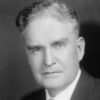
Talent is God-given; be humble. Fame is man-given; be thankful. Conceit is self-given; be careful.

He’s a good person, you know. In spite of many things, including his own opinion, he’s a good person. Maybe a bit conceited, overbearing, and arrogant, but then, people without a trace of these diseases aren’t usually worth one’s time.
Steven Brust (b. 1955) American writer, systems programmer
Orca [Kiera] (1996)

Of great riches there is no real use, except it be in the distribution; the rest is but conceit.
Francis Bacon (1561–1626) English philosopher, scientist, author, statesman
“Of Riches,” Essays, No. 34 (1625)
(Source)

Nothing is to be done out of jealousy or vanity; instead, out of humility of mind everyone should give preference to others, everyone pursuing not selfish interests but those of others.
[μηδὲν κατ᾽ ἐριθείαν μηδὲ κατὰ κενοδοξίαν ἀλλὰ τῇ ταπεινοφροσύνῃ ἀλλήλους ἡγούμενοι ὑπερέχοντας ἑαυτῶν, μὴ τὰ ἑαυτῶν ἕκαστος σκοποῦντες ἀλλὰ [καὶ] τὰ ἑτέρων ἕκαστοι.]
The Bible (The New Testament) (AD 1st - 2nd C) Christian sacred scripture
Book 11. Letter to the Philippians 2: 3ff (Phil 2:3–4) [NJB (1985)]
(Source)
(Source (Greek)). Other translations:Let nothing be done through strife or vainglory; but in lowliness of mind let each esteem other better than themselves. Look not every man on his own things, but every man also on the things of others.
[KJV (1611)]There must be no competition among you, no conceit; but everybody is to be self-effacing. Always consider the other person to be better than yourself, so that nobody thinks of his own interests first but everybody thinks of other s people's interests instead.
[JB (1966)]Don't do anything from selfish ambition or from a cheap desire to boast, but be humble toward one another, always considering others better than yourselves. And look out for one another's interests, not just for your own.
[GNT (1992 ed.)]Don’t do anything for selfish purposes, but with humility think of others as better than yourselves. Instead of each person watching out for their own good, watch out for what is better for others.
[CEB (2011)]Do nothing from selfishness or empty conceit, but with humility consider one another as more important than yourselves; do not merely look out for your own personal interests, but also for the interests of others.
[NASB (2020 ed)]Do nothing from selfish ambition or empty conceit, but in humility regard others as better than yourselves. Let each of you look not to your own interests but to the interests of others.
[NRSV (2021 ed.)]

Even in common people, conceit has the virtue of making them cheerful; the man who thinks his wife, his baby, his house, his horse, his dog, and himself severally unequalled, is almost sure to be a good-humored person, though liable to be tedious at times.
Oliver Wendell Holmes, Sr. (1809–1894) American poet, essayist, scholar
Article (1857-11), “The Autocrat of the Breakfast-Table,” Atlantic Monthly
Collected in The Autocrat of the Breakfast-Table, ch. 1 (1858)

No man is happy without a delusion of some kind. Delusions are as necessary to our happiness as realities.
Christian Nestell Bovee (1820–1904) American epigrammatist, writer, publisher
Intuitions and Summaries of Thought, Vol. 1 (1862)