A hasty quarrel sparks a fire,
and hasty conflict sheds blood.
If you blow on a spark, it will flame up,
and if you spit on it, it will go out;
nonetheless, both come out
of your mouth.[ἔρις κατασπευδομένη ἐκκαίει πῦρ,
καὶ μάχη κατασπεύδουσα ἐκχέει αἷμα.
ἐὰν φυσήσῃς εἰς σπινθῆρα, ἐκκαήσεται,
καὶ ἐὰν πτύσῃς ἐπ᾽ αὐτόν, σβεσθήσεται·
καὶ ἀμφότερα ἐκ τοῦ στόματός σου ἐκπορεύεται.]The Bible (The Old Testament) (14th - 2nd C BC) Judeo-Christian sacred scripture [Tanakh, Hebrew Bible], incl. the Apocrypha (Deuterocanonicals)
Book 22b. Sirach (Ecclesiasticus) 28:11ff (Sir 28:11–12) [tr. CEB (2011)]
(Source)
More on the history and acceptance of this Apocryphal book here and here.
(Source (Greek)). Alternate translations:An hasty contention kindleth a fire: and an hasty fighting sheddeth blood.
If thou blow the spark, it shall burn: if thou spit upon it, it shall be quenched: and both these come out of thy mouth.
[tr. KJV (1611)]A hasty contention kindleth a fire: and a hasty quarrel sheddeth blood: and a tongue that beareth witness bringeth death.
If thou blow the spark, it shall burn as a fire: and if thou spit upon it, it shall be quenched: both come out of the mouth.
[tr. DRA (1899), 28:13–14]A sudden quarrel kindles fire,
a hasty dispute leads to bloodshed.
Blow on a spark and up it flares,
spit on it and out it goes;
both are the effects of your mouth.
[tr. JB (1966); NJB (1985)]An argument that blazes out suddenly can lead to violence. You can blow on a spark to make it glow, or you can spit on it to put it out. Either way, you do it with your mouth.
[tr. GNT (1992 ed.)]A hasty quarrel kindles a fire,
and a hasty dispute sheds blood.
If you blow on a spark, it will glow;
if you spit on it, it will be put out,
yet both come out of your mouth.
[tr. NRSV (2021 ed.)]
Quotations about:
fight
Note not all quotations have been tagged, so Search may find additional quotes on this topic.

It is commonly assumed that what human beings want is to be comfortable. Well, we now have it in our power to be comfortable, as our ancestors had not. Nature may occasionally hit back with an earthquake or a cyclone, but by and large she is beaten. And yet exactly at the moment when there is, or could be, plenty of everything for everybody, nearly our whole energies have to be taken up in trying to grab territories, markets and raw materials from one another. Exactly at the moment when wealth might be so generally diffused that no government need fear serious opposition, political liberty is declared to be impossible and half the world is ruled by secret police forces. Exactly at the moment when superstition crumbles and a rational attitude towards the universe becomes feasible, the right to think one’s own thoughts is denied as never before. The fact is that human beings only started fighting one another in earnest when there was no longer anything to fight about.
George Orwell (1903–1950) English journalist, essayist, writer [pseud. of Eric Arthur Blair]
Essay (1946-11-29), “As I Please” column, Tribune Newspaper
(Source)
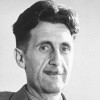
He that wrestleth with a turd shall be beshitt fall he over or under.
James Howell (c. 1594–1666) Welsh historian, writer, aphorist
Paroimiographia [Παροιμιογραφία]: Proverbs, or, Old Sayed Sawes & Adages, “English Proverbs” (1659) [compiler]
(Source)

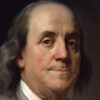
Every honorable effort should always be made to avoid war, just as every honorable effort should always be made by the individual in private life to keep out of a brawl, to keep out of trouble; but no self-respecting individual, no self-respecting nation, can or ought to submit to wrong.
Theodore Roosevelt (1858–1919) American politician, statesman, conservationist, writer; US President (1901–09)
Speech (1910-04-23), “Citizenship in a Republic [The Man in the Arena],” Sorbonne, Paris
(Source)
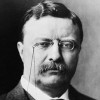
HOOK: (with curling lip) So, Pan, this is all your doing!
PETER: Ay, Jas Hook, it is all my doing.
HOOK: Proud and insolent youth, prepare to meet thy doom.
PETER: Dark and sinister man, have at thee.
J. M. Barrie (1860–1937) Scottish novelist and dramatist [James Matthew Barrie]
Peter Pan, Act 5 (1904, pub. 1928)
In Barrie's novelization, Peter and Wendy, ch. 15 "Hook Or Me This Time" (1911), this is rendered:“So, Pan,” said Hook at last, “this is all your doing.”
“Ay, James Hook,” came the stern answer, “it is all my doing.”
“Proud and insolent youth,” said Hook, “prepare to meet thy doom.”
“Dark and sinister man,” Peter answered, “have at thee.”

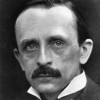
MACBETH: Lay on, Macduff,
And damned be him that first cries “Hold! Enough!”William Shakespeare (1564–1616) English dramatist and poet
Macbeth, Act 5, sc. 8, l. 38ff (5.8.38-39) (1606)
(Source)

If fate means you to lose, give him a good fight anyhow.
A great part of the happiness of life consists not in fighting battles but in avoiding them. A masterly retreat is in itself a victory.
“Why,” said La Belle Isode,”are ye a knight and are no lover? For sooth, it is a great shame to you; wherefore ye may not be called a good knight by reason but if ye make a quarrel for a lady.”
Thomas Malory (c. 1415–1471) English writer
Le Morte d’Arthur, Book 10, ch. 56 (1485)
(Source)
Often paraphrased, "The very purpose of a knight is to fight on behalf of a lady."

Idiot, not to know
his days are numbered who would fight the gods!
His children will not sing around his knees
“Papà! Papà!” on his return from war.Ὅττι μάλ’ οὐ δηναιὸς ὃς ἀθανάτοισι μάχηται,
οὐδέ τί μιν παῖδες ποτὶ γούνασι παππάζουσιν
ἐκ πολέμοιο καὶ αἰνῆς δηϊοτῆτος.Homer (fl. 7th-8th C. BC) Greek author
The Iliad [Ἰλιάς], Book 5, l. 407ff (5.407-409) (c. 750 BC) [tr. Fitzgerald (1974), l. 467ff]
(Source)
Alt. trans.:Not knowing he that fights with Heav’n hath never long to live,
And for this deed, he never shall have child about his knee
To call him father, coming home.
[tr. Chapman (1611), ll. 387-89]No man who fights with gods will live long or hear his children prattling about his knees when he returns from battle.
[tr. Butler (1898)]Know thou, whoe'er with heavenly power contends,
Short is his date, and soon his glory ends;
From fields of death when late he shall retire,
No infant on his knees shall call him sire.
[tr. Pope (1715-20)]Infatuate! he forgets
That whoso turns against the Gods his arm
Lives never long; he never, safe escaped
From furious fight, the lisp’d caresses hears
Of his own infants prattling at his knees.
[tr. Cowper (1791), ll. 474-78]Infatuate! nor does the son of Tydeus know this in his mind, that he is by no means long-lived who fights with the immortals, nor ever at his knees will sons lisp a father’s name, as he returns from war and dreadful battle.
[tr. Buckley (1860)]Unknowing he how short his term of life
Who fights against the Gods! for him no child
Upon his knee shall lisp a father's name,
Safe from the war and battle-field return'd.
[tr. Derby (1864), ll. 463-466]Verily he endureth not for long who fighteth with the immortals, nor do his children prattle about his knees when he is come back from war and the dread conflict.
[tr. Murray (1924)]That man who fights the immortals lives for no long time, his children do not gather to his knees to welcome their father when he returns home after the fighting and the bitter warfare.
[tr. Lattimore (1951)]Doesn't the son of Tydeus know, down deep,
the man who fights the gods does not live long?
Nor do his children ride his knees with cries of 'Father' --
home at last from the wars and heat of battle.
[tr. Fagles (1990), ll. 465-468]

Aravis also had many quarrels (and, I’m afraid even fights) with Cor, but they always made it up again: so that years later, when they were grown up they were so used to quarreling and making it up again that they got married so as to go on doing it more conveniently.
C. S. Lewis (1898–1963) English writer, literary scholar, lay theologian [Clive Staples Lewis]
The Horse and His Boy (1954)
It demonstrated that old adage: never bring a gun to a fight where the other guy has a time-machine and tomorrow’s newspapers.
James Nicoll (b. 1961) Canadian reviewer, editor
“OTT: If ye break faith with us who die,” rec.arts.sf.written, Usenet (27 Apr 2006)
(Source)

A religious life is a struggle and not a hymn.
Germaine de Staël (1766–1817) Swiss-French writer, woman of letters, critic, salonist [Anne Louise Germaine de Staël-Holstein, Madame de Staël, Madame Necker]
Corinne, Book 10, ch. 5 (1807)

If it was a worthwhile fight, it didn’t matter who won; some good was sure to come of it.
Richard Brooks (1912–1992) American screenwriter, film director, novelist
Deadline: U.S.A. [film] (1952)
Line spoken by Ethyl Barrymore.
You may either win your peace or buy it: win it, by resistance to evil; buy it, by compromise with evil.
John Ruskin (1819–1900) English art critic, painter, writer, social thinker
The Two Paths, Lecture 5 (1859)

It isn’t enough to stand up and fight darkness. You’ve got to stand apart from it, too. You’ve got to be different from it.
Jim Butcher (b. 1971) American author
Fool Moon (2001)

Strength of numbers is the delight of the timid. The valiant in spirit glory in fighting alone.
Mohandas Gandhi (1869–1948) Indian lawyer, anti-colonial nationalist, political ethicist [Mahatma Gandhi]
In Young India (17 Jun 1926)
‘Twas blow for blow, disputing inch by inch,
For one would not retreat, nor t’other flinch.
Is it not strange that men are so keen to fight for a religion and so unkeen to live according to its precepts?

It’s not the size of the dog in the fight, it’s the size of the fight in the dog.
Mark Twain (1835–1910) American writer [pseud. of Samuel Clemens]
(Misattributed)
Scholarly research finds no actual connection between Twain and the origin of this phrase. It appears to have been first crafted by columnist Arthur G. Lewis, Book of the Royal Blue Magazine (1911-04):It is not the size of the dog in the fight that counts, but the fight in the dog that wins.
For more discussion of the origins and variations, see Quote Origin: It’s Not the Size of the Dog in the Fight, It’s the Size of the Fight in the Dog – Quote Investigator®.
The advice of a father to his son “Beware of entrance to a quarrel, but being in, bear it that the opposed may beware of thee,” is good, and yet not the best. Quarrel not at all. No man resolved to make the most of himself can spare time for personal contention. Still less can he afford to take all the consequences, including the vitiating of his temper and loss of self control. Yield larger things to which you can show no more than equal right; and yield lesser ones, though clearly your own. Better give your path to a dog than be bitten by him in contesting for the right. Even killing the dog would not cure the bite.

I don’t beleave in fighting; i am solemly aginst it; but if a man gits teu fighting, i am also solemly aginst hiz gitting licked. After a fight iz once opened, all the virtew thare iz in it iz tew lick the other party.
[I don’t believe in fighting; I am solemnly against it; but if a man gets to fighting, I am also solemnly against his getting licked. After a fight is once opened, all the virtue there is in it is to lick the other party.]
Josh Billings (1818–1885) American humorist, aphorist [pseud. of Henry Wheeler Shaw]
Everybody’s Friend, Or; Josh Billing’s Encyclopedia and Proverbial Philosophy of Wit and Humor, ch. 148 “Affurisms: Ink Brats” (1874)
(Source)

Be ashamed to die until you have won some victory for humanity.
Horace Mann (1796–1859) American politician, abolitionist, education reformer
Baccalaureate address, Antioch College, Ohio (1859)
Final public address.
It is always easier to fight for one’s principles than to live up to them.
Alfred Adler (1870–1937) Austrian psychologist
(Attributed)
(Source)
Comment to friend (1927). In Phyllis Bottome, Alfred Adler: A Biography, ch. 5 (1939)
But it must be remembered that, in spite of the proverb, it takes in reality only one to make a quarrel. It is useless for the sheep to pass resolutions in favour of vegetarianism, while the wolf remains of a different opinion.
William Ralph Inge (1860–1954) English prelate [Dean Inge]
“Patriotism,” Outspoken Essays: First Series (1915)
Sometimes quoted as "while wolves remain of a different opinion."

G’KAR: By G’Quon I can’t recall the last time I was in a fight like that! No moral ambiguity, no hopeless battle against ancient and overwhelming forces. They were the bad guys, as you say, and we were the good guys! And they made a very satisfying thump when they hit the floor!
J. Michael (Joe) Straczynski (b. 1954) American screenwriter, producer, author [a/k/a "JMS"]
Babylon 5, 3×13 “A Late Delivery from Avalon” (22 Apr 1996)