

The man who mingles the useful with the sweet carries the day by charming his reader and at the same time instructing him. That’s the book to enrich the publisher, to be posted over seas, and to prolong its author’s fame.
[Omne tulit punctum, qui miscuit utile dulci,
lectorem delectando pariterque monendo.
Hic meret aera liber Sosiis, hic et mare transit
et longum noto scriptori prorogat aevum.]Horace (65–8 BC) Roman poet, satirist, soldier, politician [Quintus Horatius Flaccus]
Epistles [Epistularum, Letters], Book 2, ep. 3 “Art of Poetry [Ars Poetica; To the Pisos],” l. 343ff (2.3.343-346) (19 BC) [tr. Blakeney; ed. Kraemer (1936)]
(Source)
Horace advises on how to write a best-seller, by blending both entertainment and (moral) substance. The Sosii were famed booksellers in Rome.
(Source (Latin)). Other translations:He beares the bell in all respects who good with sweete doth minge:
Who can in delectable style good counsaile with him bring.
His bookes the stationers will bye, beyonte Sea it will goe,
And will conserve the authors name a thowsand yeare, and mo.
[tr. Drant (1567)]But he hath every suffrage can apply
Sweet mix'd with soure, to his reader, so
As doctrine and delight together goe.
This book will get thee Socij money; this
Will passe the Seas; and long as Nature is
With honour make the far-known Author live.
[tr. Jonson (1640), l. 490ff]But he that joyns instructions with delight,
Profit with pleasure, carries all the Votes;
These are the Volumes that enrich the Shops,
These pass with admiration through the World,
And bring their Author an Eternal fame.
[tr. Roscommon (1680)]Profit and pleasure, then, to mix with art,
To inform the judgment, nor to bend the heart,
Shall gain all votes; to booksellers shall raise
No trivial fortune, and across the seas
To distant nations spread the writer's fame,
And with immortal honours crown his name.
[tr. Francis (1747)]But he who precept with amusement blends,
And charms the fancy while the heart he mends,
Wins every suffrage. Rarely shall he miss
To enrich the Sosii with a piece like this:
Seas shall it traverse, and the writer's page
Hand down his glories to a distant age.
[tr. Howes (1845)]He who joins the instructive with the agreeable, carries off every vote, by delighting and at the same time admonishing the reader. This book gains money for the Sosii; this crosses the sea, and continues to its renowned author a lasting duration.
[tr. Smart/Buckley (1853)]But he who, mixing grave and gay, can teach
And yet give pleasure, gains a vote from each:
His works enrich the vendor, cross the sea,
And hand the author down to late posterity.
[tr. Conington (1874)]He wins all suffrages who, while he charms.
Instructs the soul, the heart to virtue warms,
And so what ministers to use unites
With what is beautiful in all he writes.
These are the works on which the Sosii thrive,
That cross the seas, to times remote survive.
[tr. Martin (1881)]He meets with acceptance everywhere who blends the practical with the pleasant, by equally delighting and instructing the reader. Such a book enriches the Sosii, travels across the sea, and confers immortality on its famous author.
[tr. Elgood (1893)]He has won every vote who has blended profit and pleasure, at once delighting and instructing the reader. That is the book to make money for the Sosii; this the one to cross the sea and extend to a distant day its author's fame.
[tr. Fairclough (Loeb) (1926)]He wins every vote who combines the sweet and the useful,
Charming the reader and warning him equally well.
This book will bring in money for Sosius and Son,
Booksellers, travel across the sea, and extend
Its author's fame a long distance into the future.
[tr. Palmer Bovie (1959)]The poet winning every vote blends the useful with the sweet,
giving pleasure to his reader while he offers him advice.
His book will make the Sosii money and travel overseas,
and far into the years ahead extend its author's name.
[tr. Fuchs (1977)]Tame sense with a dash of sugar,
Storke your reader's cheeks while you box his ears.
Then everyone reads you, your royalties mount
Like gushing oil, foreigners run for your latest title
And read you long after you've turned to dust.
So: make your own memorial!
[tr. Raffel (1983 ed.)]He who provides to all both profit and pleasure
Wins everybody's vote; his book will bring
Money for bookstore owners and fame across
The seas and down the years to the author himself.
[tr. Ferry (2001)]Everyone votes for the man who mixes wholesome and sweet,
giving his reader an equal blend of help and delight.
That book earns the Sosii money; it crosses the ocean,
winning fame for the author and ensuring long survival.
[tr. Rudd (2005 ed.)]Who can blend usefulness and sweetness wins every
Vote, at once delighting and teaching the reader.
That’s the book that earns the Sosii money, crosses
The seas, and wins its author fame throughout the ages.
[tr. Kline (2015)]He wins every hand who mingles profit with pleasure, by delighting and instructing the reader at the same time.
[ed. Bartlett's]
Quotations about:
message
Note not all quotations have been tagged, so Search may find additional quotes on this topic.
Added on 17-Apr-26 | Last updated 7-Aug-26
Link to this post | No comments
Topics: author, best seller, drama, entertainment, fame, froth, lesson, literature, message, moral, pith, poetry, success, writing
More quotes by Horace
Link to this post | No comments
Topics: author, best seller, drama, entertainment, fame, froth, lesson, literature, message, moral, pith, poetry, success, writing
More quotes by Horace
It isn’t enough for poems to be things of beauty:
Let them stun the hearer and lead his heart where they will.[Non satis est pulchra esse poemata; dulcia sunto
Et, quocumque uolent, animum auditoris agunto.]Horace (65–8 BC) Roman poet, satirist, soldier, politician [Quintus Horatius Flaccus]
Epistles [Epistularum, Letters], Book 2, ep. 3 “Art of Poetry [Ars Poetica; To the Pisos],” l. 99ff (2.3.99-100) (19 BC) [tr. Palmer Bovie (1959)]
(Source)
One of the most famous lines in the Ars Poetica.
(Source (Latin)). Other translations:Not lore enough in Poesis, let them be sweetlye fynde,
And let them leade to where them liste the hearers plyante mynde.
[tr. Drant (1567)]Tis not enough the labouring Muse affords
Her Poëms beauty, but a sweet delight,
To worke the hearers minds, still to the plight.
[tr. Jonson (1640); l. 140ff]He that would have Spectators share his Grief,
Must write not only well, but movingly,
And raise Mens Passions to what height he will.
[tr. Roscommon (1680)]'Tis not enough, ye writers, that ye charm
With ease and elegance; a play should warm
With soft concernment; should possess the soul,
And, as it wills, the listening crowd controul.
[tr. Francis (1747)]'Tis not enough that Plays are polish'd, chaste,
Or trickt in all the harlotry of taste,
They must have passion too; beyond controul
Transporting where they please the hearer's soul.
[tr. Coleman (1783)]'Tis not enough that poetry combine
All fancy's charms in every sounding line:
Empassion'd let her be, and melt at will
The soul to pity or with horror thrill.
[tr. Howes (1845)]It is not enough that poems be beautiful; let them be tender and affecting, and bear away the soul of the auditor whithersoever they please.
[tr. Smart/Buckley (1853)]Mere grace is not enough: a play should thrill
The hearer's soul, and move it at its will.
[tr. Conington (1874)]Fine things won't make a drama: it must thrill
The hearers' souls, and sway them at its will.
[tr. Martin (1881)]Nor is it enough that poems possess beauty in the construction. They must please and, in whatsoever direction they will, send there the feelings of the auditors.
[tr. Elgood (1893)]Not enough is it for poems to have beauty: they must have charm, and lead the hearer's soul where they will.
[tr. Fairclough (Loeb) (1926)]It is not enough for poems to be fine; they must charm, and draw the mind of the listener at will.
[tr. Blakeney; ed. Kraemer (1936)]It isn't enough to make lines pretty; they must move,
and affect the hearer's soul exactly as the poet wants.
[tr. Fuchs (1977)]Poems (oh)
can be (oh)
so beautiful
And (oh) so dull.
Poets need charm, too, to seduce our minds.
[tr. Raffel (1983 ed.)]Sheer abstract beauty isn't enough in a poem;
Its language must so persuade the listener
And act upon his soul that he'll respond
As the poem intends.
[tr. Ferry (2001)]Correctness is not enough in a poem; it must be attractive,
leading the listener's emotions in whatever way it wishes.
[tr. Rudd (2005 ed.)]It’s not enough for poems to have beauty: they must have
Charm, leading their hearer’s heart wherever they wish.
[tr. Kline (2015)]
Added on 3-Apr-26 | Last updated 7-Aug-26
Link to this post | No comments
Topics: beauty, charm, craft, drama, emotion, engagement, feelings, form, impact, influence, message, moving, passion, play, poem, polish, prettiness, substance, theater, writing
More quotes by Horace
Link to this post | No comments
Topics: beauty, charm, craft, drama, emotion, engagement, feelings, form, impact, influence, message, moving, passion, play, poem, polish, prettiness, substance, theater, writing
More quotes by Horace
It was one Sunday evening early in September of the year 1902 that I received one of Holmes’s laconic messages: “Come at once if convenient — if inconvenient come all the same. — S. H.”
Arthur Conan Doyle (1859–1930) British writer and physician
Story (1923-03), “The Adventure of the Creeping Man,” The Strand Magazine, Vol 65
(Source)
Added on 19-Nov-25 | Last updated 12-Nov-25
Link to this post | No comments
Topics: convenience, imposition, inconvenience, message, summons
More quotes by Doyle, Arthur Conan
Link to this post | No comments
Topics: convenience, imposition, inconvenience, message, summons
More quotes by Doyle, Arthur Conan
When you let money speak for you, it drowns out anything else you meant to say.
Mignon McLaughlin (1913–1983) American journalist and author
The Second Neurotic’s Notebook, ch. 9 (1966)
(Source)

Added on 28-Jul-25 | Last updated 28-Jul-25
Link to this post | No comments
Topics: affluence, communication, message, money, ostentation, self-expression, wealth
More quotes by McLaughlin, Mignon
Link to this post | No comments
Topics: affluence, communication, message, money, ostentation, self-expression, wealth
More quotes by McLaughlin, Mignon
The ways of dead people are not our ways. They have a very oblique way of expressing themselves, and often they’ll tell you something that can be interpreted many ways; it gives them a way out while preserving their reputation for infallibility.
S. P. Somtow (b. 1952) Thai-American music composeer, conductor, author [Somtow Papinian Sucharitkul; สมเถา สุจริตกุล; Somthao Sucharitkun]
“Lottery Night,” World Fantasy Convention Program Book (1989-10)
(Source)
Collected in Gardner Dozois, ed., Year's Best Science Fiction 7 (1990) and Somtow, Dragon's Fin Soup (1998).

Added on 24-Mar-25 | Last updated 24-Mar-25
Link to this post | No comments
Topics: dead, ghost, infallibility, message, misinterpretation, oracle, spirit, supernatural, vagueness, warning
More quotes by Somtow, S. P.
Link to this post | No comments
Topics: dead, ghost, infallibility, message, misinterpretation, oracle, spirit, supernatural, vagueness, warning
More quotes by Somtow, S. P.
Every book is, in an intimate sense, a circular letter to the friends of him who writes it. They alone take his meaning; they find private messages, assurances of love, and expressions of gratitude, dropped at every corner. The public is but a generous patron who defrays the postage.
Robert Louis Stevenson (1850–1894) Scottish essayist, novelist, poet
Travels with a Donkey in the Cévennes, Dedication to Sydney Colvin (1879)
(Source)
Added on 28-Oct-24 | Last updated 28-Oct-24
Link to this post | No comments
Topics: author, book, easter egg, friends, message, writer, writing
More quotes by Stevenson, Robert Louis
Link to this post | No comments
Topics: author, book, easter egg, friends, message, writer, writing
More quotes by Stevenson, Robert Louis
A book is the only place I know in which you can examine a fragile thought without breaking it, or explore an explosive idea without fear that it will go off in your face. It is one of the few sources of information left that is served up without the silent black noise of a headline, the doomy hullabaloo of a commercial. It is one of the few havens remaining where a man’s mind can get both provocation and privacy.
Edward P. Morgan (1910–1993) American journalist
Essay (1955-08-15), “The Literary Bug Doesn’t Bite,” ABC Radio
(Source)
Collected in Clearing the Air, Part 1 (1963).
Often attributed to Madeleine L'Engle, who quoted it in her lecture (1983-11-16), "Dare To Be Creative," Library of Congress, Washington, DC; she indicated someone had given the quote to her, but she did not know who had said it.

Added on 23-Sep-24 | Last updated 7-May-26
Link to this post | No comments
Topics: book, commercial, consideration, contemplation, ideas, literature, message, reading, solitude
More quotes by Morgan, Edward
Link to this post | No comments
Topics: book, commercial, consideration, contemplation, ideas, literature, message, reading, solitude
More quotes by Morgan, Edward
The world is a book, and those who do not leave home read but one page.
Augustine of Hippo (354–430) Christian church father, philosopher, saint [b. Aurelius Augustinus]
(Spurious)
This quotation, and variants, are widely attributed to Augustine, but, though he did on occasion write of the world as a a text or book, it was not in the sense of encouraging travel (which Augustine did not like), but in the sense that anyone could read the message of God in the world around them, even if they could not read Scripture itself. For example in Exposition of the Psalms [Enarrationes in Psalmos] on Psalm 45, sec. 7 (v. 4), he writes:The page of divine scripture is open for you to read, and the wide world is open for you to see. Only the literate can read the books, but even the illiterate can read the book of the world.
[tr. Boulding (2000)]
May the sacred page be a book for you, so that you may hear, may the globe of the earth be a book for you, so that you may see; in these books only those who know letters read these things; in the whole world, even the fool can read.
[tr. Mews (2004)]
[Liber tibi sit pagina diuina, ut haec audias; liber tibi sit orbis terrarum, ut haec uideas. in istis codicibus non ea legunt, nisi qui litteras nouerunt; in toto mundo legat et idiota.]
If this was the source of the original quote -- which begins to show up in English in the late 18th Century -- it was significantly distorted. Early appearances of the version we know today:The world is a great book, and none study this book so much as a traveler. They that never stir from their home read only one page of this book.
[ed. Feltham, The English Enchiridion (1799), paraphrasing]The world is a great book, of which they that never stir from home read only a page.
[ed. Fiedling, Select Proverbs of All Nations (1824)]
It is in turn possible that Augustine's "world is a book" metaphor was somehow conflated with this original expression in Fougeret de Monbron, Le Cosmopolite (opening words) (1750):The universe is a sort of book, whose first page one has read when one has seen only one's own country.
[L'Univers est une espece de livre dont on n'a lû que la prémiére page, quand on n'a vû que son Païs.]
More discussion:

Added on 4-Aug-24 | Last updated 4-Aug-24
Link to this post | No comments
Topics: book, demonstration, explication, God, message, revelation, travel, world
More quotes by Augustine of Hippo
Link to this post | No comments
Topics: book, demonstration, explication, God, message, revelation, travel, world
More quotes by Augustine of Hippo
Children are the living messages we send to a time we will not see.
Neil Postman (1931–2003) American author, media theorist, cultural critic
The Disappearance of Childhood, Introduction (1982)
(Source)
Often misattributed to John W Whitehead (b. 1946) American lawyer, conservative activist, author. The same line appears, unattributed, in Whitehead's The Stealing of America, ch. 10 (1983); elsewhere in there Whitehead references Postman's book, so it is likely he took the line from Postman.For more discussion of this, see Lance Strate's Blog Time Passing: Children are the Living Messages We Send to a Time We Will Not See.
Added on 19-Jun-24 | Last updated 12-Aug-25
Link to this post | No comments
Topics: children, future, legacy, message, posterity
More quotes by Postman, Neil
Link to this post | No comments
Topics: children, future, legacy, message, posterity
More quotes by Postman, Neil
Dissents speak to a future age. It’s not simply to say, “My colleagues are wrong and I would do it this way.” But the greatest dissents do become court opinions and gradually over time their views become the dominant view. So that’s the dissenter’s hope: that they are writing not for today but for tomorrow.
Ruth Bader Ginsburg (1933–2020) American lawyer and jurist, Supreme Court Justice (1993–2020)
“Ruth Bader Ginsburg and Malvina Harlan,” interview by Nina Totenberg, NPR (2002-05-02)
(Source)
Speaking of Justice John Marshall Harlan and his lone dissent in Civil Rights Cases, 109 U.S. 3 (1883), where the Supreme Court struck down the Civil Rights Act of 1875. Ginsburg was being interviewed for her role in getting a long-lost memoir by Malvina Harlan, the Justice's wife, published as a book.

Added on 17-Oct-23 | Last updated 17-Oct-23
Link to this post | No comments
Topics: court, disagreement, dissent, evolution, future, influence, justice, message, posterity, supreme court
More quotes by Ginsburg, Ruth Bader
Link to this post | No comments
Topics: court, disagreement, dissent, evolution, future, influence, justice, message, posterity, supreme court
More quotes by Ginsburg, Ruth Bader
It is enough that the language one uses gets the point across.
[辭、達而已矣]
[辞达而已矣]Confucius (c. 551- c. 479 BC) Chinese philosopher, sage, politician [孔夫子 (Kǒng Fūzǐ, K'ung Fu-tzu, K'ung Fu Tse), 孔子 (Kǒngzǐ, Chungni), 孔丘 (Kǒng Qiū, K'ung Ch'iu)]
The Analects [論語, 论语, Lúnyǔ], Book 15, verse 41 (15.41) (6th C. BC – AD 3rd C.) [tr. Lau (1979)]
(Source)
Currently identified as 15.41; older sources use the Legge numbering, as noted below. (Source (Chinese) 1, 2). Other translations:In language it is simply required that it convey the meaning.
[tr. Legge (1861), 15.40]In speaking, perspicuity is all that is needed.
[tr. Jennings (1895)], 15.40]Language should be intelligible and nothing more.
[tr. Ku Hung-Ming (1898), 15.40]In language, perspicuity is everything.
[tr. Soothill (1910), 15.40]Words should be used simply for conveying the meaning, ornateness is not their aim.
[tr. Soothill (1910), alternate. 15.40]Problem of style? Get the meaning across and then STOP.
[tr. Pound (1933), 15.40]In official speeches all that matters is to get one's meaning through.
[tr. Waley (1938), 15.40]Expressiveness is the only principle of language.
[tr. Lin Yutang (1938)]It is enough that one’s words express fully one’s thought.
[tr. Ware (1950)]In words, the purpose is simply to get one's point across.
[tr. Dawson (1993)]Words are merely for communication.
[tr. Leys (1997)]As long as speech conveys the idea, it suffices.
[tr. Huang (1997)]It is enough that the words can express the meanings.
[tr. Cai/Yu (1998), #425]In expressing oneself, it is simply a matter of getting the point across.
[tr. Ames/Rosemont (1998)]The words should reach their goal, and nothing more.
[tr. Brooks/Brooks (1998)]Language is insight itself.
[tr. Hinton (1998)]Words should convey their point, and leave it at that.
[tr. Slingerland (2003)]With words it is enough if they get the meaning across.
[tr. Watson (2007)]The sole purpose of a language is to communicate messages and ideas. That is all.
[tr. Li (2020), 15.42]

Added on 9-Aug-22 | Last updated 8-May-23
Link to this post | No comments
Topics: clarity, communication, intent, language, meaning, message, words
More quotes by Confucius
Link to this post | No comments
Topics: clarity, communication, intent, language, meaning, message, words
More quotes by Confucius
Once abandon that firm ground, once plead that history has a “message” or that history has a “social responsibility” (to produce good Marxists or good Imperialists or good citizens) there is no logical escape from the censor and the Index, the OGPU and the Gestapo.
A. J. P. Taylor (1906–1990) British historian, journalist, broadcaster [Alan John Percivale Taylor]
“The Historian,” Manchester Guardian (5 Aug 1938)
(Source)

Added on 9-Aug-21 | Last updated 9-Aug-21
Link to this post | No comments
Topics: history, message, purpose, truth
More quotes by Taylor, A. J. P.
Link to this post | No comments
Topics: history, message, purpose, truth
More quotes by Taylor, A. J. P.
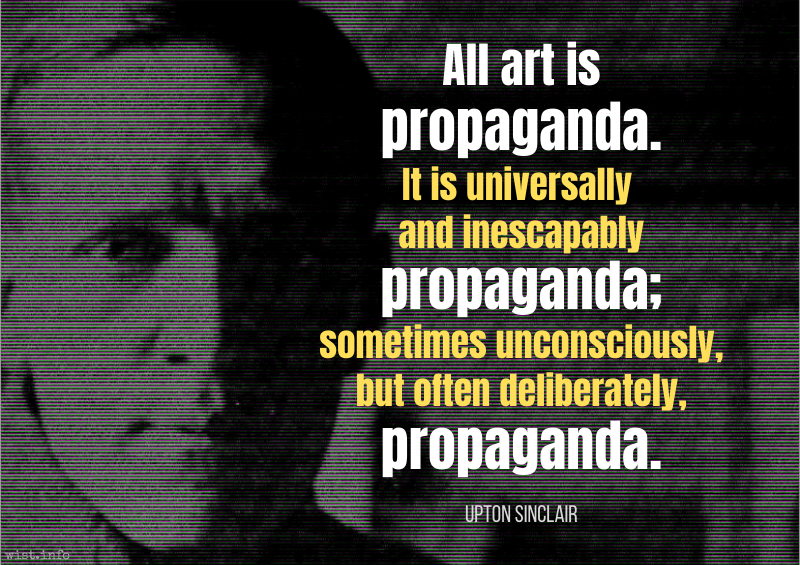
All art is propaganda. It is universally and inescapably propaganda; sometimes unconsciously, but often deliberately, propaganda.
As commentary on the above, we add, that when artists or art critics make the assertion that art excludes propaganda, what they are saying is that their kind of propaganda is art, and other kinds of propaganda are not art. Orthodoxy is my doxy, and heterodoxy is the other fellow’s doxy.
Upton Sinclair (1878–1968) American writer, journalist, activist, politician
Mammonart, ch. 2 “Who Owns the Artists?” (1925)
(Source)
Added on 2-Jul-20 | Last updated 2-Jul-20
Link to this post | No comments
Topics: art, culture, message, music, norms, painting, propaganda, writing
More quotes by Sinclair, Upton
Link to this post | No comments
Topics: art, culture, message, music, norms, painting, propaganda, writing
More quotes by Sinclair, Upton
Every great work of art has two faces: one toward its own time and one toward the future, toward eternity.
Daniel Barenboim (b. 1942) Argentine-Israeli pianist and conductor
Quoted in the International Herald Tribune (20 Jan 1989)
The above is sometimes cited to his collaborative dialog with Edward Said, Parallels and Paradoxes (2002), but the passage there is slightly different: "I think that every great work of art has two faces: one toward its own time and one toward eternity."

Added on 14-May-20 | Last updated 15-May-20
Link to this post | No comments
Topics: art, context, future, history, message, perspective, present, understanding
More quotes by Barenboim, Daniel
Link to this post | No comments
Topics: art, context, future, history, message, perspective, present, understanding
More quotes by Barenboim, Daniel
If you are silent about your pain, they’ll kill you and say you enjoyed it.
Zora Neale Hurston (1891–1960) American writer, folklorist, anthropologist
(Attributed)

Added on 17-Apr-20 | Last updated 17-Apr-20
Link to this post | No comments
Topics: message, narrative, pain, silence, suffering
More quotes by Hurston, Zora Neale
Link to this post | No comments
Topics: message, narrative, pain, silence, suffering
More quotes by Hurston, Zora Neale
Language exerts hidden power, like the moon on the tides.
Rita Mae Brown (b. 1944) American author, playwright
Starting from Scratch, Part 3 “The Work,” “The Passive Voice, or The Secret Agent” (1989)
(Source)

Added on 26-Nov-18 | Last updated 26-Nov-18
Link to this post | No comments
Topics: influence, language, message, power, propaganda, words, writing
More quotes by Brown, Rita Mae
Link to this post | No comments
Topics: influence, language, message, power, propaganda, words, writing
More quotes by Brown, Rita Mae
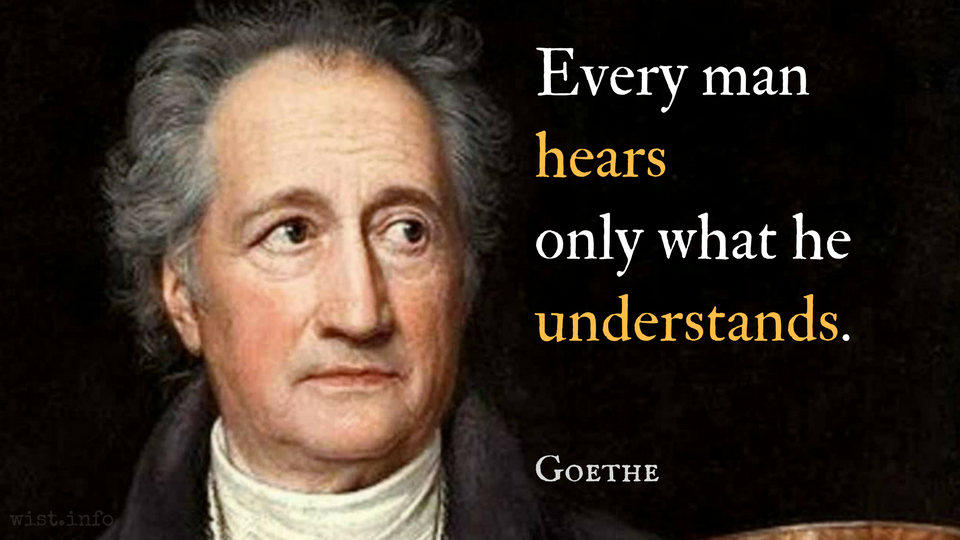
Every man hears only what he understands.
[Es hört doch jeder nur, was er versteht.]
Johann Wolfgang von Goethe (1749–1832) German poet, statesman, scientist
Sprüche in Prosa: Maximen und Reflexionen [Proverbs in Prose: Maxims and Reflections] (1833) [tr. Saunders (1893), “Life and Character,” #383]
(Source)
Posthumous, on "Literature and Life." (Source (German)). Other translations:A man hears only that which he understands.
[tr. Rönnfeldt (1900)]For surely everyone only hears what he understands.
[tr. Stopp (1995), "Posthumous," #887]
Added on 25-Jan-17 | Last updated 6-Mar-25
Link to this post | No comments
Topics: communication, comprehension, conversation, hearing, listen, listening, meme, message, perspective, reality, subjectivity, understanding
More quotes by Goethe, Johann von
Link to this post | No comments
Topics: communication, comprehension, conversation, hearing, listen, listening, meme, message, perspective, reality, subjectivity, understanding
More quotes by Goethe, Johann von
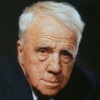
Half the world is composed of people who have something to say and can’t, and the other half who have nothing to say and keep on saying it.
Robert Frost (1874–1963) American poet
(Attributed)
Added on 19-Feb-16 | Last updated 19-Feb-16
Link to this post | No comments
Topics: bore, chatter, expression, inarticulate, meaning, message, natter, silent, speech, stifled, talk
More quotes by Frost, Robert
Link to this post | No comments
Topics: bore, chatter, expression, inarticulate, meaning, message, natter, silent, speech, stifled, talk
More quotes by Frost, Robert
They say you shouldn’t shoot the messenger, but no one warns you how much you’ll want to.

Added on 19-Dec-14 | Last updated 19-Dec-14
Link to this post | No comments
Topics: bad news, message, messenger, punish
More quotes by Adams, Scott
Link to this post | No comments
Topics: bad news, message, messenger, punish
More quotes by Adams, Scott
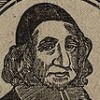
Books may preach when the author cannot, when the author may not, when the author dares not, yes, and which is more, when the author is not.
Thomas Brooks (1608–1680) English Puritan divine, writer
Heaven on Earth (1654)
Added on 10-Dec-14 | Last updated 10-Dec-14
Link to this post | No comments
Topics: author, interpretation, meaning. theme, message, writing
More quotes by Brooks, Thomas
Link to this post | No comments
Topics: author, interpretation, meaning. theme, message, writing
More quotes by Brooks, Thomas
Consider not so much who speaks, as what is spoken.
Thomas Fuller (1654–1734) English physician, preacher, aphorist, writer
Introductio ad Prudentiam, Vol. 1, # 109 (1725)
(Source)

Added on 2-Jun-14 | Last updated 21-Feb-24
Link to this post | No comments
Topics: message, messenger, speaker, speaking, speech, truth
More quotes by Fuller, Thomas (1654)
Link to this post | No comments
Topics: message, messenger, speaker, speaking, speech, truth
More quotes by Fuller, Thomas (1654)
No sinner is ever saved after the first twenty minutes of a sermon.
Mark Twain (1835–1910) American writer [pseud. of Samuel Clemens]
Hannibal Courier-Post (6 Mar 1835)

Added on 29-May-12 | Last updated 26-Jan-19
Link to this post | No comments
Topics: boredom, focus, message, preaching, sermon, speech, succinctness, writing
More quotes by Twain, Mark
Link to this post | No comments
Topics: boredom, focus, message, preaching, sermon, speech, succinctness, writing
More quotes by Twain, Mark
Eloquence which diverts our minds to itself is harmful to its subject.
[L’eloquence faict injure aux choses, qui nous destourne à soy.]Michel de Montaigne (1533–1592) French essayist
Essays, Book 1, ch. 25 (1.25), “Of the Education of Children [De l’institution des enfans]” (1579) [tr. Ives (1925), 1.26]
(Source)
First published in the 1580 edition.
(Source (French)). Other translations:That eloquence offereth injurie unto things, which altogether drawes us to observe it.
[tr. Florio (1603), ch. 25]That eloquence prejudices the subject it would advance, that wholly attracts us to itself.
[tr. Cotton (1686), ch. 25; Cotton/Hazlitt (1877)]That sort of eloquence which makes us in love with Ourselves, does an injury to the subject it treats of.
[alt. tr. Cotton (1686), ch. 25]The eloquence that diverts us to itself harms its content.
[tr. Frame (1943)]When eloquence draws attention to itself it does wrong by the substance of things.
[tr. Screech (1987)]

Added on 3-Dec-09 | Last updated 24-Jun-26
Link to this post | No comments
Topics: attention, distraction, diversion, eloquence, focus, language, message, style
More quotes by Montaigne, Michel de
Link to this post | No comments
Topics: attention, distraction, diversion, eloquence, focus, language, message, style
More quotes by Montaigne, Michel de
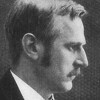
What I like in a good author isn’t what he says, but what he whispers.
Logan Pearsall Smith (1865–1946) American-English essayist, editor, anthologist
Afterthoughts, “Arts and Letters” (1931)
Added on 15-Apr-09 | Last updated 26-Jan-22
Link to this post | No comments
Topics: author, message, subtext, subtlety, writing
More quotes by Smith, Logan Pearsall
Link to this post | No comments
Topics: author, message, subtext, subtlety, writing
More quotes by Smith, Logan Pearsall
But every writer, especially every novelist, has a “message”, whether he admits it or not, and the minutest details of his work are influenced by it. All art is propaganda. Neither Dickens himself nor the majority of Victorian novelists would have thought of denying this. On the other hand, not all propaganda is art.

Added on 26-Feb-09 | Last updated 31-Jan-25
Link to this post | No comments
Topics: art, message, polemic, propaganda, subtext, writing
More quotes by Orwell, George
Link to this post | No comments
Topics: art, message, polemic, propaganda, subtext, writing
More quotes by Orwell, George
Most books are propaganda, direct or indirect.
George Orwell (1903–1950) English journalist, essayist, writer [pseud. of Eric Arthur Blair]
Essay (1938-07-08), Review of Frasnk Jellinkek, The Civil War in Spain, The New Leader
(Source)
Added on 27-Jan-09 | Last updated 21-Aug-26
Link to this post | No comments
Topics: books, literature, message, propaganda, writing
More quotes by Orwell, George
Link to this post | No comments
Topics: books, literature, message, propaganda, writing
More quotes by Orwell, George
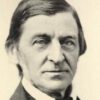
Put the argument into a concrete shape, into an image — some hard phrase, round and solid as a ball, which they can see and handle and carry home with them — and the cause is half-won.
Ralph Waldo Emerson (1803–1882) American essayist, lecturer, poet
“Eloquence,” Society and Solitude (1870)
Added on 20-Nov-08 | Last updated 19-Feb-22
Link to this post | No comments
Topics: eloquence, explanation, message, understanding
More quotes by Emerson, Ralph Waldo
Link to this post | No comments
Topics: eloquence, explanation, message, understanding
More quotes by Emerson, Ralph Waldo
In every election in American history both parties have their clichés. The party that has the clichés that ring true wins.
Newt Gingrich (b. 1943) American politician [Newton Leroy Gingrich]
International Herald Tribune, Paris (1 Aug 1988)

Added on 6-Jul-04 | Last updated 3-Nov-21
Link to this post | No comments
Topics: cliche, election, message, party, politics, voters
More quotes by Gingrich, Newt
Link to this post | No comments
Topics: cliche, election, message, party, politics, voters
More quotes by Gingrich, Newt
Added on 1-Feb-04 | Last updated 19-Aug-25
Link to this post | No comments
Topics: be quiet, divine guidance, guidance, listening, message, quiet, silence
More quotes by Emerson, Ralph Waldo
Link to this post | No comments
Topics: be quiet, divine guidance, guidance, listening, message, quiet, silence
More quotes by Emerson, Ralph Waldo
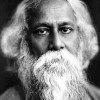
Every child comes with the message that God is not yet tired of the man.
Rabindranath Tagore (1861–1941) Indian Bengali poet, philosopher [a.k.a. Rabi Thakur, Kabiguru]
Stray Birds (1916)
Alt. trans.: "Every child comes with the message that God is not yet discouraged of man."
Added on 1-Feb-04 | Last updated 14-Feb-17
Link to this post | No comments
Topics: child, divine purpose, future, God, message, optimism
More quotes by Tagore, Rabindranath
Link to this post | No comments
Topics: child, divine purpose, future, God, message, optimism
More quotes by Tagore, Rabindranath