

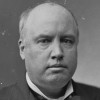
What we want to-day is what our fathers wrote down. They did not attain to their ideal; we approach it nearer, but have not reached it yet. We want, not only the independence of a State, not only the independence of a nation, but something far more glorious — the absolute independence of the individual. That is what we want. I want it so that I, one of the children of Nature, can stand on an equality with the rest; that I can say this is my air, my sunshine, my earth, and I have a right to live, and hope, and aspire, and labor, and enjoy the fruit of that labor, as much as any individual or any nation on the face of the globe.
Robert Green Ingersoll (1833–1899) American lawyer, freethinker, orator
Speech (1876-07-04), “Centennial Oration [The Declaration of Independence],” Peoria, Illinois
(Source)
Quotations about:
personal freedom
Note not all quotations have been tagged, so Search may find additional quotes on this topic.
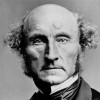
It is not by wearing down into uniformity all that is individual in themselves, but by cultivating it and calling it forth, within the limits imposed by the rights and interests of others, that human beings become a noble and beautiful object of contemplation; and as the works partake the character of those who do them, by the same process human life also becomes rich, diversified, and animating, furnishing more abundant aliment to high thoughts and elevating feelings, and strengthening the tie which binds every individual to the race, by making the race infinitely better worth belonging to. In proportion to the development of his individuality, each person becomes more valuable to himself, and is therefore capable of being more valuable to others
John Stuart Mill (1806–1873) English philosopher and economist
On Liberty, ch. 3 “Of Individuality, as One of the Elements of Well-Being” (1859)
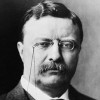
Unrestricted individualism spells ruin to the individual himself. But so does the elimination of individualism, whether by law or custom.
Theodore Roosevelt (1858–1919) American politician, statesman, conservationist, writer; US President (1901–09)
Autobiography, ch. 5 “Applied Idealism” (1913)
(Source)
The sole end for which mankind are warranted, individually or collectively, in interfering with the liberty of action of any of their number, is self-protection. That the only purpose for which power can be rightfully exercised over any member of a civilised community, against his will, is to prevent harm to others. His own good, either physical or moral, is not a sufficient warrant. He cannot rightfully be compelled to do or forbear because it will be better for him to do so, because it will make him happier, because, in the opinions of others, to do so would be wise, or even right. These are good reasons for remonstrating with him, or reasoning with him, or persuading him, or entreating him, but not for compelling him, or visiting him with any evil in case he do otherwise. To justify that, the conduct from which it is desired to deter him must be calculated to produce evil to some one else. The only part of the conduct of any one, for which he is amenable to society, is that which concerns others. In the part which merely concerns himself, his independence is, of right, absolute. Over himself, over his own body and mind, the individual is sovereign.
My manner of thinking, so you say, cannot be approved. Do you suppose I care? A poor fool indeed is he who adopts a manner of thinking for others! My manner of thinking stems straight from my considered reflections; it holds with my existence, with the way I am made. It is not in my power to alter it; and were it, I’d not do so.
Donatien Alphonse François de Sade (1740–1814) French aristocrat, philosopher, writer, libertine [The Marquis de Sade]
Letter to his wife (1783)
He had not learned that the majority in a democracy has no more right to tyrannize over a minority than, under a different system, the latter would have to oppress the former; and that, if there is a moral principle at stake, the saying that the voice of the people is the voice of God may be quite as untrue, and do quite as much mischief, as the old theory of the divine right of kings. The distinguishing feature of our American governmental system is the freedom of the individual; it is quite as important to prevent his being oppressed by many men as it is to save him from the tyranny of one.
Theodore Roosevelt (1858–1919) American politician, statesman, conservationist, writer; US President (1901–09)
Thomas Hart Benton, ch. 6 (1886)
(Source)