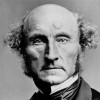
We hold that our loyalty is due solely to the American Republic, and to all our public servants exactly in proportion as they efficiently and faithfully serve the Republic. Our opponents, in flat contradiction of Lincoln’s position, hold that our loyalty is due to the President, not the country; to one man, the servant of the people, instead of to the people themselves. In practice they adopt the fetishism of all believers in absolutism; for every man who parrots the cry of “stand by the President,” without adding the proviso “so far as he serves the Republic” takes an attitude as essentially unmanly as that of any Stuart Royalist who championed the doctrine that the King could do no wrong. No self-respecting and intelligent freeman can take such an attitude.
Theodore Roosevelt (1858–1919) American politician, statesman, conservationist, writer; US President (1901–09)
Essay (1918-05), “Lincoln and Free Speech,” Metropolitan Magazine, Vol. 47, No. 6
(Source)
On censorious actions by the Wilson Administration taken against critics of its handling of war efforts.
Reprinted in Appendix C of his The Great Adventure (1918), and as ch. 7 of that book in Vol. 21 of The Works of Theodore Roosevelt (1925), The Great Adventure.
Quotations about:
infallibility
Note not all quotations have been tagged, so Search may find additional quotes on this topic.
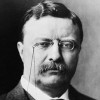
Undying hope is co-ruler of the human bosom with infallible credulity. A man finds he has been wrong at every preceding stage of his career, only to deduce the astonishing conclusion that he is at last entirely right.
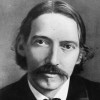

Trouble arises when either science or religion claims universal jurisdiction, when either religious dogma or scientific dogma claims to be infallible. Religious creationists and scientific materialists are equally dogmatic and insensitive. By their arrogance they bring both science and religion into disrepute. The media exaggerate their numbers and importance. The media rarely mention the fact that the great majority of religious people belong to moderate denominations that treat science with respect, or the fact that the great majority of scientists treat religion with respect so long as religion does not claim jurisdiction over scientific questions.
Freeman Dyson (1923–2020) English-American theoretical physicist, mathematician, futurist
“Progress in Religion,” Templeton Prize acceptance speech, Washington National Cathedral (9 May 2000)
(Source)

A common fallacy in much of the adverse criticism to which science is subjected today is that it claims certainty, infallibility and complete emotional objectivity. It would be more nearly true to say that it is based upon wonder, adventure and hope.
Cyril Norman Hinshelwood (1897–1967) British chemist and Nobel laureate
“Classics among the intellectual disciplines,” Presidential Address to the Classical Association, Hull, UK (1959-04-09)
Quoted in the Sunday Times (1959-05-17), and in E. J. Bowen's obituary of Hinshelwood, in Chemistry in Britain, Vol. 3 (1967), p. 534.

From the totalitarian point of view history is something to be created rather than learned. A totalitarian state is in effect a theocracy, and its ruling caste, in order to keep its position, has to be thought of as infallible. But since, in practice, no one is infallible, it is frequently necessary to rearrange past events in order to show that this or that mistake was not made, or that this or that imaginary triumph actually happened. Then again, every major change in policy demands a corresponding change of doctrine and a revelation of prominent historical figures.
This kind of thing happens everywhere, but is clearly likelier to lead to outright falsification in societies where only one opinion is permissible at any given moment. Totalitarianism demands, in fact, the continuous alteration of the past, and in the long run probably demands a disbelief in the very existence of objective truth.George Orwell (1903–1950) English journalist, essayist, writer [pseud. of Eric Arthur Blair]
Essay (1946-01), “The Prevention of Literature,” Polemic Magazine
(Source)

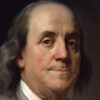
You both seem concern’d lest I have imbib’d some erroneous Opinions. Doubtless I have my Share, and when the natural Weakness and Imperfection of Human Understanding is considered, with the unavoidable Influences of Education, Custom, Books and Company, upon our Ways of thinking, I imagine a Man must have a good deal of Vanity who believes, and a good deal of Boldness who affirms, that all the Doctrines he holds, are true; and all he rejects, are false. And perhaps the same may be justly said of every Sect, Church and Society of men when they assume to themselves that Infallibility which they deny to the Popes and Councils. I think Opinions should be judg’d of by their Influences and Effects; and if a Man holds none that tend to make him less Virtuous or more vicious, it may be concluded he holds none that are dangerous; which I hope is the Case with me.
Benjamin Franklin (1706–1790) American statesman, scientist, philosopher, aphorist
Letter to Josiah and Abiah Franklin (13 Apr 1738)
(Source)
His parents.
A revolution requires of its leaders a record of unbroken infallibility; if they do not possess it, they are expected to invent it.
Murray Kempton (1917–1997) American journalist.
Part of Our Time: Some Ruins & Monuments of the Thirties, ch. 3 (1955)
(Source)

BRUTUS: The abuse of greatness is, when it disjoins
Remorse from power.William Shakespeare (1564–1616) English dramatist and poet
Julius Caesar, Act 2, sc. 1, l. 19ff (2.1.19-20) (1599)
(Source)

To refuse a hearing to an opinion because they are sure that it is false, is to assume that their certainty is the same thing as absolute certainty. All silencing of discussion is an assumption of infallibility.
John Stuart Mill (1806–1873) English philosopher and economist
On Liberty, ch. 2 “Of the Liberty of Thought and Discussion” (1859)
(Source)