

And always, in our highly regularised way of life, [the modern man] is obsessed by thoughts of the morrow. Of all the precepts in the Gospels the one that Christians have most neglected is the commandment to take no thought for the morrow. If a man is prudent, thought for the morrow will lead him to save; if he is imprudent, it will make him apprehensive of being unable to pay his debts. In either case the moment loses its savour. Everything is organised, nothing is spontaneous.
Bertrand Russell (1872–1970) English mathematician and philosopher
Lecture (1949-01-09), “The Role of Individuality,” Reith Lecture, “Authority and the Individual” No. 3, BBC Radio
(Source)
Quotations about:
seize the moment
Note not all quotations have been tagged, so Search may find additional quotes on this topic.
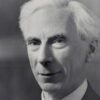
We refuse sympathy and intimacy with people, as if we waited for some better sympathy and intimacy to come. But whence and when? To-morrow will be like to-day. Life wastes itself whilst we are preparing to live. Our friends and fellow-workers die off from us. Scarcely can we say we see new men, new women, approaching us. We are too old to regard fashion, too old to expect patronage of any greater or more powerful. Let us suck the sweetness of those affections and consuetudes that grow near us. These old shoes are easy to the feet.
Ralph Waldo Emerson (1803–1882) American essayist, lecturer, poet
Essay (1841), “Prudence,” Essays: First Series, No. 7
(Source)
Based on a lecture (winter 1837–1838), Boston, the seventh in his course on "Human Culture."
’Mid hopes and fears and passion’s stormy strife
Think, every day that dawns, the last of life:
Thus shall each hour that lengthens nature’s treat,
By coming unexpected, come more sweet.[Inter spem curamque, timores inter et iras,
Omnem crede diem tibi diluxisse supremum:
Grata superveniet quae non sperabitur hora.]Horace (65–8 BC) Roman poet, satirist, soldier, politician [Quintus Horatius Flaccus]
Epistles [Epistularum, Letters], Book 1, ep. 4 “To Albius Tibullus,” l. 12ff (1.4.12-14) (20 BC) [tr. Howes (1845)]
(Source)
(Source (Latin)). Other translations:Twixte hope to have, and care to kepe, twixte feare and wrathe, awaye
Consumes the time: eche daye that cummes thinke it the latter daye,
The hower that cummes unloked for shall cum more welcum ay.
[tr. Drant (1567)]When thou'rt tost up and down' twixt hope and care,
Enflam'd with anger and shrunk up with fear:
As soon as such a day is overpast,
Comfort thy self, that that's to be the last:
When an hour comes that brings thee joy and bliss,
If unexpected, Oh! how grateful is!
[tr. A. B.; ed. Brome (1666)]Whilst mid'st strong hopes and fears thy time doth wast,
Think every rising Sun will be thy last;
And so the grateful unexpected Hour
Of Life prolong'd, when come, will please the more.
[tr. Creech (1684)]By hope inspir'd, deprest with fear,
By passion warm'd, perplext with care,
Believe that every morning's ray
Hath lighted up thy latest day;
Then, if to-morrow's sun be thine,
With double lustre shall it shine.
[tr. Francis (1747)]In the midst of hope and care, in the midst of fears and disquietudes, think every day that shines upon you is the last. [Thus] the hour, which shall not be expected, will come upon you an agreeable addition.
[tr. Smart/Buckley (1853)]Let hopes and sorrows, fears and angers be,
And think each day that dawns the last you'll see;
For so the hour that greets you unforeseen
Will bring with it enjoyment twice as keen.
[tr. Conington (1874)]'Twixt hopes and tremors, fears and frenzies passed,
Regard each day as though it were thy last.
So shall chance seasons of delight arise.
And overtake thee with a sweet surprise.
[tr. Martin (1881)]Unswayed then either by hopes or fears, by apprehensive or angry feelings, regard each day, as it shines upon you, as your last. death will one day come upon you acceptably because unexpectedly.
[tr. Elgood (1893)]Amid hopes and cares, amid fears and passions, believe that every day that has dawned is your last. Welcome will come to you another hour unhoped for.
[tr. Fairclough (Loeb) (1926)]Between your hopes
And cares, between your rages and fears, believe
That each day's down is the last to shine upon you:
The unhoped-for hours will be welcome.
[tr. Palmer Bovie (1959)]Among men’s cares and hopes, their fears and rages,
count as your last each morning that illuminates the sky:
then the next day, unhoped for, will always please you.
[tr. Fuchs (1977)]Live with hope and with fear, with worry and with angry passion,
But expect every hour to be your last:
Days come even more delightful, unexpected.
[tr. Raffel (1983)]Between hope and discouragement, fears, and angers, and such,
Treat every new day as the last you're going to have,
Then welcome the next as unexpectedly granted.
[tr. Ferry (2001)]In a world torn by hope and worry, dread and anger,
imagine every day that dawns is the last you'll see;
the hour you never hoped for will prove a happy surprise.
[tr. Rudd (2005 ed.)]Beset by hopes and anxieties, indignation and fear,
Treat every day that dawns for you as the last.
The unhoped-for hour’s ever welcome when it comes.
[tr. Kline (2015)]
He who puts off the hour to begin living rightly
Is like the yokel who stands at the stream with a sigh:
“I can’t get across. I’ll wait here till it runs dry.”
Meanwhile, it flows, forever flows on and rolls by.[Qui recte vivendi prorogat horam,
rusticus exspectat dum defluat amnis; at ille
labitur et labitur in omne volubilis aevum.]Horace (65–8 BC) Roman poet, satirist, soldier, politician [Quintus Horatius Flaccus]
Epistles [Epistularum, Letters], Book 1, ep. 2 “To Lollius,” l. 41ff (1.2.41-42) (20 BC) [tr. Palmer Bovie (1959)]
(Source)
(Source (Latin)). Other translations:Who so dryves of good déedes, he playes the farmers part,
Who will not overslip the brooke whilste that the water falls,
The water runnes, and kepes his course, and ever kepe it shall.
[tr. Drant (1567)]He who defers this work from day to day,
Does on a river's bank expecting stay,
Till the whole stream which stopt him should be gone,
That runs, and as it runs, forever will run on.
[tr. Cowley (17th C)]He that to rule
And square his life, prolongs, is like the Fool
Who staid to have the River first pass by,
Which rowles and rowles to all Eternity.
[tr. Fanshawe; ed. Brome (1666)]So stayes the Clown till th' hasty Brook be dri'd,
But th' everlasting streams still still do glide.
[tr. "Dr. W."; ed. Brome (1666)]He that deferrs to live is like the Clown,
Who waits, expecting till the River's gone:
But that still rouls its Streams, and will roul on.
[tr. Creech (1684)]And sure the man, who has it in his power
To practise virtue, and protracts the hour,
Waits, like the rustic, till the river dried:
Still glides the river, and will ever glide.
[tr. Francis (1747)]He that defers life's task from day to day,
Is like the simple clown who thought to stay
Till the full stream that stopt him should be gone: --
Alas! the tide still rolls and ever will roll on!
[tr. Howes (1845)]He who postpones the hour of living well, like the hind [in the fable], waits till [all the water in] the river be run off: whereas it flows, and will flow, ever rolling on.
[tr. Smart/Buckley (1853)]He who puts off the time for mending, stands
A clodpoll by the stream with folded hands,
Waiting till all the water be gone past;
But it runs on, and will, while time shall last.
[tr. Conington (1874)]He that would mend his life, yet still delays
To set to work, is like the boor who stays
Till the broad stream that bars his way is gone.
But on still flows the stream, and ever will flow on.
[tr. Martin (1881)]Whoever puts off the course of a right life waits, like the rustic, until the stream shall stop. But it rolls on, and will continue to roll on to every age.
[tr. Elgood (1893)]He who puts off the hour of right living is like the bumpkin waiting for the river to run out: yet on it glides, and on it will glide, rolling its flood forever.
[tr. Fairclough (Loeb) (1926)]Any man delaying when he could be living right
is like the hayseed who waits for the river to stop:
it flows and flows -- in fact, it rushes -- forever.
[tr. Fuchs (1977)]The fool waits
For the river to run by, so he can cross, but it runs forever,
On and on, and always will. Now is the time.
[tr. Raffel (1983)]The man who puts off
The time to start living right is like the hayseed
Who wants to cross the river and so he sits there
Waiting for the river to run out of water,
And the river flows by, and it flows on by, forever.
[tr. Ferry (2001)]The man who postpones the hour of reform
is the yokel who waits for the river to pass; but it continues
and will continue gliding and rolling for ever and ever.
[tr. Rudd (2005 ed.)]He who postpones the time for right-living resembles
The rustic who’s waiting until the river’s passed by:
Yet it glides on, and will roll on, gliding forever.
[tr. Kline (2015)]He who postpones the hour of living rightly is like the rustic who waits for the river to run out before he crosses, yet on it glides, and will glide on forever.
[E.g.]He who postpones the hour of living rightly, is like the rustic who waits till the river shall have passed away; but that still flows, and will continue to flow to perpetuity.
[E.g.]
Old and young, we are all on our last cruise. If there is a fill of tobacco among the crew, for God’s sake pass it round, and let us have a pipe before we go!

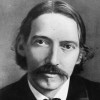
Since Life is so very short, live as much as thou canst in so short a Time.
Thomas Fuller (1654–1734) English physician, preacher, aphorist, writer
Introductio ad Prudentiam, Vol. 1, # 1757 (1725)
(Source)
Pleasing for a moment is of some consequence; for, if we take care of the moments, the years will take care of themselves, you know.
Maria Edgeworth (1768–1849) Anglo-Irish writer, novelist
Mademoiselle Panache, Part 2 [Helen] (1795)
(Source)

He that will not when he may,
When he will he shall have nay.Robert Burton (1577–1640) English scholar
Anatomy of Melancholy, Part 3, sec. 2, member 5, subsec. 5 (1621, 2nd ed.)
(Source)

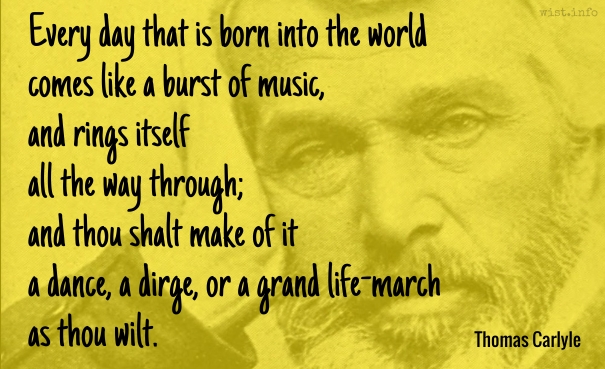
Every day that is born into the world comes like a burst of music, and rings itself all the way through; and thou shalt make of it a dance, a dirge, or a grand life-march as thou wilt.
Thomas Carlyle (1795–1881) Scottish essayist and historian
(Attributed)
Variant: "Every day that is born into the world comes like a burst of music and rings itself the way through, and you make of it a dance, a dirge, or a life-march, as thou wilt."
This is widely attributed in the late 19th Century to Carlyle, but I cannot find any primary source or citation for it. The earliest reference I can find to this is its apparent quotation in Kate W. Hamilton, "Ariel Seaton's Rainy Day," The Ladies' Repository (1868-01), but it is not attributed to Carlyle, only included in quotation marks. Perhaps because of this, other sources actually (mis)attribute it to The Ladies' Repository (1883, 1889), and other sources include no attribution whatesoever.
BRUTUS: There is a tide in the affairs of men
Which, taken at the flood, leads on to fortune;
Omitted, all the voyage of their life
Is bound in shallows and in miseries.
On such a full sea are we now afloat,
And we must take the current when it serves
Or lose our ventures.William Shakespeare (1564–1616) English dramatist and poet
Julius Caesar, Act 4, sc. 3, l. 249ff (4.3.249-255) (1599)
(Source)

It is better to lose health like a spendthrift than to waste it like a miser. It is better to live and be done with it, then to die daily in the sick-room.
He doubly benefits the needy who gives quickly.
[Inopi beneficium bis dat, qui dat celeriter.]
Publilius Syrus (d. 42 BC) Assyrian slave, writer, philosopher [less correctly Publius Syrus]
Sententiae [Moral Sayings], # 6
Our grand business undoubtedly is, not to see what lies dimly at a distance, but to do what lies clearly at hand.
Thomas Carlyle (1795–1881) Scottish essayist and historian
Essay (1829-06), “Signs of the Times,” Edinburgh Review, Vol. 49, No. 98, Art. 7
(Source)
Review of three 1829 books: Anticipation; or, an Hundred Years Hence; The Rise, Progress, and Present State of Public Opinion in Great Britain; Edward Irvine, The Last Days; or, Discourses on These Our Times.