

The law will never make men free; it is men who have got to make the law free. They are the lovers of law and order, who observe the law when the government breaks it.
Henry David Thoreau (1817-1862) American philosopher and writer
Speech (1854-07-04), “Slavery in Massachusetts,” Anti-Slavery Celebration, Framingham, Massachusetts
(Source)
After the conviction in Boston of Anthony Burns, under the Fugitive Slave Act of 1850. This led to large protests and an abolitionist riot at the Boston Courthouse, requiring Federal troops and state militia to ensure Burns' transport to a ship sailing to Virginia.
In context, Thoreau is arguing the quality of a higher law, higher than the Fugitive Slave Law or Constitutional legalism from the courts -- the "law of humanity," which condemns the injustice of slavery.
Quotations about:
civil disobedience
Note not all quotations have been tagged, so Search may find additional quotes on this topic.
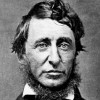
Men generally, under such a government as this, think that they ought to wait until they have persuaded the majority to alter [unjust laws]. They think that, if they should resist, the remedy would be worse than the evil. But it is the fault of the government itself that the remedy is worse than the evil. It makes it worse. Why is it not more apt to anticipate and provide for reform? Why does it not cherish its wise minority? Why does it cry and resist before it is hurt? Why does it not encourage its citizens to be on the alert to point out its faults, and do better than it would have them? Why does it always crucify Christ, and excommunicate Copernicus and Luther, and pronounce Washington and Franklin rebels?
Henry David Thoreau (1817-1862) American philosopher and writer
Essay (1849-05), “Resistance to Civil Government [On the Duty of Civil Disobedience],” Æsthetic Papers, No. 1, Article 10
(Source)
Based on an 1848 lecture at the Concord Lyceum.
We cannot, by total reliance on law, escape the duty to judge right and wrong [….] There are good laws and there are occasionally bad laws, and it conforms to the highest traditions of a free society to offer resistance to bad laws, and to disobey them.
Alexander M. Bickel (1924-1974) Romanian-American law professor, constitutional scholar
Politics and the Warren Court, Part 3, ch. 5 “Civil Rights and Civil Disobedience” (1965)
(Source)
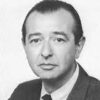
[The first principle of British democracy is] our prime duty to each other and to what our conscience tells us to be right. If this leads individuals into conflict with the law, those individuals must be ready to take the consequences non-violently. In our democracy no man should tell another man to break the law, nor should any man break the law to by-pass Parliament. But a person who is punished for breaking an unjust law may if he is sincere and his cause wins public sympathy, create a public demand to have that unjust law changed through Parliament. This is the first and most fundamental principle of British democracy. It has a deep moral significance. Our religious and political liberties rest upon it.
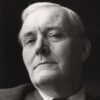
If a law commands me to sin I will break it; if it calls me to suffer, I will let it take its course unresistingly. The doctrine of blind obedience and unqualified submission to any human power, whether civil or ecclesiastical, is the doctrine of despotism, and ought to have no place among Republicans and Christians.
Angelina Grimké Weld (1805-1879) American abolitionist, women's rights activist
“Appeal to the Christian Women of the South,” Anti-Slavery Examiner (Sep 1836)
(Source)

The authentic human being is one of us who instinctively knows what he should not do and, in addition, will balk at doing it. He will refuse to do it, even if this brings down dread consequences to him and those whom he loves. This, to me, is the ultimately heroic trait of ordinary people. They say “no” to the tyrant and they calmly take the consequences of this resistance. Their deeds may be small, and almost always unnoticed, unmarked by history. Their names are not remembered, nor did these authentic humans expect their names to be remembered. I see their authenticity in an odd way: not in their willingness to perform great heroic deeds, but in their quiet refusals to commit villainies. In essence, they cannot be compelled to be what they are not.
Philip K. Dick (1928-1982) American writer
Speech (1978) “How To Build A Universe That Doesn’t Fall Apart Two Days Later”
(Source)
First collected in Dick's I Hope I Shall Arrive Soon (1985) [ed. Mark Hurst and Paul Williams], where it serves as the introduction.
Lawrence Sutin, editor of The Shifting Realities of Philip K. Dick (1995) (where this is reprinted) suggests this speech was "likely never delivered."

We will match your capacity to inflict suffering by our capacity to endure suffering. We will meet your physical force with soul force. Do to us what you will, and we will still love you. We cannot in all good conscience obey your unjust laws because non-cooperation with evil is as much a moral obligation as is cooperation with good. And so put us in jail, and we will go in with humble smiles on our faces, still loving you. Bomb our homes and threaten our children, and we will still love you. Send your propaganda agents around the country and make it appear that we are not fit morally, culturally, and otherwise for integration. And we will still love you. Send your hooded perpetrators of violence into our communities at the midnight hours, and drag us out on some wayside road and beat us and leave us half dead, and we will still love you. But be assured that we will wear you down by our capacity to suffer.
And one day we will win our freedom, but not only will we win freedom for ourselves, we will so appeal to your heart and conscience that we will win you in the process. And our victory will be a double victory.
Martin Luther King, Jr. (1929-1968) American clergyman, civil rights leader, social activist, preacher
“Loving Your Enemies,” sermon, Detroit Council of Churches Noon Lenten Services (1961-03-07)
(Source)
Reprinted in edited form in King, Strength to Love, ch. 5 "Loving Your Enemies," sec. 2 (1963). In the preface he notes this sermon was originally written while in jail in Georgia.
See Gandhi.
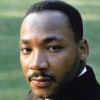
We should never forget that everything Adolf Hitler did in Germany was “legal” and everything the Hungarian freedom fighters did in Hungary was “illegal.”
Martin Luther King, Jr. (1929-1968) American clergyman, civil rights leader, social activist, preacher
Letter from Birmingham Jail (16 Apr 1963)
(Source)
No law is stronger than is the public sentiment where it is to be enforced.
Abraham Lincoln (1809-1865) American lawyer, politician, US President (1861-65)
Letter (1859-12-22) to John J. Crittenden
(Source)
Crittenden was a US Senator from Kentucky, a former Whig but at the time part of the American (Know-Nothing) Party. Lincoln was criticizing the idea of a party platform with the sole position of "The Constitution, the Union, and the enforcement of the laws," and used the resistance to the Fugitive Slave Act in the North as an example.
See Lincoln (1858).

If the injustice is part of the necessary friction of the machine of government, let it go, let it go: perchance it will wear smooth, — certainly the machine will wear out. If the injustice has a spring, or a pulley, or a rope, or a crank, exclusively for itself, then perhaps you may consider whether the remedy will not be worse than the evil; but if it is of such a nature that it requires you to be the agent of injustice to another, then, I say, break the law. Let your life be a counter friction to stop the machine. What I have to do is to see, at any rate, that I do not lend myself to the wrong which I condemn.
Henry David Thoreau (1817-1862) American philosopher and writer
Essay (1849-05), “Resistance to Civil Government [On the Duty of Civil Disobedience],” Æsthetic Papers, No. 1, Article 10
(Source)
Based on an 1848 lecture at the Concord Lyceum.
Unjust laws exist: shall we be content to obey them, or shall we endeavor to amend them, and obey them until we have succeeded, or shall we transgress them at once?
Henry David Thoreau (1817-1862) American philosopher and writer
Essay (1849-05), “Resistance to Civil Government [On the Duty of Civil Disobedience],” Æsthetic Papers, No. 1, Article 10
(Source)
Based on an 1848 lecture at the Concord Lyceum.
There is all the difference in the world between the criminal’s avoiding the public eye and the civil disobedient’s taking the law into his own hands in open defiance. This distinction between an open violation of the law, performed in public, and a clandestine one is so glaringly obvious that it can be neglected only by prejudice or ill will.
Hannah Arendt (1906-1975) German-American philosopher, political theorist
Essay (1970-09-12), “Civil Disobedience,” The New Yorker
(Source)
Revised and collected in Crises of the Republic (1972).

Every actual State is corrupt. Good men must not obey the laws too well.
Ralph Waldo Emerson (1803-1882) American essayist, lecturer, poet
“Politics,” Essays: Second Series (1844)
Under a government which imprisons any unjustly, the true place for a just man is also a prison.
Henry David Thoreau (1817-1862) American philosopher and writer
Essay (1849-05), “Resistance to Civil Government [On the Duty of Civil Disobedience],” Æsthetic Papers, No. 1, Article 10
(Source)
Based on an 1848 lecture at the Concord Lyceum.
In no sense do I advocate evading or defying the law, as would the rabid segregationist. That would lead to anarchy. One who breaks an unjust law must do so openly, lovingly, and with a willingness to accept the penalty. I submit that an individual who breaks a law that conscience tells him is unjust, and who willingly accepts the penalty of imprisonment in order to arouse the conscience of the community over its injustice, is in reality expressing the highest respect for law.
Martin Luther King, Jr. (1929-1968) American clergyman, civil rights leader, social activist, preacher
Letter from Birmingham Jail (16 Apr 1963)