

We should never forget that everything Adolf Hitler did in Germany was “legal” and everything the Hungarian freedom fighters did in Hungary was “illegal.”
Martin Luther King, Jr. (1929–1968) American clergyman, civil rights leader, social activist, preacher
Letter from Birmingham Jail (16 Apr 1963)
(Source)
Quotations about:
legal
Note not all quotations have been tagged, so Search may find additional quotes on this topic.
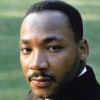
You must remember that some things that are legally right are not morally right.
Abraham Lincoln (1809–1865) American lawyer, politician, US President (1861–65)
(Attributed)
Remark to potential client (1840s?), refusing his case involving a $600 claim against a widow with six children. In F. Brown, The Every-Day Life of Abraham Lincoln, 2.6 (1887).

It will be of little avail to the people, that the laws are made by men of their own choice, if the laws be so voluminous that they cannot be read, or so incoherent that they cannot be understood; if they be repealed or revised before they are promulgated, or undergo such incessant changes that no man, who knows what the law is today, can guess what it will be tomorrow.
James Madison (1751–1836) American statesman, political theorist, US President (1809–17)
The Federalist Papers, #62 (Feb 1788)
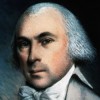
A lawyer has no business with the justice or injustice of the cause which he undertakes, unless his client asks his opinion, and then he is bound to give it honestly. The justice or injustice of the cause is to be decided by the judge.
Samuel Johnson (1709–1784) English writer, lexicographer, critic
Comment (15 Aug 1773)
In James Boswell, Tour to the Hebrides (1786)
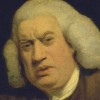
Be brief, be pointed, let your matter stand
Lucid in order, solid and at hand;
Spend not your words on trifles but condense;
Strike with the mass of thought, not drops of sense;
Press to close with vigor, once begun,
And leave, (how hard the task!) leave off, when done.Joseph Story (1779–1845) American lawyer, jurist, Supreme Court Justice (1811–1845)
“Advice to a Young Lawyer”, The American Jurist and Law Magazine, Vol. 5 (1831)
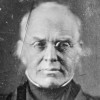
It may be true that morality cannot be legislated, but behavior can be regulated. It may be true that the law cannot change the heart but it can restrain the heartless. It may be true that the law can’t make a man love me, but it can restrain him from lynching me, and I think that’s pretty important also.
Martin Luther King, Jr. (1929–1968) American clergyman, civil rights leader, social activist, preacher
“The Other America,” speech, Stanford University (14 Apr 1967)
(Source)
A motif King used frequently. In the Wall Street Journal (13 Nov 1962), King used the line, "It may be true that the law cannot make a man love me, but it can keep him from lynching me, and I think that's pretty important." In Strength to Love, 3.3 (1963), he wrote, "Morality cannot be legislated, but behavior can be regulated. Judicial decrees may not change the heart, but they can restrain the heartless."
In no sense do I advocate evading or defying the law, as would the rabid segregationist. That would lead to anarchy. One who breaks an unjust law must do so openly, lovingly, and with a willingness to accept the penalty. I submit that an individual who breaks a law that conscience tells him is unjust, and who willingly accepts the penalty of imprisonment in order to arouse the conscience of the community over its injustice, is in reality expressing the highest respect for law.
Martin Luther King, Jr. (1929–1968) American clergyman, civil rights leader, social activist, preacher
Letter from Birmingham Jail (16 Apr 1963)