

Political virtue is a renunciation of oneself, which is always a very painful thing. One can define this virtue as love of the laws and the homeland. This love, requiring a continuous preference of the public interest over one’s own, produces all the individual virtues; they are only that preference.
[La vertu politique est un renoncement à soi-même, qui est toujours une chose très-pénible. On peut définir cette vertu, l’amour des loix & de la patrie. Cet amour, demandant une préférence continuelle de l’intérêt public au sien propre, donne toutes les vertus particulieres: elles ne sont que cette préférence.]
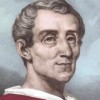
Charles-Lewis de Secondat, Baron de Montesquieu (1689–1755) French political philosopher
Spirit of Laws [The Spirit of the Laws; De l’esprit des lois], Book 4, ch. 5 (4.5) (1748) [tr. Cohler/Miller/Stone (1989)]
(Source)
(Source (French)). Other translations:Virtue is a self-renunciation which is always arduous and painful. This virtue may be defined, the love of the laws and of our country. As this love requires a constant preference of public to private interest, it is the source of all the particular virtues; for they are nothing more than this very preference itself.
[tr. Nugent (1750)]Virtue is a self-renunciation, which is very arduous and painful. This virtue may be defined as the love of the laws and of our country. As such love requires a constant preference of public to private interest, it is the source of all private virtues [....]
[E.g. (1904)]Virtue is self-renunciation, which is always a very hard thing. This virtue may be defined as love of the laws and of the homeland. As this love requires a continual preference for the public interest over one’s own, it confers all the separate virtues: they are nothing more than this preference.
[tr. Stewart (2018)]
Quotations about:
law-abiding
Note not all quotations have been tagged, so Search may find additional quotes on this topic.
Law never made men a whit more just; and, by means of their respect for it, even the well-disposed are daily made the agents of injustice. A common and natural result of an undue respect for the law is, that you may see a file of soldiers, colonel, captain, corporal, privates, powder-monkeys and all, marching in admirable order over hill and dale to the wars, against their wills, aye, against their common sense and consciences, which makes it very steep marching indeed, and produces a palpitation of the heart. They have no doubt that it is a damnable business in which they are concerned; they are all peaceably inclined. Now, what are they? Men at all? or small movable forts and magazines, at the service of some unscrupulous man in power?
Henry David Thoreau (1817–1862) American philosopher and writer
Essay (1849-05), “Resistance to Civil Government [On the Duty of Civil Disobedience],” Æsthetic Papers, No. 1, Article 10
(Source)
Based on an 1848 lecture at the Concord Lyceum.

Unjust laws exist: shall we be content to obey them, or shall we endeavor to amend them, and obey them until we have succeeded, or shall we transgress them at once?
Henry David Thoreau (1817–1862) American philosopher and writer
Essay (1849-05), “Resistance to Civil Government [On the Duty of Civil Disobedience],” Æsthetic Papers, No. 1, Article 10
(Source)
Based on an 1848 lecture at the Concord Lyceum.