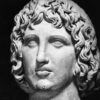
MEDEA: Now let things take their course. What use is life to me?
I have no land, no home, no refuge from despair.[ΜΉΔΕΙΑ: ἴτω: τί μοι ζῆν κέρδος; οὔτε μοι πατρὶς
οὔτ᾽ οἶκος ἔστιν οὔτ᾽ ἀποστροφὴ κακῶν.]Euripides (485?-406? BC) Greek tragic dramatist
Medea [Μήδεια], l. 798ff (431 BC) [tr. Vellacott (1963)]
(Source)
Though she has just been offered refuge in Athens by King Ægeus; perhaps because that contradiction, note that some more recent translators (Davie, Ewans) leave out these lines as interpolations.
(Source (Greek)). Other translations:Can life be any gain
To me who have no country left, no home,
No place of refuge?
[tr. Wodhull (1782)]Go to: hath life
A blessing yet for me? I have no country,
I have no house, no refuge from my ills.
[tr. Potter (1814)]Well, be it as it must be.
What good for me to live? No home for me,
Nor fatherland, nor refuge from my woes.
[tr. Webster (1868)]Enough! What gain is life to me? I have no country, home, or refuge left.
[tr. Coleridge (1891)]Let things take their course; what gain is it to me to live longer? I have neither country, nor house, nor refuge from my ills.
[tr. Buckley (1892)]Let all go: what is life to me? Nor country
Nor home have I, nor refuge from mine ills.
[tr. Way (Loeb) (1894)]Let it come!
What profits life to me? I have no home,
No country now, nor shield from any wrong.
[tr. Murray (1906)]What good is life? I have no land,
No home, no shelter for my misery.
[tr. Lucas, ed. Higham (1938)]So it must happen. What profit have I in life?
I have no land, no home, no refuge from my pain.
[tr. Warner (1944)]So -- what profit for me in living? who have
No country, no home, no shelter from misfortune.
[tr. Podlecki (1989)]Let that be as it will. What do I gain by living? I have no fatherland, no house, and no means to turn aside misfortune.
[tr. Kovacs (Loeb) (1994)]What is the point of living?
There is no land, no home, nor any means to escape my suffering. Miserable wretch!
[tr. Theodoridis (2004)]Let it pass. What good is life to me? I have no homeland,
I have no home as a refuge from evils.
[tr. Luschnig (2007)]So be it. What good does life hold for me now?
I have no father, no home, no refuge.
[tr. Johnston (2008), l. 948ff]So be it. What gain for me to stay alive? I have no fatherland, no home, no escape from disaster.
[tr. Kovacs / Kitzinger (2016)]What do I gain from living? I have no country,
no home, no relief from my misfortune.
[ed. Yeroulanos (2016)]So be it! What profit [kerdos] is life to me? I have no country, home [oikos], or refuge left from evils [kaka].
[tr. Coleridge / Ceragioli / Nagy / Hour25]
Quotations about:
refugee
Note not all quotations have been tagged, so Search may find additional quotes on this topic.
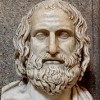
So come, young soldiers, welcome to our house.
My destiny, harrying me with trials hard as yours,
led me as well, at last, to anchor in this land.
Schooled in suffering, now I learn to comfort
those who suffer too.[Quare agite, O tectis, iuvenes, succedite nostris.
Me quoque per multos similis fortuna labores
iactatam hac demum voluit consistere terra.
Non ignara mali, miseris succurrere disco]Virgil (70–19 BC) Roman poet [b. Publius Vergilius Maro; also Vergil]
The Aeneid [Ænē̆is], Book 1, l. 627ff (1.627-630) [Dido] (29-19 BC) [tr. Fagles (2006), l. 748ff]
(Source)
(Source (Latin)). Other translations:Therefore bold Trojans to our Court advance;
We in such dangers tost, and various chance
At length our selves did in this countrey plant,
I know t'help others, taught by my own want.
[tr. Ogilby (1649)]Enter, my noble guest, and you shall find,
If not a costly welcome, yet a kind:
For I myself, like you, have been distress'd,
Till Heav'n afforded me this place of rest;
Like you, an alien in a land unknown,
I learn to pity woes so like my own.
[tr. Dryden (1697)]Then enter, chiefs, these friendly doors;
I too have had my fate, like yours,
Which, many a suffering overpast,
Has willed to fix me here at last.
Myself not ignorant of woe,
Compassion I have learned to show.
[tr. Conington (1866)]Come then, O warriors, enter our abodes!
I also from calamities like yours
Have suffered much, till here I set my feet.
Not ignorant of trouble, I have learned
To succor the distressed
[tr. Cranch (1872), l. 817ff]Come therefore, O men, and enter our house. Me too hath a like fortune driven through many a woe, and willed at last to find my rest in this land. Not ignorant of ill do I learn to succour the afflicted.
[tr. Mackail (1885)]So hasten now to enter in 'neath roofs of me and mine.
Me too a fortune such as yours, me tossed by many a toil,
Hath pleased to give abiding-place at last upon this soil,
Learned in illhaps full wise am I unhappy men to aid.
[tr. Morris (1900)]Welcome, then, heroes! Me hath Fortune willed
Long tost, like you, through sufferings, here to rest
And find at length a refuge. Not unskilled
In woe, I learn to succour the distrest.
[tr. Taylor (1907), st. 83, l. 739ff]Therefore, behold, our portals are swung wide
for all your company. I also bore
hard fate like thine. I too was driven of storms
and after long toil was allowed at last
to call this land my home. O, I am wise
in sorrow, and I help all suffering souls!
[tr. Williams (1910)]Come therefore, sirs, and pass within our halls. Me, too, has a like fortune driven through many toils, and willed that at last I should find rest in this land. Not ignorant of ill do I learn to befriend the unhappy.
[tr. Fairclough (1916)]Enter my house. I, too, am fortune-driven
Through many sufferings; this land at last
Has brought me rest. Not ignorant of evil,
I know one thing, at least, -- to help the wretched.
[tr. Humphries (1951)]So, gentlemen, do not hesitate to come under my roof.
I too have gone through much; like you, have been roughly handled
By fortune; but now at last it has willed me to settle here.
Being acquainted with grief, I am learning to help the unlucky.
[tr. Day Lewis (1952)]Thus, young men, you are welcome to our halls.
My destiny, like yours, has willed that I,
a veteran of hardships, halt at last
in this country. Not ignorant of trials,
I now can learn to help the miserable.
[tr. Mandelbaum (1971), l. 878ff]Come, then, soldiers, be our guests. My life
Was one of hardship and forced wandering
Like your own, till in this land at length
Fortune would have me rest. Through pain I've learned
To comfort suffering men.
[tr. Fitzgerald (1981)]This is why I now invite your warriors to come into my house. I, too, have known ill fortune like yours and been tossed from one wretchedness to another until at last I have been allowed to settle in this land. Through my own suffering, I am learning to help those who suffer.
[tr. West (1990)]So come, young lords, and enter our palace.
Fortune, pursuing me too, through many similar troubles,
willed that I would find peace at last in this land.
Not being unknown to evil, I’ve learned to aid the unhappy.
[tr. Kline (2002)]And so, young men, come under my roof.
My fortune too has long been adverse
But at last has allowed me to rest in this land.
My own acquaintance with suffering
Has taught me to aid others in need.
[tr. Lombardo (2005), l. 767]So come, young men, enter my home. Fortune once harassed me with hardship like your own. At last, the fates let me settle in this land. Knowing pain, I can learn to help the pain of others.
[tr. Bartsch (2021)]