A love of heavenly beauty does not preclude
A proper love for earthly pulchritude.[L’amour qui nous attache aux beautés éternelles
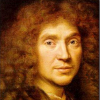
N’étouffe pas en nous l’amour des temporelles.]Molière (1622-1673) French playwright, actor [stage name for Jean-Baptiste Poquelin]
Tartuffe, or the Hypocrite [Le Tartuffe, ou L’Imposteur], Act 3, sc. 3 (1669) [tr. Wilbur (1963)]
(Source)
When Elmire suggests that the (falsely) pious Tartuffe must surely be focused solely on Heaven.
(Source (French)). Alternate translations:The Love which engages us to eternal Beauties, does not extinguish in us the Love of temporal ones.
[tr. Clitandre (1672)]The love which attaches us to eternal beauties does not stifle in us the love of earthly things.
[tr. Van Laun (1876)]Our love for the beauty which is eternal, stifles not in us love for that which is fleeting and temporal.
[tr. Wall (1879)]The love which leads us to eternal beauties does not extinguish in us the love of temporal ones.
[tr. Mathew (1890)]Our love for the beauty which is eternal does not stifle in us the love for things fleeting.
[tr. Waller (1903)]Love for the beauty of eternal things
Cannot destroy our love for earthly beauty.
[tr. Page (1909)]The love which draws us to eternal beauty
Does not exclude the love of temporal things.
[tr. Bishop (1957)]To love eternal beauties far above
Is not to be immune to other love.
[tr. Frame (1967)]The love that draws us to eternal beauty does not stifle love of this world.
[tr. Steiner (2008)]The love that binds us to eternal beauties
Does not entirely stifle in us the love of temporal.
[tr. Campbell (2013)]