Thare are two kinds of men that fear makes phools ov, them who are afrade of nothing, and them who are afrade of everything.
[There are two kinds of men that fear makes fools of, them who are afraid of nothing, and them who are afraid of everything.]
Josh Billings (1818–1885) American humorist, aphorist [pseud. of Henry Wheeler Shaw]
Josh Billings’ Farmer’s Allminax, 1877-09 (1877 ed.)
(Source)
Quotations about:
fearlessness
Note not all quotations have been tagged, so Search may find additional quotes on this topic.
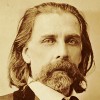
I salute the man who is going through life always helpful, knowing no fear, and to whom aggressiveness and resentment are alien. Such is the stuff of which the great moral leaders are made who proffer consolation to mankind in their self-created miseries.
[Heil dem Manne, der stets helfend durchs Leben ging, keine Furcht kannte und dem jede Aggressivität und jedes Ressentiment fremd war! Von solchem Holz sind die Idealgestalten geschnitzt, die der Menschheit Trost bieten in den Situationen selbstgeschaffenen Leidens.]
Albert Einstein (1879–1955) German-American physicist
Essay (1953-05-23), “Aphorisms for Leo Baeck [Neun Aphorismen], No. 1, Essays Presented to Leo Baeck on the Occasion of His Eightieth Birthday (1954) [Einstein Archives 28-962]
(Source)
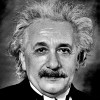
Fear comes from uncertainty. When we are absolutely certain, whether of our worth or worthlessness, we are almost impervious to fear. Thus a feeling of utter unworthiness can be a source of courage.
Eric Hoffer (1902–1983) American writer, philosopher, longshoreman
Passionate State of Mind, Aphorism 87 (1955)
(Source)
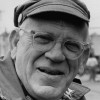
All the world is a very narrow bridge, and the most important thing is not to be overwhelmed by fear.
כל העולם כולו גשר צר מאוד, והעיקר – לא לפחד כלל.
Nachman of Breslov (1772–1810) Ukrainian Jewish Hasidic leader, rabbi, kabbalist [רַבִּי נַחְמָן מִבְּרֶסְלֶב; of Bratslav; of Bracław]
(Paraphrase)
The original of this passage, in Nachman's Likutey Moharan, Part 2, 48:2, is:
[וְדַע, שֶׁהָאָדָם צָרִיך לַעֲבר עַל גֶּשֶׁר צַר מְאֹד מְאֹד וְהַכְּלָל וְהָעִקָּר שֶׁלּא יִתְפַּחֵד כְּלָל]
which is variously translated:And know, a person needs to make his passage on a very, very narrow bridge, and the rule and the essence is to not be afraid at all.
[Source]Know that [when] a person needs to cross a very, very narrow bridge, the general principle and main point is not to make oneself at all terrified.
[Source]Now know, a person needs to pass over on a very, very narrow bridge, and the rule and the essence is to not be afraid at all.
[Source]
This Nachman quote was paraphrased and set to music in the Hebrew tune, "Kol Ha'Olam Kulo [כָּל הָעוֹלָם כֻּלוֹ]":Kol ha'olam kulo
Gesher tzar me'od,
Veha'ikar lo le'fached klal.
Other translations of the song include:More information about the song:
- "All the world is a very narrow bridge, and the essence is not to fear at all."
- "All the world is a very narrow bridge, and the essence is, don't be afraid at all."
- "The whole world is a narrow bridge, but the main thing is not to be at all afraid."
- "All the world is a very narrow bridge. / But the main thing to recall / Is to have no fear at all."
MENENIUS: His nature is too noble for the world.
He would not flatter Neptune for his trident
Or Jove for ‘s power to thunder. His heart’s his mouth;
What his breast forges, that his tongue must vent,
And, being angry, does forget that ever
He heard the name of death.William Shakespeare (1564–1616) English dramatist and poet
Coriolanus, Act 3, sc. 1, l. 326ff (3.1.326-331) (c. 1608)
(Source)
Speaking of the title character.

You go on inside. Be bold, nothing to fear.
In every venture the bold man comes off best,
even the wanderer, bound from distant shores.[σὺ δ᾽ ἔσω κίε, μηδέ τι θυμῷ
τάρβει: θαρσαλέος γὰρ ἀνὴρ ἐν πᾶσιν ἀμείνων
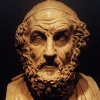
ἔργοισιν τελέθει, εἰ καί ποθεν ἄλλοθεν ἔλθοι.]Homer (fl. 7th-8th C. BC) Greek author
The Odyssey [Ὀδύσσεια], Book 7, l. 50ff (7.50) (c. 700 BC) [tr. Fagles (1996)]
(Source)
Athena to Odysseus, outside the palace of King Alkinoös.
(Source (Greek)). Other translations:Enter amongst them, nor admit a fear.
More bold a man is, he prevails the more,
Though man nor place he ever saw before.
[tr. Chapman (1616)]Though you a stranger be, fear not, go in;
The bold than fearful always better speed.
[tr. Hobbes (1675), ll. 45-46]Fear not, but be bold:
A decent boldness ever meets with friends,
Succeeds, and even a stranger recommends.
[tr. Pope (1725)]But enter fearing nought, for boldest men
Speed ever best, come whencesoe’er they may.
[tr. Cowper (1792), ll. 60-61]Now enter, and all fear forego,
Since it is always on the bold in mind,
Strange though his stock, that fortune shines most kind.
[tr. Worsley (1861), st. 8]Go in! with no faint heart: --
The bold man ever wins the best success
In all his works, e'en tho' from far he come!
[tr. Bigge-Wither (1869)]Enter then, and fear not in thine heart, for the dauntless man is the best in every adventure, even though he come from a strange land.
[tr. Butcher/Lang (1879)]Go in and have no dread:
For the man that is stout and hardy drives all things better home,
Whatever of deeds be toward; yea, e'en if from far he come.
[tr. Morris (1887)]But enter, and have no misgivings in your heart; for the courageous man in all affairs better attains his head, come he from where he may.
[tr. Palmer (1891)]But do not be afraid; go straight in, for the bolder a man is the more likely he is to carry his point, even though he is a stranger.
[tr. Butler (1898)]Go thou within, and let thy heart fear nothing; for a bold man is better in all things, though he be a stranger from another land.
[tr. Murray (1919)]Thrust in fearlessly: however foreign a man may be, in every crisis it is the high face which will carry him through.
[tr. Lawrence (1932)]Go straight in and have no qualms. For it is the bold man who every time does best, at home or abroad.
[tr. Rieu (1946)]You must not be dismayed; go in to them. A cheerful man does best in every enterprise -- even a stranger.
[tr. Fitzgerald (1961)]You go in with a spirit that fears nothing.
The bold man proes the better for every action
in the end, even though he is a stranger coming from elsewhere.
[tr. Lattimore (1965)]When you go in, forget your fear: far better
to be a bold man, though a stranger here.
[tr. Mandelbaum (1990)]Go inside and don't be afraid of anything.
Things turn out better for a man who is bold,
Especially if he's a stranger from a distant land.
[tr. Lombardo (2000)]Go in and have no fear. For a man is best to be bold, even a stranger from a foreign land.
[tr. Kline (2004)]Go in and have no fear in your heart; in every kind of action the dauntless man always proves the better, even if he hails from some distant country.
[tr. Verity (2016)]Do not be scared; go in. The brave succeed in all adventures, even those who come from countries far away.
[tr. Wilson (2017)]Go in and don't let your heart show alarm: a man whose every move speaks boldness does better, even supposing he comes form some other country.
[tr. Green (2018)]But go inside, and do not be afraid.
In a man, boldness is always better
at getting good results, even in the case
where he’s a stranger from another land.
[tr. Johnston (2019)]
I want
to think again of dangerous and noble things.
I want to be light and frolicsome.
I want to be improbable beautiful and afraid of nothing,
as though I had wings.

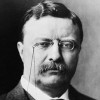
There were all kinds of things of which I was afraid at first, from grizzly bears to “mean” horses and gunfighters, but by acting as if I was not afraid, I gradually ceased to be afraid.
Theodore Roosevelt (1858–1919) American politician, statesman, conservationist, writer; US President (1901–09)
Autobiography, ch. 2 “The Vigor of Life” (1913)
(Source)
Never contend with a Man who has nothing to Lose.
[No empeñarse con quien no tiene qué perder.]
Baltasar Gracián y Morales (1601–1658) Spanish Jesuit priest, writer, philosopher
The Art of Worldly Wisdom [Oráculo Manual y Arte de Prudencia], § 172 (1647) [tr. Jacobs (1892)]
(Source)
See also More (1518), Goethe (1804).
(Source (Spanish)). Other translations:Never to engage with him that hath nothing to lose.
[Flesher ed. (1685)]Do not get into a contest with one who has nothing to lose.
[tr. Duff (1877)]Do not engage with him who has nothing to lose.
[tr. Fischer (1937)]Never compete with someone who has nothing to lose.
[tr. Maurer (1992)]