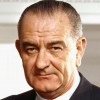
Education is the cheap defence of nations.
Edmund Burke (1729–1797) Anglo-Irish statesman, orator, philosopher
(Spurious)
American spelling variant: "Education is the cheap defense of nations."
While widely quoted since the early 19th Century, there is no record of Burke having said or written it. The earliest references come from Thomas Chalmers (1827, 1832), who mentions it as a well-known quotation, but many other uses of it show up quickly after (1835, 1837, 1838, 1839, etc.), continuing through the 19th and early 20th centuries.
Burke did, in Reflections on the Revolution in France (1790), make a reference to the "cheap defence of nations," but in the very different context of praising the social order of genteel nobility and honor. In a passage bemoaning the execution of Marie Antoinette, he wrote (emphasis mine):But the age of chivalry is gone; that of sophisters, economists, and calculators has succeeded, and the glory of Europe is extinguished forever. Never, never more, shall we behold that generous loyalty to rank and sex, that proud submission, that dignified obedience, that subordination of the heart, which kept alive, even in servitude itself, the spirit of an exalted freedom! The unbought grace of life, the cheap defense of nations, the nurse of manly sentiment and heroic enterprise is gone. It is gone, that sensibility of principle, that chastity of honor, which felt a stain like a wound, which inspired courage whilst it mitigated ferocity, which ennobled whatever it touched, and under which vice itself lost half its evil, by losing all its grossness.
It's unclear how this phrase got "Education is ..." grafted to it, though some see it as an intentional and nefarious fabrication.
Quotations about:
schools
Note not all quotations have been tagged, so Search may find additional quotes on this topic.
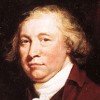
It happens sometimes that two opposite tendencies flourish together, deriving strength from a sense of the danger with which each is threatened by the popularity of the other. Where the antagonism is not absolute, each may gain by being compelled to recognise the strong points in the rival position. In a serious controversy the right is seldom or never all on one side; and in the normal course of events both theories undergo some modification through the influence of their opponents, until a compromise, not always logically defensible, brings to an end the acute stage of the controversy.
William Ralph Inge (1860–1954) English prelate [Dean Inge]
“Institutionalism and Mysticism” (1914), Outspoken Essays: First Series (1914)
(Source)

Every child must be encouraged to get as much education as he has the ability to take. We want this not only for his sake — but for the nation’s sake. Nothing matters more to the future of our country: not military preparedness — for armed might is worthless if we lack the brain power to build a world of peace; not our productive economy — for we cannot sustain growth without trained manpower; not our democratic system of government — for freedom is fragile if citizens are ignorant.
Lyndon B. Johnson (1908–1973) American politician, educator, US President (1963–69)
Speech (1965-01-12), “Toward Full Educational Opportunity,” Joint Session of Congress
(Source)