Nobody knows what is going to happen because so much depends on an enormous number of variables, on simple hazard. On the other hand if you look at history retrospectively, then, even though it was contingent, you can tell a story that makes sense. […]
Jewish history, for example, in fact had its ups and downs, its, enmities and its friendships, as every history of all people has. The notion that there is one unilinear history is of course false. But if you look at it after the experience of Auschwitz it looks as though all of history — or at least history since the Middle Ages — had no other aim than Auschwitz. […]
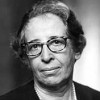
This, is the real problem of every philosophy of history how: is it possible that in retrospect it always looks as though it couldn’t have happened otherwise?Hannah Arendt (1906–1975) German-American philosopher, political theorist
Interview (1973-10) with Roger Errera, Office de Radiodiffusion-Télévision Française (ORTF)
(Source)
Parts of this interview were turned into an episode of the French TV series "Un certain regard," directed by Jean-Claude Lubtchansky, first broadcast 1974-07-06. This portion of the interview comes at NN:NN in.
This portion of the interview was also published in The New York Review of Books (1978-10-26).