

I know it is the fashion to say that most of recorded history is lies anyway. I am willing to believe that history is for the most part inaccurate and biased, but what is peculiar to our own age is the abandonment of the idea that history could be truthfully written.
George Orwell (1903–1950) English journalist, essayist, writer [pseud. of Eric Arthur Blair]
Essay (1942-08), “Looking Back on the Spanish War,” ch. 4, Such, Such Were the Joys, essay 8 (1953)
(Source)
Quotations about:
historiography
Note not all quotations have been tagged, so Search may find additional quotes on this topic.
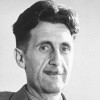
The intrigues of unworthy courtiers to gain the favour of still more unworthy kings, or the records of murderous battles and sieges, have been dilated on, and told over and over again, with all the eloquence of style and all the charms of fancy; while the circumstances which have most deeply affected the morals and welfare of the people have been passed over with but slight notice, as dry and dull, and capable of neither warmth nor colouring.
Charles Mackay (1814–1889) Scottish poet, journalist, song writer
Memoirs of Extraordinary Popular Delusions and the Madness of Crowds, “The South-Sea Bubble” (1841)
(Source)
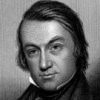
Historians relate, not so much what is done, as what they would have believed.
Benjamin Franklin (1706–1790) American statesman, scientist, philosopher, aphorist
Poor Richard (1739 ed.)
(Source)
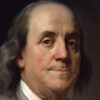
History ain’t what it is; it’s what some Writer wanted it to be.
Will Rogers (1879–1935) American humorist
Article (1931-03-22), “Letter of a Self-Made Diplomat to His President,” Saturday Evening Post
(Source)
Collected in More Letters of a Self-Made Diplomat to His President (1928) [ed. Steven Gragert].
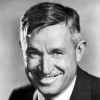
Study the historian before you begin to study the facts. This is, after all, not very abstruse. It is what is already done by the intelligent undergraduate who, when recommended to read a work by that great scholar Jones of St. Jude’s, goes round to a friend at St. Jude’s to ask what sort of chap Jones is, and what bees he has in his bonnet. When you read a work of history, always listen out for the buzzing. If you can detect none, either you are tone deaf or your historian is a dull dog. The facts are really not at all like fish on the fishmonger’s slab. They are like fish swimming about in a vast and sometimes inaccessible ocean; and what the historian catches will depend partly on chance, but mainly on what part of the ocean he chooses to fish in and what tackle he chooses to use – these two factors being, of course, determined by the kind of fish he wants to catch. By and large, the historian will get the kind of facts he wants. History means interpretation.
E. H. Carr (1892–1982) British historian, journalist, international relations theorist [Edward Hallett "Ted" Carr]
What Is History?, ch. 1 (1961)
(Source)
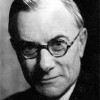
History is a jangle of accidents, blunders, surprises and absurdities, and so is our knowledge of it, but if we are to report it at all we must impose some order upon it.
Henry Steele Commager (1902–1998) American historian, writer, activist
The Nature and the Study of History, ch. 5 (1965)
(Source)
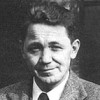
In the popular imagination, the belief persists that history involves little more than reconstruction, a retelling of the past “as it actually was.” But historical understanding involves far more than mere empiricism; it demands a readiness to draw back from the facts to reflect on their significance and their interconnection.
Peter E, Gordon (b. 1966) American intellectual historian
“Why Historical Analogy Matters,” New York Review of Books (7 Jan 2020)
(Source)

Our task as historians is to make past conflicts live again; not to lament the verdict or to wish for a different one. It bewildered me when my old master A. F. Pribram, a very great historian, said in the nineteen-thirties: “It is still not decided whether the Habsburg monarchy could have found a solution for its national problems.” How can we decide about something that did not happen? Heaven knows, we have difficulty enough in deciding what did happen. Events decided that the Habsburgs had not found a solution for their national problems; that is all we know or need to know. Whenever I read the phrase: “whether so-and-so acted rightly must be left for historians to decide,” I close the book; the writer has moved from history to make-believe.
A. J. P. Taylor (1906–1990) British historian, journalist, broadcaster [Alan John Percivale Taylor]
Trouble Makers: Dissent Over Foreign Policy 1792-1939 (1957)
(Source)
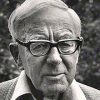
Caution in handling generally accepted opinions that claim to explain whole trends of history is especially important for the historian of modern times, because the last century has produced an abundance of ideologies that pretend to be keys to history but are actually nothing but desperate efforts to escape responsibility.
Hannah Arendt (1906–1975) German-American philosopher, political theorist
The Origins of Totalitarianism, Part 1, ch. 1 “Antisemitism as an Outrage to Common Sense” (1951)
(Source)
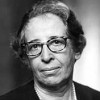
Nobody knows what is going to happen because so much depends on an enormous number of variables, on simple hazard. On the other hand if you look at history retrospectively, then, even though it was contingent, you can tell a story that makes sense. […]
Jewish history, for example, in fact had its ups and downs, its, enmities and its friendships, as every history of all people has. The notion that there is one unilinear history is of course false. But if you look at it after the experience of Auschwitz it looks as though all of history — or at least history since the Middle Ages — had no other aim than Auschwitz. […]
This, is the real problem of every philosophy of history how: is it possible that in retrospect it always looks as though it couldn’t have happened otherwise?Hannah Arendt (1906–1975) German-American philosopher, political theorist
Interview (1973-10) with Roger Errera, Office de Radiodiffusion-Télévision Française (ORTF)
(Source)
Parts of this interview were turned into an episode of the French TV series "Un certain regard," directed by Jean-Claude Lubtchansky, first broadcast 1974-07-06. This portion of the interview comes at NN:NN in.
This portion of the interview was also published in The New York Review of Books (1978-10-26).
The main work of the historian is not to record, but to evaluate; for, if he does not evaluate, how can he know what is worth recording?
E. H. Carr (1892–1982) British historian, journalist, international relations theorist [Edward Hallett "Ted" Carr]
What is History?, ch. 1 (1961)
(Source)
Recounting the historiographical writings of Benedetto Croce in the 1920s.