

A clean desk is a sign of an empty mind.
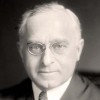
Felix Frankfurter (1882–1965) American jurist, teacher; US Supreme Court Justice (1939–62)
(Attributed)
Quotations by:
Frankfurter, Felix
One of the prerogatives of American citizenship is the right to criticize public men and measures — and that means not only informed and responsible criticism, but the freedom to speak foolishly and without moderation.
Felix Frankfurter (1882–1965) American jurist, teacher; US Supreme Court Justice (1939–62)
Baumgartner v. United States, 322 U.S. 664 (1944) [majority opinion]
(Source)
Ruling that the government could not strip a naturalized citizen of their citizenship simply for expressing political views, such as admiration for Adolph Hitler.
Morals are three-quarters manners.
Felix Frankfurter (1882–1965) American jurist, teacher; US Supreme Court Justice (1939–62)
Felix Frankfurter Reminiscences (1960) [ed. Harlan Phillips]
The nonsectarian or secular public school was the means of reconciling freedom in general with religious freedom. The sharp confinement of the public schools to secular education was a recognition of the need of a democratic society to educate its children, insofar as the State undertook to do so, in an atmosphere free from pressures in a realm in which pressures are most resisted and where conflicts are most easily and most bitterly engendered. Designed to serve as perhaps the most powerful agency for promoting cohesion among a heterogeneous democratic people, the public school must keep scrupulously free from entanglement in the strife of sects.
Felix Frankfurter (1882–1965) American jurist, teacher; US Supreme Court Justice (1939–62)
McCollum v. Board of Education 333 U.S. 216–217 (1948) [concurring]
(Source)
The preservation of the community from divisive conflicts, of Government from irreconcilable pressures by religious groups, of religion from censorship and coercion, however subtly exercised, requires strict confinement of the State to instruction other than religious, leaving to the individual’s church and home indoctrination in the faith of his choice.
Felix Frankfurter (1882–1965) American jurist, teacher; US Supreme Court Justice (1939–62)
McCollum v. Board of Education 333 U.S. 217 (1948) [concurring]
(Source)
If nowhere else, in the relation between Church and State, “good fences make good neighbors.”
Felix Frankfurter (1882–1965) American jurist, teacher; US Supreme Court Justice (1939–62)
McCollum v. Board of Education, 333 U.S. 232 (1948) [concurring]
(Source)
Ruling that public schools could not let religious groups use their property for religious education to children.
The quoted reference is to a poem by Robert Frost.
The history of liberty is the history of the observances of procedural safeguards.
Felix Frankfurter (1882–1965) American jurist, teacher; US Supreme Court Justice (1939–62)
McNabb v. United States, 318 U.S. 332, 347 (1943) [majority opinion]
(Source)
The ruling determined a defendant's confession was inadmissible as evidence in federal court if the government had disregarded the legal requirement to bring them promptly before a judge or magistrate.
Freedom of the press is not an end in itself but a means to the end of [achieving] a free society.
Felix Frankfurter (1882–1965) American jurist, teacher; US Supreme Court Justice (1939–62)
New York Times (28 Nov. 1954)
If one man can be allowed to determine for himself what is law, every man can. That means first chaos, then tyranny. Legal process is an essential part of the democratic process.
Felix Frankfurter (1882–1965) American jurist, teacher; US Supreme Court Justice (1939–62)
United States v. Mine Workers, 330 U.S. 312 (concurring) (1946)
It is a fair summary of history to say that the safeguards of liberty have frequently been forged … [by] not very nice people.
Felix Frankfurter (1882–1965) American jurist, teacher; US Supreme Court Justice (1939–62)
United States v. Rabinowitz, 339 US 56, 69 (dissenting) (1950)
As a member of this court I am not justified in writing my private notions of policy into the Constitution, no matter how deeply I may cherish them or how mischievous I may deem their disregard.
Felix Frankfurter (1882–1965) American jurist, teacher; US Supreme Court Justice (1939–62)
Comment to reporters (9 Aug 1964)