The hour for your departure draws near; if you will but forget all else and pay sole regard to the helmsman of your soul and the divine spark within you — if you will but exchange your fear of having to end your life some day for a fear of failing even to begin it on nature’s true principles — you can yet become a man, worthy of the universe that gave you birth, instead of a stranger in your own homeland, bewildered by each day’s happenings as though by wonders unlooked for, and ever hanging upon this one or the next.
[ἐὰν οὖν, ὅτε δήποτε πρὸς ἐξόδῳ γένῃ, πάντα τὰ ἄλλα καταλιπὼν μόνον τὸ ἡγεμονικόν σου καὶ τὸ ἐν σοὶ θεῖον τιμήσῃς καὶ μὴ τὸ παύσεσθαί ποτε ῾τοὖ ζῆν φοβηθῇς, ἀλλὰ τό γε μηδέποτε ἄρξασθαι κατὰ φύσιν ζῆν, ἔσῃ ἄνθρωπος ἄξιος τοῦ γεννήσαντος κόσμου καὶ παύσῃ ξένος ὢν τῆς πατρίδος καὶ θαυμάζων ὡς ἀπροσδόκητα τὰ καθ̓ ἡμέραν γινόμενα καὶ κρεμάμενος ἐκ τοῦδε καὶ τοῦδε.]
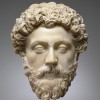
Marcus Aurelius (AD 121–180) Roman emperor (161–180), Stoic philosopher
Meditations [To Himself; Τὰ εἰς ἑαυτόν], Book 12, ch. 1 (12.1) (AD 161-180) [tr. Staniforth (1964)]
(Source)
Source of the commonly given paraphrase, "It is not death that a man should fear, but never beginning to live."
(Source (Greek)). Other translations:If therefore whensoever the time of thy departing shall come, thou shalt readily leave all things, and shalt respect thy mind only, and that divine part of thine, and this shall be thine only fear, not that some time or other thou shalt cease to live, but thou shalt never begin to live according to nature : then shalt thou be a man indeed, worthy of that world, from which thou hadst thy beginning; then shalt thou cease to be a stranger in thy country, and to wonder at those things that happen daily, as things strange and unexpected, and anxiously to depend of divers things that are not in thy power.
[tr. Casaubon (1634)]If, since your Life is almost up, you lay aside all other Matters, and only Cultivate your Mind, and pay a Regard to the Governing , and Diviner part of your self: If you are not at all afraid of losing your Life, but of Missing the Ends on't, and not Living as you should do; Then you'l act suitably to your Extraction, and deserve to have the Deity for your Maker: Then you'l be no longer a stranger in your own Country , nor be surpriz'd at common Accidents; you'll ne'er be anxious about the Future, nor stand to the Courtesy of Events.
[tr. Collier (1701)]If, therefore, now that you are near your exit, you quit thought about other things, and honour only that governing and divine part within you, and dread not the ceasing to live, but the not commencing to live according to nature; you will become a man, worthy of that orderly universe which produced you, and will cease to be as a stranger in your own country; both astonished, with what happens every day, as if unexpected; and in anxious suspence about this and t’other thing.
[tr. Hutcheson/Moor (1742)]If then, as you are now on the verge of life, you lay aside all other cares, and dedicate your whole attention to the improvement of your mind, and pay a due respect to the Deity within you, and fear less to die than not to live according to nature; you will, by this means, become worthy of that Universal Nature which produced you, and will no longer be a stranger in your own country; and will cease to be surprized at what happens every day, as if it were something extraordinary; nor be anxious and in suspense about the common events of life.
[tr. Graves (1792)]If, then, whatever the time may be when thou shalt be near to thy departure, neglecting everything else thou shalt respect only thy ruling faculty and the divinity within thee, and if thou shalt be afraid not because thou must some time cease to live, but if thou shalt fear never to have begun to live according to nature -- then thou wilt be a man worthy of the universe which has produced thee, and thou wilt cease to be a stranger in thy native land, and to wonder at things which happen daily as if they were something unexpected, and to be dependent on this or that.
[tr. Long (1862)]If, since your life is almost up, you lay aside all other matters, and only cultivate your mind, and pay a regard to the governing and diviner part of yourself; if you are not at all afraid of losing your life, but only of never beginning to live in accordance with nature, then you will act suitably to your extraction, and deserve to be the offspring of the universe; then you will be no longer a stranger in your own country, nor surprised at common accidents; you will never be dependent on this or that.
[tr. Collier/Zimmern (1887)]If then, now that you near your end, leaving all else alone, you will reverence only your Inner Self and the god within, if you will fear not life some time coming to an end, but never beginning life at all in accord with nature's law, then indeed you will be a man, worthy of the universe that begat you, and no more a stranger to your fatherland, ever in amaze at the unexpectedness of what each day brings forth, and hanging upon this event or that.
[tr. Rendall (1898)]If then, now that you are near your exit, setting behind you all other things, you will hold alone in reverence your ruling part, the spirit divine within you; if you will cease to dread the end of life, but rather fear to miss the beginning of life according to Nature, you will be a man, worthy of the ordered Universe that produced you; you will cease to be a stranger in your own country, gaping in wonder at every daily happening, caught up by this trifle or by that.
[tr. Hutcheson/Chrystal (1902)]If then, when the time of thy departure is near, abandoning all else thou prize thy ruling Reason alone and that which in thee is divine, and dread the thought, not that thou must one day cease to live, but that thou shouldst never yet have begun to live according to Nature, then shalt thou be a man worthy of the Universe that begat thee, and no longer an alien in thy fatherland, no longer shalt thou marvel at what happens every day as if it were unforeseen, and be dependent on this or that.
[tr. Haines (Loeb) (1916)]If then, when you arrive at last at your final exit, resigning all else, you honour your governing self alone and the divine element within you, if what you dread is not that some day you will cease to live, but rather never to begin at all to live with Nature, you will be a man worthy of the Universe that gave you birth, and will cease to be a stranger in your own country, surprised by what is coming to pass every day, as at something you did not look to see, and absorbed in this thing or in that.
[tr. Farquharson (1944)]If then, when the time for your departure draws near, you have put all else behind you and you honour your governing faculty alone and what is divine within you, and if what you hold in fear is not that some day you will cease to live, but rather that you may never begin go live according to nature, you will be a person who is worthy of the universe that brought you to birth, and you will no longer be a stranger in your native land, wondering at what happens day after day as if it were beyond foreseeing, and in thrall to one thing and the next.
[tr. Hard (1997 ed.)]And if, when it’s time to depart, you shunt everything aside except your mind and the divinity within ... if it isn’t ceasing to live that you’re afraid of but never beginning to live properly ... then you’ll be worthy of the world that made you.
No longer an alien in your own land.
No longer shocked by everyday events—as if they were unheard-of aberrations.
No longer at the mercy of this, or that.
[tr. Hays (2003)]If, then, when you finally come close to your exit, you have left all else behind and value only your directing mind and the divinity within you, if your fear is not that you will cease to live, but that you never started a life in accordance with nature, then you will be a man worthy of the universe that gave you birth. You will no longer be a stranger in your own country, no longer meet the day’s events as if bemused by the unexpected, no longer hang on this or that.
[tr. Hammond (2006), 12.2]But if, when you have come to the end, having let go of all other things, you honor only your guiding part and the divinity that is within you, and you do not fear ceasing to live so much as you fear never having begun to live in accordance with Nature -- then you will be a man who is worthy of the Cosmos that created you; and you will cease to live like a stranger in your own land, that is, surprised at unexpected everyday occurrences and wholly distracted by this and that.
[tr. Needleman/Piazza (2008)]If then, when the time for your departure draws near, you have put all else behind you and you honour your ruling centre alone and what is divine within you, and if what you hold in fear is not that some day you will cease to live, but rather that you may never begin to live according to nature, you will be a man who is worthy of the universe that brought you to birth, and you will no longer be a stranger in your native land, wondering at what happens day after day as if it were beyond foreseeing, and hanging on to one thing after another.
[tr. Hard (2011 ed.)]