

These [social questions] have all been kept alive in the cauldron of our agitation, and earned us properly, deservedly, the title of “infidel” and “traitor.” “Infidel” to a church that could be at peace in the presence of sin! “Traitor” to a state that was a magnificent conspiracy against justice.
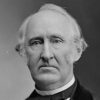
Wendell Phillips (1811–1884) American abolitionist, orator, social activist
Speech (1857-01-02), 25th Anniversary of the Massachusetts Anti-Slavery Society, Faneuil Hall, Boston
(Source)
As recorded in The Liberator, Vol. 27, No. 2 (1857-01-09), and the National Anti-Slavery Standard, Vol. 17, No. 35 (1857-01-17).
This is the closest to primary source for a variation of a quote more commonly cited to Phillips:Write on my gravestone: "Infidel, Traitor" -- infidel to every church that compromises with wrong; traitor to every government that oppresses the people.”
The earliest I can find this version of the quote in print is in the late 1920s (1927, 1927, 1929) in various Labor / Socialist publications, standing alone as column filler without citation.
Prior to this, I can find examples of a form closer to the one given above:When I die I wish but two words written on my tombstone -- "Infidel" -- "Traitor." Infidel to a church that can be at peace in the presence of sin; Traitor to a government that is a magnificent conspiracy against justice.
The earliest I find this version is in Oliver Johnson, William Lloyd Garrison and His Time (1879), a quotation from Johnson of a (the same?) speech at Faneuil Hall. It's also mentioned, in whole or in part in:While it is possible that Phillips used variations of the same quotation on different occasions (as many orators and lecturers of that time and this do), the clustering of dates with versions suggests to me failures of memory (e.g., Johnson), or intentional tweakings of the text (in the 1920s) to prefer more contemporary language or political usage.
- The Cube (1897-05), mentioned as a quotation from Phillips.
- The Advocate of Peace, Vol. 60, No. 9 (1898-10), printing a pacifism speech by William Lloyd Garrison (1898-08-25).
- The Labour Annual (1899), as column filler.
Rufus King Noyes (comp.), Views of Religion (1908), is a list of quotations about (and generally critical of) religion, in the format of giving the name, and then the quotation after this. It includes, attributed in this fashion to Phillips:When I die, I wish but two words written on my tombstone -- "Infidel" and "Traitor."
The next quotation -- with its name immediately below the above, is from William Dean Howells. I did find misattributions to this and the longer quote made to Howells, probably from a misreading of this book's format.
As a final note, Phillips' gravestone did not end up including either of those words.
Quotations about:
abolition
Note not all quotations have been tagged, so Search may find additional quotes on this topic.
Look at the tyranny of party — at what is called party allegiance, party loyalty — a snare invented by designing men for selfish purposes — and which turns voters into chattels, slaves, rabbits, and all the while their masters, and they themselves are shouting rubbish about liberty, independence, freedom of opinion, freedom of speech, honestly unconscious of the fantastic contradiction; and forgetting or ignoring that their fathers and the churches shouted the same blasphemies a generation earlier when they were closing their doors against the hunted slave, beating his handful of humane defenders with Bible texts and billies, and pocketing the insults and licking the shoes of his Southern Master.
Mark Twain (1835–1910) American writer [pseud. of Samuel Clemens]
“The Character of Man” (23 Jan 1906), in The Autobiography of Mark Twain, Vol. 1 (2010)

This declared indifference, but as I must think, covert real zeal for the spread of slavery, I cannot but hate. I hate it because of the monstrous injustice of slavery itself. I hate it because it deprives our Republican example of its just influence in the world — enables the enemies of free institutions, with plausibility, to taunt us as hypocrites — causes the real friends of freedom to doubt our sincerity, and especially because it forces so many really good men amongst ourselves into an open war with the very fundamental principles of civil liberty — criticizing the Declaration of Independence, and insisting that there is no right principle of action but self-interest.
Abraham Lincoln (1809–1865) American lawyer, politician, US President (1861–65)
Speech (1854-10-16), “In Reply to Senator Douglas,” Peoria, Illinois
(Source)
Speaking on the 1854 Kansas-Nebraska Act, which repealed the Missouri Compromise and allowed for residents of those two territories to decide locally whether to allow slavery there.

The conflict between the principle of liberty and the fact of slavery is coming gradually to an issue. Slavery has now the power, and falls into convulsions at the approach of freedom. That the fall of slavery is predetermined in the counsels of Omnipotence I cannot doubt; it is a part of the great moral improvement in the condition of man, attested by all the records of history. But the conflict will be terrible, and the progress of improvement perhaps retrograde before its final progress to consummation.
John Quincy Adams (1767–1848) US President (1825–29)
Journal (11 Dec 1838)