

But the ambiguities of metaphorical words, about which I am next to speak, demand no ordinary care and diligence. In the first place, we must beware of taking a figurative expression literally. For the saying of the apostle applies in this case too: “The letter killeth, but the spirit giveth life.”
[Sed verborum translatorum ambiguitates, de quibus deinceps loquendum est, non mediocrem curam industriamque desiderant. Nam in principio cavendum est ne figuratam locutionem ad litteram accipias. Et ad hoc enim pertinet quod ait Apostolus: Littera occidit, spiritus autem vivificat.]Augustine of Hippo (354–430) Christian church father, philosopher, saint [b. Aurelius Augustinus]
On Christian Doctrine [De Doctrina Christiana], Book 3, ch. 5 / § 9 (3.5.9) (AD 397) [tr. Shaw (1858)]
(Source)
Quoting 2 Cor. 3:6.
(Source (Latin)). Alternate translations:But the ambiguities of figurative words, which are now to be treated, require no little care and industry. For at the outset you must be very careful lest you take figurative expressions literally. What the apostle says pertains to this problem: "For the letter killeth, but the spirit quickeneht."
[tr. Robertson (1958)]But the ambiguities of metaphorical words, about which I must now speak, require no ordinary care and attention. To begin with, one must take care not to interpret a figurative expression literally. What the apostle says is relevant here: "the letter kills but the spirit gives life."
[tr. Green (1995)]
Quotations about:
literalism
Note not all quotations have been tagged, so Search may find additional quotes on this topic.

There is no surer way to misread any document than to read it literally; in every interpretation we must pass between Scylla and Charybdis; and I certainly do not wish to add to the barrels of ink that have been spent in logging the route. As nearly as we can, we must put ourselves in the place of those who uttered the words, and try to divine how they would have dealt with the unforeseen situation; and, although their words are by far the most decisive evidence of what they would have done, they are by no means final.
Learned Hand (1872–1961) American jurist
Guiseppi v. Walling, 144 F.2d 608, 624 (2d Cir. 1944) [concurring]
(Source)
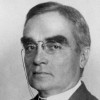
It is very pious to say and prudent to affirm that the holy Bible can never speak untruth — whenever its true meaning is understood. But I believe nobody will deny that it is often very abstruse, and may say things which are quite different from what its bare words signify. Hence in expounding the Bible if one were always to confine oneself to the unadorned grammatical meaning, one might fall into error. Not only contradictions and propositions far from true might thus be made to appear in the Bible, but even grave heresies and follies.
Galileo Galilei (1564–1642) Italian astronomer, physicist, engineer, polymath
Letter (1651) to Christina of Lorraine, Grand Duchess of Tuscany [tr. Drake (1957)]
(Source)
Making the case that people using Bible passages to claim his heleocentric model was wrong and heretical were not to be trusted.
