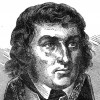
No simplicity of mind, no obscurity of station, can escape the universal duty of questioning all that we believe.
William Kingdon Clifford (1845-1879) English mathematician and philosopher
“The Ethics of Belief,” Part 1 “The Duty of Inquiry,” Contemporary Review (Jan 1877)
(Source)
Quotations about:
self-challenging
Note not all quotations have been tagged, so Search may find additional quotes on this topic.
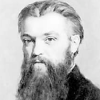
Perfect valour is to behave, without witnesses, as one would act were all the world watching.
[La parfaite valeur est de faire sans témoins ce qu’on serait capable de faire devant tout le monde.]
François VI, duc de La Rochefoucauld (1613-1680) French epigrammatist, memoirist, noble
Réflexions ou sentences et maximes morales [Reflections; or Sentences and Moral Maxims], ¶216 (1665-1678) [tr. FitzGibbon (1957)]
(Source)
(Appeared in the 1st (1665) ed. as the similar:[La pure valeur, s’il y en avoit, seroit de faire sans témoins ce qu’on est capable de faire devant le monde.]
(Source (French)). Other translations:Pure Valour, if there were any such thing, would consist in the doing of that without witnesses, which it were able to do, if all the world were to be spectators thereof.
[tr. Davies (1669), ¶117]True Valour would do all that, when alone, that it could do, if all the World were by.
[tr. Stanhope (1694), ¶217]Perfect valour consists in doing without witnesses all we should be capable of doing before the whole world.
[pub. Donaldson (1783), ¶431; ed. Lepoittevin-Lacroix (1797), ¶207; ed. Carvill (1835), ¶367]Perfect valor is to do unwitnessed what we should be capable of doing before all the world.
[ed. Gowens (1851), ¶225]Perfect valour is to do without witnesses what one would do before all the world.
[tr. Bund/Friswell (1871), ¶216]Perfect valor accomplishes without witnesses what anyone could do before the eyes of the world.
[tr. Heard (1917), ¶221]Perfect courage consists in doing unobserved what we could do in the eyes of the world.
[tr. Stevens (1939), ¶216]Perfect courage means doing unwitnessed what we would be capable of with the world looking on.
[tr. Kronenberger (1959), ¶216]Perfect valor consists in doing without witnesses what one would be capable of doing before the world at large.
[tr. Tancock (1959), ¶216]Perfect bravery is being able to do without witnesses what one would be able to do in front of everyone.
[tr. Siniscalchi (c. 1994)]Perfect courage is to do without witnesses what one would do before all the world.
[tr. Whichello (2016) ¶216]Perfect courage is to do without witnesses what one would be capable of doing with the world looking on.
[Source]
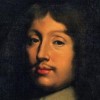
There is nothing noble in being superior to your fellow man; true nobility is being superior to your former self.
Ernest Hemingway (1899-1961) American writer
(Attributed)

In my head there is a permanent opposition-party; and whenever I take any step or come to any decision — though I may have given the matter mature consideration — it afterward attacks what I have done, without, however, being each time necessarily in the right. This is, I suppose, only a form of rectification on the part of the spirit of scrutiny; but it often reproaches me when I do not deserve it.
[In meinem Kopfe giebt es eine stehende Oppositionspartei, die gegen Alles, was ich, wenn auch mit reiflicher Überlegung, gethan, oder beschlossen habe, nachträglich polemisirt, ohne jedoch darum jedesmal Recht zu haben. Sie ist wohl nur eine Form des berichtigenden Prüfungsgeistes, macht mir aber oft unverdiente Vorwürfe.]
Arthur Schopenhauer (1788-1860) German philosopher
Parerga and Paralipomena, Vol. 2, ch. 26 “Psychological Observations [Psychologische Bemerkungen],” § 345 (1851) [tr. Saunders (1890)]
(Source)
(Source (German)). Alternate translation:There is in my mind a standing opposition party which subsequently attacks everything I have done or decided, even after mature consideration, yet without its always being right on that account. It is, I suppose, only a form of the corrective spirit of investigation; but it often casts an unmerited slur on me.
[tr. Payne (1974)]
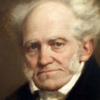
Half myself mocks the other half.
Joseph Joubert (1754-1824) French moralist, philosopher, essayist, poet
Pensées [Thoughts], 1813 entry [tr. Auster (1983)]
(Source)
I could not find an analog in other translations of the Pensées.