

When I find any officer that answers me with firmness, intelligence, and clearness, I set him down in my list for making of his service on proper occasions.
Frederick II (1712–1786) King of Prussia (Frederick the Great, Friedrich der Große)
“Morning the Fourth: On Private Politics” The Confessions of Frederick the Great [ed. D. Sladen (1915)]
Full text.
Quotations by:
Frederick II (the Great)
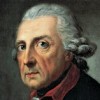
A brave colonel makes a brave battalion.
Frederick II (1712–1786) King of Prussia (Frederick the Great, Friedrich der Große)
(Attributed)Quoted in R.R. Palmer, "Frederick the Great, Guibert, Bulow: From Dynastic to National War," in E. Earle (ed.), Makers of Modern Strategy (1943)
My people and I have come to an agreement which satisfies both. They are to say what they please, and I am to do what I please.
Frederick II (1712–1786) King of Prussia (Frederick the Great, Friedrich der Große)
(Attributed)
Prudence is very inclined to preserve what one possesses, but courage alone knows how to acquire.
Frederick II (1712–1786) King of Prussia (Frederick the Great, Friedrich der Große)
(Attributed)
(Source)
In Heinrich von Treitschke, The Life of Frederick the Great [tr. Sladen (1915)]
The more I see of people, the more I love my dog.
[Je mehr ich von den Menschen sehe, um so lieber habe ich meinen Hund.]
Frederick II (1712–1786) King of Prussia (Frederick the Great, Friedrich der Große)
(Attributed)
This quote is widely attributed to Frederick, but I cannot find a primary or contemporary citation. The earliest attribution to Frederick I find is in a comment attributed to Otto von Bismarck in French historian Constantin de Grünwald, Bismarck (1949):«Je suis comme Frederic II», dit-il à Radowitz: «Plus j'apprends à connaitre les hommes, plus je me mets à aimer les chiens.»
["I am like Frederick II," he told Radowitz: "The more I get to know men, the more I start to love dogs."]
[Google Translate]
As the earliest (unattributed) versions of this quote predate Bismark's adulthood, it is unlikely the formulation is originally his.
The quote is often misattributed to Charles de Gaulle, based on an article (1967-12-08), "Some General Comments, Entre Nous," Time Magazine, on political writer Jean-Raymond Tournoux's best-seller, La Tragédie du Général (1967). The article mistakes a use of the French phrase (translated as "The better I get to know men, the more I find myself loving dogs") as an attribution to De Gaulle, which, in context, it is a reference to the Bismarck quote above (and is in fact footnoted to de Grünwald's Bismarck):Dans le petit parc, la ronde familière continue. Au passage, le chien «Vincam», berger allemand au pédigrée rare, tire sa longue, longue chaine: «Une chose me torture», dit de Gaulle... «Cet animal enchainé ... C’est impossible ... Je ne peux plus le voir ... Donnez-le à l’amiral Ortoli.»
Sur ce terrain, il se sent de plain-pied avec Frederic II, avec Bismarck: «Plus j'apprends à connaitre les hommes, plus je me mets à aimer les chiens.»
[In the small park, the familiar round continues. As we pass, the dog "Vincam," a German shepherd with a rare pedigree, pulls on his long, long chain: "One thing is torturing me," says de Gaulle ... "This chained animal ... It's impossible ... I can't stand it anymore ... Give it to Admiral Ortoli."
On this ground, he feels on the same level as Frederick II, from Bismarck: "The better I get to know men, the more I find myself loving dogs."]
[Google Translate]
The same quote is also attribute to Blaise Pascal ("Plus je vois les hommes, plus j'aime mon chien"). I cannot find a primary source of his saying it, but it is attributed to him in an inscription in the Cimetière des Chiennes in Asnières on the Ile de la Recetre on the Seinne (1, 2, 3).
Similarly, it is often attributed to Madame Germaine de Staël ("The more I know men, the more I love dogs"). Again, I can find only attributions, not a primary souce (1, 2, 3) .
For additional discussion about this quotation and its origins, see:
Dogs, would you live forever?
[Kerls, wollt ihr ewig leben?]
Frederick II (1712–1786) King of Prussia (Frederick the Great, Friedrich der Große)
(Attributed) (18 Jun 1757)
Rallying call to retreating Prussian troops at the Battle of Kolin.Variants:
- Rogues, would you live forever? [Ihr Racke, wollen sie ewig leben?]
- Rascals, do you want to live forever? [Kerls, wollt ihr denn ewig leben?]
The phrase has been attributed to various commanders since.
The world is like a game in which there are both honest and dishonest players, so that a prince who plays in this game must learn how to cheat, not in order to do it, but in order not to be the dupe of others.
Frederick II (1712–1786) King of Prussia (Frederick the Great, Friedrich der Große)
Anti-Machiavel, ch. 18 (1740) [tr. Sonnino (1981)]
Don’t forget your great guns, which are the most respectable arguments of the rights of kings.
Frederick II (1712–1786) King of Prussia (Frederick the Great, Friedrich der Große)
Letter to his brother, Prince Henry (21 Apr 1759)
All Religions are equal and good, if only the people that practice them are honest people; and if Turks and heathens came and wanted to live here in this country, we would build them mosques and churches.
[Alle Religionen sind gleich und gut, wenn nur die Leute, die sie praktizeren, ehrliche Leute sind; und wenn Türken und Heiden kämen und wollten das Lande pöpulieren, so wollen wir ihnen Moscheen und Kirchen bauen.]
Frederick II (1712–1786) King of Prussia (Frederick the Great, Friedrich der Große)
Note (1740)
On the question of whether a Catholic should be allowed to be a citizen of a Prussian city.
By push of bayonets, no firing till you see the whites of their eyes.
Frederick II (1712–1786) King of Prussia (Frederick the Great, Friedrich der Große)
Order (6 May 1757)
Before the Battle of Prague.
It is disgusting to notice the increase in the quantity of coffee used by my subjects. … If possible, this must be prevented. My people must drink beer.
Frederick II (1712–1786) King of Prussia (Frederick the Great, Friedrich der Große)
Proclamation (13 Sep 1777)
Religions must all be tolerated and the state has to keep an eye that none of them shall derogate the other, because here everyone must find his salvation in his own way.
[Die Religionen müssen alle toleriert werden und der Fiscal muß nur das Auge darauf haben, dass Keine der Andern abruch tue, denn hier muß ein jeder nach seiner Fasson selig werden.]
Frederick II (1712–1786) King of Prussia (Frederick the Great, Friedrich der Große)
Reply to his secretaries
On whether Catholic schools should be forbidden in Prussia, which was officially Lutheran.Alt trans.: "All religions must be tolerated ...; for in this country every man must get to heaven his own way."