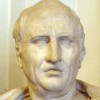
But there is in fact nobody who is so hostile to the Muses that he would not readily allow his own deeds to be immortalized in verse.
[Neque enim quisquam est tam aversus a Musis, qui non mandari versibus aeternum suorum laborum facile praeconium patiatur. ]
Marcus Tullius Cicero (106–43 BC) Roman orator, statesman, philosopher
Pro Archia Poeta [For Archia the Poet], ch. 9 / sec. 20 (62 BC) [tr. Guinach (1962)]
(Source)
(Source (Latin)). Other translations:For there was no one so disinclined to the Muses as not willingly to endure that the praise of his labours should be made immortal by means of verse.
[tr. Yonge (1856)]For there is nobody so averse to the Muses as not to suffer the eternal cry of their labour to be readily committed to verse.
[tr. M'Donogh Mahony (1886)]For indeed is there anyone so averse to the Muses who would not readily suffer (that) the eternal panegyric of his labors [should] be committed to verse.
[tr. Dewey (1916)]For indeed there is no man to whom the Muses are so distasteful that he will not be glad to entrust to poetry the eternal emblazonment of his achievements.
[tr. Watts (Loeb) (1923)]Indeed, there never was any one such a stranger to poetic feeling as not readily to allow the immortal advertisement of his deeds to be committed to verse.
[tr. Allcroft/Plaistowe (c. 1925)]There is no one so averse to the Muses that he would not readily submit to having an eternal monument of his own labors made in verse.
[tr. @sentantiq [Erik] (2016)]