Let us spurn the rewards of today and look to future glory; let us deem best what is most honorable; let us hope for what we want, but bear what befalls us; finally, let us consider that even the bodies of brave men and great citizens are mortal; but that activity of the mind and the glory of virtue are for ever.
[Praesentis fructus neglegamus, posteritatis gloriae serviamus; id esse optimum putemus quod erit rectissimum; speremus quae volumus, sed quod acciderit feramus; cogitemus denique corpus virorum fortium magnorum hominum esse mortale, animi vero motus et virtutis gloriam sempiternam.]
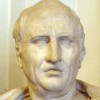
Marcus Tullius Cicero (106–43 BC) Roman orator, statesman, philosopher
Pro Sestio [For Publius Sestius], ch. 68 / sec. 143 (56-02 BC) [tr. @sentantiq (2011)]
(Source)
(Source (Latin)). Other translations:Let us disregard present gains, let us care only for the reputation we shall have with posterity; let us hope for that which we desire to have, but let us bear what shall have befallen us; lastly, let us reflect that the bodies of brave heroes and great men are mortal, but the emotions of the soul and the glory of their merits eternal.
[tr. Hickie (1888)]Let us disregard present rewards, and fix our eyes on the glory which we shall receive from posterity. Let us think that the most desirable conduct, which is the most upright; let us hope for whatever we choose, but bear whatever befalls us, let us consider, lastly, that the bodies of brave men and great citizens are mortal, but that the impulses of the mind and the glory of virtue are everlasting.
[tr. Yonge (1891)]Neglecting present gain, let us be in bondage to posterity; let us count best what is right; hoping to achieve our ends, let us nevertheless bear what may befall us; let us remember that the body of the great and brave is mortal, but the fame of their spirit and their virtues is eternal.
[tr. Rogers/Harley (1928)]Let us disregard present advantages, let us work for glory in years to come; let us regard that as best which is most truly good ; let us hope for our wishes, but let us bear what comes. Lastly, let us remember, that if the body of a brave and great man is mortal, yet the impulses of the mind and the glory of virtue are eternal.
[tr. Gardner (Loeb) (1958)]