An actor can remember his briefest notice well into senescence and long after he has forgotten his phone number and where he lives.
Jean Kerr (1922–2003) American author and playwright [b. Bridget Jean Collins]
Essay (1957), “One Half of Two on the Aisle,” Please Don’t Eat the Daisies
(Source)
No earlier magazine publication found.
Quotations about:
actor
Note not all quotations have been tagged, so Search may find additional quotes on this topic.

Wherein, then, is your grievance? You are not ejected from the city [life] by any unjust judge or tyrant, but by the selfsame Nature which brought you into it; just as when an actor is dismissed by the manager who engaged him.
“But I have played no more than three of the five acts.” Just so; in your drama of life, three acts are all the play. Its point of completeness is determined by him who formerly sanctioned your creation, and today sanctions your dissolution. Neither of those decisions lay within yourself.
Pass on your way, then, with a smiling face, under the smile of him who bids you go.[τί οὖν δεινόν, εἰ τῆς πόλεως ἀποπέμπει σε οὐ τύραννος οὐδὲ δικαστὴς ἄδικος, ἀλλ̓ ἡ φύσις ἡ εἰσαγαγοῦσα, οἷον εἰ κωμῳδὸν ἀπολύοι τῆς σκηνῆς ὁ παραλαβὼν στρατηγός;—ἀλλ̓ οὐκ εἶπον τὰ πέντε μέρη, ἀλλὰ τὰ τρία.—καλῶς εἶπας: ἐν μέντοι τῷ βίῳ τὰ τρία ὅλον τὸ δρᾶμά ἐστι. τὸ γὰρ τέλειον ἐκεῖνος ὁρίζει ὁ τότε μὲν τῆς συγκρίσεως. νῦν δὲ τῆς διαλύσεως αἴτιος: σὺ δὲ ἀναίτιος ἀμφοτέρων. ἄπιθι οὖν ἵλεως: καὶ γὰρ ὁ ἀπολύων ἵλεως.]
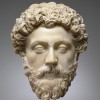
Marcus Aurelius (AD 121–180) Roman emperor (161–180), Stoic philosopher
Meditations [To Himself; Τὰ εἰς ἑαυτόν], Book 12, ch. 36 (12.36) (AD 161-180) [tr. Staniforth (1964)]
(Source)
Concluding words of the Meditations. See Cicero (44 BC).
(Source (Greek)). Other translations:Why then should it be grievous unto thee, if (not a tyrant, nor an unjust judge, but) the same nature that brought thee in, doth now send thee out of the world? As if the praetor should fairly dismiss him from the stage, whom he had taken in to act a while.
Oh, but the play is not yet at an end, there are but three acts yet acted of it? Thou hast well said: for in matter of life, three acts is the whole play. Now to set a certain time to every man's acting, belongs unto him only, who as first he was of thy composition, so is now the cause of thy dissolution. As for thyself; thou hast to do with neither.
Go thy ways then well pleased and contented: for so is He that dismisseth thee.
[tr. Casaubon (1634), 12.27]You can't say you are sent off by a Tyrannical, and Unrighteous Sentence; No, you quit the Stage as fairly as a Player does that has his Discharge from the Master of the Revels:
But I have only gone through three Acts, and not held out to the End of the Fifth. You say well; but in Life three Acts make the Play entire. He that appoints the Entertainment is the best Judge of the length on't; and as he ordered the opening of the first Scene, so now he gives the sign for shutting up the last: You are neither accountable for one or to'ther;
Therefore retire in good Humour, for He by whom you are dismiss'd means you no harm.
[tr. Collier (1701)]What is there terrible in this, that you are sent out, not by a tyrant, or an unjust judge, but by that nature, which at first introduced you? As if the praetor who employed the player, should dismiss him again from the scene.
But, say you, I have not finished the five acts, but only three. You say true; but, in life, three acts make a complete play. For, ’tis he who appoints the end to it, who, as he was the cause of the composition, is now the cause of the dissolution. Neither of them are chargeable on you:
Depart, therefore, contented, and in good humour; for, he is propitious and kind, who dismisses you.
[tr. Hutcheson/Moor (1742)]Is it any hardship that you are sent out of the world, not by a tyrant, or an unjust judge, but by that Being which first introduced you? As the magistrate who engages an actor for the stage, dismisses him again at his pleasure.
"But I have performed only three acts of the play, and not the whole five."
Very true; but in life, even three acts may complete the whole drama. He determines the duration of the piece, who first cause it to be composed, and now orders its conclusion. You are not accountable for either.
Depart, therefore, with a good grace; for he who dismisses you is a gracious and benevolent Being.
[tr. Graves (1792)]Where is the hardship then, if no tyrant nor yet an unjust judge sends thee away from the state, but nature, who brought thee into it? the same as if a praetor who has employed an actor dismisses him from the stage.
-- "But I have not finished the five acts, but only three of them." -- Thou sayest well, but in life the three acts are the whole drama; for what shall be a complete drama is determined by him who was once the cause of its composition, and now of its dissolution: but thou art the cause of neither.
Depart then satisfied, for he also who releases thee is satisfied.
[tr. Long (1862)]Where is the hardship then if nature, that planted you here, orders your removal? You cannot say you are sent off by a tyrant or unjust judge. No; you quit the stage as fairly as a player does that has his discharge from the master of the revels.
But I have only gone through three acts, and not held out to the end of the fifth. You say well; but in life three acts make the play entire. He that ordered the opening of the first scene now gives the sign for shutting up the last; you are neither accountable for one nor the other;
Therefore retire well satisfied, for He, by whom you are dismissed, is satisfied too.
[tr. Collier/Zimmern (1887)]Why then protest? No tyrant gives you your dismissal, no unjust judge, but nature who gave you the admission. It is like the praetor discharging some player whom he has engaged.
-- "But the five acts are not complete; I have played but three." -- Good: life's drama, look you, is complete in three. The completeness is in his hands, who first authorized your composition, and now your dissolution; neither was your work.
Serenely take your leave; serene as he who gives you discharge.
[tr. Rendall (1898)]Where then is the calamity, if you are sent out of the city, by no tyrant or unjust judge, but Nature herself who at first introduced you, just as the praetor who engaged the actor again dismisses him from the stage?
“But,” say you, “I have not spoken my five acts, but only three.” True, but in life three acts make up the play. For he sets the end who was responsible for its composition at the first, and for its present dissolution. You are responsible for neither.
Depart then graciously; for he who dismisses you is gracious.
[tr. Hutcheson/Chrystal (1902)]What hardship then is there in being banished from the city, not by a tyrant or an unjust judge but by Nature who settled thee in it? So might a praetor who commissions a comic actor, dismiss him from the stage.
But I have not played my five acts, but only three. Very possibly, but in life three acts count as a full play. For he, that is responsible for thy composition originally and thy dissolution now, decides when it is complete. But thou art responsible for neither.
Depart then with a good grace, for he that dismisses thee is gracious.
[tr. Haines (Loeb) (1916)]Why is it hard, then, if Nature who brought you in, and no despot nor unjust judge, sends you out of the City -- as though the master of the show, who engaged an actor, were to dismiss him from the stage?
"But I have not spoken my five acts, only three." "What you say is true, but in life three acts are the whole play." For He determines the perfect whole, the cause yesterday of your composition, to-day of your dissolution; you are the cause of neither.
Leave the stage, therefore, and be reconciled, for He also who lets his servant depart is reconciled.
[tr. Farquharson (1944)]Where is the hardship, then, if it is no tyrant or unjust judge who sends you out of the city, but nature who brought you into it? It is just as if the director of a show, after first engaging an actor, were dismissing him from the stage.
"But I haven't played all five acts, only three!" Very well; but in life three can make up a full play. For the one who determines when it is complete is he who once arranged for your composition and now arranges for your dissolution, while you for your part are responsible for neither.
So make your departure with good grace, as he who is releasing you shows a good grace.
[tr. Hard (1997 ed.; 2011 ed.)]And to be sent away from it, not by a tyrant or a dishonest judge, but by Nature, who first invited you in -- why is that so terrible?
Like the impresario ringing down the curtain on an actor:
“But I’ve only gotten through three acts ...!”
Yes. This will be a drama in three acts, the length fixed by the power that directed your creation, and now directs your dissolution. Neither was yours to determine.
So make your exit with grace -- the same grace shown to you.
[tr. Hays (2003)]So what is there to fear in your dismissal from the city? This is no tyrant or corrupt judge who dismisses you, but the very same nature that brought you in. It is like the officer who engaged a comic actor dismissing him from the stage.
"But I have not played my five acts, only three." "True, but in life three acts can be the whole play." Completion is determined by that being who caused first your composition and now your dissolution. You have no part in either causation.
Go then in peace: the god who lets you go is at peace with you.
[tr. Hammond (2006)]
The world’s a theatre, the earth a stage,
Which God and Nature do with actors fill.
Kings have their entrance in due equipage,
And some there parts play well, and others ill.The best no better are (in this theater),
Where every humor’s fitted in his kinde;
This a true subiect acts, and that a traytor,
The first applauded, and the last confin’d;This plays an honest man, and that a knave,
A gentle person this, and he a clowne,
One man is ragged, and another brave:
All men have parts, and each man acts his own.

My notion about any artist is that we honor him best by reading him, by playing his music, by seeing his plays or by looking at his pictures. We don’t need to fall all over ourselves with adjectives and epithets. Let’s play him more.
Jacques Barzun (1907–2012) French-American historian, educator, polymath
Interview (1986-12-04) by John C. Tibbetts, “Jacques Barzun on Robert Schumann”
(Source)
BENJY: The kiss. There are all sorts of kisses, lad, from the sticky confection to the kiss of death. Of them all, the kiss of an actress is the most unnerving. How can we tell if she means it or if she’s just practicing?
Ruth Gordon (1896–1985) American actress, screenwriter, playwright
The Leading Lady, Act 2 (1948)
(Source)

In order to be well received, an actor need not be on stage all the way through the play, as long as he performs satisfactorily in the scenes in which his character appears. In the same way, a wise man need not feel that he must loiter to the very end of the very last act. To demonstrate virtue and excellent character, a short life is long enough.
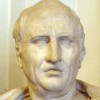
[Neque enim histrioni, ut placeat, peragenda fabula est, modo in quocunque fuerit actu probetur; neque sapientibus usque ad “Plaudite” veniendum est. Breve enim tempus aetatis satis longum est ad bene honesteque vivendum.]Marcus Tullius Cicero (106–43 BC) Roman orator, statesman, philosopher
De Senectute [Cato Maior; On Old Age], ch. 19 / sec. 70 (19.70) (44 BC) [tr. Cobbold (2012)]
(Source)
Many older translators refer to the plaudite, which was was the last word of many Latin plays, particularly those of Terence and Plautus. It was basically a formal cue for the audience to applaud. Waiting for the plaudite is the same as waiting for the end of the play, the fall of the curtain.
See Shakespeare (1599), Heywood (1612), Billings (1877), O'Casey (c. 1940), Brooks (1970), Watterson (1993).
(Source (Latin)). Other translations:I wolde that ye knowe that as the poete makith not onely by versys of a fable in his comedye callid an enterlude to the intente bycause that it please to hym that pleyeth it in the game. But the poete makith onely his comedye and enterlude to the ende bycause that in every pagent he be preysed and commended of every man aftir his playe. And the wise man also ought not to desire to lyve tylle that he saye "That is to witt I will no lenger of my life." For a short and a litle tyme of age is long for to lyve wele and honestly.
[tr. Worcester/Worcester/Scrope (1481)]For he that is a stage-player needeth not of necessity to be an actor in the interlude or comedy until the last end thereof (to delight the beholders), but in what act of the same soever he playeth or chanceth to be, he must so expressly handle and play his part, that he may win praise and commendation; neither should a wise man live till the plaudite be stricken up. For a short space and time of life is long enough to live well and honestly, and in whatsoever age we be in, it is sufficient to have lived therein godly and virtuously.
[tr. Newton (1569)]For a good actor is not applauded in the midst of a Scene, so a wise mans praise comes not till the end. The time of our age is short indeed; but long enough to live well and honestly.
[tr. Austin (1648), ch. 21]When a good Actor doth his part present,
In ev'ry Act he our attention draws,
That at the last he may find just applause,
So (though but short) yet we must learn the art
Of virtue, on this Stage to act our part;
True wisdome must our actions so direct,
Not only the last Plaudite to expect.
[tr. Denham (1669)]A short Space of time is long enough, if constantly employed in the Pursuit of Honour and Virtue.
[tr. Hemming (1716)]And as the Player may be applauded in every Scene, tho' to give true Satisfaction he must finish his Play; so with the wise Man, he lives approv'd by all till his last Plaudit. For the time of Man's life is short, yet it is long enough to live well.
[tr. J. D. (1744)]No Man expects of any one Actor on the Theatre, that he should perform all the Parts of the Piece himself: One Role only is committed to him, and whatever that be, if he acts it well, he is applauded. In the same Manner, it is not the Part of a wise Man, to desire to be busy in these Scenes to the last Plaudit. A short Term may be long enough to live it well and honourably.
[tr. Logan (1744)]It is in life as on the stage, where it is not necessary in order to be approved, that the actor's part should continue to the conclusion of the drama; it is sufficient, in whatever scene he shall make his final exit, that he supports the character assigned him with deserved applause. The truth is, a small portion of time is abundantly adequate to the purposes of honour and virtue.
[tr. Melmoth (1773)]For neither must a play be gone all through by a player, that he may please; it is only needful that he be approved in whatsoever act he shall have been; nor should a wise man live quite to Plaudite. For a short space of time is long enough to live virtuously and honourably.
[Cornish Bros. ed. (1847)]For neither need the drama be performed entire by the actor, in order to give satisfaction, provided he be approved in whatever act he may be: nor need the wise man live till the plaudite. For the short period of life is long enough for living well and honourably.
[tr. Edmonds (1874)]In order to give pleasure to the audience, the actor need not finish the play; he may win approval in whatever act he takes part in; nor need the wise man remain on the stage till the closing plaudit. A brief time is long enough to live well and honorably.
[tr. Peabody (1884)]An actor, in order to earn approval, is not bound to perform the play from beginning to end; let him only satisfy the audience in whatever act he appears. Nor need a wise man go on to the concluding "plaudite." For a short term of life is long enough for living well and honourably.
[tr. Shuckburgh (1895)]Our span of life is brief, but it is long enough for us to live well and honestly.
[ed. Harbottle (1906)]Why ev'n the actor to secure applause
Need not play to the end: if but he do
His best, he will be cheered: if wise, he'll stop
Before he reach the final "Plaudite."
A little time's enough, in which to live
A good and honest life.
[tr. Allison (1916)]The actor, for instance, to please his audience need not appear in every act to the very end; it is enough if he is approved in the parts in which he plays; and so it is not necessary for the wise man to stay on this mortal stage to the last fall of the curtain. For even if the allotted space of life be short, it is long enough in which to live honourably and well.
[tr. Falconer (1923)]An actor, in order to find favor, does not have to take part all the way through a play; he need only prove himself in any act in which he may appear; similarly the wise and good man does not have to keep going until the curtain is rung down. A brief span of years is quite long enough for living a good and honorable life.
[tr. Copley (1967)]An actor does not have to appear in the last part of the movie: he can earn good reviews from what he does in any part of it. And neither must life be drawn out until some venerable time for the final curtain. A short time of life is enough to live well and honorably.
[tr. Gerberding (2014)]During a drama an actor has no need
To be cheered but in the parts he plays
while on the stage of mortal life, indeed,
A man of discernment never stays
Until the last applause. A short life is always
Long enough to be lived honestly and well.
[tr. Bozzi (2015)]An actor does not need to remain on stage throughout the play. It is enough that he appears in the appropriate acts. Likewise, a wise man need not stay on the stage of this world until the audience applauds at the end. The time allotted to our lives may be short, but it is long enough to live honestly and decently.
[tr. Freeman (2016)]
I have observed that in comedies the best actor plays the droll, while some scrub rogue is made the fine gentleman or hero. Thus it is in the farce of life. Wise men spend their time in mirth, ’tis only fools who are serious.
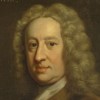
Henry St John, 1st Viscount Bolingbroke (1678–1751) English politician, government official, political philosopher [Lord Bolingbroke]
(Attributed)
Quoted in Gleason's Pictorial (Boston) (3 Dec 1853).
Every writer is a frustrated actor who recites his lines in the hidden auditorium of his skull.
Rod Serling (1924–1975) American screenwriter, playwright, television producer, narrator
Vogue (1 Apr 1957)
JAQUES:All the world’s a stage,
And all the men and women merely players.
They have their exits and their entrances,
And one man in his time plays many parts ….