

FABIAN If this were played upon a stage now, I could
condemn it as an improbable fiction.William Shakespeare (1564–1616) English dramatist and poet
Twelfth Night, Act 3, sc. 4, l. 136ff (3.4.136-137) (1601)
(Source)
Quotations about:
stage
Note not all quotations have been tagged, so Search may find additional quotes on this topic.

Life aint mutch more than a farce enny how, but it iz quite necessary that the play should go on, and the farce be well ackted.
[Life ain’t much more than a farce anyhow, but it is quite necessary that the play should go on, and the farce be well-acted.]

I have two trifling ambitions in the theater: to make a lot of people laugh and to make a lot of money.
Jean Kerr (1922–2003) American author and playwright [b. Bridget Jean Collins]
Interview (1955-07), Theatre Arts magazine
(Source)
While in some quarters it is felt that the critic is just a necessary evil, most serious-minded, decent, talented theater people agree that the critic is an unnecessary evil.
Jean Kerr (1922–2003) American author and playwright [b. Bridget Jean Collins]
Essay (1957), “One Half of Two on the Aisle,” Please Don’t Eat the Daisies
(Source)
No earlier magazine publication found.
Smiles are contagious; so are tears; to see
Another sobbing, brings a sob from me.
No, no, good Peleus; set the example, pray,
And weep yourself; then weep perhaps I may.[Ut ridentibus adrident, ita flentibus adflent
humani voltus. Si vis me flere, dolendum est
primum ipsi tibi: tum tua me infortunia laedent,
Telephe vel Peleu.]Horace (65–8 BC) Roman poet, satirist, soldier, politician [Quintus Horatius Flaccus]
Epistles [Epistularum, Letters], Book 2, ep. 3 “Art of Poetry [Ars Poetica; To the Pisos],” l. 101ff (2.3.101-103) (19 BC) [tr. Conington (1874)]
(Source)
Telephus and Peleus were mythic figures in well-known Greek tragedies. The advice is offered up to those who write of or act/declaim the roles of such characters.
(Source (Latin)). Other translations:The cheares of men as these will smerke on those that use to smyle:
So are theye wrinchd, when theye do weepe and chaungd within a whyle.
If thou wouldste have me weepe for the firste muste thou pensyfe be.
Thy harmes shall hitte me, when I spy that they have harmed thee.
[tr. Drant (1567)]To worke the hearers minds, still to the plight.
Mens count'nances, with such as laugh, are prone
To laughter: so they grieve with those that mone:
If thou wouldst have mee weep, bee thou first dround
Thy selfe in tears, then me thy harms will wound,
[tr. Jonson (1640); l. 145ff]We Weep and Laugh as we see others doe,
He only makes me sad who shews the way,
And first is sad himself, then (Telephus)
I feel the weight of your Calamities,
And fancy all your miseries my Own.
[tr. Roscommon (1680)]With them, who laugh, our social joy appears;
With them, who mourn, we sympathise in tears;
If you would have me weep, begin the strain,
Then I shall feel your sorrows, feel your pain.
[tr. Francis (1747)]With those that smile, our face in smiles appears;
With those that weep, our cheeks are bath'd in tears:
To make me grieve, be first your anguish shown,
And I shall feel your sorrows like my own.
[tr. Coleman (1783)]As the human face answers a smile with a smile, so does it wait upon tears; if you would have me weep, you must first of all feel grief yourself; then and not till then will your misfortunes, Telephus or Peleus, touch me.
[tr. Blakeney (1828)]From face to face as smiles contagious creep,
so weeps the according eye with those that weep.
Who claims my tears, must first display his own;
Then shall I catch his pangs and share his moan.
[tr. Howes (1845)]As the human countenance smiles on those that smile, so does it sympathize with those that weep. If you would have me weep you must first express the passion of grief yourself; then, Telephus or Peleus, your misfortunes hurt me.
[tr. Smart/Buckley (1853)]A face all smiles makes other faces smile,
A face all tears will tears from others wile.
Unless, then, in your voice a sob I hear,
You will not wring from me a single tear.
[tr. Martin (1881)]As human countenances laugh with those who laugh so they weep with those who weep. If you desire me to weep, O Telephus or Peleus, yourself must first lead the way; then you thrill through me.
[tr. Elgood (1893)]As men's faces smile on those who smile, so they respond to those who weep. If you would have me weep, you must first feel grief yourself: then, O Telephus or Peleus, will your misfortunes hurt me.
[tr. Fairclough (Loeb) (1926)]A man’s face is wreathed in smiles when he sees someone smile;
It twists when he sees someone cry; if you expect me
To burst into tears, you have to feel sorrow yourself.
Then your woes will fasten on me, O Telephus, Peleus.
[tr. Palmer Bovie (1959)]Just as laughter inspires laughter, tears bring tears
to human faces; if you want my tears, you first must
weep yourself. Then your agonies will hurt me too.
[tr. Fuchs (1977)]We smile when we see smiling, weep at tears:
Ask me to sob
when you can sob
yourself --
Then (ah) tragic heroes are tragic
(To me).
[tr. Raffel (1983 ed.)]Men smile if the language smiles;
They weep if the language truly weeps. If you
Desire to hear me weep, you must truly grieve,
O Peleus or Telephus, and I
Grieve as if I suffered your cause of grief.
[tr. Ferry (2001)]When a person smiles, people's faces smile in return;
when he weeps, they show concern. Before you can move me to tears,
you must grieve yourself. Only then will your woes distress me.
[tr. Rudd (2005 ed.)]As the human face smiles at a smile, so it echoes
Those who weep: if you want to move me to tears
You must first grieve yourself: then Peleus or Telephus
Your troubles might pain me.
[tr. Kline (2015)]
Wherein, then, is your grievance? You are not ejected from the city [life] by any unjust judge or tyrant, but by the selfsame Nature which brought you into it; just as when an actor is dismissed by the manager who engaged him.
“But I have played no more than three of the five acts.” Just so; in your drama of life, three acts are all the play. Its point of completeness is determined by him who formerly sanctioned your creation, and today sanctions your dissolution. Neither of those decisions lay within yourself.
Pass on your way, then, with a smiling face, under the smile of him who bids you go.[τί οὖν δεινόν, εἰ τῆς πόλεως ἀποπέμπει σε οὐ τύραννος οὐδὲ δικαστὴς ἄδικος, ἀλλ̓ ἡ φύσις ἡ εἰσαγαγοῦσα, οἷον εἰ κωμῳδὸν ἀπολύοι τῆς σκηνῆς ὁ παραλαβὼν στρατηγός;—ἀλλ̓ οὐκ εἶπον τὰ πέντε μέρη, ἀλλὰ τὰ τρία.—καλῶς εἶπας: ἐν μέντοι τῷ βίῳ τὰ τρία ὅλον τὸ δρᾶμά ἐστι. τὸ γὰρ τέλειον ἐκεῖνος ὁρίζει ὁ τότε μὲν τῆς συγκρίσεως. νῦν δὲ τῆς διαλύσεως αἴτιος: σὺ δὲ ἀναίτιος ἀμφοτέρων. ἄπιθι οὖν ἵλεως: καὶ γὰρ ὁ ἀπολύων ἵλεως.]
Marcus Aurelius (AD 121–180) Roman emperor (161–180), Stoic philosopher
Meditations [To Himself; Τὰ εἰς ἑαυτόν], Book 12, ch. 36 (12.36) (AD 161-180) [tr. Staniforth (1964)]
(Source)
Concluding words of the Meditations. See Cicero (44 BC).
(Source (Greek)). Other translations:Why then should it be grievous unto thee, if (not a tyrant, nor an unjust judge, but) the same nature that brought thee in, doth now send thee out of the world? As if the praetor should fairly dismiss him from the stage, whom he had taken in to act a while.
Oh, but the play is not yet at an end, there are but three acts yet acted of it? Thou hast well said: for in matter of life, three acts is the whole play. Now to set a certain time to every man's acting, belongs unto him only, who as first he was of thy composition, so is now the cause of thy dissolution. As for thyself; thou hast to do with neither.
Go thy ways then well pleased and contented: for so is He that dismisseth thee.
[tr. Casaubon (1634), 12.27]You can't say you are sent off by a Tyrannical, and Unrighteous Sentence; No, you quit the Stage as fairly as a Player does that has his Discharge from the Master of the Revels:
But I have only gone through three Acts, and not held out to the End of the Fifth. You say well; but in Life three Acts make the Play entire. He that appoints the Entertainment is the best Judge of the length on't; and as he ordered the opening of the first Scene, so now he gives the sign for shutting up the last: You are neither accountable for one or to'ther;
Therefore retire in good Humour, for He by whom you are dismiss'd means you no harm.
[tr. Collier (1701)]What is there terrible in this, that you are sent out, not by a tyrant, or an unjust judge, but by that nature, which at first introduced you? As if the praetor who employed the player, should dismiss him again from the scene.
But, say you, I have not finished the five acts, but only three. You say true; but, in life, three acts make a complete play. For, ’tis he who appoints the end to it, who, as he was the cause of the composition, is now the cause of the dissolution. Neither of them are chargeable on you:
Depart, therefore, contented, and in good humour; for, he is propitious and kind, who dismisses you.
[tr. Hutcheson/Moor (1742)]Is it any hardship that you are sent out of the world, not by a tyrant, or an unjust judge, but by that Being which first introduced you? As the magistrate who engages an actor for the stage, dismisses him again at his pleasure.
"But I have performed only three acts of the play, and not the whole five."
Very true; but in life, even three acts may complete the whole drama. He determines the duration of the piece, who first cause it to be composed, and now orders its conclusion. You are not accountable for either.
Depart, therefore, with a good grace; for he who dismisses you is a gracious and benevolent Being.
[tr. Graves (1792)]Where is the hardship then, if no tyrant nor yet an unjust judge sends thee away from the state, but nature, who brought thee into it? the same as if a praetor who has employed an actor dismisses him from the stage.
-- "But I have not finished the five acts, but only three of them." -- Thou sayest well, but in life the three acts are the whole drama; for what shall be a complete drama is determined by him who was once the cause of its composition, and now of its dissolution: but thou art the cause of neither.
Depart then satisfied, for he also who releases thee is satisfied.
[tr. Long (1862)]Where is the hardship then if nature, that planted you here, orders your removal? You cannot say you are sent off by a tyrant or unjust judge. No; you quit the stage as fairly as a player does that has his discharge from the master of the revels.
But I have only gone through three acts, and not held out to the end of the fifth. You say well; but in life three acts make the play entire. He that ordered the opening of the first scene now gives the sign for shutting up the last; you are neither accountable for one nor the other;
Therefore retire well satisfied, for He, by whom you are dismissed, is satisfied too.
[tr. Collier/Zimmern (1887)]Why then protest? No tyrant gives you your dismissal, no unjust judge, but nature who gave you the admission. It is like the praetor discharging some player whom he has engaged.
-- "But the five acts are not complete; I have played but three." -- Good: life's drama, look you, is complete in three. The completeness is in his hands, who first authorized your composition, and now your dissolution; neither was your work.
Serenely take your leave; serene as he who gives you discharge.
[tr. Rendall (1898)]Where then is the calamity, if you are sent out of the city, by no tyrant or unjust judge, but Nature herself who at first introduced you, just as the praetor who engaged the actor again dismisses him from the stage?
“But,” say you, “I have not spoken my five acts, but only three.” True, but in life three acts make up the play. For he sets the end who was responsible for its composition at the first, and for its present dissolution. You are responsible for neither.
Depart then graciously; for he who dismisses you is gracious.
[tr. Hutcheson/Chrystal (1902)]What hardship then is there in being banished from the city, not by a tyrant or an unjust judge but by Nature who settled thee in it? So might a praetor who commissions a comic actor, dismiss him from the stage.
But I have not played my five acts, but only three. Very possibly, but in life three acts count as a full play. For he, that is responsible for thy composition originally and thy dissolution now, decides when it is complete. But thou art responsible for neither.
Depart then with a good grace, for he that dismisses thee is gracious.
[tr. Haines (Loeb) (1916)]Why is it hard, then, if Nature who brought you in, and no despot nor unjust judge, sends you out of the City -- as though the master of the show, who engaged an actor, were to dismiss him from the stage?
"But I have not spoken my five acts, only three." "What you say is true, but in life three acts are the whole play." For He determines the perfect whole, the cause yesterday of your composition, to-day of your dissolution; you are the cause of neither.
Leave the stage, therefore, and be reconciled, for He also who lets his servant depart is reconciled.
[tr. Farquharson (1944)]Where is the hardship, then, if it is no tyrant or unjust judge who sends you out of the city, but nature who brought you into it? It is just as if the director of a show, after first engaging an actor, were dismissing him from the stage.
"But I haven't played all five acts, only three!" Very well; but in life three can make up a full play. For the one who determines when it is complete is he who once arranged for your composition and now arranges for your dissolution, while you for your part are responsible for neither.
So make your departure with good grace, as he who is releasing you shows a good grace.
[tr. Hard (1997 ed.; 2011 ed.)]And to be sent away from it, not by a tyrant or a dishonest judge, but by Nature, who first invited you in -- why is that so terrible?
Like the impresario ringing down the curtain on an actor:
“But I’ve only gotten through three acts ...!”
Yes. This will be a drama in three acts, the length fixed by the power that directed your creation, and now directs your dissolution. Neither was yours to determine.
So make your exit with grace -- the same grace shown to you.
[tr. Hays (2003)]So what is there to fear in your dismissal from the city? This is no tyrant or corrupt judge who dismisses you, but the very same nature that brought you in. It is like the officer who engaged a comic actor dismissing him from the stage.
"But I have not played my five acts, only three." "True, but in life three acts can be the whole play." Completion is determined by that being who caused first your composition and now your dissolution. You have no part in either causation.
Go then in peace: the god who lets you go is at peace with you.
[tr. Hammond (2006)]
To an impartial estimate it will seem clear that many of the wisest, most virtuous, and most beneficent parts that are to be played upon the Theatre of Life are filled by gratuitous performers, and pass, among the world at large, as phases of idleness. For in that Theatre, not only the walking gentlemen, singing chambermaids, and diligent fiddlers in the orchestra, but those who look on and clap their hands from the benches, do really play a part and fulfil important offices towards the general result. You are no doubt very dependent on the care of your lawyer and stockbroker, of the guards and signalmen who convey you rapidly from place to place, and the policemen who walk the streets for your protection; but is there not a thought of gratitude in your heart for certain other benefactors who set you smiling when they fall in your way, or season your dinner with good company?
The world’s a theatre, the earth a stage,
Which God and Nature do with actors fill.
Kings have their entrance in due equipage,
And some there parts play well, and others ill.The best no better are (in this theater),
Where every humor’s fitted in his kinde;
This a true subiect acts, and that a traytor,
The first applauded, and the last confin’d;This plays an honest man, and that a knave,
A gentle person this, and he a clowne,
One man is ragged, and another brave:
All men have parts, and each man acts his own.

It is my belief that Peter Pan is a great and refining and uplifting benefaction to this sordid and money-mad age; and that the next best play on the boards is a long way behind it as long as you play Peter.
Mark Twain (1835–1910) American writer [pseud. of Samuel Clemens]
Letter (1906-10-09) to Maude Adams, advertisement in the Boston Globe
(Source)
(Source (Image)). Adams played Peter Pan during its New York debut in 1905, and had the role when Twain saw it in November of that year; Twain submitted the advertisement to the Globe prior to the show's opening in Boston.
Quoted in Maria Tatar, The Annotated Peter Pan (2011) and in Phyllis Robbins, Maude Adams: An Intimate Portrait (1956) (also referenced contemporaneously here).

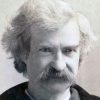
Tragedy in the theater has the great moral inconvenience of putting too much importance in life and death.
[Le Théâtre tragique a le grand inconvénient moral de mettre trop d’importance à la vie et à la mort.]
Nicolas Chamfort (1741–1794) French writer, epigrammist (b. Nicolas-Sébastien Roch)
Products of Perfected Civilization [Produits de la Civilisation Perfectionée], Part 1 “Maxims and Thoughts [Maximes et Pensées],” ch. 1, ¶ 79 (1795) [tr. Siniscalchi (1994)]
(Source)
(Source (French)). Other translations:The tragic drama has the great moral drawback of attaching too high an importance to life and death.
[tr. Hutchinson (1902), "The Cynic's Breviary"]There is one great objection to the tragic Drama, it attaches too importance to life and death.
[tr. Mathers (1926)]Tragic drama has the great moral disadvantage of attaching too much importance to life and death.
[tr. Merwin (1969)]The tragic theatre suffers from the great moral disadvantage of attaching too much importance to life and death.
[tr. Pearson (1973)]Tragic drama has the great ethical flaw of attaching too much importance to life and death.
[tr. Dusinberre (1992)]Tragedies suffer from the moral defect of attaching too great an importance to life and death.
[tr. Parmée (2003), ¶66]

Authors are actors, books are theaters.

The fourth and most important difference between a novel and a film (or play) is that when the reader tires of a novel he can mark his place, put it down, and return to it later. But the attention of an audience must be held continuously. There must be an unbroken progression. It may be progression of the emotion or the thought or the action, but emotion and thought must issue in action or threaten to. In a dramatic medium such as film the characters cannot pause to propound ideas and emotions not directly relevant to their own dramatic situation. In the middle of War and Peace Tolstoy can plant a substantial essay on the nature of military power. In a film script one unnecessary page, one page not furthering the progression, will lose the attention of the audience for the next ten.
Robert Bolt (1924–1995) English dramatist
Doctor Zhivago: The Screenplay, “Author’s Note” (1965)
(Source)
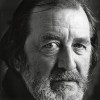
A dramatist is one who believes that the pure event, an action involving human beings, is more arresting than any comment that can be made upon it. On the stage it is always now; the personages are standing on that razor edge, between the past and the future, which is the essential character of conscious being; the words are rising to their lips in immediate spontaneity. […] The theater is supremely fitted to say: “Behold! These things are.”
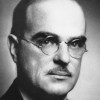
No play is rubbish if it pleases and if it takes money at the door.
CHORUS: O! for a muse of fire, that would ascend
The brightest heaven of invention!
A kingdom for a stage, princes to act,
And monarchs to behold the swelling scene!
In order to be well received, an actor need not be on stage all the way through the play, as long as he performs satisfactorily in the scenes in which his character appears. In the same way, a wise man need not feel that he must loiter to the very end of the very last act. To demonstrate virtue and excellent character, a short life is long enough.
[Neque enim histrioni, ut placeat, peragenda fabula est, modo in quocunque fuerit actu probetur; neque sapientibus usque ad “Plaudite” veniendum est. Breve enim tempus aetatis satis longum est ad bene honesteque vivendum.]Marcus Tullius Cicero (106–43 BC) Roman orator, statesman, philosopher
De Senectute [Cato Maior; On Old Age], ch. 19 / sec. 70 (19.70) (44 BC) [tr. Cobbold (2012)]
(Source)
Many older translators refer to the plaudite, which was was the last word of many Latin plays, particularly those of Terence and Plautus. It was basically a formal cue for the audience to applaud. Waiting for the plaudite is the same as waiting for the end of the play, the fall of the curtain.
See Shakespeare (1599), Heywood (1612), Billings (1877), O'Casey (c. 1940), Brooks (1970), Watterson (1993).
(Source (Latin)). Other translations:I wolde that ye knowe that as the poete makith not onely by versys of a fable in his comedye callid an enterlude to the intente bycause that it please to hym that pleyeth it in the game. But the poete makith onely his comedye and enterlude to the ende bycause that in every pagent he be preysed and commended of every man aftir his playe. And the wise man also ought not to desire to lyve tylle that he saye "That is to witt I will no lenger of my life." For a short and a litle tyme of age is long for to lyve wele and honestly.
[tr. Worcester/Worcester/Scrope (1481)]For he that is a stage-player needeth not of necessity to be an actor in the interlude or comedy until the last end thereof (to delight the beholders), but in what act of the same soever he playeth or chanceth to be, he must so expressly handle and play his part, that he may win praise and commendation; neither should a wise man live till the plaudite be stricken up. For a short space and time of life is long enough to live well and honestly, and in whatsoever age we be in, it is sufficient to have lived therein godly and virtuously.
[tr. Newton (1569)]For a good actor is not applauded in the midst of a Scene, so a wise mans praise comes not till the end. The time of our age is short indeed; but long enough to live well and honestly.
[tr. Austin (1648), ch. 21]When a good Actor doth his part present,
In ev'ry Act he our attention draws,
That at the last he may find just applause,
So (though but short) yet we must learn the art
Of virtue, on this Stage to act our part;
True wisdome must our actions so direct,
Not only the last Plaudite to expect.
[tr. Denham (1669)]A short Space of time is long enough, if constantly employed in the Pursuit of Honour and Virtue.
[tr. Hemming (1716)]And as the Player may be applauded in every Scene, tho' to give true Satisfaction he must finish his Play; so with the wise Man, he lives approv'd by all till his last Plaudit. For the time of Man's life is short, yet it is long enough to live well.
[tr. J. D. (1744)]No Man expects of any one Actor on the Theatre, that he should perform all the Parts of the Piece himself: One Role only is committed to him, and whatever that be, if he acts it well, he is applauded. In the same Manner, it is not the Part of a wise Man, to desire to be busy in these Scenes to the last Plaudit. A short Term may be long enough to live it well and honourably.
[tr. Logan (1744)]It is in life as on the stage, where it is not necessary in order to be approved, that the actor's part should continue to the conclusion of the drama; it is sufficient, in whatever scene he shall make his final exit, that he supports the character assigned him with deserved applause. The truth is, a small portion of time is abundantly adequate to the purposes of honour and virtue.
[tr. Melmoth (1773)]For neither must a play be gone all through by a player, that he may please; it is only needful that he be approved in whatsoever act he shall have been; nor should a wise man live quite to Plaudite. For a short space of time is long enough to live virtuously and honourably.
[Cornish Bros. ed. (1847)]For neither need the drama be performed entire by the actor, in order to give satisfaction, provided he be approved in whatever act he may be: nor need the wise man live till the plaudite. For the short period of life is long enough for living well and honourably.
[tr. Edmonds (1874)]In order to give pleasure to the audience, the actor need not finish the play; he may win approval in whatever act he takes part in; nor need the wise man remain on the stage till the closing plaudit. A brief time is long enough to live well and honorably.
[tr. Peabody (1884)]An actor, in order to earn approval, is not bound to perform the play from beginning to end; let him only satisfy the audience in whatever act he appears. Nor need a wise man go on to the concluding "plaudite." For a short term of life is long enough for living well and honourably.
[tr. Shuckburgh (1895)]Our span of life is brief, but it is long enough for us to live well and honestly.
[ed. Harbottle (1906)]Why ev'n the actor to secure applause
Need not play to the end: if but he do
His best, he will be cheered: if wise, he'll stop
Before he reach the final "Plaudite."
A little time's enough, in which to live
A good and honest life.
[tr. Allison (1916)]The actor, for instance, to please his audience need not appear in every act to the very end; it is enough if he is approved in the parts in which he plays; and so it is not necessary for the wise man to stay on this mortal stage to the last fall of the curtain. For even if the allotted space of life be short, it is long enough in which to live honourably and well.
[tr. Falconer (1923)]An actor, in order to find favor, does not have to take part all the way through a play; he need only prove himself in any act in which he may appear; similarly the wise and good man does not have to keep going until the curtain is rung down. A brief span of years is quite long enough for living a good and honorable life.
[tr. Copley (1967)]An actor does not have to appear in the last part of the movie: he can earn good reviews from what he does in any part of it. And neither must life be drawn out until some venerable time for the final curtain. A short time of life is enough to live well and honorably.
[tr. Gerberding (2014)]During a drama an actor has no need
To be cheered but in the parts he plays
while on the stage of mortal life, indeed,
A man of discernment never stays
Until the last applause. A short life is always
Long enough to be lived honestly and well.
[tr. Bozzi (2015)]An actor does not need to remain on stage throughout the play. It is enough that he appears in the appropriate acts. Likewise, a wise man need not stay on the stage of this world until the audience applauds at the end. The time allotted to our lives may be short, but it is long enough to live honestly and decently.
[tr. Freeman (2016)]
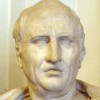
I have always thought that all the theories of what a good play is, or how a good play should be written, are futile. A good play is a play which, when acted upon the boards, makes an audience interested and pleased. A play that fails in this is a bad play.
Maurice Baring (1874–1945) English man of letters, writer, essayist, translator
Have You Anything to Declare? (1936)
(Source)
The course of a man’s life is certain. The path that we follow goes in only one direction. Every mile is distinctly marked with its own peculiar characteristic — the vulnerability of infants, the animal high spirits of adolescents, the seriousness of adults, the maturity of old men — and at each of these stages we must accept gracefully what Nature grants us.
[Cursus est certus aetatis et una via naturae eaque simplex, suaque cuique parti aetatis tempestivitas est data, ut et infirmitas puerorum et ferocitas iuvenum et gravitas iam constantis aetatis et senectutis maturitas naturale quiddam habet, quod suo tempore percipi debeat.]
Marcus Tullius Cicero (106–43 BC) Roman orator, statesman, philosopher
De Senectute [Cato Maior; On Old Age], ch. 10 / sec. 33 (10.33) (44 BC) [tr. Cobbold (2012)]
(Source)
(Source (Latin)). Other translations:The cours and the weye of age is certeyne and determyned by nature, whiche hathe onely awey which is symple & is nothyng different more in the one than in the othir. But each go by that symple and determyned wey aftir the degrees in their cours from the one age in to that other. And yet nature had given to every part of age his owne propre season and tyme, and hir pertynent cours of usage in kynde. That is to witt, that sekenesse and maladye is appropryd to the age of puerice in childhode, & cruelte is appropryd to the age of yongth, worshipfulnesse and sadnesse of maners be appropryd to the age of virilite whiche is the fyfthe age. Moderaunce and temperaunce be appropryd to olde age. Eueriche oweth to have sumwhat naturelly and appropryd unto that whiche may be gadird in his tyme.
[tr. Worcester/Worcester/Scrope (1481), Part 3]The race and course of age is certain; and there is but one way of nature and the same simple; and to every part of a man's life and age are given his convenient times and proper tempestivities. For even as weakness and infirmity is incident to young children, lustiness and bravery to young men, and gravity when they come to ripe years; so, likewise the maturity or ripeness of old age have a certain special gift given and attributed to it by nature, which ought not to be neglected, but to be taken in his own time and season when it cometh.
[tr. Newton (1569)]There is but one course of age, and one way of nature, and the same simple, and to every part of age its own timelines is given; for as infirmity belongs to child-hood, fiercenesse to youth, and gravity to age, so the true ripenesse of age hath a certaine natural gravity in it, which ought to be used in it own time.
[tr. Austin (1648)]Simple, and certain Nature's wayes appear,
As she sets forth the seasons of the year.
So in all parts of life we find her truth,
Weakness to childhood, rashness to our youth:
To elder years to be discreet and grave,
Then to old age maturity she gave.
[tr. Denham (1669)]Every Age has something in it, peculiar to it self: as Weakness to our Infancy, an unguided Warmth to Youth, Seriousness to Manhood, and a certain Maturity of Judgment to Old Age, which we may expect to reap the Fruits of, when advanced to it.
[tr. Hemming (1716)]Life has a sure Course, and Nature but one Way, that that too simple and plain. And to every Part of Man's Age a peculiar Propriety of Temper is given: Thus Weakness in Children, a Boldness in Youth, and a Gravity in Manhood appears; and a full Ripeness of Years has always something which seems natural to it, and which ought to be made use of at a proper Time.
[tr. J. D. (1744)]The Stages of Life are fixed; Nature is the same in all, and goes on in a plain and steady Course: Every Part of Life, like the Year, has its peculiar Season: As Children are by Nature weak, Youth is rash and bold; staid Manhood more solid and grave; and so Old-Age in its Maturity, has something natural to itself, that ought particularly to recommend it.
[tr. Logan (1750)]Nature conducts us, by a regular and insensible progression through the different seasons of human life; to each of which she has annexed its proper and distinguishing characteristic. As imbecility is the attribute of infancy, ardour of youth, and gravity of manhood; so declining age has its essential properties, which gradually disclose themselves as years increase.
[tr. Melmoth (1773)]The course of life is fixed, and the path of nature is one, and that simple. And its own proper seasonableness has been given to each division of life; so that both the feebleness of boys and the proud spirit of young men, and the gravity of a now settle period of life, and the maturity of old age, has something natural to it, which ought to be gathered in its own season.
[Cornish Bros. ed. (1847)]There is a definite career in life, and one way of nature, and that a simple one; and to every part ot life its own peculiar period has been assigned: so that both the feebleness of boys, and the high spirit of young men, and the steadiness of now fixed manhood, and the maturity of old age, have something natural, which ought to be enjoyed in their own time.
[tr. Edmonds (1874)]Life has its fixed course, and nature one unvarying way; each age has assigned to it what best suits it, so that the fickleness of boyhood, the sanguine temper of youth, the soberness of riper years, and the maturity of old age, equally have something in harmony with nature, which ought to be made availing in its season.
[tr. Peabody (1884)]The course of life is fixed, and nature admits of its being run but in one way, and only once; and to each part of our life there is something specially seasonable; so that the feebleness of children, as well as the high spirit of youth, the soberness of maturer years, and the ripe wisdom of old age -- all have a certain natural advantage which should be secured in its proper season.
[tr. Shuckburgh (1895)]One only way
Nature pursues, and that a simple one:
To each is given what is fit for him.
The boy is weak: youth is more full of fire:
Increasing years have more of soberness:
And as in age there is a ripeness too.
Each should be garnered at its proper time,
And made the most of.
[tr. Allison (1916)]Life's race-course is fixed; Nature has only a single path and that path is run but once, and to each stage of existence has been allotted its own appropriate quality; so that the weakness of childhood, the impetuosity of youth, the seriousness of middle life, the maturity of old age -- each bears some of Nature's fruit, which must be garnered in its own season.
[tr. Falconer (1923)]The course of life is clear to see; nature has only one path, and it has no turnings. Each season of life has an advantage peculiarly its own; the innocence of children, the hot blood of youth, the gravity of the prime of life, and the mellowness of age all possess advantages that are theirs by nature, and that should be garnered each at its proper time.
[tr. Copley (1967)]Life and nature have but one direction
Easy to take, without correction.
Each of life’s rite of passage dates
Has its own distinguishing traits:
A child’s weakness
A youth’s boldness
An adult’s authority
An old man’s maturity
And each with a certain natural zest
To be reaped when it’s time for its harvest.
[tr. Bozzi (2015)]The course of life cannot change. Nature has but a single path and you travel it only once. Each stage of life has its own appropriate qualities -- weakness in childhood, boldness in youth, seriousness in middle age, and maturity in old age. These are fruits that must be harvested in due season.
[tr. Freeman (2016)]
Man comes to each age of his life a novice.
[L’homme arrive novice à chaque âge de la vie.]
Nicolas Chamfort (1741–1794) French writer, epigrammist (b. Nicolas-Sébastien Roch)
Products of Perfected Civilization [Produits de la Civilisation Perfectionnée], Part 2 “Characters and Anecdotes [Caractères et Anecdotes],” ch. 12 (1795) [tr. Merwin (1969)]
(Source)
(Source (French)). Other translations:Man arrives a novice at every age of life.
[Source (1878)]Man reaches each stage in his life as a novice.
[tr. Hutchinson (1902), "The Cynic's Breviary"]A man begins every stage of his life as a novice.
[tr. Parmée, ¶412 (2003)]
Our life gets as complicated as a comedy as it goes on, but the complications get gradually resolved: see that the curtain comes down on a good denouement.
[Vase empeñando nuestra vida como en comedia, al fin viene a desenredarse. Atención, pues, al acabar bien.]
Baltasar Gracián y Morales (1601–1658) Spanish Jesuit priest, writer, philosopher
The Art of Worldly Wisdom [Oráculo Manual y Arte de Prudencia], § 211 (1647) [tr. Jacobs (1892)]
(Source)
(Source (Spanish)). Other translations:Our life is acted like a Play. The Catastrophy is in the last Act. The chief part then is, to end it well.
[Flesher ed. (1685)]Our life becomes more complicated as we go along, like a comedy, but toward the end it becomes simpler; keep in mind, therefore, the happy ending.
[tr. Fischer (1937)]Our lives fold and unfold like theater, so be careful to end well.
[tr. Maurer (1992)]
Detective inspector John “Call me Jack, everyone does” Robinson did not like theatres. Bit of a night out at the variety or even the Tiv was fair enough, but ever since a high-minded relative had forced him to sit through an Ibsen festival at an impressionable age, theatres had always been synonymous with what he called ‘high art’, a portmanteau term for everything self-indulgent, terminally tedious and incomprehensible in the world of culture.
Kerry Greenwood (b. 1954) Australian author and lawyer
Phryne Fisher, Book 7, Ruddy Gore, ch. 3 (1995)
(Source)

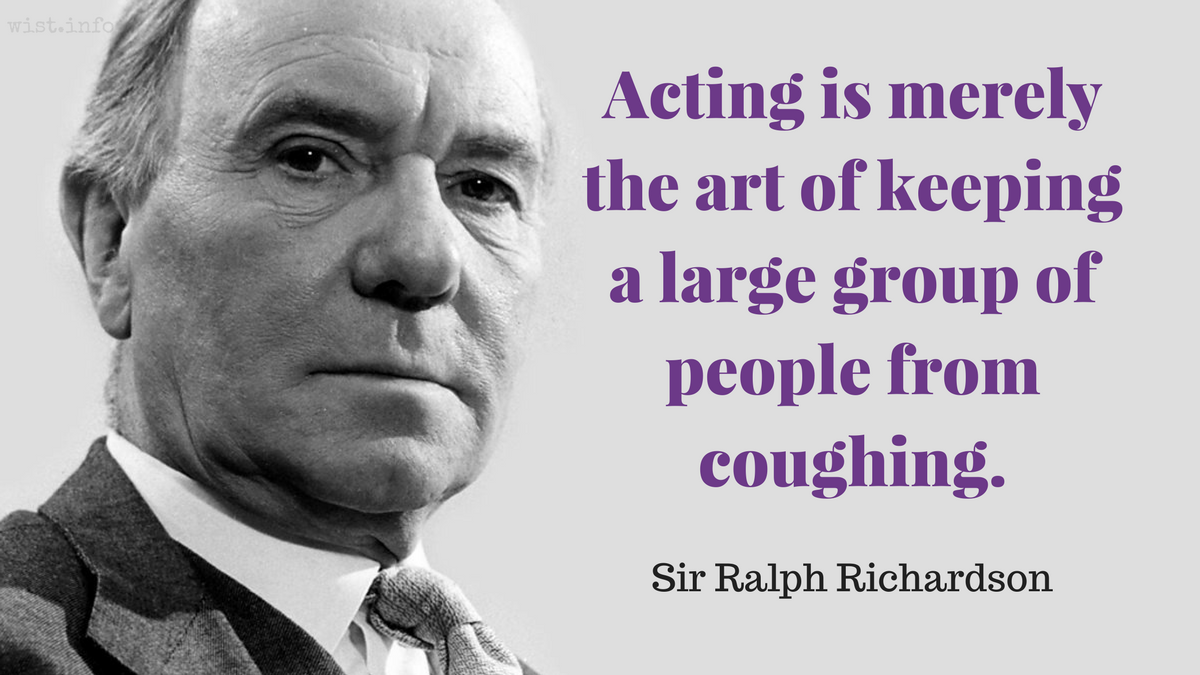
Acting is merely the art of keeping a large group of people from coughing.
I have observed that in comedies the best actor plays the droll, while some scrub rogue is made the fine gentleman or hero. Thus it is in the farce of life. Wise men spend their time in mirth, ’tis only fools who are serious.
Henry St John, 1st Viscount Bolingbroke (1678–1751) English politician, government official, political philosopher [Lord Bolingbroke]
(Attributed)
Quoted in Gleason's Pictorial (Boston) (3 Dec 1853).
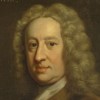
Hope for the best.
Expect the worst.
The world’s a stage.
We’re unrehearsed.
Mel Brooks (b. 1926) American comedic actor, writer, producer [b. Melvyn Kaminsky]
The Twelve Chairs, “Hope for the Best, Expect the Worst” (1970)
(Source)
(Source (Audio)). More information on composition of the song here and here.
See Cicero (44 BC), Shakespeare (1599), Heywood (1612), Billings (1877), O'Casey (c. 1940), Watterson (1993).
Any man who undertakes to write a play is either a damn fool or a hero, I don’t know which. When you write a book, you pull it out of the typewriter and that’s that. When you write a play you’ve got to go on with the producer and the director and the actors and the rehearsals and the …
Rex Stout (1886–1975) American writer
In “Author Rex Stout vs. the FBI,” Interview with Sandra Schmidt, Life (10 Dec 1965)
PROSPERO: Our revels now are ended. These our actors,
As I foretold you, were all spirits and
Are melted into air, into thin air;
And like the baseless fabric of this vision,
The cloud-capped towers, the gorgeous palaces,
The solemn temples, the great globe itself,
Yea, all which it inherit, shall dissolve,
And, like this insubstantial pageant faded,
Leave not a rack behind. We are such stuff
As dreams are made on, and our little life
Is rounded with a sleep.William Shakespeare (1564–1616) English dramatist and poet
Tempest, Act 4, sc. 1, l. 165ff (4.1.165-175) (1611)
(Source)
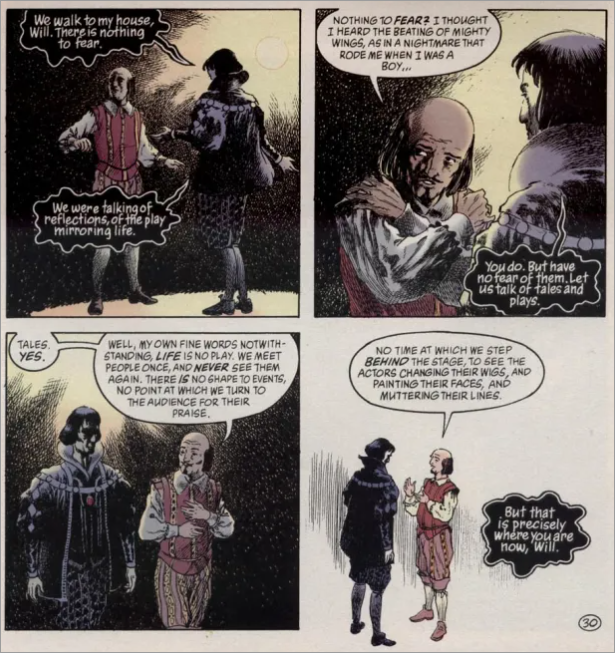
SHAKESPEARE: Well, my own fine words notwithstanding, life is no play. We meet people once, and never see them again. There is no shape to events, no point at which we turn to the audience for their praise. No time at which we step behind the stage, to see the actors changing their wigs, and painting their faces, and muttering their lines.
Neil Gaiman (b. 1960) British author, screenwriter, fabulist
Sandman, Book 10. The Wake, # 75 “The Tempest” (1996-02)
(Source)
Speaking to Morpheus. Final issue of the series.
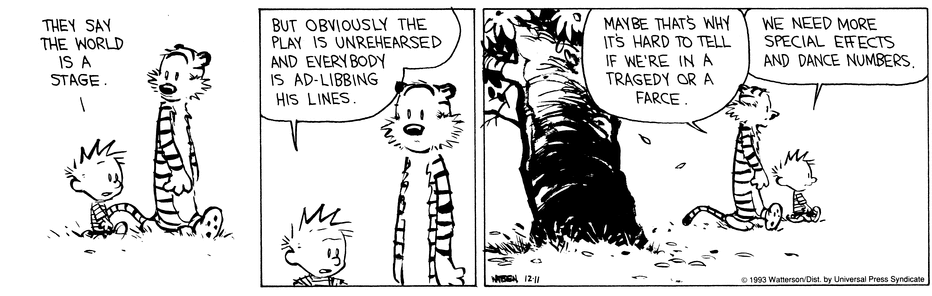
CALVIN: They say the world is a stage. But obviously the play is unrehearsed and everybody is ad-libbing his lines.
HOBBES: Maybe that’s why it’s hard to tell if we’re in a tragedy or a farce.
CALVIN: We need more special effects and dance numbers.
He who carves the Buddha never worships him.
Proverbs, Sayings, and Adages
Chinese proverb

All the world’s a stage and most of us are desperately unrehearsed.
JAQUES:All the world’s a stage,
And all the men and women merely players.
They have their exits and their entrances,
And one man in his time plays many parts ….
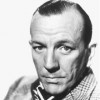
The only advice I ever give actors is to learn to speak clearly, to project your voice without shouting — and to move about the stage gracefully, without bumping into people.
Noël Coward (1899–1973) English playwright, actor, wit
Quoted in Leonard Lyons, “The Lyons Den” syndicated column (16 Aug 1954)
Variants attributed to Coward:Alternately, another Lyons Den column (24 Jan 1955) quoted Lynn Fontanne, in talking about her acting style with her husband Alfred Lunt:
- "You ask my advice about acting? Speak clearly, don't bump into the furniture and if you must have motivation, think of your pay packet on Friday."
- "Just say the lines and don't trip over the furniture." [Dick Richards, The Wit of Noël Coward (1968)]
We read the lines so that people can hear and understand them; we move about the stage without bumping into the furniture or each other; and, well that’s it.
Coward and Fontanne were good friends, and may well have discussed the concepts here previously, or shared the idea one to the other.
The quote is also attributed to Lunt, and to Spencer Tracy.
More discussion about this quotation:
The empty pageant; a stage play; flocks of sheep, herds of cattle; a tussle of spearmen; a bone flung among a pack of curs; a crumb tossed into a pond of fish; ants, loaded and laboring; mice, scared and capering; puppets, jerking on their strings — that is life.
In the midst of it all you must take your stand, good-temperedly and without disdain, yet always aware that a man’s worth is no greater than the worth of his ambitions.[Πομπῆς κενοσπουδία, ἐπὶ σκηνῆς δράματα, ποίμνια, ἀγέλαι, διαδορατισμοί, κυνιδίοις ὀστάριον ἐρριμμένον, ψωμίον εἰς τὰς τῶν ἰχθύων δεξαμενάς, μυρμήκων ταλαιπωρίαι καὶ ἀχθοφορίαι, μυιδίων ἐπτοημένων διαδρομαί, σιγιλλάρια νευροσπαστούμενα.
χρὴ οὖν ἐν τούτοις εὐμενῶς μὲν καὶ μὴ καταφρυαττόμενον ἑστάναι, παρακολουθεῖν μέντοι, ὅτι τοσούτου ἄξιος ἕκαστός ἐστιν, ὅσου ἄξιά ἐστι ταῦτα περὶ ἃ ἐσπούδακεν.]Marcus Aurelius (AD 121–180) Roman emperor (161–180), Stoic philosopher
Meditations [To Himself; Τὰ εἰς ἑαυτόν], Book 7, ch. 3 (7.3) (AD 161-180) [tr. Staniforth (1964)]
(Source)
(Source (Greek)). Other translations:Public shows and solemnities with much pomp and vanity, stage plays, flocks and herds; conflicts and contentions: a bone thrown to a company of hungry curs; a bait for greedy fishes; the painfulness, and continual burden-bearing of wretched ants, the running to and fro of terrified mice: little puppets drawn up and down with wires and nerves: these be the objects of the world.
Among all these thou must stand steadfast, meekly affected, and free from all manner of indignation; with this right ratiocination and apprehension; that as the worth is of those things which a man doth affect, so is in very deed every man's worth more or less.
[tr. Casaubon (1634)]Gazing after Triumphs, and Cavalcades; the Diversions of the Stage-Farms well stock'd with Flocks and Herds; contests for Victory in the Field; These are the little Pleasures, and concerns of Mortals. Would you have a farther Illustration, and see an Image of them elsewhere? Fancy then that you saw two or three Whelps quarrelling about a Bone; Fishes scrambling for a Bait, Pismires in a peck of troubles about the Carriage of a Grain of Wheat; Mice frighted out of their Wits, and scouring cross the Room; Poppets danced upon a Wire, &c.
And after all, tho' Humane Life is but ordinary, and trifling, a Wise Man must be easie and Good-humour'd, and not grow Splenetick, or Haughty upon the Contemplation. Remembring notwithftanding, that the true Bulk and Bigness of a Man, is to be measur'd by the size of his Business, and the Quality of his Inclinations.
[tr. Collier (1701)]The vain solicitude about shows, scenical representations, flocks and herds, skirmishing, little bones cast in for contention among little dogs, baits cast into a fish-pond, the toiling of Ants, and their carrying of burdens, the fluttering of affrighted flies, the involuntary agitations of puppets by wires!
We ought to persist amidst such things with good-nature, without storming at them; and be persuaded that such is the worth of each person, as is the value of the things he pursues.
[tr. Hutcheson/Moor (1742)]A fondness for pompous processions, grand exhibitions on the stage, or skirmishes in the amphitheatre; the care of flocks and herds; these are some of the solemn amusements of mankind; and are of much the same importance as the quarrelling of dogs for a bone, of fishes catching at a bait, an hillock of ants in an uproar about carrying a grain of corn, of mince scampering across a room in a fright, or puppets danced on wires. Such is the bustle of human life!
Let us, however, amidst this ludicrous scene of things not be out of humour, but contemplate it with complacency and benevolence; remembering always to estimate the value of men by the utility of those employments on which they bestow their attention.
[tr. Graves (1792)]The idle business of show, plays on the stage, flocks of sheep, herds, exercises with spears, a bone cast to little dogs, a bit of bread into fishponds, laborings of ants and burden-carrying, runnings about of frightened little mice, puppets pulled by strings -- [all alike].
It is thy duty then in the midst of such things to show good humor and not a proud air; to understand however that every man is worth just so much as the things are worth about which he busies himself.
[tr. Long (1862)]Gazing after shows, the diversions of the stage, farms well stocked with flocks and herds, contests for victory in the field are all much the same. So, too, a bone thrown to puppies, fishes scrambling for a bait, ants laboriously carrying a grain of wheat, mice frighted out of their wits and running away, puppets danced upon a wire.
And in the midst of them a wise man must be good-humored, and not grow haughty in the contemplation. Remembering, notwithstanding, that the true worth of a man is to be measured by the objects he pursues.
[tr. Collier/Zimmern (1887)]A mimic pageant, a stage spectacle, flocking sheep and herding cows, an armed brawl, a bone flung to curs, a crumb dropped in the fish-tanks, toiling of burdened ants, the scamper of scurrying mice, puppets pulled with strings -- such is life.
In such surroundings you must take your stand, considerate and undisdainful; yet understand the while, that the measure of the man's worth is the worth of his aims.
[tr. Rendall (1898)]Your vain concern for shows, for stage plays, for flocks and herds, your little combats, are as bones cast for the contention of puppies, as baits dropped into a fishpond, as the toil of ants and the burdens that they bear, as the scampering of frightened mice, or the antics of puppets jerked by wires.
It is then your duty amid all this to stand firm, kindly and not proud, yet to understand that a man’s worth is just the worth of that which he pursues.
[tr. Hutcheson/Chrystal (1902)]Empty love of pageantry, stage-plays, flocks and herds, sham-fights, a bone thrown to lap-dogs, crumbs cast in a fish-pond, painful travail of ants and their bearing of burdens, scurryings of scared little mice, puppets moved by strings.
Amid such environment therefore thou must take thy place graciously and not "snorting defiance," nay thou must keep abreast of the fact that everyone is worth just so much as those things are worth in which he is interested.
[tr. Haines (Loeb) (1916)]A procession's vain pomp, plays on a stage, flocks, herds, sham fights, a bone thrown to puppies, a crumb into fishponds, toiling and moiling of ants carrying their loads, scurrying of startled mice, marionettes dancing to strings.
Well, then, you must stand up in all this, kindly and not carrying your head proudly; yet understand that every man is worth just so much as the worth of what he has set his heart upon.
[tr. Farquharson (1944)]The idle pageantry of a procession, plays on the stage, flocks and herds, the clahsing of spears, a bone tossed to puppies, a scrap of bread cast into a fishpond, the wretched labours of overladen ants, the scurryings of stargled mice, puppets pulled about on their strings.
You must take your place, then, in the midst of all this, with a good grace and without assuming a scornful air; and yet, at the same time, keep in mind that a person's worth is measured by the worth of what he has set his heart on.
[tr. Hard (1997 ed.)]Pointless bustling of processions, opera arias, herds of sheep and cattle, military exercises. A bone flung to pet poodles, a little food in the fish tank. The miserable servitude of ants, scampering of frightened mice, puppets jerked on strings.
Surrounded as we are by all of this, we need to practice acceptance. Without disdain. But remembering that our own worth is measured by what we devote our energy to.
[tr. Hays (2003)]The empty pomp of a procession, plays on the stage, flocks and herds, jousting shows, a bone thrown to puppies, tit-bits into the fishponds, ants toiling and carrying, the scurries of frightened mice, puppets dancing on their strings.
Well, amid all this you must keep yourself tolerant -- do not snort at them. But bear in mind that a person’s worth is measured by the worth of what he values.
[tr. Hammond (2006)]The idle pageantry of a procession, plays on a stage, flocks and herds, the clashing of spears, a bone tossed to puppies, a scrap of bread cast into a fishpond, the wretched labours of overladen ants, the scurryings of startled mice, puppets pulled about on their strings.
You must take your place, then in, the midst of all this, with a good grace and without assuming a scornful air; and yet, at the same time, keep in mind that a person's worth is measured by the worth of what he has set his heart on.
[tr. Hard (2011 ed.)]Each man is as worthy as his endeavours are worthy.
[ed. Taplin (2016)]