
While in some quarters it is felt that the critic is just a necessary evil, most serious-minded, decent, talented theater people agree that the critic is an unnecessary evil.
Jean Kerr (1922–2003) American author and playwright [b. Bridget Jean Collins]
Essay (1957), “One Half of Two on the Aisle,” Please Don’t Eat the Daisies
(Source)
No earlier magazine publication found.
Quotations about:
necessary evil
Note not all quotations have been tagged, so Search may find additional quotes on this topic.

In their moral justification, the argument of the lesser evil has played a prominent role. If you are confronted with two evils, thus the argument runs, it is your duty to opt for the lesser one, whereas it is irresponsible to refuse to choose altogether. […] Politically, the weakness of the argument has always been that those who choose the lesser evil forget very quickly that they chose evil.

War may sometimes be a necessary evil. But no matter how necessary, it is always an evil, never a good. We will not learn how to live together in peace by killing each other’s children.
Jimmy Carter (b. 1924) American politician, US President (1977–1981), Nobel laureate [James Earl Carter, Jr.]
Nobel Peace Prize Lecture (10 Dec 2002)
(Source)

It may be necessary temporarily to accept a lesser evil, but one must never label a necessary evil as good.
Margaret Mead (1901–1978) American anthropologist
(Attributed)

It is not possible to lay down an inflexible rule as to when compromise is right and when wrong; when it is a sign of the highest statesmanship to temporize, and when it is merely a proof of weakness. Now and then one can stand uncompromisingly for a naked principle and force people up to it. This is always the attractive course; but in certain great crises it may be a very wrong course. Compromise, in the proper sense, merely means agreement; in the proper sense opportunism should merely mean doing the best possible with actual conditions as they exist.
A compromise which results in a half-step toward evil is all wrong, just as the opportunist who saves himself for the moment by adopting a policy which is fraught with future disaster is all wrong; but no less wrong is the attitude of those who will not come to an agreement through which, or will not follow the course by which, it is alone possible to accomplish practical results for good.

The duty of public men in this Republic is to lead in standards of integrity — both in mind and money.
Dishonor in public life has a double poison. When people are dishonorable in private business, they injure only those with whom they deal or their own chances in the next world. But when there is a lack of honor in Government, the morals of the whole people are poisoned.
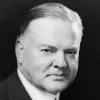
Some folks seem to think these are necessary evils in a free government. Or that it is smart politics. Those are deadly sleeping pills. No public man can be just a little crooked.Herbert Hoover (1874–1964) American engineer, bureaucrat, US President (1929–33)
Speech (1951-08-30), “Concerning Honor in Public Life,” Iowa Centennial Celebration, Des Moines, Iowa (radio broadcast)
(Source)
Society in every state is a blessing, but Government, even in its best state, is but a necessary evil; in its worst state an intolerable one: for when we suffer, or are exposed to the same miseries by a Government, which we might expect in a country without Government, our calamity is heightened by reflecting that we furnish the means by which we suffer.
Thomas Paine (1737–1809) American political philosopher and writer
Common Sense, “On the Origin and Design of Government in General” (14 Feb 1776)
(Source)

No man is justified in doing evil on the ground of expediency. He is bound to do all the good possible. Yet he must consider the question of expediency, in order that he may do all the good possible, for otherwise he will do none.