Honesty iz the rarerest welth enny one kan possess, and yet all the honesty in the world, aint lawful tender for a loaf ov bread.
[Honesty is the rarest wealth anyone can possess, and yet all the honesty in the world, ain’t lawful tender for a loaf of bread.]
Josh Billings (1818–1885) American humorist, aphorist [pseud. of Henry Wheeler Shaw]
Josh Billings’ Farmer’s Allminax, 1878-04 “Imps” (1878 ed.)
(Source)
Quotations about:
practicality
Note not all quotations have been tagged, so Search may find additional quotes on this topic.

To give the public what they do not want, and yet expect to be supported: we have there a strange pretension, and yet not uncommon, above all with painters. The first duty in this world is for a man to pay his way; when that is quite accomplished, he may plunge into what eccentricity he likes; but emphatically not till then.
There are three faithful friends, an old wife, an old dog, and ready money.
Benjamin Franklin (1706–1790) American statesman, scientist, philosopher, aphorist
Poor Richard (1738 ed.)
(Source)

The youth gets together his materials to build a bridge to the moon, or perchance a palace or temple on the earth, and at length the middle-aged man concludes to build a woodshed of them.
The worth of the ideal must be largely determined by the success with which it can in practice be realized. We should abhor the so-called “practical” men whose practicality assumes the shape of that peculiar baseness which finds its expression in disbelief in morality and decency, in disregard of high standards of living and conduct. Such a creature is the worst enemy of the body politic. But only less desirable as a citizen is his nominal opponent and real ally, the man of fantastic vision who makes the impossible better forever the enemy of the possible good.
Theodore Roosevelt (1858–1919) American politician, statesman, conservationist, writer; US President (1901–09)
Speech (1910-04-23), “Citizenship in a Republic [The Man in the Arena],” Sorbonne, Paris
(Source)
Designing a dream city is easy; rebuilding a living one takes imagination.
Jane Jacobs (1916–2006) American-Canadian journalist, author, urban theorist, activist
“Downtown Is for People,” Fortune (1958-04)
(Source)
Closing words of the essay.
Originally reprinted in the magazine's topical collection, The Exploding Metropolis (1958). Later collected in Samuel Zipp and Nathan Storring, eds., Vital Little Plans: The Short Works of Jane Jacobs (2016).

Many of us affect a tone of irony about gadgets, as if we lived always in realms above and dealt with trifles only during rare descents from sublime thoughts. The truth is that more and more of the important things in life turn on pinpoints. Our frustrations begin in trivialities — a telephone out of order, a car that will not start, a claim check whose number has been misread. The thing in cellophane that cannot be got at — plain to the sight but sealed like an egg — is the modern version of the torture of Tantalus. Catastrophes we will deal with like heroes, but the bottle top that defies us saps our morale, like the tiny arrows of the Lilliputians that maddened Gulliver and set his strength at naught.
Jacques Barzun (1907–2012) French-American historian, educator, polymath
God’s Country and Mine, Part 3, ch. 12 (1954)
(Source)
I have no dress except the one I wear every day. If you are going to be kind enough to give me one, please let it be practical and dark so that I can put it on afterwards to go to the laboratory.
Marie Curie (1867–1934) Polish-French physicist and chemist [b. Maria Salomea Skłodowska]
Letter to Casimir Dluski’s mother on her offer of a wedding dress (1895)
(Source)
Regarding an offered wedding dress for her marriage to Pierre Curie (1865-07-26). As quoted in Eve Curie Labouisse, Madame Curie: A Biography, ch. 8 (1937) [tr. Sheean (1938)].

If you keep your eyes so fixed on Heaven that you never look at the Earth, you will stumble into Hell.
Austin O'Malley (1858–1932) American ophthalmologist, professor of literature, aphorist
Keystones of Thought (1914)
(Source)
Experience is nearly always commonplace; the present is not romantic in the way the past is, and ideals and great visions have a way of becoming shoddy and squalid in practical life. Literature reverses this process.
Northrop Frye (1912–1991) Canadian literary critic and literary theorist
The Educated Imagination, Talk 3 “Giants in Time” (1963)
(Source)
Wisdom is not gained by knowing what is right. Wisdom is gained by practicing what is right, and noticing what happens when that practice succeeds and when it fails.
Barbara Brown Taylor (b. 1951) American minister, academic, author
An Altar in the World, ch. 2 (2009)
(Source)

The moral case for intervention is only as strong as the practicality of the mission itself. There is no moral case for doing something you’re not capable of doing.
Dexter Filkins (b. 1961) American journalist
“The Moral Logic of Humanitarian Intervention,” New Yorker (16 Sep 2019)
(Source)

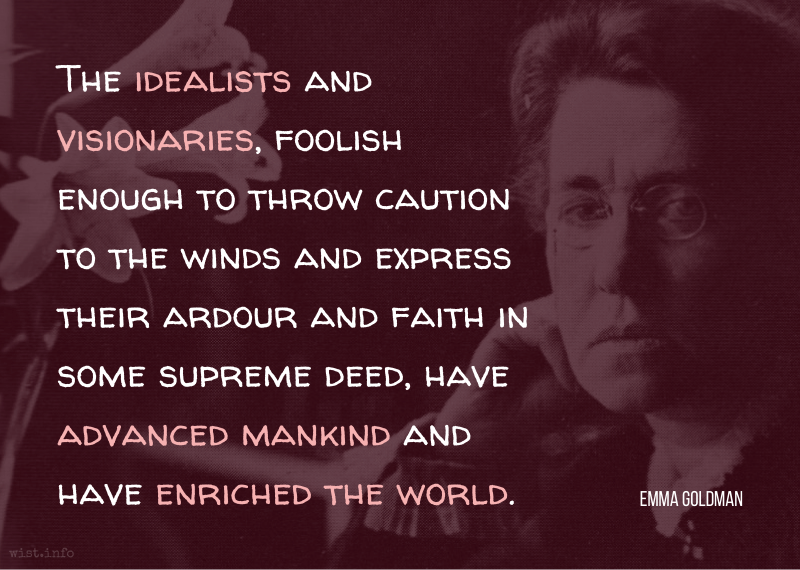
From time immemorial the wise and practical have denounced every heroic spirit. Yet it has not been they who have influenced our lives. The idealists and visionaries, foolish enough to throw caution to the winds and express their ardour and faith in some supreme deed, have advanced mankind and have enriched the world.
Emma Goldman (1869–1940) Lithuanian-American anarchist, activist
Living My Life, Part 2, ch. 39 (1931)
(Source)

The case against intellect is founded upon a set of fictional and wholly abstract antagonisms. Intellect is pitted against feeling, on the ground it is somehow inconsistent with warm emotion. It is pitted against character, because it is widely believed that intellect stands for mere cleverness, which transmutes easily into the sly or the diabolical. It is pitted against practicality, since theory is held to be opposed to practice, and the “purely” theoretical mind is so much disesteemed. It is pitted against democracy, since intellect is felt to be a form of distinction that defies egalitarianism. Once the validity of these antagonisms is accepted, then the case for intellect, and by extension for the intellectual, is lost. Who cares to risk sacrificing warmth of emotion, solidity of character, practical capacity, or democratic sentiment in order to pay deference to a type of man who at best is deemed to be merely clever and at worst may even be dangerous?
Richard Hofstadter (1916–1970) American historian and intellectual
Anti-Intellectualism in American Life, Part 1, ch. 2 “On the Unpopularity of Intellect” (1962)
(Source)
You are right in assuming that I am indifferent to the pattern of things. I am. I have never liked stale phrases and bodyless courage. I have the nerve to walk my own way, however hard, in my search for reality, rather than climb upon the rattling wagon of wishful illusions.
Zora Neale Hurston (1891–1960) American writer, folklorist, anthropologist
Letter to Countee Cullen (5 Mar 1943)
(Source)

Pocket Envy: Women’s unfulfilled yearning for practical clothes
Marie Shear (1940–2017) American writer and feminist activist
“Media Watch: Celebrating Women’s Words,” New Directions for Women (May/Jun 1986)
(Source)

Never be limited by other people’s limited imaginations. There were people who said, “You can’t go into space. You can’t go to the moon.” If you adopt their attitudes, then the possibility won’t exist because you’ll have already shut it out. Yes, you can hear other people’s wisdom, but you’ve got to re-evaluate the world for yourself.
Mae Jemison (b. 1956) American engineer, physician, astronaut
Interview, Chicago Sun-Times (May 1994)
(Source)


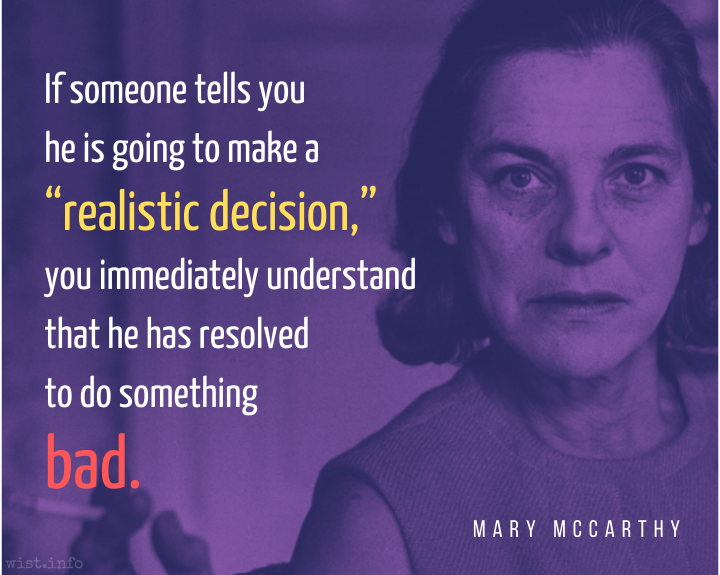
If someone tells you he is going to make a “realistic decision,” you immediately understand that he has resolved to do something bad.
Mary McCarthy (1912–1989) American author, critic, political activist
“American Realist Playwrights,” On the Contrary (1961)
(Source)

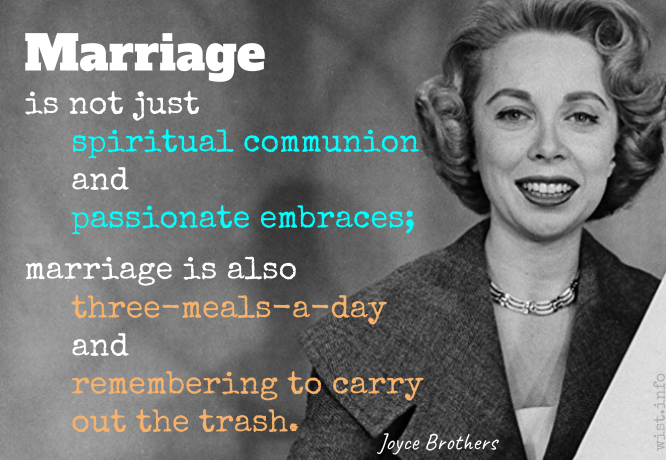
Marriage is not just spiritual communion and passionate embraces; marriage is also three-meals-a-day and remembering to carry out the trash.
Joyce Brothers (1927–2013) American psychologist, television personality, advice columnist
“When Your Husband’s Affection Cools,” Good Housekeeping (May 1972)

Vampire super-strength is a poor fit for many of the modern world’s problems — it really doesn’t help you fill in your time-sheet any faster — but when it comes to breaking damp-weakened wooden door frames it’s superb.
Charles "Charlie" Stross (b. 1964) British writer
The Nightmare Stacks (2016)

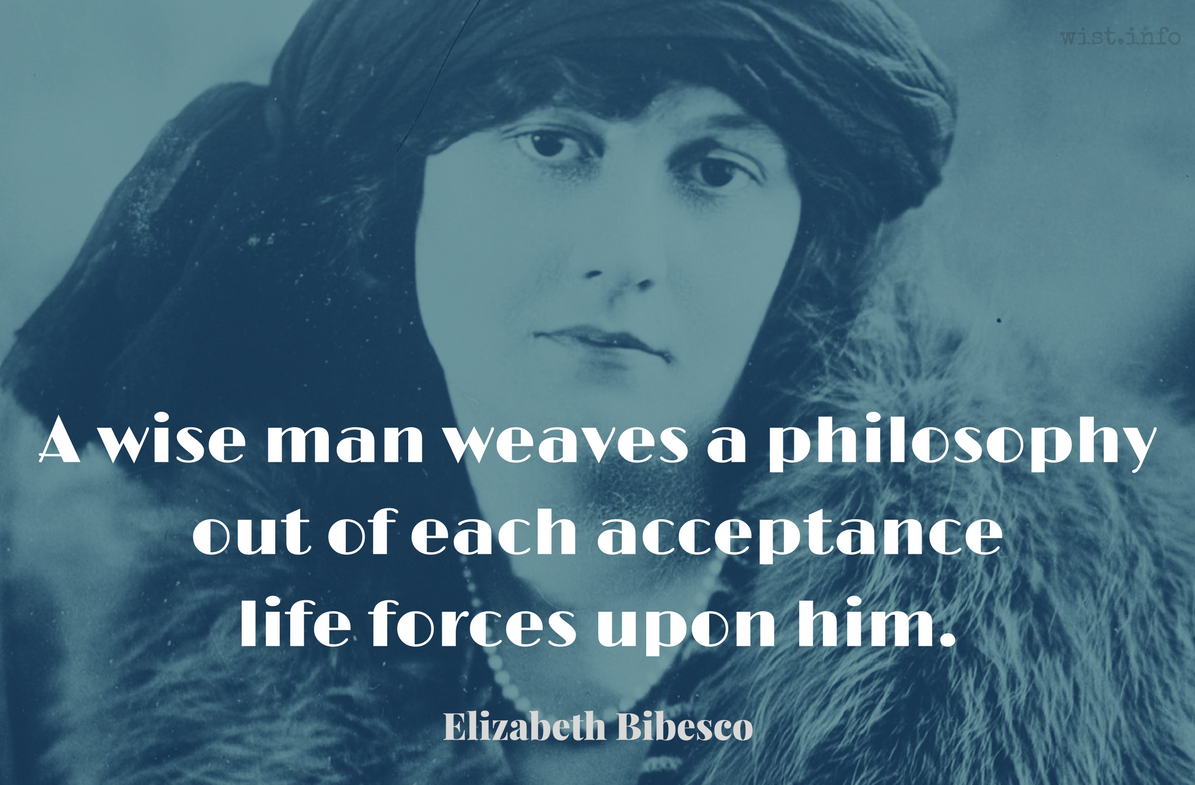
A wise man weaves a philosophy out of each acceptance life forces upon him.

There is always a certain meanness in the argument of conservatism, joined with a certain superiority in its fact.
Ralph Waldo Emerson (1803–1882) American essayist, lecturer, poet
“The Conservative,” lecture, Boston (1841-12-09)
Practical politics consists in ignoring facts.
Henry Adams (1838–1918) American journalist, historian, academic, novelist
The Education of Henry Adams, ch. 22 (1907)
Perseverance must have some practical end, or it does not avail the man possessing it. A person without a practical end in view becomes a crank or an idiot. Such persons fill our asylums.
Alexander Graham Bell (1847–1922) Scottish-American scientist, inventor, engineer
Interview, in Orison Swett Marden, How They Succeeded, ch. 2 (1901)
(Source)
To accomplish almost anything worthwhile, it is necessary to compromise between the ideal and the practical.
Franklin Delano Roosevelt (1882–1945) American lawyer, politician, statesman; US President (1933–45)
Quoted in Drew Pearson and Robert S. Allen, “How the President Works,” Harper’s Monthly Magazine, Vol. 173 (1936-06)
(Source)
He didn’t say “That’s weird.” He wouldn’t have said “That’s weird” if a flock of sheep had cycled past playing violins. It wasn’t the sort of thing a responsible engineer said.
Terry Pratchett (1948–2015) English author
Good Omens, 4. “Thursday” (1990) [with Neil Gaiman]
(Source)

That observation which is called knowledge of the world will be found much more frequently to make men cunning than good.
Samuel Johnson (1709–1784) English writer, lexicographer, critic
Essay (1750-03-31), The Rambler, No. 4
(Source)
It is not possible to lay down an inflexible rule as to when compromise is right and when wrong; when it is a sign of the highest statesmanship to temporize, and when it is merely a proof of weakness. Now and then one can stand uncompromisingly for a naked principle and force people up to it. This is always the attractive course; but in certain great crises it may be a very wrong course. Compromise, in the proper sense, merely means agreement; in the proper sense opportunism should merely mean doing the best possible with actual conditions as they exist.
A compromise which results in a half-step toward evil is all wrong, just as the opportunist who saves himself for the moment by adopting a policy which is fraught with future disaster is all wrong; but no less wrong is the attitude of those who will not come to an agreement through which, or will not follow the course by which, it is alone possible to accomplish practical results for good.
All men in whose character there is not an element of hardened baseness must admit the need in our public life of those qualities which we somewhat vaguely group together when we speak of “reform,” and all men of sound mind must also admit the need of efficiency.
There are, of course, men of such low moral type, or of such ingrained cynicism, that they do not believe in the possibility of making anything better, or do not care to see things better. There are also men who are slightly disordered mentally, or who are cursed with a moral twist which makes them champion reforms less from a desire to do good to others than as a kind of tribute to their own righteousness, for the sake of emphasizing their own superiority. From neither of these classes can we get any real help in the unending struggle for righteousness.
There remains the great body of the people, including the entire body of those through whom the salvation of the people must ultimately be worked out. All these men combine or seek to combine in varying degrees the quality of striving after the ideal, that is, the quality which makes men reformers, and the quality of so striving through practical methods — the quality which makes men efficient. Both qualities are absolutely essential. The absence of either makes the presence of the other worthless or worse.
Let us therefore boldly face the life of strife, resolute to do our duty well and manfully; resolute to uphold righteousness by deed and by word; resolute to be both honest and brave, to serve high ideals, yet to use practical methods. Above all, let us shrink from no strife, moral or physical, within or without the nation, provided we are certain that the strife is justified, for it is only through strife, through hard and dangerous endeavor, that we shall ultimately win the goal of true national greatness.
Theodore Roosevelt (1858–1919) American politician, statesman, conservationist, writer; US President (1901–09)
Speech (1899-04-10), “The Strenuous Life,” Hamilton Club, Chicago
(Source)
Science is like sex: sometimes something useful comes out, but that is not the reason we are doing it.
Richard Feynman (1918–1988) American physicist
(Attributed)
Many variations can be found for this quotation (none of them with citation); the word "Science" and "Physics" are often interchanged:As noted here, Frank Oppenheimer (a colleague of Feynman's) was quoted saying, "There's a lot of practical fruits to understanding, but it's like sex. There are practical fruits to sex, but nobody would say that's why you do it, normally." Feynman and Oppenheimer may well have collaborated on the general phrasing, or taken it from one another.
- "Science is like sex, it has its practical purposes, but that's not why we do it."
- "Science is like sex. Sometimes something useful comes out, but that is not why we are doing it."
- Physics is like sex. Sure, it may give some practical results, but that's not why we do it."
A man without mirth is like a waggon without springs, in which one is caused disagreeably to jolt by every pebble over which it runs. A man with mirth is like a chariot with springs, in which one can ride over the roughest road, and scarcely feel anything but a pleasant rocking motion.
Henry Ward Beecher (1813–1887) American clergyman and orator
Royal Truths (1862)
(Source)
Frequently rendered, but unsourced in this form:A person without a sense of humor is like a wagon without springs. It's jolted by every pebble on the road.
In Proverbs from Plymouth Pulpit, "The Human Mind" [ed. Drysdale (1887)], Beecher is recorded similarly saying:A practical, matter-of-fact man is like a wagon without springs: every single pebble on the road jolts him; but a man with imagination has springs that break the jar and jolt.
And he gave it for his opinion, that whosoever could make two ears of corn or two blades of grass to grow upon a spot of ground where only one grew before, would deserve better of mankind, and do more essential service to his country, than the whole race of politicians put together.
Jonathan Swift (1667–1745) English writer and churchman
Gulliver’s Travels, Part 2 “Voyage to Brobdingnab,” ch. 7 (1726)
(Source)

No man is justified in doing evil on the ground of expediency. He is bound to do all the good possible. Yet he must consider the question of expediency, in order that he may do all the good possible, for otherwise he will do none.
When you have only two pennies left in the world, buy a loaf of bread with one, and a lily with the other.
Proverbs, Sayings, and Adages
Chinese proverb

KEATING: We don’t read and write poetry because it’s cute. We read and write poetry because we are members of the human race. And the human race is filled with passion. And medicine, law, business, engineering, these are noble pursuits and necessary to sustain life. But poetry, beauty, romance, love, these are what we stay alive for.